That nagging pressure behind your nose that just won’t quit?
It often signals a sinus infection.
Sinus infections can cause facial pain, thick nasal discharge, headaches, and disrupted sleep — and they’re frequently mistaken for colds or allergies.
This practical guide outlines common causes (viral, bacterial, allergic), how to tell the difference, and evidence-based approaches from home remedies to medical options.
You’ll learn when antibiotics may be considered, which over-the-counter remedies help, safe nasal rinses like a neti pot, and when to see a doctor.
Practical tips for relieving sinus pressure, preventing recurrences, and recognizing warning signs in children are also included.
What is a sinus infection
Sinus infection, also called sinusitis, is inflammation of the air-filled spaces around the nose. These spaces line the skull and face.
The main sinuses include the maxillary, frontal, ethmoid, and sphenoid sinuses. Each connects to the nasal passages through small openings.
When the sinus lining becomes inflamed, it swells and can block those openings. Blocked passages trap mucus and reduce drainage, creating pressure, pain, and reduced sense of smell.
Various pathogens and triggers can cause inflammation. Viral infections are most common — often following a cold or flu. Bacterial growth may follow if drainage stays poor. Allergens and structural issues like a deviated septum can also play a role.
Blocked sinuses lead to symptoms such as nasal congestion, thick nasal discharge, sinus headache, and postnasal drip. Tooth pain may occur when maxillary sinuses press on upper molar roots. (Yes, your teeth can hurt from sinus trouble!)
Acute sinusitis often lasts up to four weeks. Chronic sinusitis lasts twelve weeks or more and may involve ongoing inflammation without clear infection.
Some studies estimate about 12% of adults report chronic sinus problems at some point. Symptom severity and duration can vary from person to person.
If your symptoms feel severe, new, or worsen, consider consulting a healthcare professional for evaluation and possible testing. Not a medical advice, content for educational purposes, consult a professional.
What are the common symptoms of a sinus infection
Recognizing sinus infection symptoms helps you know when simple home care may be enough — and when to seek medical evaluation.
|
Symptom |
Description |
|---|---|
|
Facial pain or pressure |
Aching or fullness over cheeks, forehead, or around eyes |
|
Nasal congestion |
Blocked nasal passages, difficulty breathing through nose |
|
Thick nasal discharge |
Yellow or green mucus draining from nose or down throat |
|
Headache |
Often worsens when bending forward |
|
Loss of smell or taste |
Reduced ability to detect odors or flavors |
|
Fever |
Low-grade in viral cases; higher in bacterial infections |
|
Cough |
Often worse at night due to postnasal drip |
|
Tooth pain |
Upper molars may ache from maxillary sinus pressure |
|
Bad breath |
Caused by trapped mucus and bacteria |
|
Fatigue |
General tiredness as body fights infection |
Can a sinus infection cause a headache or tooth pain
Sinus infection means the sinuses swell and fill with mucus. The swelling raises pressure inside sinus cavities.
Pressure in the frontal and maxillary sinuses can cause a sinus headache. You may notice worse pain when you bend forward or lie down.
The maxillary sinus sits directly above the upper molars. Roots and sinus floor lie within a few millimeters of each other. Inflamed sinuses can press on nearby nerves and cause a referred toothache.
That explains why upper molar pain occurs with sinusitis. Some studies suggest dental pain appears in a notable share of sinusitis cases. Presence of nasal congestion and thick discharge supports a sinus origin.
Short-term measures may offer sinus pressure relief. Saline irrigation, warm compresses, and hydration can reduce pressure. Not a medical advice, content for educational purposes, consult a professional.
How do I relieve sinus pressure and pain
Sinus pressure can follow a sinus infection or allergic reaction. You may feel facial pain, fullness, or a sinus headache.
Try simple home methods for quick relief:
-
Apply a warm compress over the nose and cheeks for 10 to 15 minutes
-
Use a humidifier or steam inhalation for about 10 minutes
-
Try saline nasal irrigation to clear mucus — you may use a neti pot or saline spray once or twice daily with sterile water
-
Rest with your head elevated to ease drainage
-
Drink fluids and stay well hydrated
-
Over-the-counter pain relievers may reduce pain
-
Short-term decongestants may ease blockage, though effects can vary
For step-by-step guidance, see relieve sinus pressure.
Seek medical care for fever, worsening pain, vision changes, or symptoms lasting longer than seven days. Not a medical advice, content for educational purposes, consult a professional.
How to tell the difference between a sinus infection and a cold or allergies
Sinus infection, common cold, and allergic rhinitis can feel similar. You may notice overlap in congestion and nasal drip.
Here’s how to spot the differences:
-
Sinus infection: Pain or pressure over the cheeks or forehead. Thick yellow or green discharge and reduced smell may appear. Symptoms that last over 10 days or worsen after a brief improvement can suggest sinusitis.
-
Common cold: Runny or stuffy nose with clear to white discharge. Mild fever and sore throat. Symptoms tend to resolve in about a week.
-
Allergies: Runny, clear discharge with itchy eyes and sneezing. Symptoms that vary with exposure to pollen or pets and persist for weeks. No fever typically.
For a detailed comparison, see sinus infection vs allergies. Not a medical advice, content for educational purposes, consult a professional.
Can COVID-19 feel like a sinus infection
COVID-19 can mimic a sinus infection. Nasal congestion, runny nose, facial pressure, headache, and cough may overlap.
Shared signs include thick discharge and postnasal drip. However, sudden loss of smell often points toward COVID-19. Some studies suggested up to 60% of cases reported anosmia early in the pandemic. Later variants showed lower rates, around 15 to 25%.
A viral sinus infection often improves within seven to ten days. A bacterial sinus infection may last longer or worsen after brief improvement.
Consider testing for coronavirus if you have fever, sudden loss of smell, shortness of breath, or recent exposure to a confirmed case. Test if symptoms feel systemic, like high fever or body aches.
You may try steam or a warm compress for sinus pressure relief if symptoms feel localized. Not a medical advice, content for educational purposes, consult a professional.
What causes sinus infections
Understanding what triggers sinusitis helps you take steps to reduce risk. Most cases are viral, triggered by a common cold or flu.
Key causes include:
-
Viruses: Most common cause, like colds or COVID-19
-
Bacteria: Develop after prolonged viral cases when drainage remains blocked
-
Fungi: Rare, typically in people with weakened immunity
-
Allergens: Pollen, dust, pet dander trigger inflammation
-
Structural issues: Nasal polyps, deviated septum limit airflow
-
Environmental factors: Smoking, pollution irritate sinus lining
Risk factors include prior colds, seasonal allergies, smoking, nasal polyps, or weak immune systems. According to available research, most acute cases follow upper respiratory infections.
You may tell the likely cause by symptom duration and pattern. Well, it’s not always straightforward, but here are some clues.
A viral sinus infection often improves within 7 to 10 days. Symptoms include congestion, mild fever, and nasal discharge that may be clear or colored.
Consider a bacterial sinus infection if:
-
Symptoms last more than 10 days without improvement
-
Fever of 102°F (39°C) or higher
-
Purulent nasal discharge persists for at least three days
-
Symptoms return or worsen after initial improvement (called “double worsening”)
Discharge color alone doesn’t confirm bacteria. Symptom progression and fever severity offer stronger clues.
Clinical exam, imaging, or cultures may clarify persistent or severe cases. If you have severe pain, vision changes, high fever, or symptoms that persist, seek medical evaluation. Not a medical advice, content for educational purposes, consult a professional.
Is a sinus infection contagious
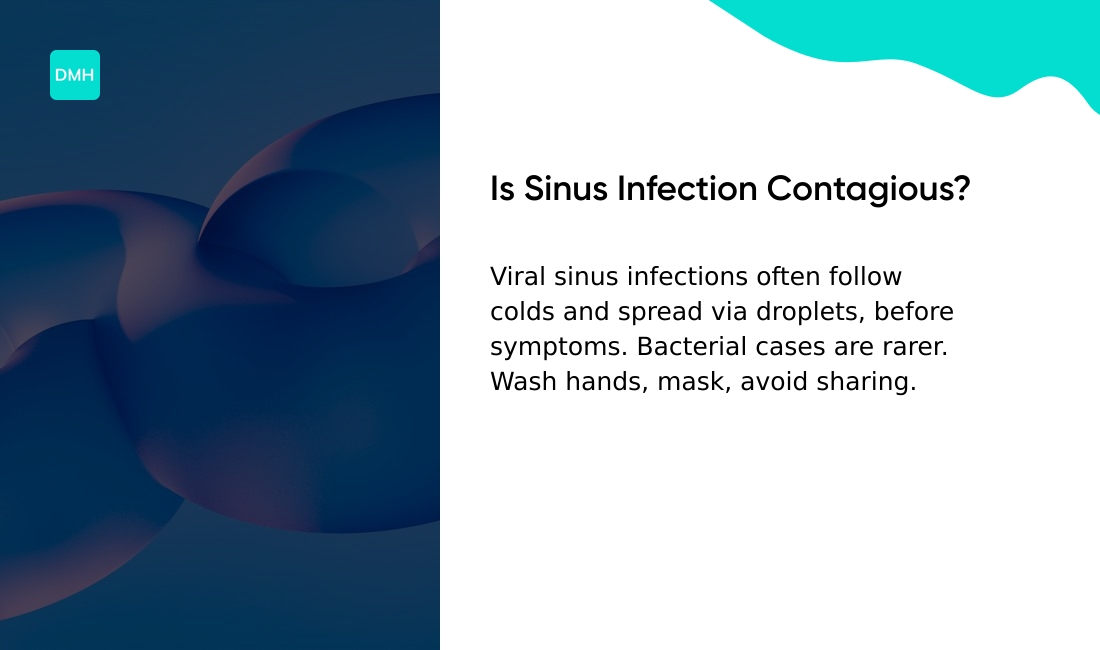
Sinusitis means inflamed sinuses. Many sinus infections follow a viral cold.
Viral infections spread easily via droplets and surface contact. A viral sinus infection can transmit the virus before symptoms appear. Some studies estimate bacterial sinusitis occurs in about 0.5–2% of adult colds.
A bacterial sinus infection often develops after mucus buildup. Bacteria rarely spread by casual contact like viruses, but close contact may transfer germs.
To limit spread:
-
Wash hands often with soap and water
-
Cover coughs and sneezes with tissue or elbow
-
Wear a mask when you have symptoms
-
Clean high-touch surfaces regularly
-
Avoid sharing utensils and cups
For more on contagiousness, see is a sinus infection contagious. Not a medical advice, content for educational purposes, consult a professional.
What causes chronic sinusitis
Chronic sinusitis, or chronic sinus infection, means sinus inflammation lasting 12 weeks or more. It may stem from several underlying factors.
Allergies trigger ongoing inflammation. Persistent allergic rhinitis may keep sinuses swollen. Nasal polyps block drainage and trap mucus. A deviated septum or other structural abnormality can limit airflow and drainage.
Smoking and air pollution irritate the lining and reduce local immunity. Repeated acute infections may scar sinus openings over time. Some people have immune differences or chronic fungal colonization that perpetuate inflammation.
Doctors may use imaging and nasal exams to identify causes. Treatment often targets the specific driver, such as allergy control, nasal steroids, or surgery for structural problems. Read more on pansinusitis.
Not a medical advice, content for educational purposes, consult a professional.
How is acute sinusitis different from chronic sinusitis
Acute sinusitis lasts up to four weeks. Chronic sinusitis lasts 12 weeks or more.
Acute cases often follow a viral upper respiratory infection. A smaller portion involve a bacterial sinus infection. Chronic cases often link to allergies, nasal polyps, a deviated septum, or repeated infections. Ongoing inflammation and mucus buildup can drive long symptoms.
Symptom patterns differ. Acute symptoms start suddenly with facial pain, thick nasal discharge, fever, and marked congestion. Chronic symptoms tend to be persistent with mild to moderate congestion, reduced sense of smell, postnasal drip, and fatigue.
Treatment approaches vary by type and likely cause. For acute viral cases, rest, saline nasal irrigation, pain relief, and fluids often ease symptoms. Antibiotics for sinus infection may be considered when bacterial signs appear or symptoms worsen or persist beyond about 10 days.
Chronic sinusitis treatment may include regular saline rinses, intranasal steroid sprays, allergy management, and referral to an ear, nose, and throat specialist for further evaluation. Surgery can be an option when structural problems or resistant disease limit response to medical care.
If symptoms last beyond 12 weeks, become severe, or affect vision, contact a healthcare professional for evaluation. Not a medical advice, content for educational purposes, consult a professional.
How long does a sinus infection usually last
Duration varies by cause and severity. Sinusitis often starts with nasal inflammation and pressure.
Viral sinus infection cases commonly improve within 7–14 days. Symptoms such as congestion and facial pressure tend to peak early. Many people notice clear improvement by day ten.
Bacterial sinus infection may last longer. Expect symptoms past 10 days without improvement or a clear worsening after initial recovery. High fever or thick, colored nasal discharge for three to four days may indicate a bacterial cause.
Chronic sinusitis lasts 12 weeks or more. Symptoms may wax and wane. Patients often need specialist evaluation for underlying issues like polyps or a deviated septum.
Watch for signs of complications. Severe facial pain, eye swelling or vision changes, persistent high fever, or confusion require prompt medical attention. You may need antibiotics or imaging if symptoms worsen or fail to improve.
Children can show similar timelines. Young children may need earlier evaluation if breathing or feeding becomes difficult.
Simple home measures often ease symptoms while the body fights a viral infection. Nasal irrigation, steam, hydration, and over-the-counter pain relief may help. If symptoms persist beyond timelines above, consider clinical assessment. Not a medical advice, content for educational purposes, consult a professional.
Sinus infection treatment options
Treatment depends on whether your infection is viral or bacterial — and how severe your symptoms are.
Do I need antibiotics for a sinus infection
Antibiotics help when a bacterial sinus infection is likely. Deciding on antibiotics for sinus infection depends on symptom duration and severity.
Look for symptoms lasting 10 days or longer without improvement. High fever above 102°F (39°C) or severe facial pain may point to bacteria. Purulent nasal discharge for 3 to 4 days can indicate bacterial infection.
Some studies estimate 0.5–2% of postviral colds develop bacterial sinusitis. Viral sinus infection cases tend to clear in 7 to 10 days without antibiotics.
You may find saline nasal irrigation and steam provide symptom relief. Clinicians may use history, exam, and symptom course to decide on antibiotics. Antibiotics aren’t needed for viruses and won’t speed recovery — plus, they can contribute to resistance.
If you experience sudden or severe symptoms, contact a healthcare professional promptly. Not a medical advice, content for educational purposes, consult a professional.
Which over-the-counter medicines help with sinus infection symptoms
Oral decongestants such as pseudoephedrine may reduce nasal congestion and sinus pressure. Effects often last about four to six hours.
Topical nasal sprays like oxymetazoline can relieve congestion within 30 minutes. Use for no more than three days to avoid rebound congestion. (Trust me, rebound congestion is no fun!)
Saline nasal sprays and nasal rinses help clear thick mucus and improve breathing. Some studies suggest rinses may shorten symptom duration when used properly.
Pain relievers such as acetaminophen or ibuprofen may ease facial pain, headache, and fever. Read product labels and avoid combining similar active ingredients.
People with high blood pressure, heart disease, or on certain medications may need to avoid some decongestants. If symptoms worsen or last longer than a week, seek medical advice. Not a medical advice, content for educational purposes, consult a professional.
Are sinus rinses and neti pots safe and effective
Nasal irrigation can ease sinus infection symptoms by washing mucus and allergens from the nose. People report less congestion and fewer sinus headaches after regular use.
Devices include squeeze bottles, bulbs, and the classic neti pot. Studies show saline at 0.9% helps mucous clearance and comfort for many patients.
Use clean technique to reduce risk:
-
Use sterile water, distilled water, or water boiled for one minute and cooled
-
Rinse bottles between uses and air-dry completely
-
Avoid tap water unless treated first
-
Replace devices every few months
Start gently. You may try rinsing 1–2 times daily during acute symptoms. Some clinicians suggest up to three short rinses daily for brief periods. Stop if pain, bleeding, or worsening symptoms occur and seek care.
Rare infections can occur if water is contaminated, so proper technique is essential. Not a medical advice, content for educational purposes, consult a professional.
What are effective home remedies for a sinus infection
Home care can ease sinus infection symptoms while the body fights infection. You may notice less congestion and pain with simple steps.
-
Rest and sleep: Sleep with your head elevated to reduce postnasal drip. Aim for 7 to 9 hours of sleep when possible.
-
Hydration: Helps thin mucus. Aim for about 8 cups (2 liters) of fluids per day unless a provider advises otherwise.
-
Humidifier: Set near 40% to 50% humidity. Dry air can worsen congestion. Clean the device weekly to avoid mold.
-
Steam inhalation: 5 to 10 minutes can ease nasal blockage. Inhale warm steam from a bowl or shower with care to avoid burns.
-
Warm compresses: Apply for 5 to 10 minutes to the face for sinus pressure relief. Repeat three times daily as needed.
-
Saline rinses: Try a neti pot rinse once daily. Use distilled, sterile, or previously boiled and cooled water. Follow device cleaning instructions.
-
Pain relievers: Over-the-counter options may lower facial pain and headache. Read labels and check interactions with other medicines.
For an overview of symptoms and care, see the Mayo Clinic on acute sinusitis. Not a medical advice, content for educational purposes, consult a professional.
When should I see a doctor for a sinus infection
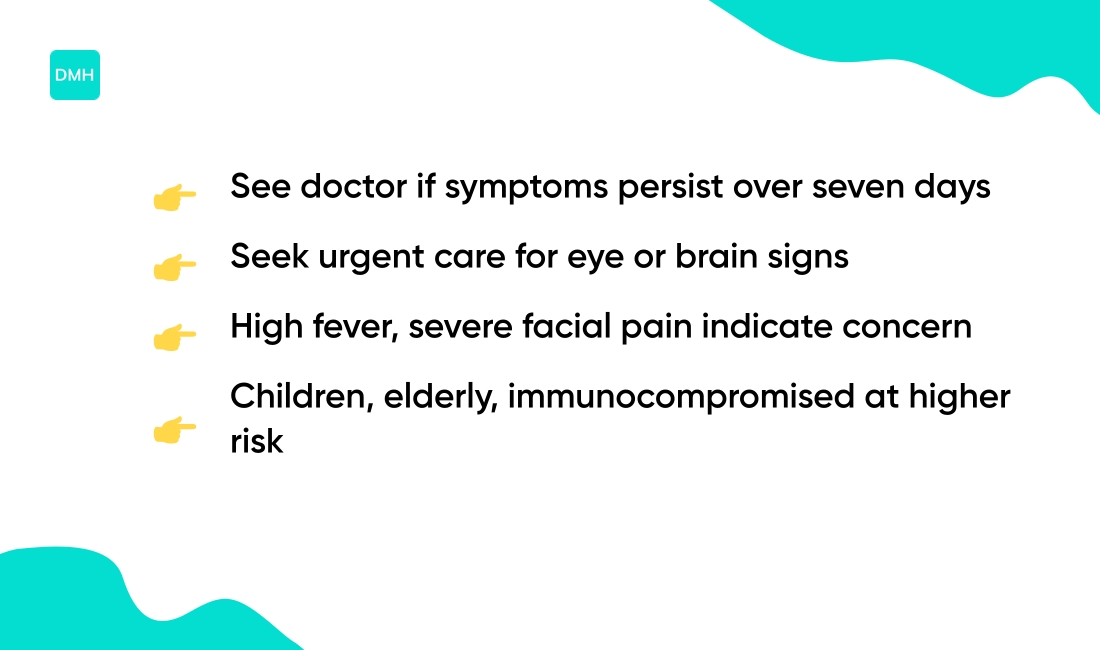
You may manage mild sinusitis at home. Seek professional care when symptoms last more than seven days or get worse after several days.
Watch for these warning signs:
-
Sinus infection symptoms that persist beyond 7–10 days
-
High fever above 101.3°F (38.5°C)
-
Severe facial pain or swelling around the eyes
-
Vision changes, eye redness, or bulging
-
Confusion, neck stiffness, or severe headache
-
Breathing difficulty or rapid worsening of symptoms
Children, older adults, and people with weakened immunity may face higher risk. You may notice tooth pain from sinus pressure. You may notice green nasal discharge with a sustained fever. These signs can suggest a bacterial sinus infection, though diagnosis requires exam and sometimes imaging.
Emergency care is reasonable for signs of eye or brain involvement. Read detailed guidance on when to go to hospital for sinus infection at when to go to hospital for sinus infection. For general clinical information, see the Cleveland Clinic on sinusitis.
Not a medical advice, content for educational purposes, consult a professional.
What complications can occur from an untreated sinus infection
An untreated sinus infection may lead to serious problems. Risks vary by age and health status.
Sinus infections can spread to nearby tissues. Infection near the eye can cause orbital cellulitis or an abscess. Eye symptoms include swelling, redness, severe pain, reduced or double vision. Some studies report orbital complications in under 5% of complicated cases.
In rare cases, infection can reach the brain. That may cause meningitis, brain abscess, or cerebral venous thrombosis. Warning signs include severe headache, neck stiffness, confusion, seizures, or high fever. Intracranial complications appear in less than 1% of cases in some reports.
Untreated acute sinusitis can become chronic sinusitis. Chronic forms last 12 weeks or longer and may need focused evaluation.
Other risks include bone infection near the sinuses and recurrent bacterial sinus infection. People with weakened immunity face higher risks.
Recognize concerning changes early. If you notice eye changes, sudden neurological symptoms, or worsening pain, seek emergency care.
Practical step: track symptom duration and intensity. You may share this record with a clinician to speed diagnosis. Not a medical advice, content for educational purposes, consult a professional.
You might also like: How Long Does A Sore Throat From Allergies Last
How can I prevent recurring sinus infections
Recurring sinus infections often follow allergies, structural blockages, or repeated colds. You may lower your risk by targeting these factors.
-
Manage allergies: Control with avoidance and testing. Allergy control may reduce flare frequency.
-
Nasal hygiene: Use isotonic saline rinses once daily or after high exposure days.
-
Water safety: Use distilled or boiled then cooled water for rinses. This step lowers infection risk.
-
Humidity control: Keep indoor humidity at 30–50%. A humidifier set in that range eases mucous flow and may cut symptoms.
-
Stay hydrated: Aim for about 2 liters (8 cups) of fluids per day unless a clinician advises otherwise.
-
Reduce irritants: Avoid smoke and heavy pollution exposure. Use a HEPA filter if indoor allergens exist.
-
Address blockage: If nasal polyps or a deviated septum cause repeated problems, ENT evaluation may help.
-
Medical options: Some studies suggest allergy immunotherapy or targeted medications lower recurrence in selected patients. Emerging research shows antihistamine nasal sprays may reduce viral activity and recurrence risk.
Simple steps offer measurable benefit. Nasal irrigation can improve symptoms faster in some reports. Humidity control and hydration show clear, low-risk gains. Not a medical advice, content for educational purposes, consult a professional.
Read also: Can You Take Mucinex And Sudafed Together Safely?
Can children get sinus infections and how are they treated
Children can get a sinus infection. Sinusitis means inflammation of the air-filled spaces around the nose.
Common sinus infection symptoms in children include nasal congestion, thick nasal discharge, persistent cough, daytime tiredness, and reduced appetite. Fever may occur. Younger children may refuse feeds or touch their face. Facial pain is less common in toddlers.
Treatment focuses on symptom relief and safe care:
-
Saline nasal irrigation can ease mucus using boiled or sterile water and a neti pot or bulb syringe
-
Humidifiers add moisture to the air
-
Warm compresses applied gently to the face
-
Rest and extra fluids support recovery
-
Pain relief with acetaminophen or ibuprofen at age-appropriate doses per a pediatrician or product label
Oral decongestants and many OTC cough medicines are not recommended for very young children. Antibiotics may be used if a clinician suspects a bacterial sinus infection, such as symptoms lasting longer than 10 days or worsening after initial improvement.
A pediatrician may suggest imaging or referral for chronic or recurrent cases. Seek prompt care for high fever, eye swelling, vision changes, severe headache, breathing difficulty, or sudden worsening.
Persistent symptoms beyond about 10 days may justify evaluation by a pediatrician. Not a medical advice, content for educational purposes, consult a professional. Always consult a qualified healthcare professional for medical advice specific to your situation.
Read also: How To Stop Runny Nose When Working Out
Educational notice: This content is provided for informational and educational purposes only and is not intended as medical advice. Always consult a qualified healthcare professional for medical concerns.