Insulin resistance happens when your muscle, fat, and liver cells stop responding properly to insulin.
That hormone, made by your pancreas, normally helps glucose move from your bloodstream into cells for energy.
When cells resist, blood sugar levels climb and the pancreas pumps out more insulin to compensate.
Over time, this silent process can wear out your pancreas and push you toward prediabetes or type 2 diabetes.
What is insulin resistance?
Cells in your muscles, fat, and liver fail to clear glucose despite insulin’s signal. Blood glucose stays elevated, forcing the pancreas to ramp up insulin production and causing hyperinsulinemia.
- Insulin resistance means cells ignore insulin and stop clearing glucose efficiently.
- Blood glucose stays high while the pancreas overworks to produce more insulin.
- Over years, pancreatic beta cells wear out and your risk of type 2 diabetes climbs.
Visceral fat, chronic inflammation, genetics, and low physical activity drive this process. Abdominal fat links tightly to reduced insulin sensitivity.
We recommend measuring fasting glucose, fasting insulin, and HOMA-IR to quantify risk and guide treatment. A fasting glucose of 100–125 mg/dL or an A1c of 5.7–6.4% signals impaired glucose regulation. A fasting insulin above 15 μU/mL often points to reduced insulin sensitivity.
Early detection and simple habits reverse many cases. Aim for 5% body weight loss, 150 minutes of moderate exercise per week, and a lower refined-carb diet to improve insulin sensitivity. Track labs every three months until values improve.
You should book a visit with your clinician to get tests and a clear plan within four weeks. They’ll help you interpret results and set realistic goals to lower type 2 diabetes risk.
What causes insulin resistance?
Insulin resistance develops when cells stop responding to insulin because of prolonged high glucose, visceral fat, chronic systemic inflammation, genetic risk, and low activity. Here’s how each factor contributes:
- Prolonged high glucose damages insulin receptors and drives compensatory hyperinsulinemia.
- Abdominal fat accumulation releases hormones that blunt insulin action and raise metabolic risk.
- Chronic systemic inflammation interferes with insulin signaling in muscle and liver cells.
- Inherited genes raise baseline susceptibility and affect how your body handles insulin.
- A sedentary lifestyle lowers muscle glucose uptake and promotes weight gain.
Targeting belly fat and activity gives the fastest gains in insulin sensitivity. Many patients cut fasting insulin by about 20–30% with 5–8% weight loss and regular brisk walking.
Measure waist circumference to track visceral fat and monitor progress. (Men should aim for under 40 inches, women under 35 inches.) Use this guide to learn where to measure waist for body fat.
Your next step is simple. Check fasting glucose and fasting insulin with your clinician. Start a plan that reduces refined carbs, adds protein and fiber, and includes 150 minutes of moderate activity per week.
What are the signs of insulin resistance?
Persistent thirst, frequent urination, fatigue, carb cravings, belly weight gain, darkened skin patches, numbness, and slow-healing cuts often point to insulin resistance and warrant testing.
- Extreme thirst and urination increase as blood sugar stays high. Those symptoms signal impaired glucose control and rising type 2 diabetes risk.
- Abdominal weight gain and strong carb cravings reflect rising insulin and reduced insulin sensitivity in muscle and fat tissue.
- Slow-healing infections, acanthosis nigricans (dark velvety skin on neck or armpits), and tingling in hands or feet show metabolic stress and nerve effects from sustained hyperinsulinemia.
- Hunger even after meals and blurred vision may appear as glucose regulation worsens.
Do several of these symptoms sound familiar? An A1c of 5.7–6.4% or fasting glucose of 100–125 mg/dL often accompanies these signs and marks prediabetes.
We recommend getting fasting glucose, A1c, and fasting insulin if you notice multiple symptoms within two weeks. Ask your clinician about HOMA-IR to quantify insulin resistance and discuss a plan to improve insulin sensitivity.
Read the Cleveland Clinic overview for more clinical detail.
How do you test for insulin resistance?
Fasting glucose and A1c tests
Fasting glucose levels of 100–125 mg/dL or an A1c value of 5.7–6.4% indicate prediabetes. Fasting glucose ≥126 mg/dL or A1c ≥6.5% confirms type 2 diabetes.
- These thresholds signal higher type 2 diabetes risk and reflect underlying insulin resistance.
- Repeat testing within two to three months helps confirm results before starting treatment.
- If you have symptoms or risk factors, add fasting insulin or HOMA-IR to the evaluation.
Routine screening saves months of delay. Delayed diagnosis can cause missed treatment windows and allow complications to develop.
You should get tested if you have abdominal fat, family history, or metabolic syndrome. Schedule a blood test and review results with your provider within four weeks.
What is HOMA-IR and how is it calculated?
HOMA-IR gives a simple numeric estimate of insulin resistance from fasting insulin and glucose.
| Measure | Value | Interpretation |
|---|---|---|
| HOMA-IR formula | (fasting insulin [µU/mL] × fasting glucose [mg/dL]) ÷ 405 | Estimates insulin resistance |
| Example calculation | 12 µU/mL insulin × 100 mg/dL glucose ÷ 405 | HOMA-IR = 2.96 |
| Common cutoff | Above 2.0–2.5 | Suggests insulin resistance |
| Alternate formula | (fasting insulin × glucose [mmol/L]) ÷ 22.5 | For international units |
Fasting insulin and fasting glucose require an 8–12 hour fast for accurate results. We use HOMA-IR for screening alongside fasting glucose and A1c.
HOMA-IR helps you track improvement after weight loss and exercise. Use the score with symptoms and other labs, and review results with your provider for personalized guidance.
What is a normal fasting insulin level?
A normal fasting insulin is about 2–10 µIU/mL. Values above 10 µIU/mL suggest hyperinsulinemia and reduced insulin sensitivity.
- Fasting insulin range: Labs vary by assay. Some labs use 3–25 µIU/mL as their reference.
- Use fasting glucose or A1c with fasting insulin to calculate HOMA-IR for an insulin resistance estimate.
- Consistent fasting insulin above 10 should prompt lifestyle changes and medical follow-up.
Some labs report results in pmol/L. To convert, multiply µIU/mL by 6 to get pmol/L.
Bring your fasting insulin, glucose, and A1c to your clinician. Ask for HOMA-IR and a clear plan to improve insulin sensitivity. Recheck levels after three months of targeted diet and exercise.
How does insulin resistance lead to type 2 diabetes?
Insulin resistance causes beta cells to overwork until they fail.
- Cells resist insulin, so blood glucose rises.
- The pancreas raises insulin output, producing hyperinsulinemia.
- Long-term strain causes beta cell failure, leading to prediabetes and type 2 diabetes.
We outline the pathway as a clear sequence from insulin resistance to loss of glucose control. Muscle and fat cells lose insulin sensitivity while the liver adds glucose to the bloodstream.
Prediabetes appears at fasting glucose 100–125 mg/dL or A1c 5.7–6.4%. Diabetes diagnosis uses fasting glucose ≥126 mg/dL or A1c ≥6.5%.
Visceral fat raises inflammation and worsens insulin resistance. Sustained hyperinsulinemia stresses beta cells. People with prediabetes progress to diabetes at about 5–10% per year, depending on risk factors.
Early weight loss and exercise preserve beta cell function and slow progression. Check fasting insulin and HOMA-IR with your clinician to quantify insulin resistance.
Aim for 5% weight loss in three months and 150 minutes of moderate exercise per week. Use dietary changes that lower spikes and support insulin sensitivity. Rising blood glucose signals that compensatory insulin can no longer maintain control—act now to reduce type 2 diabetes risk.
Is insulin resistance the same as prediabetes?
Insulin resistance is a cellular problem, not the same thing as prediabetes.
- What it is: insulin resistance means your muscle, fat, and liver cells respond poorly to insulin. The pancreas raises insulin levels to keep glucose normal.
- What prediabetes means: labs show fasting glucose 100–125 mg/dL or A1c 5.7–6.4%. That’s a diagnostic category based on blood tests.
- How they overlap: many people have insulin resistance before blood tests cross the prediabetes cutoffs. Insulin resistance raises type 2 diabetes risk by driving hyperinsulinemia and then beta cell strain.
Spotting insulin resistance early gives you an actionable head start. Fasting insulin or HOMA-IR can flag trouble weeks to months before A1c moves.
Check fasting glucose, A1c, and fasting insulin if available. Talk with your clinician about lifestyle steps to improve insulin sensitivity. Read a clear comparison from Stony Brook Medicine for more detail.
Insulin resistance often drives PCOS symptoms by causing hyperinsulinemia, which raises androgen levels and disrupts ovulation.
- High insulin forces the ovary to make more androgens. This harms follicle development and stops regular periods.
- About 40–70% of women with PCOS show measurable insulin resistance. That links PCOS to greater metabolic health risks.
- Compensatory high insulin also increases fat storage around the belly and worsens inflammation, lowering ovulation and hormone balance.
Tests that matter include fasting insulin, fasting glucose, A1c, and HOMA-IR. These identify how severe insulin resistance is and guide therapy.
Checking fasting insulin helps tailor treatment for women with PCOS. We use that data to prioritize weight loss, structured exercise, and a lower-glycemic eating plan to improve insulin sensitivity.
Next step: ask your clinician for fasting insulin and HOMA-IR. Track results and start a plan to improve insulin sensitivity within three months so you can protect reproductive and metabolic health.
Can insulin resistance be reversed?
Does weight loss reduce insulin resistance?
Losing belly fat improves insulin sensitivity and lowers hyperinsulinemia.
- Abdominal fat loss targets visceral fat that releases inflammatory cytokines and impairs insulin signaling.
- Losing 5–10% of body weight improves HOMA-IR and lowers fasting insulin. See what parts of the body lose fat first to learn which areas change early.
- You can improve insulin sensitivity within weeks with modest weight loss. The Diabetes Prevention Program used 7% weight loss and cut type 2 diabetes risk by 58%.
Aiming for 5–10% weight loss over six months gives measurable metabolic gains. Track waist circumference and fasting insulin with your clinician to confirm progress and achieve lower fasting insulin levels.
Can exercise reverse insulin resistance?
Regular exercise improves insulin sensitivity and can reverse insulin resistance.
- Exercise increases muscle glucose uptake via contraction-mediated GLUT4 translocation.
- A single 30-minute session raises uptake for 24–48 hours. Chronic training improves insulin sensitivity by about 20–40%.
- Resistance training builds muscle that stores glucose.
- Aerobic work lowers liver fat and cuts visceral fat stores, reducing inflammation tied to insulin resistance.
- Short, frequent sessions beat rare long workouts. Aim for 150 minutes of moderate aerobic activity weekly plus two resistance sessions to improve insulin sensitivity and increase glucose uptake.
Start with achievable goals this week. Track fasting insulin or HOMA-IR every 8–12 weeks to measure progress. Modest, consistent exercise makes the biggest difference.
How long does it take to reverse insulin resistance?
You can see measurable insulin sensitivity gains in 2–4 weeks, while true reversal usually requires 3–12 months of steady changes.
- Improve insulin sensitivity: Expect lower fasting insulin and better HOMA-IR within 2–8 weeks with regular exercise and fewer refined carbs.
- Aim for 5–10% bodyweight loss over three months to reduce visceral fat and hyperinsulinemia.
- Medications can speed improvement for high-risk patients, but lasting change depends on sustained habits.
Track fasting insulin or HOMA-IR and set a 12-week plan with 150 minutes of moderate exercise weekly. A focused 12-week effort shows clear progress and keeps you motivated toward full insulin resistance reversal. Check results at 12 weeks and adjust goals with your clinician.
What is the best diet for insulin resistance?
Follow a lower-glycemic, whole-food diet that balances carbs, fiber, and protein to stabilize blood sugar and lower insulin levels.
- Insulin resistance diet: prioritize nonstarchy vegetables, legumes, nuts, and whole grains. See our nutrition guide for meal ideas.
- High fiber foods: aim for 25–30 g fiber daily to slow glucose absorption and blunt spikes.
- Include 20–30 g protein per meal and time carbs with protein or fat to reduce post-meal glucose rises.
- Consider low-carb plans if you need fast glucose control. A modest carb limit of 30–45% of calories works for many people.
- Losing 5–10% body weight reliably improves insulin sensitivity and lowers fasting insulin.
Pairing diet with regular exercise and consistent sleep speeds results. Tracking your meals for two weeks will reveal patterns you can fix now.
Start with one swap today. Replace sugary drinks with water and add a high-fiber vegetable to one meal. Test fasting glucose weekly and adjust with your clinician.
What foods should I avoid with insulin resistance?
Avoid foods that spike blood sugar and sustain high insulin levels.
- Refined carbohydrate foods: white bread, pastries, and many breakfast cereals raise glucose quickly.
- Added sugars and sweets: candy, baked desserts, and table sugar drive hyperinsulinemia.
- Sugar-sweetened soft drinks: soda, energy drinks, and sweetened coffee raise fasting glucose and A1c.
- Fruit juice and sweetened yogurt: liquid sugar hits blood sugar fast without fiber to slow it.
- High-glycemic starchy foods: white rice, instant potatoes, and some snack foods cause sharp glucose spikes.
- Highly processed meals: frozen entrees, fast food, and packaged snacks contain refined carbs and unhealthy fats that worsen insulin resistance.
- Processed meats and trans-fat foods: linked to higher metabolic syndrome and type 2 diabetes risk.
Cutting soda and pastries first gives the fastest benefit. Small tests show fasting glucose can fall within 2–4 weeks.
Start this week: remove one sugar source and replace it with protein, fiber, and vegetables. Track fasting glucose and adjust the plan.
Are low-carb diets effective for insulin resistance?
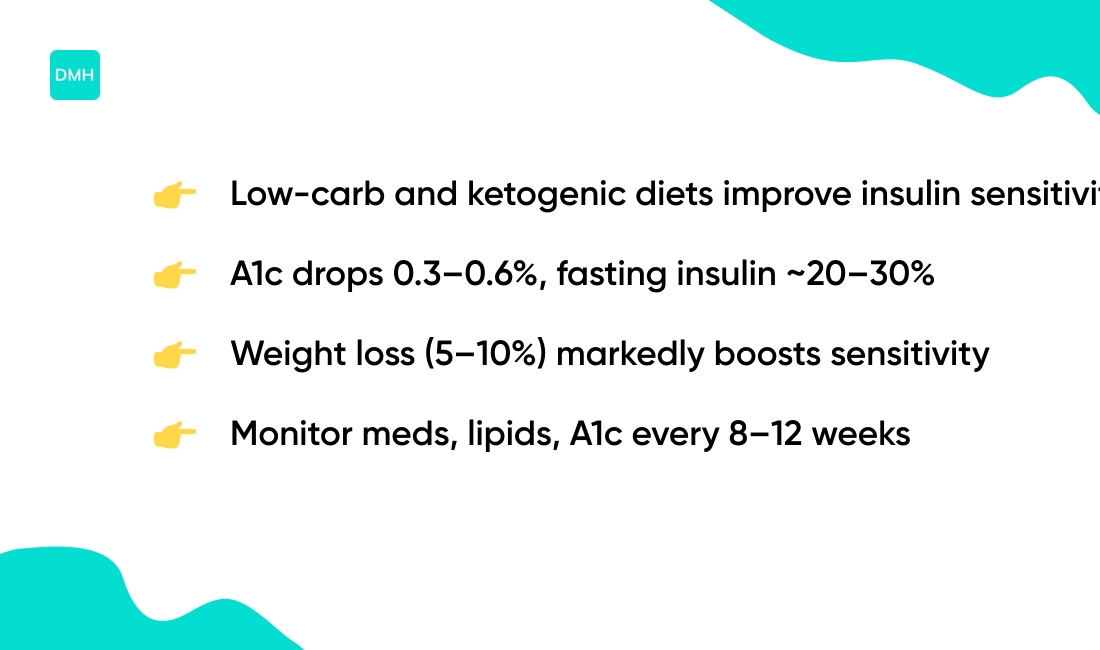
Low-carbohydrate and ketogenic diets improve insulin sensitivity and lower fasting insulin for many people with insulin resistance.
- Evidence: randomized controlled trials report A1c reductions of 0.3–0.6% and fasting insulin drops around 20–30% over 3–6 months in low-carb groups.
- Mechanism: cutting digestible carbs reduces post-meal glucose spikes and lowers compensatory hyperinsulinemia.
- Weight link: 5–10% weight loss increases insulin sensitivity markedly; low-carb plans often speed early weight loss via reduced appetite.
- Practical: choose a sustainable carb target. A moderate plan uses 50–130 g/day. A ketogenic plan uses under 30 g/day. Monitor lipids and meds when you lower carbs.
- Food choices matter. Some legumes change net carbs. See are chickpeas keto for guidance on including chickpeas in low-carb menus.
Try a structured low-carb plan under clinical supervision and track fasting insulin, A1c, weight, and lipids every 8–12 weeks. This approach works best when paired with regular activity and modest weight loss. Start by reducing refined carbs, set a three-month goal of 5% weight loss, and review medication needs with your clinician.
You might also like: How To Get Rid Of Acne When Nothing Works
What is an insulin resistance meal plan?
An insulin resistance meal plan centers on low-glycemic whole foods and balanced macronutrient ratios to keep blood sugar steady.
- Limit carbs to 30–45 g per meal and include 10+ g fiber. This reduces post-meal spikes and supports insulin sensitivity.
- Include 20–30 g protein and a serving of healthy fat each meal. Protein and fat slow glucose absorption and increase satiety.
- Use simple portion rules: palm-sized protein, fist of nonstarchy vegetables, cupped hand of whole grains or starchy veg. Portion control helps caloric balance and weight loss.
- Pair foods into blood sugar-stabilizing combos. Example: grilled salmon, ½ cup quinoa, and a big salad with olive oil dressing.
Consistent meal timing helps most people cut large glucose swings. Better results happen when meals occur every 3–5 hours and one snack contains protein.
Start small. Swap sugary drinks for water or unsweetened tea. Replace one refined grain daily with a whole-food option. For a practical list of options, see our guide to lower blood sugar foods.
Track meals and fasting glucose for two weeks. Use that data to tweak portions and carbs. If fasting insulin or HOMA-IR stays high, see your clinician for testing and a tailored plan.
Read also: What Vitamin Deficiency Causes You To Crave Salt
What are the risks of untreated insulin resistance?
Untreated insulin resistance will progress to metabolic disease and raise your risk of major complications.
- Type 2 diabetes: Persistent insulin resistance causes compensatory hyperinsulinemia and eventual beta cell failure. About 15–30% of people with prediabetes develop diabetes within five years.
- Cardiovascular disease: Insulin resistance raises triglycerides and lowers HDL. It increases blood pressure and stroke risk.
- Metabolic syndrome: You face a cluster of problems including abdominal obesity, dyslipidemia, high blood pressure, and non-alcoholic fatty liver. They increase inflammation and raise cancer risk.
What happens if you ignore the warning signs? Early testing prevents many downstream harms. Use an insulin resistance test such as fasting insulin and HOMA-IR to track progress.
Get fasting glucose, A1c, and fasting insulin within three months. Aim for 5–10% weight loss and 150 minutes of moderate exercise weekly to improve insulin sensitivity. Talk with your clinician now to build a personalized plan.
You might also like: Does Peanut Butter Cause Constipation
Educational notice: This content is provided for informational and educational purposes only and is not intended as medical advice. Always consult a qualified healthcare professional for medical concerns.