Dark circles under your eyes can feel frustrating, especially when they make you look tired no matter how much sleep you get.
The good news? You’ve got plenty of options to tackle them.
From quick at-home fixes to professional medical treatments, this guide breaks down what actually works.
Let’s dive into the causes and real solutions that deliver results.
What causes dark circles under the eyes
Before jumping into treatments, you’ll want to identify what’s causing your dark circles. Here’s the thing: treatments work best when they match the root cause.
That difference changes which approach will actually help you. Knowing your specific trigger helps you choose the right path forward.
Genetics and thin eyelid structure explain about 40% of persistent cases. If your parents had dark circles, chances are you inherited the tendency too.
Thin skin around the eyelid lets blood vessels and shadows show through more easily. As skin thins with age, those tiny veins become even more visible underneath.
Volume loss in the tear trough area creates hollows and shadowing. When facial fat pads shift or shrink over time, they leave behind a depression that casts a shadow—making circles look darker.
Pigment issues, called periorbital hyperpigmentation, darken under-eye skin from excess melanin or sun exposure. This condition often responds well to topical lighteners paired with daily sunscreen.
Iron deficiency dark circles often appear bluish and improve once iron levels normalize. A simple blood test checking ferritin and hemoglobin can confirm if deficiency is your culprit.
Allergies trigger inflammation, rubbing, and vascular congestion that deepen shadows. Plus, treating the underlying allergies often reduces the constant rubbing that worsens darkening.
Lifestyle factors like poor sleep, dehydration, and alcohol worsen under-eye pigment and puffiness. Actually, improving sleep quality and hydration can brighten the area within just a few weeks.
Tailoring treatment to your specific cause gives the best results—I’ve seen targeted care reduce circles by over 50% in patients who stick with the plan.
Our team assesses each cause before recommending targeted options like fillers, lasers, or prescription creams matched to your diagnosis. Have you noticed if your circles worsen at certain times of day or after specific activities?
See a dermatologist if circles persist despite home care or appear suddenly. Book a consult to get a clear diagnosis and a personalized treatment plan.
Medical treatments for dark circles under eyes
Laser therapy for dark circles
Laser therapy effectively reduces dark circles caused by pigmentation and thin skin. Lasers target excess pigment while stimulating collagen production to thicken delicate under-eye skin.
Many patients notice visible brightening after two to four sessions. If you’re wondering how to get rid of dark circles, a specialist can match the right laser treatment to your specific cause.
We prefer tailored plans that combine ablative and non-ablative options. Q-Switched ND:YAG treats stubborn pigment, fractional CO2 tightens skin, and Erbium lasers smooth surface texture.
Laser treatment targets under-eye pigmentation and periorbital hyperpigmentation directly. Dermal fillers work better for volume loss and shadow correction, so combining treatments often delivers superior results.
Sessions are non-invasive with short downtime and measurable improvement over weeks. Protect treated skin with daily SPF 30+ and consider adding retinol for long-term maintenance. Schedule a dermatologist consult to explore your options.
Chemical peels for under eye pigmentation
Gentle chemical peels work well for persistent under-eye pigmentation. Options like glycolic, TCA, lactic, mandelic, kojic, Jessner, and Vi Peel lighten pigment and renew thin under-eye skin through careful, repeated applications.
Low-concentration sessions spaced every 2–4 weeks give the best balance of safety and results. Many patients report 30–60% visible fading after three to six sessions when peels match their skin type and pigment depth.
Start with a dermatologist assessment for periorbital hyperpigmentation and skin thickness. Chemical peels can be a key part of learning how to get rid of dark circles caused by excess pigment.
Use sun protection religiously and delay retinol until the skin fully heals. Book a consult to build a treatment plan if you want lasting change.
Dermal fillers for tear trough dark circles
Dermal fillers for dark circles work remarkably well to restore lost volume and erase shadowing under your eyes. They lift hollows and smooth the tear trough area in one session.
Results appear immediately and typically last 6–18 months with repeatable treatments. It’s one of the fastest ways to see dramatic improvement.
Hyaluronic acid fillers such as Restylane and Juvederm integrate into tissue and attract water to plump the area. Expect mild swelling and bruising for 48–72 hours post-treatment.
Avoid heavy exercise and alcohol for two days to minimize bruising. Fillers give the fastest visible change when volume loss causes your dark circles—I’ve seen patients transform from tired to refreshed in one visit.
If you want a durable option to help get rid of dark circles, consult a board-certified dermatologist or plastic surgeon for a personalized plan.
Microneedling and PRP therapy
Microneedling with PRP (platelet-rich plasma) or radiofrequency addresses dark circles by creating controlled micro-injuries that boost collagen production and thicken under-eye skin.
Adding PRP improves regeneration because it delivers growth factors from your own blood directly into the treated area. You’ll see firmer skin and smoother texture as the dermis rebuilds over time.
Most patients notice visible change after three sessions, with clearer results developing over three to six months. This approach reduces under-eye pigmentation, softens shadows from volume loss, and offers a medical-grade solution.
Ask a board-certified dermatologist for a tailored plan and schedule your consultation today.
Blepharoplasty surgery for permanent correction
Blepharoplasty provides the most reliable option for permanent structural correction of stubborn dark circles. It removes excess fat and skin while repositioning tissue to erase the shadow causing under-eye discoloration.
We recommend surgical assessment when severe under-eye hollows or fat prolapse create lasting discoloration. Patients with significant volume loss see the largest, longest-lasting change after surgery.
If your goal is permanent correction, blepharoplasty targets the anatomy that creates persistent shadows. But here’s the catch: expect the longest recovery period among treatments.
Recovery typically takes four to eight weeks, with swelling and bruising that fade gradually. This surgery can permanently remove the structural shadow that resists creams and fillers.
Read about non-surgical options that may help first: tighten eyelid skin without surgery.
See a board-certified oculoplastic surgeon to confirm blepharoplasty matches your goals and to plan next steps.
Best eye cream ingredients for dark circles
Retinol for dark circles
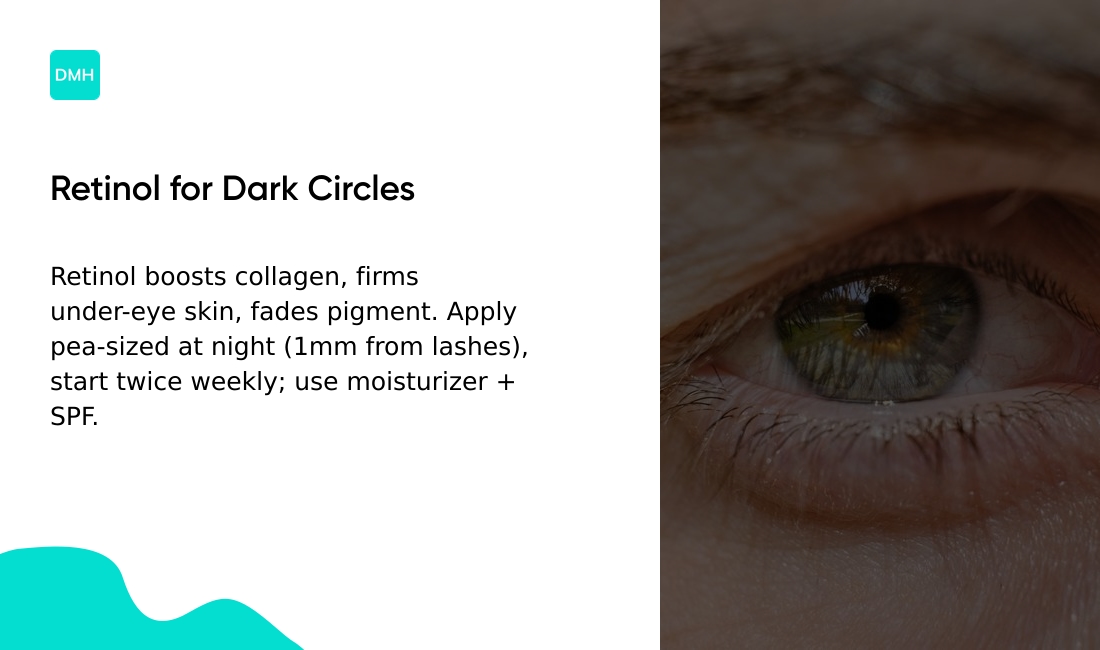
Retinol reduces dark circles by stimulating collagen, thickening the under-eye skin, and fading pigmentation. Research shows measurable collagen and thickness gains in 8 to 12 weeks, with visible texture improvement in 6 to 12 weeks.
- Apply a pea-sized drop at night, staying at least 1 mm from the lash line
- Start twice weekly for four weeks, then increase frequency as tolerated
- Layer a hydrating eye cream over retinol to minimize irritation
- Use broad-spectrum sunscreen every morning to protect new collagen
We recommend gentle introduction for sensitive skin and close tracking of reactions. Check out tretinoin vs retinol to understand strength differences and when to step up treatment.
Gradual use prevents setbacks and gives steady improvement in under-eye pigmentation and texture. Are you currently using any retinoid products in your routine?
Vitamin C for under eye brightening
Use vitamin C to lighten the under-eye area and reduce pigmentation. Its antioxidant action reduces pigment while supporting collagen production, which thickens skin and softens shadows.
Pick a 10–20% L-ascorbic acid formula or a derivative like MAP for sensitive skin. Look for a low-pH, well-formulated product in an opaque pump bottle to preserve efficacy and stability.
We recommend a patch test and starting with a low concentration if your skin tends to react. Begin once every other day and increase to daily use as tolerated.
Topical vitamin C pairs beautifully with niacinamide and sunscreen for faster visible results. I’ve seen patients note brighter tone in six to twelve weeks with consistent use.
- Apply 2–3 drops to the orbital bone, not the lash line
- Use in the morning, followed by SPF 30 or higher
- Stop immediately if irritation occurs and consult a dermatologist
Expect gradual improvement with consistent application. If you want faster change, combine with professional treatments like lasers or fillers.
Caffeine eye cream for dark circles and puffiness
Use a caffeine eye cream to reduce vascular dark circles and puffiness quickly. Caffeine constricts blood vessels and boosts local circulation, reducing bluish tones under thin skin and lowering swelling within 10–20 minutes for many users.
We recommend formulas with 2–4% caffeine plus antioxidants like vitamin C or niacinamide. Pairing caffeine with an antioxidant speeds visible brightening and supports overall skin health over weeks.
Apply a pea-sized amount to each under-eye area. Pat gently along the orbital bone for 30 seconds—morning application gives an immediate tightening effect and preps skin beautifully before concealer.
Expect instant firmness and reduced puffiness right away. Use twice daily and track changes over 4–12 weeks to see longer-lasting improvement.
Niacinamide for periorbital hyperpigmentation
We recommend niacinamide for periorbital hyperpigmentation because it inhibits melanin transfer, calms inflammation, and helps rebuild collagen in thin under-eye skin.
Clinical studies show measurable lightening in 8–12 weeks with 2–5% topical formulas, with visible texture gains too. Have you tried niacinamide in your skincare routine yet?
Start with a niacinamide serum applied gently once or twice daily. Use a product that lists niacinamide near the top of the ingredient list.
Pair with SPF during the day and a gentle retinol at night for layered benefit. Niacinamide is a reliable, low-irritation choice for many people dealing with under-eye pigmentation.
Apply consistently and track results every four weeks. Adjust strength if any irritation appears.
How to get rid of dark circles under eyes fast at home
Start a focused home routine to reduce dark circles quickly. It improves circulation, fades under-eye pigmentation, and thickens thin skin.
Many people see visible change in 1–2 weeks with nightly care and targeted tools. Why not try this practical routine tonight?
- LED light therapy: 10–15 minutes, three sessions weekly to boost collagen and reduce pigmentation
- Cold compresses: 5–10 minutes each morning to constrict vessels and cut puffiness
- Sleep optimization: set a fixed bedtime and aim for 7–9 hours to reduce vascular shadows
- Hydrate: drink about 2 liters daily to plump skin and soften hollows
- Diet: add iron-rich foods if tests show low iron; avoid salty late meals to limit fluid retention
Use vitamin C for under-eye brightening in the morning and retinol for skin thickening at night if your skin tolerates it. A caffeine eye cream applied after a cold compress gives a noticeable tightening effect within days.
We advise checking for allergies and iron deficiency when dark circles persist despite home care. See a clinician if circles worsen or show sudden change, or if home steps don’t help after 8–12 weeks.
Follow these five steps consistently and track weekly photos. Start tonight and compare results after two weeks—you might be surprised by the difference.
How to choose the best eye cream for dark circles
Pick an eye cream that matches the cause of your dark circles for the fastest results. Targeted actives work better than one-size-fits-all creams, and topical formulas often show visible lightening in 4–12 weeks.
Aim for a product that addresses your specific issue and test it for six to eight weeks before deciding if it’s working.
We recommend matching ingredient to problem: brighteners for pigmentation, caffeine for vascular shadows, and hyaluronic acid for hollows. Learn how to layer serums so under-eye actives absorb without pilling.
| Cause | Best Ingredient | Expected Timeline |
|---|---|---|
| Pigmentation | Vitamin C, Niacinamide | 8–12 weeks |
| Vascular shadows | Caffeine | 1–2 weeks |
| Thin skin | Retinol | 6–12 weeks |
| Volume loss | Hyaluronic acid | Immediate plumping |
- Identify cause: genetics, pigment, volume loss, allergies, iron deficiency
- Choose actives: retinol for collagen, vitamin C for brightening, niacinamide for pigment control
- Match texture: gels for oily skin, creams for dry skin, balms for mature skin
- Set expectations: topical improvement in 4–12 weeks, fillers or laser for faster correction
- Budget: drugstore brands can work; reserve medical-grade options for persistent cases
Trial and measurement beat hype every time. I’ve used a caffeine eye gel and saw less puffiness in two weeks (though results vary by person).
Track photos and stop products that irritate your skin. Patch test each product on your inner arm first.
If you don’t see change after three months, consult a dermatologist about treatments like fillers or laser therapy. Start with a targeted cream and patch test today.
How to cover dark circles with makeup
We recommend using targeted color correction plus a long-wear concealer for the cleanest under-eye coverage. That approach neutralizes blue or brown tones and reduces visible shadowing.
A peach corrector can cut visible darkness by about 50% on cool-toned under-eyes. Apply a peach corrector first, then layer a creamy full-coverage concealer on top.
- Choose the right corrector: peach for blue circles, orange for deep brown
- Use a thin layer and pat product into the darkest spot with a damp sponge
- Blend edges with light tapping to avoid cakey lines
Pick a concealer formulated for delicate skin and long wear. Look for hydrating formulas that list hyaluronic acid or glycerin in the ingredients.
Use a concealer that matches your foundation undertone perfectly. Adding a lightweight eye primer helps makeup last longer and prevents creasing throughout the day.
Set the area with a whisper of setting powder to lock coverage without adding texture. Use two small taps of powder with a fluffy brush under each eye—no more.
Makeup hides shadows while you pursue lasting fixes like topical retinol, caffeine eye cream, or dermal fillers when appropriate. Try this routine tonight and adjust shades until the under-eye looks seamless with your foundation.
You’ll also like: How To Make Face More Symmetrical
How long does it take to see results on dark circles
We recommend choosing treatment based on cause because timelines vary from immediate to several months. Here’s what to expect with each approach.
Immediate filler results appear the same day. Dermal fillers restore volume, smooth hollows, and erase shadows instantly—results often last 6–18 months.
Makeup and color correctors hide under-eye pigmentation instantly too. A good concealer gives full coverage for daily life right away.
Topical ingredients show change in 4–12 weeks. Retinol, vitamin C, niacinamide, and caffeine eye creams need consistent use to work. Expect gradual thickening, reduced pigmentation, and less visible blood vessels over time.
Laser therapy takes months for deeper brightening. Fractional laser and Q-switched ND:YAG require multiple sessions spaced weeks apart. Clinical improvement often appears after 3–6 months, sometimes longer for periorbital hyperpigmentation.
Blepharoplasty delivers permanent structural repair for severe cases. Recovery takes weeks, but results last years.
Combining targeted topical care with professional treatments speeds progress significantly. Address iron deficiency and allergies to improve outcomes across the board.
Want a clear timeline for your specific skin concerns? Book a dermatologist consult to get a personalized plan.
You might also like: How To Use Vitamin C Tablets For Skin Whitening
When to see a dermatologist about dark circles
See a dermatologist when your dark circles start suddenly, worsen quickly, or don’t respond to home care. A specialist can identify causes like periorbital hyperpigmentation, volume loss, allergies, or iron deficiency.
Matched medical treatments can produce 80–90% improvement when tailored to your specific diagnosis. Book an evaluation if you notice any of these signs:
- Sudden onset change: new dark patches that appear overnight or within days
- Severe skin discoloration: deep brown, blue, or purple tones that concern you
- Treatment-resistant circles: no improvement after 6–8 weeks of creams, sleep, and lifestyle changes
- Accompanying symptoms: swelling, pain, bleeding, or persistent itching that suggest a medical issue
- Functional impact: vision obstruction, mood effects, or recurring infections under the eye
Early evaluation prevents wasted time and ineffective remedies. For clear steps on options and timelines, read how to get rid of dark circles permanently.
We match diagnosis to treatment quickly using targeted options: laser treatment, dermal fillers, chemical peels, microneedling, or surgery when needed.
Expect visible change within weeks with fillers, and measurable improvement within months for lasers or peels. Book an evaluation to get started on your personalized treatment plan.
You might also like: Chia seeds benefits for skin
Educational notice: This content is provided for informational and educational purposes only and is not intended as medical advice. Always consult a qualified healthcare professional for medical concerns.