Sinus pressure can hit you out of nowhere — that dull ache across your forehead, tightness in your cheeks, and pain behind your eyes.
The good news? You can often ease that discomfort in about 10 minutes using simple, proven methods.
Let’s dive into the fastest ways to get relief and get you back to feeling like yourself.
What is sinus pressure
Sinus pressure feels like tightness in the face, forehead, and behind the eyes. Understanding what creates that pain helps you tackle it faster.
Your sinuses are air-filled cavities in your forehead, cheekbones, and between your eyes. When the sinus lining gets inflamed, drainage pathways narrow. Trapped mucus raises pressure inside those cavities, and that’s when the pain starts.
Mucus buildup blocks airflow and feeds bacteria when present. Allergies, colds, and infections trigger the inflammation. You’ll often notice nasal congestion and reduced smell along with the pain.
Pressure activates pain nerves in the sinus walls, creating a dull ache or sharp pain across your forehead and cheeks. Pain behind the eyes? That comes from pressure around the ethmoid and sphenoid sinuses.
Here’s the thing: sinus pressure often improves with simple drainage techniques and nasal irrigation. A short steam session or saline rinse can clear mucus and lower pressure quickly, offering visible sinus pressure relief in minutes for many people.
Persistent symptoms that last more than 10 days or include high fever, severe pain, or vision changes need medical evaluation. Don’t wait if you see those red flags.
We recommend starting with gentle measures that promote drainage. Quick action gives faster sinus headache relief and better comfort. Try simple steps first: hydrate, use a warm compress, or try targeted sinus massage.
How can I relieve sinus pressure fast
Steam inhalation for sinuses
We recommend steam inhalation for quick nasal relief. It opens congested passages and eases pressure in the face and behind the eyes.
Here’s how to do it right:
- Boil 2 cups of water.
- Pour into a heatproof bowl on a stable surface.
- Cover your head with a towel to trap steam.
- Breathe slowly and deeply for 10–15 minutes.
Add 2 drops of eucalyptus or peppermint oil to the bowl for extra relief. Keep your face about 12 inches from the bowl and close your eyes. Stop if the steam feels too hot.
This method brings fast comfort for most people. It often reduces pressure within minutes. (I’ve seen folks feel noticeably better halfway through the session.)
Don’t use steam if you have severe asthma or if a child under two is present. For warning signs and when to seek care, check Cleveland Clinic on sinus pressure.
Try steam for 10 minutes to relieve sinus pressure and note whether your symptoms improve.
Warm compress application
A warm compress is one of the simplest ways to tackle how to relieve sinus pressure. Use a moist compress at 40–43°C (104–109°F) for 10–15 minutes.
Heat opens blood vessels and boosts circulation to reduce inflammation. Soak a clean cloth in hot water, wring it out, fold it, and place it over your forehead, cheeks, and bridge of the nose.
Check the temperature on your wrist before you apply it to your face to avoid burns. Moist heat gives faster sinus headache relief than dry heat because it aids sinus drainage and eases pressure.
Leave the compress in place for 10–15 minutes. Repeat every three hours for continued sinus pressure relief or until congestion eases.
If your skin reddens, pain increases, or symptoms last over 72 hours, stop use and seek medical care.
Saline nasal rinse and neti pot
A simple saline nasal rinse clears mucus and eases sinus pressure fast. Mix 1/4 to 1/2 teaspoon of non-iodized salt per 8 oz of distilled or boiled water cooled to room temperature.
Tilt your head over the sink. Place the spout near the upper nostril and pour or squeeze slowly so the solution flows through and drains from the lower nostril. Breathe through your mouth. Repeat on the other side using a clean neti pot rinse or squeeze bottle.
Never use tap water — use distilled water or water boiled for at least one minute and cooled. Clean and dry the device after every use. Stop if you feel sharp pain or ear pressure.
A quick rinse gives immediate sinus drainage and fast relief for many people. Try one rinse and wait ten minutes to judge the results. See a clinician if symptoms last more than 48 hours or worsen.
Sinus massage for congestion
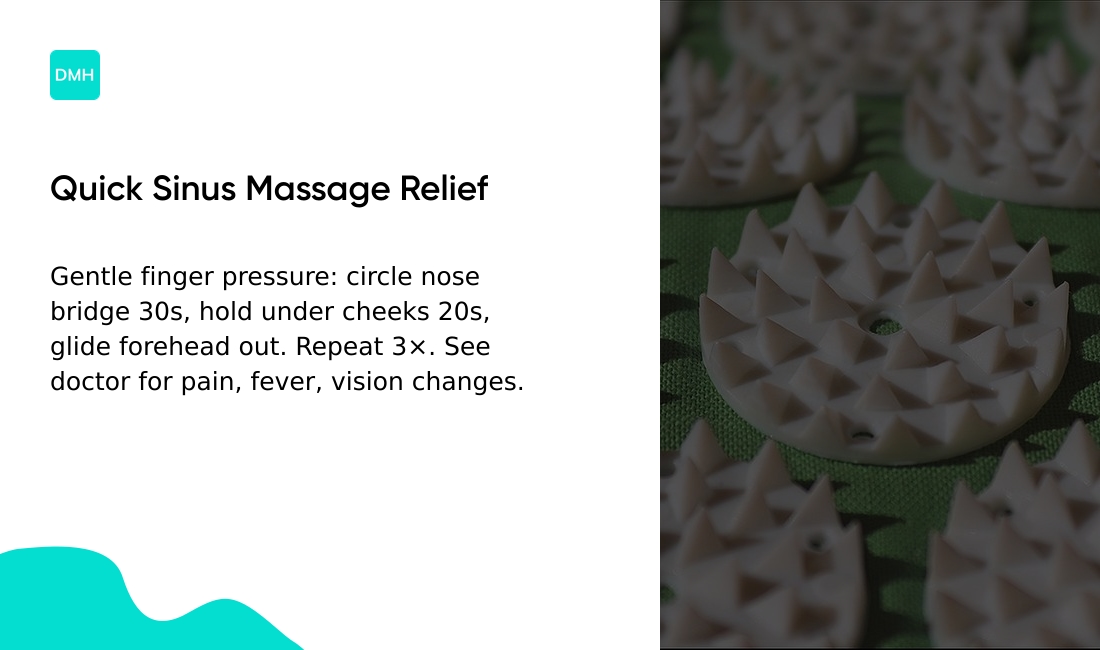
Simple massage steps can ease sinus pressure in minutes. This method explains how to relieve sinus pressure with gentle finger pressure.
Place your index fingers on the bridge of your nose. Press gently and make small circles for 30 seconds. Move your fingers to the hollow under each cheekbone and hold steady pressure while you breathe deeply for 20 seconds.
Glide your fingertips along the forehead from the center outward. Repeat three cycles. Gentle, steady pressure encourages sinus drainage and brings quick sinus headache relief.
You can check detailed diagrams of pressure points for headaches to guide your touch.
Try each point for about two minutes total. If pain, fever, or vision changes occur, see a doctor.
Home remedies for sinus pressure
Stay hydrated with fluids
If you want to know how to relieve sinus pressure, drink fluids regularly. Water thins secretions and promotes steady sinus drainage.
Warm teas like ginger and peppermint soothe membranes and help thin mucus. We recommend plain water, warm tea, and herbal infusions as a first step.
Ginger tea works fast because ginger contains gingerol, an anti-inflammatory compound. Sip small amounts often and aim for six to eight 8-ounce glasses daily (48–64 ounces).
Avoid alcohol and limit caffeine — those dehydrate you and worsen congestion. Pair fluids with a humidifier or saline nasal spray for faster nasal congestion relief.
Add a slice of lemon to water for mild vitamin C and better taste. If you use a neti pot, drink extra water after rinsing to help post-rinse drainage.
Start sipping warm water or tea now and notice pressure ease within hours.
Use a humidifier for sinus relief
We recommend a humidifier to ease sinus pressure while you sleep. It adds moisture that prevents nasal passages from drying and thins mucus so it drains.
Set humidity to 40-50% humidity to reduce congestion and nose irritation. Use distilled water to cut mineral buildup and run a hygrometer to check levels.
Clean the tank every 3 days and deep-clean weekly with white vinegar. Change water daily to avoid bacteria and mold that worsen congestion.
Cool-mist humidifiers work well at night for safety and comfort. Try one tonight to see how to relieve sinus pressure naturally. Set it to 45% and clean daily for steady nasal congestion relief and clearer breathing.
Essential oils for sinus congestion
We recommend eucalyptus, peppermint, and tea tree to help open airways fast and relieve sinus pressure.
Eucalyptus oil contains 1,8‑cineole, a compound that helps reduce inflammation quickly and thins mucus. Use 2–3 drops in a bowl of hot water for steam inhalation. Breathe gently for 10 minutes.
Peppermint delivers menthol, which gives a cooling sensation and supports nasal congestion relief. Tea tree offers mild antiseptic action. Those effects support sinus drainage techniques and sinus headache relief.
A short steam session with these oils clears your head fast. Diluted oils in a diffuser work well overnight for steady relief.
Safety tip: dilute with a carrier oil before skin contact and avoid direct inhalation for children and pregnant people.
Elevate your head when resting
We advise elevating your head while you sleep to ease sinus pressure. Gravity pulls mucus away from your sinuses, preventing pooling and cutting nighttime congestion.
Use a wedge pillow or two to three pillows. Aim for a 30-degree incline — this angle helps sinus drainage techniques work naturally.
This method gives fast nasal congestion relief. You’ll breathe easier and sleep with less pain. It’s a top home remedy for sinus pressure and often complements a saline rinse or humidifier.
Try this tonight. Learn more about why sinus colds get worse at night for additional insights. If you want a quick guide on sinus pressure relief, start here.
You’ll also like: How To Use Purple Dead Nettle For Allergies
Over-the-counter medications for sinus pressure
We recommend a shortlist of OTC medicines for quick sinus pressure relief. These target mucus, inflammation, and pain so you feel better fast.
For how to relieve sinus pressure fast, combine a nasal decongestant with a pain reliever and a saline rinse. Here’s what works:
| Medication Type | Examples | How It Helps | Onset Time |
|---|---|---|---|
| Decongestant for sinus | Pseudoephedrine (oral), Oxymetazoline (nasal) | Clears nasal passages | 30–60 min (oral), 5–10 min (nasal) |
| Pain relievers | Ibuprofen, Acetaminophen | Eases pressure and headache | 30–60 min |
| Antihistamines | Loratadine, Cetirizine, Diphenhydramine | Reduces allergy-driven congestion | 1–2 hours (non-drowsy), 30 min (drowsy) |
| Saline nasal spray | Saline rinses, Fluticasone (steroid) | Thins mucus, reduces inflammation | Minutes (saline), days (steroid) |
Oxymetazoline gives the fastest relief, but limit its use to three days to avoid rebound congestion. Ibuprofen 200–400 mg eases pressure and headache in 30–60 minutes. Use acetaminophen if NSAIDs cause issues.
If you have high blood pressure, heart disease, or are pregnant, avoid oral decongestants and ask your provider for alternatives. If symptoms last over ten days or get worse, see a doctor for further testing or prescription care.
You might also like: How Long Does A Sore Throat From Allergies Last
When should I see a doctor for sinus pressure
Seek medical care if sinus pressure lasts over 10 days or if your symptoms get worse. Severe facial pain, worsening tooth pain, or swelling near an eye require prompt evaluation.
A high fever above 101.3°F (38.5°C) or new vision changes count as urgent signs. Recurring infections need attention — three or more episodes in a year deserve an ENT referral.
When should you head straight to the ER? Immediate care is needed for severe pain, high fever, vision changes, or any sudden eye swelling.
Your doctor will examine your nose and face. They may order imaging like a CT scan when symptoms suggest complications. Treatment can include antibiotics for bacterial infection or a short steroid course to reduce inflammation.
Early care prevents avoidable complications. Manage mild cases at home with proven steps for sinus pressure relief and nasal congestion relief.
If you’re unsure which signs require emergency care, read this guide on when to go to hospital for sinus infection for clear thresholds and next steps.
If pain or vision problems appear, go to urgent care or the ER without delay. Ask your provider about sinus drainage techniques and prevention plans to keep symptoms from coming back.
You’ll also like: How To Stop Runny Nose When Working Out
Educational notice: This content is provided for informational and educational purposes only and is not intended as medical advice. Always consult a qualified healthcare professional for medical concerns.