Pancreatitis is inflammation of the pancreas that triggers upper abdominal pain and digestive problems.
The pancreas makes enzymes for digestion and hormones like insulin.
When inflammation strikes, it damages those critical functions and sets off pain.
What is pancreatitis
Acute pancreatitis hits suddenly with severe symptoms — think intense upper abdominal pain that often shoots straight to your back. (Not fun, trust me.)
Lipase levels typically jump more than three times the normal range in acute cases, giving doctors a useful lab clue. Chronic pancreatitis, on the other hand, produces ongoing episodic flare-ups. Patients report recurring pain, weight loss, and real trouble digesting fats.
Attacks often follow heavy alcohol use or fatty meals, so pancreatitis after eating fatty foods is pretty common. Jaundice, pale or oily stools, and dark urine point to bile duct involvement or advanced enzyme failure.
We recommend seeking care for sudden severe pain, persistent vomiting, fever, or yellowing of the skin. Sudden worsening pain and ongoing vomiting are clear reasons to head to the ER without delay. Acute cases can escalate fast, while chronic cases need steady management and monitoring.
Warning signs of pancreatitis you shouldn’t ignore
Severe upper abdominal pain radiating to the back
Pancreatitis when to worry begins with severe upper abdominal pain that often radiates straight to your back.
This pain feels sharp and steady. It commonly rates 7–10 out of 10 and can drag on for hours. You may get back pain that shows up after fatty meals or alcohol use.
Persistent pain not eased by over-the-counter meds or repeated vomiting needs urgent evaluation. Seek emergency care if pain worsens, you vomit without relief, have fever, jaundice, or trouble breathing.
Quick imaging and blood tests can show high lipase and confirm acute pancreatitis, so don’t delay. If you have gallstones or heavy drinking as risk factors, tell the clinician immediately — lipase often rises more than three times the normal limit in acute cases.
Sip small amounts of water only if you can keep it down, and get evaluated right away.
Persistent nausea and vomiting
Pancreatitis when to worry shows as persistent nausea and vomiting that just won’t quit.
Unrelenting nausea and vomiting are common symptoms. They reflect poor digestion and blocked pancreatic enzymes, raising the risk of dehydration and electrolyte loss.
What happens when you can’t keep anything down? If you vomit more than six times in 24 hours, feel faint, or can’t keep any fluids, seek emergency care for pancreatitis emergency symptoms. Persistent vomiting is a red flag that often needs IV fluids to prevent major complications — you can lose liters of fluid quickly.
Here’s what to do:
- Sip small amounts of clear fluid every 10 minutes.
- Avoid solid food until evaluated by a clinician.
- Go to the ER for severe belly pain, confusion, or low urine output.
We recommend urgent evaluation for dehydration, severe fluid loss, hospital fluid replacement, and a tailored symptom management plan when nausea and vomiting persist.
Fever and rapid heart rate
Pancreatitis when to worry: fever with pancreatitis, rapid heart rate, or chills mean you must seek urgent evaluation.
Temperatures above 38°C (100.4°F) or a heart rate over 100 beats per minute point to systemic inflammation or possible infection. We recommend immediate medical assessment.
Get checked if these signs appear with severe abdominal pain, persistent vomiting, low blood pressure, or trouble breathing. You shouldn’t wait at home — go to the ER or call emergency services and say you have pancreatitis with fever.
Blood tests often show a high white cell count and very high lipase. CRP above 150 mg/L at 48 hours suggests severe inflammation. Imaging can find complications like infected necrosis or blocked bile ducts.
Follow local guidance and see the NHS acute pancreatitis page for next steps.
Jaundice and changes in stool or urine
Pancreatitis when to worry: see a doctor if you get yellowing skin or eyes. Watch for pale stools and dark urine.
Blocked bile raises bilirubin above 2 mg/dL and causes jaundice. Pancreatic enzyme loss leads to greasy, foul-smelling stools and weight loss — these are common pancreatitis warning signs that suggest obstruction or insufficiency.
We recommend urgent blood tests and imaging for these signs. Early evaluation lowers complications and speeds recovery. If you have severe abdominal pain, fever, or persistent vomiting, go to the ER.
Jaundice plus worsening pain or fever may mean infection or necrosis. High bilirubin or a rising white blood cell count requires urgent attention and imaging. Don’t delay.
When should you go to the ER for pancreatitis
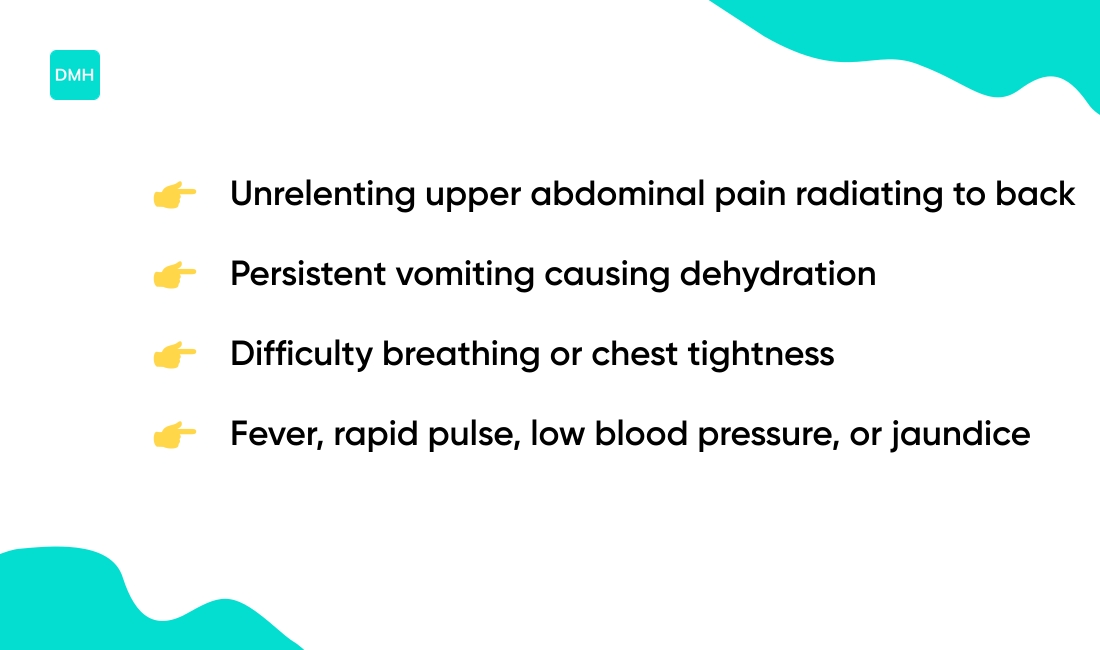
Pancreatitis when to worry: go to the ER for severe or rapidly worsening symptoms. Here’s what to watch for:
- Unrelenting pain in the upper abdomen that radiates to the back and doesn’t ease with pain meds.
- Persistent vomiting that prevents keeping fluids down for 24 hours or causes dehydration.
- Difficulty breathing or shortness of breath paired with chest tightness.
- Fever above 38°C, chills, or a heart rate over 100 beats per minute.
- Low blood pressure (systolic under 90 mmHg), fainting, or confusion.
- Tender, swollen abdomen or sudden jaundice with dark urine or pale stools.
If you have chest pain along with these signs, check our guide on when to go to the hospital for chest pain for next steps.
Severe upper abdominal pain, nausea, and vomiting often signal complications. Fever or rapid heart rate can mean infection or worsening inflammation.
Low blood pressure suggests shock risk and possible organ failure within days without treatment. I’d say early ER evaluation saves lives — call 911 or go to the nearest emergency department if you have any listed emergency symptom. Emergency teams give fluids, manage pain, monitor vitals, and order tests to guide care.
Symptoms that indicate severe pancreatitis
Pancreatitis when to worry: swollen, painful belly and fast breathing point to serious disease.
We urge prompt emergency evaluation for these signs. Delays often worsen outcomes, so early care cuts complications.
- Swollen tender abdomen with firm belly and rebound pain suggests internal inflammation or bleeding.
- Rapid breathing rate over 22 breaths per minute or oxygen saturation below 92% signals respiratory stress.
- Low blood pressure with systolic pressure under 90 mmHg or fast heart rate indicates shock and poor organ perfusion.
- Rising creatinine or falling urine output points to kidney injury. High lipase above three times normal supports severe acute pancreatitis.
- Yellow skin or dark urine with fever and confusion raises concern for infection or multi-organ failure.
If you spot any of these pancreatitis emergency symptoms, go to the ER now. If admission is needed, review steps to be admitted to the hospital overnight.
Gallstone pancreatitis vs alcoholic pancreatitis symptoms
You should spot different signs to know pancreatitis when to worry: timing, jaundice, and pain pattern.
We recommend urgent evaluation for sudden jaundice with severe pain. Gallstone pancreatitis tends to start suddenly after a meal. Patients report intense upper abdominal pain that radiates to the back and often shows jaundice or dark urine.
Gallstones account for about 40% of acute pancreatitis cases. Bile duct blockage may need ERCP or cholecystectomy within days. See practical guidance on when to go to hospital for gallbladder attack for overlap signs.
Alcoholic pancreatitis usually shows a long history of heavy drinking. Pain is recurring and persistent with weight loss and greasy stools from malabsorption. Labs may show chronically high lipase between attacks.
Treatment focuses on alcohol cessation, nutrition, and enzyme replacement when needed. Asking about alcohol use and prior gallbladder pain early speeds correct care.
Watch for fever, low blood pressure, or breathing trouble. Those are red flags for severe disease and need immediate hospital care.
When chronic pancreatitis flare-ups require emergency care
We put pancreatitis when to worry front and center. Severe chronic flare-ups can move from home care to emergency care fast.
Decide quickly when pain stays intense despite usual meds. Seek emergency care for any of these signs:
- Pancreatitis emergency symptoms: severe upper abdominal pain that radiates to the back and lasts more than 24 hours.
- Persistent nausea and vomiting that stops you from keeping fluids or pills down.
- Fever over 38°C, rapid heart rate above 100 bpm, or low blood pressure.
- Jaundice, dark urine, or pale, oily stools suggesting bile duct blockage or enzyme failure.
- Steatorrhea or frequent greasy stools plus unexplained weight loss of 5% or more over a month.
- New or worsening blood sugar problems, signs of dehydration, or trouble breathing.
- Lab red flag: lipase levels more than three times normal with worsening symptoms.
You shouldn’t wait when symptoms escalate. Quick hospital evaluation reduces risk of pancreatitis complications like infection or organ failure.
Not sure when to head to the ER? Go if pain is uncontrolled, vomiting prevents fluids, or you see fever, jaundice, or fainting. We recommend calling emergency services immediately in those cases.
Diagnostic markers and when to worry about test results
Pancreatitis when to worry: high lipase, white blood cell count, and CRP findings guide whether you need urgent care.
A lipase level three times the lab’s upper limit supports a diagnosis of acute pancreatitis. High lipase levels above 1,000 U/L often indicate more severe pancreatic injury and higher complication risk.
| Test Marker | Concerning Level | What It Means |
|---|---|---|
| Lipase | >3× upper limit (often >1,000 U/L) | Severe pancreatic injury; higher complication risk |
| White Blood Cell Count | >15,000/µL | Major inflammation or infection; may need IV fluids and antibiotics |
| CRP (C-Reactive Protein) | >150 mg/L at 48 hours | Severe course predicted; higher chance of necrosis |
Elevated white blood counts over 15,000/µL point to major inflammation or infection that may need IV fluids and antibiotics. Dangerous CRP levels above 150 mg/L at 48 hours predict a severe course and higher chance of necrosis; see more on dangerous CRP levels.
We recommend urgent imaging when markers rise with worsening pain, fever, low blood pressure, or breathing changes. A single mildly elevated number merits a repeat test, but rising values plus unrelenting pain deserve ER evaluation without delay.
Get a contrast CT when labs suggest severe disease or when abdominal exam shows tenderness or guarding. Seek emergency care for unrelenting upper abdominal pain, persistent vomiting, fever above 38°C, jaundice, or sudden lab spikes.
Read also: How to Get Rid of Heartburn Easily
Complications of pancreatitis to watch for
Pancreatitis when to worry means watching for dangerous complications. Here’s what can go wrong:
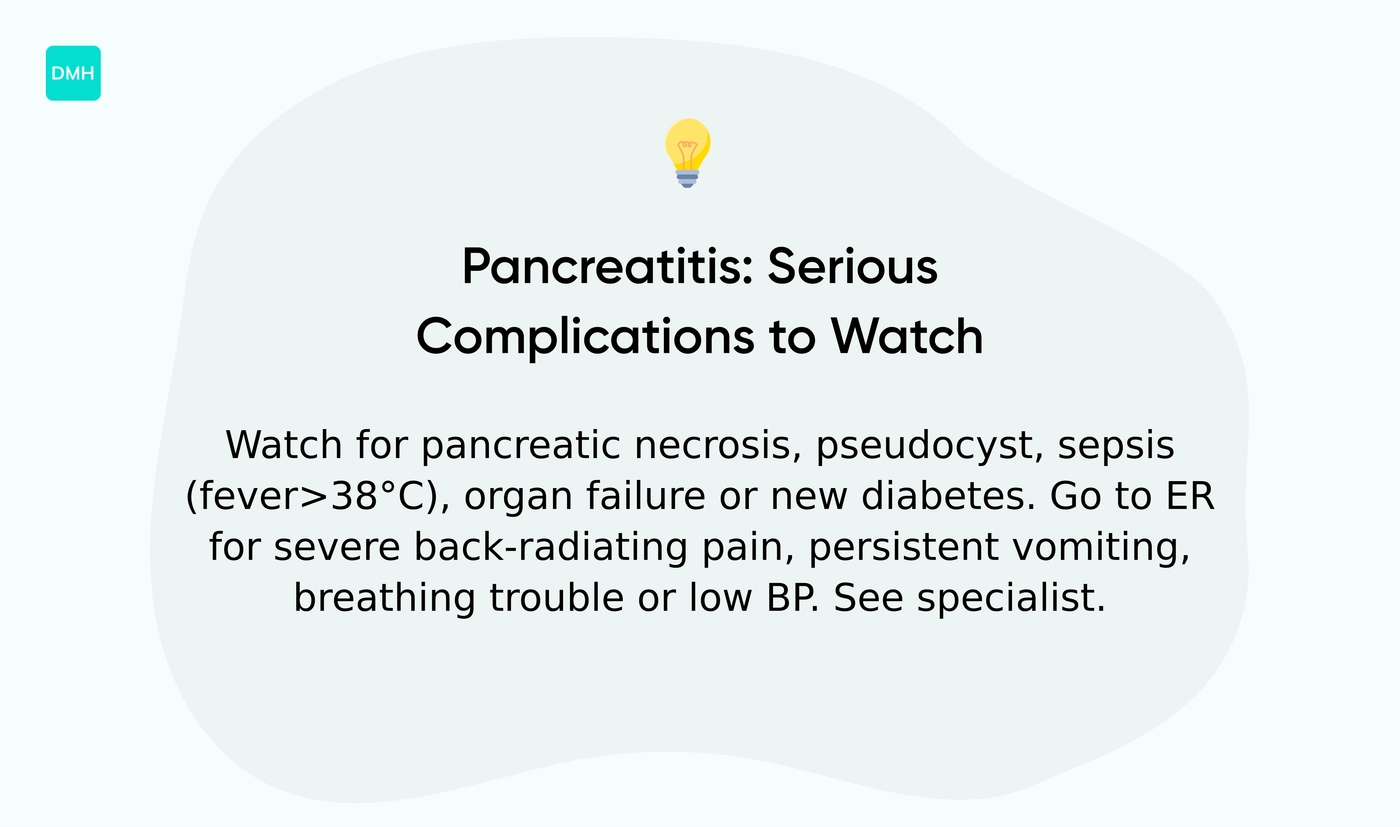
Pancreatic necrosis causes intense abdominal pain, fever, and low blood pressure. Seek specialized pancreatic care if imaging shows dead tissue or you have falling urine output or high fever.
Pancreatic pseudocyst may appear weeks after an attack. Look for a new belly lump, persistent nausea, or worsening vomiting — growing or infected pseudocysts need drainage.
Infection in the pancreas shows high fever over 38°C, chills, and a fast heart rate. These are pancreatitis emergency symptoms that require antibiotics and often surgical review.
Organ failure looks like breathing trouble, confusion, or rapidly falling blood pressure. ICU support is needed when organs start to fail. New diabetes appears as extreme thirst, frequent urination, and unexplained weight loss — you may need insulin if pancreatic damage reduces hormone output.
Unrelenting upper abdominal pain that radiates to the back, persistent vomiting, or trouble breathing are signs you should go to the ER for pancreatitis. Early referral to pancreatic specialists reduces long-term harm.
Read the Cleveland Clinic pancreatitis overview for more details.
Read also: Food To Avoid After Endoscopy
Can mild pancreatitis resolve at home and when should you worry
Pancreatitis when to worry: Yes — mild pancreatitis often improves at home with rest, short fasting, and a low-fat diet. Home care reduces inflammation and nausea.
- Avoid alcohol and fried or creamy foods for 48–72 hours.
- Sip clear fluids and progress to bland, low-fat meals as tolerated.
- Use acetaminophen or prescribed pain medicine for comfort.
Persistent pain beyond 24 hours or inability to keep fluids merits medical review. Common triggers include heavy fried meals, creamy sauces, red meat, nuts, and alcohol — symptoms often begin within 1–3 hours after eating fatty foods.
We recommend testing if pain lasts or symptoms worsen. A lipase above three times normal increases concern, and CRP over 150 mg/L at 48 hours suggests more inflammation.
When should you actually go to the ER? If vomiting persists, fever tops 38°C, jaundice appears, breathing feels hard, or you faint, go to the ER immediately. If you can’t tolerate liquids for 24 hours or pain wakes you from sleep, seek urgent care.
We manage mild cases with fluids, pain control, and dietary change. We admit patients who fail oral intake or show abnormal vitals. This approach keeps most people safe while catching those who need imaging, IV fluids, or specialist care — timely action prevents complications.
You’ll also like: What to Eat After Colonoscopy
Educational notice: This content is provided for informational and educational purposes only and is not intended as medical advice. Always consult a qualified healthcare professional for medical concerns.