Lower back pain can derail daily life faster than most people expect.
It shows as a dull ache, sharp twinge, or burning nerve pain and often makes sitting, work, or exercise difficult.
This guide explains causes, relief strategies, and when it’s time to see a doctor.
You’ll learn how to spot red flags like bowel or bladder changes, simple exercises and stretches for relief, and treatment options from home care to specialist referral.
By the end, you’ll be better equipped to manage flare-ups and know when to get urgent help.
What is lower back pain
Lower back pain refers to discomfort between the lower ribs and the buttocks. You may notice a dull ache, a sharp stab, or a burning sensation. Pain can stay local or spread into the hips, buttocks, or down the legs.
The lumbar spine supports most body weight and allows bending and twisting. Small changes in vertebrae, intervertebral discs, muscles, or nerves can cause pain.
Nerve compression may produce radiating pain, numbness, or weakness that follows a nerve path. About 80% of adults experience low back pain at some point, according to available research.
Episodes may last days or persist for weeks. Acute pain often follows a sudden movement or heavy lift. Chronic lower back pain lasts beyond 12 weeks and may involve degenerative changes.
Pain can limit walking, standing, sleep, or work performance. Severe signs include progressive leg weakness, new loss of bladder or bowel control, fever, or unexplained weight loss. Those signs may require urgent medical assessment.
Simple self-care can help mild episodes. Medical evaluation often begins with history and physical exam. Imaging such as X-ray or MRI may help when nerve involvement or structural disease is suspected.
Lower back pain causes commonly involve lumbar disc issues at L4-L5 or L5-S1. Targeted exercise and posture work may offer relief. Attention to the lumbar spine segments can guide diagnosis and further testing.
This content is for educational purposes only and is not medical advice. Always consult a qualified healthcare professional for medical advice specific to your situation.
What causes lower back pain
Muscle and ligament injuries
Lumbar strain refers to overstretching or tearing of muscles or ligaments in the lower back. Sudden twisting, heavy lifting, or prolonged poor posture can trigger this type of injury.
The injury causes inflammation and soft tissue damage. It can produce painful muscle spasm episodes near the lumbar spine.
Pain from this source often causes acute lower back pain and limits movement. Symptoms include localized soreness, stiffness, and reduced range of motion.
Muscle spasms may cause sharp, sudden pain. Recovery varies—many people improve within two to six weeks. For healing timelines, see how long a pulled muscle takes to heal.
This content is for educational purposes only and is not medical advice. Always consult a qualified healthcare professional for medical advice specific to your situation.
Herniated disc and nerve compression
A herniated disc occurs when soft disc material pushes through a tear in the outer disc ring. That material can press on nearby spinal nerve roots in the lumbar spine, most often at L4-L5 or L5-S1.
Pressure and inflammation may cause radiating leg pain that follows a nerve path. People often report sharp or burning sensations, numbness, tingling, or leg weakness.
Symptoms commonly appear with sitting, bending, coughing, or sneezing. Pain patterns can vary from person to person.
Nerve irritation can reduce muscle strength and alter reflexes. Sensory loss may affect one or both legs.
Conservative approaches such as targeted physical therapy, controlled stretching, and short-term medication may help with symptom relief. Degenerative changes can raise the risk—read about things to avoid for degenerative disc disease for related guidance.
This content is for educational purposes only and is not medical advice. Always consult a qualified healthcare professional for medical advice specific to your situation.
Degenerative conditions and structural issues
Degenerative conditions in the lumbar spine cause gradual wear of discs and joints. These changes can lead to persistent lower back pain and reduced mobility.
Spinal stenosis narrows the spinal canal and can compress nerve roots. Compression may cause leg pain, numbness, or weakness that worsens with walking.
Spondylolisthesis causes one vertebra to slip. Anterolisthesis refers to forward slippage and may destabilize the segment.
Osteoporosis weakens bone and raises the risk of compression fractures in the lumbar spine. Fractures often present as sudden lumbar pain that can become chronic.
According to available research, up to 80% of adults experience low back pain at some point. Age-related structural issues account for a larger share among people over 60.
MRI or X-ray can help identify structural causes. Conservative approaches may focus on pain control, mobility, and targeted exercises.
This content is for educational purposes only and is not medical advice. Always consult a qualified healthcare professional for medical advice specific to your situation.
Lower back pain can arise from routine activities that strain the lumbar spine. If you sit for long periods, your discs may face more pressure.
Some studies suggest disc pressure can rise by about 40% while seated compared with standing. Poor posture shifts load to spinal muscles and may cause lumbar spinal strain.
That can lead to muscle spasms and recurring pain episodes. Improper lifting with a rounded back increases risk of acute muscle or ligament injury.
Repetitive impact from running, when paired with weak hip muscles, may trigger back pain after running. Pregnancy and obesity increase front load and change spinal curvature. Those changes can raise the chance of chronic lower back pain and back spasms.
Improving posture may reduce strain. Learn how to improve your posture for better lumbar support.
This content is for informational purposes only and is not medical advice. Always consult a qualified healthcare professional for medical advice specific to your situation.
Symptoms and how to identify different types of lower back pain
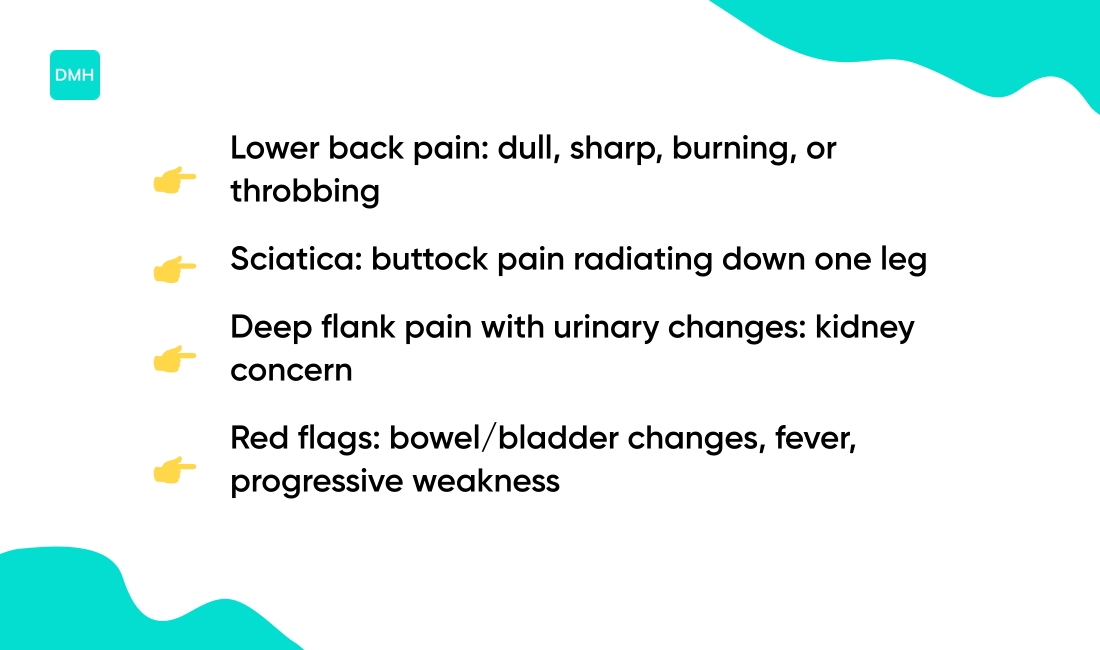
Lower back pain refers to discomfort between the lower ribs and the buttocks. It can feel dull, sharp, burning, or throbbing.
Stiffness and reduced range of motion are common. Muscle spasms can cause sudden, severe tightness. Numbness, tingling, or leg weakness may signal nerve involvement.
Pain that shoots below the knee suggests sciatica. Sciatic nerve pain typically starts in the buttock and travels down one leg. It may follow L4-L5 or L5-S1 nerve roots.
Have you noticed whether your pain changes with movement or stays constant?
| Pain Type | Key Features | Common Causes |
|---|---|---|
| Kidney flank pain | Deep flank discomfort under ribs; may come with urinary changes or fever | Kidney stones, infection |
| Lumbar muscle strain | Local tenderness and spasm; worsens with bending or lifting | Overuse, sudden twist, heavy lift |
| Sciatica | Shooting leg pain with numbness or weakness; worsens with coughing or sitting | Herniated disc, nerve compression |
Pain worse with sitting or forward bending commonly links to a herniated disc or nerve compression. Pain that eases with rest and stays tender at one spot usually stems from muscle or ligament injury.
Deep, steady flank pain that doesn’t change with movement may indicate kidney issues. Accompanying blood in the urine, fever, or painful urination tends to point toward urinary causes rather than musculoskeletal pain.
Nerve signs include dermatomal numbness and reflex change. L5 pain may appear on the top of the foot. S1 pain may affect the outer foot and ankle reflexes.
Persistent pain beyond six weeks may need evaluation. Red flags such as new bowel or bladder changes, fever, or progressive leg weakness warrant prompt medical attention.
This content is for educational purposes only and is not medical advice. Always consult a qualified healthcare professional for medical advice specific to your situation.
When to see a doctor for lower back pain
Some episodes of lower back pain improve with rest and simple care. But certain signs suggest urgent evaluation by a clinician or emergency care.
- Bowel or bladder loss. Sudden inability to pass urine or control bowel movements may signal cauda equina syndrome and needs immediate attention.
- Progressive leg weakness. Increasing weakness, numbness, or trouble walking over hours or days can indicate nerve compression. Seek prompt assessment.
- Severe unrelenting pain. Pain that wakes you at night or doesn’t ease with rest or typical pain relief may need imaging and specialist review.
- Fever above 100.4°F (38°C) with back pain may reflect infection of the spine or nearby structures.
- Unexplained weight loss greater than 5% of body weight over a few months may point to systemic disease linked to lumbar pain.
- Recent major trauma such as a fall from height or motor vehicle crash can cause fractures or spinal instability.
- History of cancer, immune suppression, or IV drug use raises the chance of serious spine pathology and warrants early evaluation.
Plus, if your pain differs from prior episodes and lasts over four weeks, it’s worth checking in with your doctor. The American Association of Neurological Surgeons offers patient information on red flags and evaluation.
This content is for educational purposes only and is not medical advice. Always consult a qualified healthcare professional for medical advice specific to your situation.
How is lower back pain diagnosed
A clinician begins with a detailed medical history review. Questions cover pain onset, location between lower ribs and buttocks, activities that worsen pain, past injuries, and any numbness or weakness.
Red-flag signs such as bowel or bladder changes, fever, progressive weakness, or recent major trauma receive immediate attention.
The physical exam follows. The clinician inspects posture and gait. They palpate the lumbar spine for tenderness and check for muscle spasms.
Range of motion tests assess bending and twisting. Movement tests such as the straight leg raise can suggest nerve root irritation or sciatica. Reflex checks and strength testing target L4, L5, and S1 nerve function.
Neurological testing may include sensory exams for numbness or tingling. Gait and balance tests look for functional impact. A brief functional assessment may measure how lower back pain limits sitting, standing, or lifting.
Imaging and electrodiagnostic tests have specific roles. X-rays often show fractures or advanced arthritis. MRI often identifies soft tissue issues like a herniated disc or nerve compression.
CT gives detailed bone views when MRI isn’t an option. EMG and nerve conduction studies help evaluate nerve damage or chronic radiculopathy.
Clinicians weigh findings before ordering tests to avoid unnecessary imaging for most acute lower back pain. Actually, about 90% of cases are non-specific and improve within 4–6 weeks without surgery, according to available research.
If you experience severe or worsening symptoms, seek prompt medical evaluation. This content is for educational purposes only and is not medical advice. Always consult a qualified healthcare professional for medical advice specific to your situation.
Lower back pain treatment and relief options
Immediate relief strategies and home remedies
Lower back pain often flares suddenly. Quick actions can provide relief and improve mobility.
Short rest combined with gentle movement may help. Prolonged bed rest tends to worsen stiffness—nobody wants that!
Many clinicians suggest brief ice sessions early on. Applying ice or heat for 15 minutes can help. Repeating every 1–2 hours throughout the initial 48 hours may provide benefit.
Once the initial 48 hours pass, moist heat for 15–20 minutes can relax tight muscles. Over-the-counter pain relievers such as NSAIDs or acetaminophen may offer temporary relief.
Reading labels and checking medical history helps avoid interactions. Leg pain or numbness may suggest sciatica and may require evaluation.
Lower back pain stretches may help mobility. Gentle lumbar stretches, such as knee-to-chest or pelvic tilts, performed slowly may reduce stiffness. Many people may tolerate five to ten slow repetitions.
Proper sleeping positions can ease overnight strain. Side sleeping with a pillow between the knees can keep the spine neutral. Back sleeping with a pillow under the knees may also reduce strain.
This content is for educational purposes only and is not medical advice. Always consult a qualified healthcare professional for medical advice specific to your situation.
Best exercises and stretches for lower back pain
Targeted exercises may reduce lower back pain by strengthening supporting muscles. Focus on pelvic stability, hip mobility, and spinal control.
Common moves include bridges, bird-dog variations, and modified planks with knees down. Guidance often suggests 10–15 repetitions and 2–3 sets for strength work.
Stretches aimed at the lumbar spine and hip flexors can ease tightness. Hold each stretch 20–30 seconds and repeat 2–4 times per side.
- Core muscle strengthening supports the spine and may reduce lumbar strain.
- Lumbar spine mobility exercises improve range of motion and reduce stiffness.
- Hip flexor stretch addresses common tightness linked to low back pain.
Sciatica pain relief may follow nerve-gliding moves with cautious progression. Individuals with a herniated disc or persistent back spasms may need tailored care.
What exercises feel manageable for your current pain level?
This content is for educational purposes only and is not medical advice. Always consult a qualified healthcare professional for medical advice specific to your situation.
Physical therapy and professional treatments
Physical therapy helps lower back pain with targeted exercises that build core strength and improve movement. Sessions often focus on lumbar stability and hip mobility.
Clinicians use hands-on techniques and soft tissue work known as manual therapy. These techniques aim to reduce stiffness and ease muscle spasms.
Therapists emphasize posture correction and functional training to change daily habits. Typical programs last 6–12 weeks with 1–3 visits per week.
When pain persists, you may ask your clinician about image-guided injections for radicular symptoms or about referral for chiropractic spinal manipulation. Some studies suggest injections can yield 30–50% short-term pain relief for nerve-related symptoms, but results vary from person to person.
This content is for educational purposes only and is not medical advice. Always consult a qualified healthcare professional for medical advice specific to your situation.
Medications and supportive devices
Medications and supportive devices can help manage acute and chronic lower back pain. They target inflammation, muscle spasm, and movement that worsens lumbar pain.
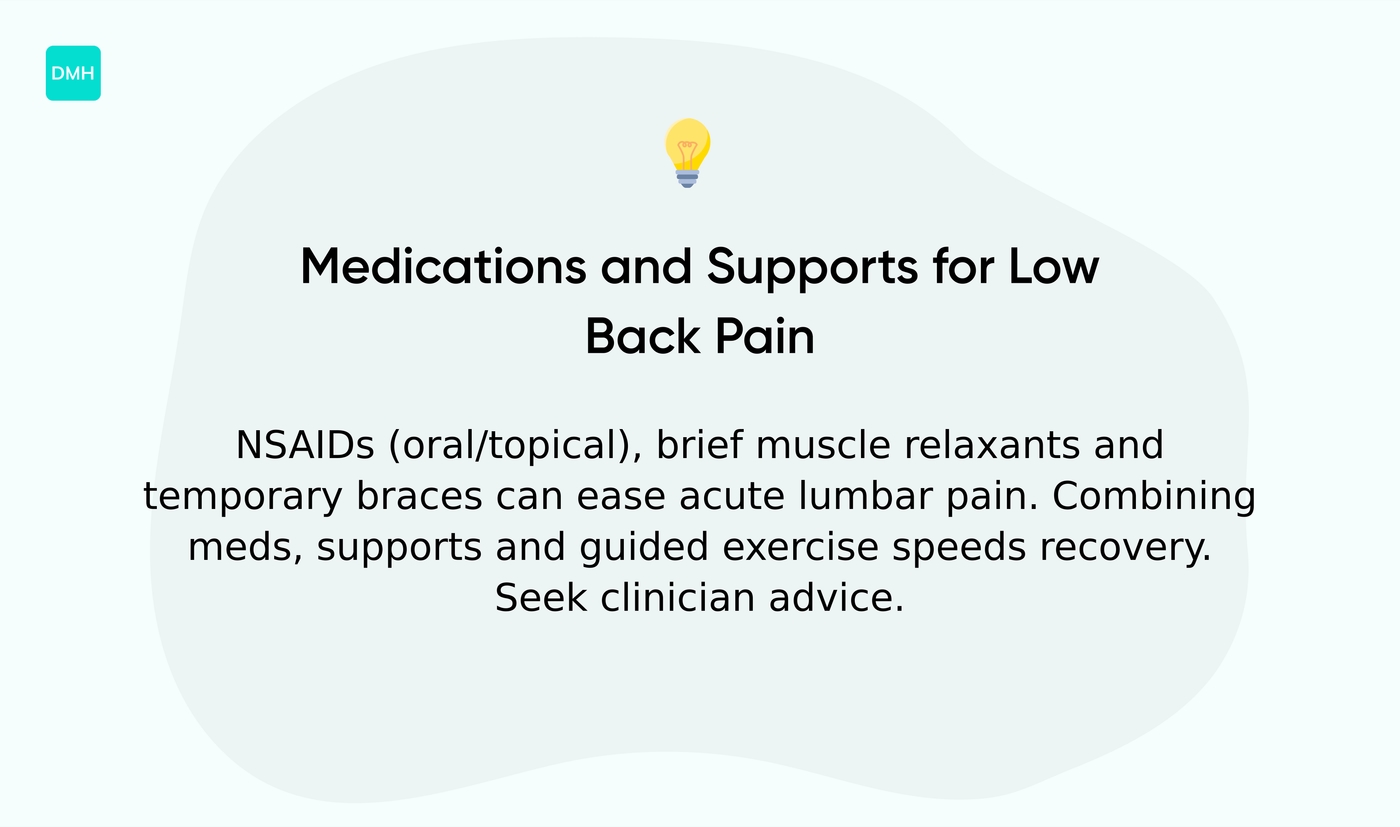
NSAIDs and analgesics such as ibuprofen or naproxen may reduce pain and stiffness for many people with lumbar pain. Topical NSAID gels or creams may give focused relief with lower systemic exposure.
Muscle relaxants may ease back spasms and help sleep during flare-ups. Some trials report modest short-term benefit for acute muscle spasm in the lower back.
Back braces and lumbar supports can limit painful motion and permit gradual return to activity. Evidence suggests short-term improvement in pain and function, with limited long-term gains.
Combining short medication courses, topical therapy, temporary support, and guided exercises may speed symptom relief for many people with lower back pain.
This content is for educational purposes only and is not medical advice. Always consult a qualified healthcare professional for medical advice specific to your situation.
Prevention and lifestyle modifications
Lower back pain can flare without warning. Small habits can make a meaningful difference over weeks and months.
Core strength exercises help support the lumbar spine. Short routines that total 150 minutes of moderate activity per week may lower flare-ups, according to WHO. Simple moves include 20–30 second planks and glute bridges done in sets of three.
Proper lifting technique reduces lumbar strain. Use a hip-hinge pattern, keep loads close to the body, and avoid twisting while lifting. Lifting lighter loads more often can limit sudden overload.
Ergonomic workspace setup eases pain when you sit for hours. Adjust chair height so hips sit level with knees. Place the monitor at eye level and use a lumbar support or rolled towel as needed.
Mattress choice may matter. Medium-firm mattresses often balance support and pressure relief. Replace mattresses older than eight years if they sag or cause morning stiffness.
Maintaining a healthy weight can reduce mechanical load on the spine. Bone strength also matters—learn more about strategies to prevent osteoporosis, which can influence back pain risk.
If pain persists, radiates to a leg, or causes weakness, seek medical evaluation.
This content is for educational purposes only and is not medical advice. Always consult a qualified healthcare professional for medical advice specific to your situation.
Acute vs chronic lower back pain
Lower back pain refers to discomfort between the lower ribs and the buttocks. Acute pain lasts less than six weeks. Chronic pain persists beyond 12 weeks.
Acute lower back pain often follows a specific event. Examples include lifting strain or a sudden twist. Most people report marked improvement within four to six weeks, according to available research.
Chronic lower back pain may follow unresolved acute pain or arise without a clear trigger. Some studies estimate about 20% of acute episodes develop into chronic pain.
Chronic cases commonly involve structural changes, nerve irritation, or persistent muscle imbalance.
Management differs by timeline. Acute care focuses on symptom control and gradual return to activity. Common approaches include short activity modification, pain relievers, cold or heat, and gentle stretches.
Chronic care emphasizes function and long-term strategies. Physical therapy, exercise programs over six to twelve weeks, posture work, and cognitive approaches may help. Interdisciplinary plans often produce better functional outcomes in many studies.
Prognosis varies from person to person. Acute episodes often resolve with conservative measures. Chronic cases may require ongoing management and specialist input.
If pain worsens, causes new weakness, or affects bowel or bladder function, seek urgent medical attention. Always consult a qualified healthcare professional for medical advice specific to your situation.
This content is for educational purposes only and is not medical advice.
You’ll also like: How To Prevent Kidney Stones: Complete Guide
Educational notice: This content is provided for informational and educational purposes only and is not intended as medical advice. Always consult a qualified healthcare professional for medical concerns.