Spotting what causes low potassium early can prevent mild symptoms from escalating into serious heart or muscle complications.
Low potassium (hypokalemia) matters because it’s often silent, stems from medications, diarrhea, vomiting, kidney issues, or poor diet, and it can disrupt normal heart rhythms and strength.
This post breaks down why potassium levels drop, how the body loses it, and which conditions and drugs most commonly cause low potassium.
You’ll get clear explanations of renal and endocrine causes, the magnesium connection, and when dehydration or alcohol use is to blame.
Practical signs to watch for, the tests clinicians use, and treatment approaches are also explained so you can spot problems early or discuss them knowledgeably with a provider.
You’ll also know when to seek medical care.
What is low potassium and how does it develop
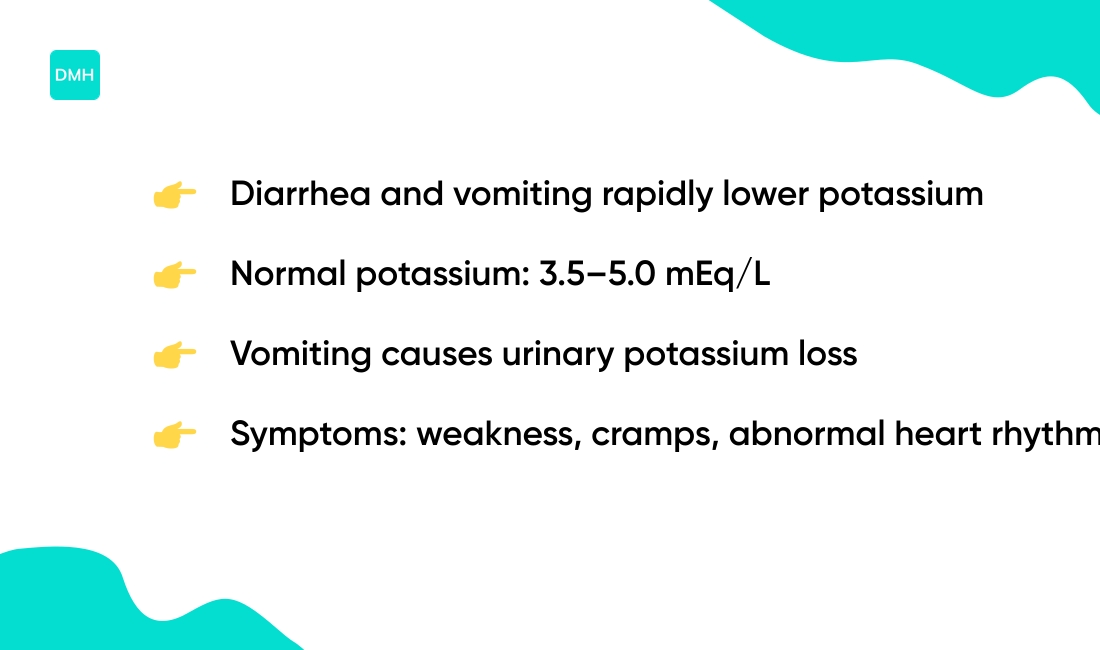
Hypokalemia, commonly called low potassium, describes a serum potassium concentration below 3.5 mEq/L. Normal adult ranges sit between 3.5 and 5.0 mEq/L.
Potassium supports nerve signals, muscle function, and heart rhythm. Small changes in blood potassium can change how cells fire.
Daily intake matters. Dietary guidelines suggest roughly 2,600 mg for adult females and 3,400 mg for adult males. Low intake may contribute to deficiency over weeks.
The kidneys control most potassium balance. Aldosterone and tubular function adjust how much potassium the kidneys excrete or retain. Disorders that increase urinary loss may produce hypokalemia.
Gastrointestinal losses also matter. Diarrhea, vomiting, and chronic laxative use cause rapid potassium depletion through the gut.
Cells shift potassium in or out of the bloodstream. Insulin and some hormones move potassium into cells, lowering serum levels without total body loss.
Common low potassium causes include poor diet, kidney potassium regulation problems, and large gastrointestinal losses. Some medications and hormonal disorders may drive losses or shifts.
Diagnosis relies on blood tests and context. Measuring urine potassium and reviewing medications helps identify the mechanism.
This summary explains mechanisms and typical ranges. Always consult a qualified healthcare professional for medical advice specific to an individual situation. Not medical advice, content for informational purposes only.
What are the most common causes of low potassium
What causes low potassium most often falls into three groups. These include kidney losses, gastrointestinal losses, and low dietary intake.
Excessive urinary loss refers to conditions that increase kidney potassium loss. Diuretics cause low potassium in many patients. Hyperaldosteronism and certain kidney disorders cause renal potassium wasting.
Gastrointestinal potassium loss covers vomiting, diarrhea, and chronic laxative use. Severe or prolonged GI losses can drop potassium quickly. Diarrhea causes low potassium in acute infections and chronic conditions.
Inadequate dietary intake appears when patients eat few potassium-rich foods. Eating disorders and malnutrition may lead to low potassium levels. Alcohol and dehydration can worsen these deficits.
Some medications and therapies shift potassium into cells or increase excretion. Insulin causes low potassium during rapid glucose shifts. Certain antibiotics and long-term laxative abuse may contribute to losses.
Low magnesium causes low potassium by preventing cellular potassium retention. Exercise-induced low potassium and temporary shifts may appear after intense activity.
This content is for educational purposes only. Always consult a qualified healthcare professional for medical advice specific to an individual case.
Which medications can cause low potassium
Do diuretics cause low potassium and how
Diuretics can cause low potassium by increasing urinary potassium loss.
Loop and thiazide diuretics commonly raise urine output. These water pills treat high blood pressure and heart failure. Actually, they’re among the most frequent medication-related causes of hypokalemia.
This mechanism explains one common answer to what causes low potassium. Normal serum potassium ranges from 3.5 to 5.0 mmol/L.
Diuretics boost sodium delivery to the distal nephron. That drives potassium secretion and lowers blood levels.
Increased urinary potassium excretion may produce muscle weakness, cramps, constipation, or irregular heartbeat.
Risk rises with higher doses, impaired kidney function, low dietary potassium, and other medications that increase potassium loss. Clinicians often monitor potassium with blood tests and adjust therapy or add supplements when needed.
Patients taking meds for lower blood pressure may require periodic checks. Hypokalemia risk can vary between individuals.
Always consult a qualified healthcare professional for medical advice specific to your situation.
Can insulin therapy cause low potassium
Insulin moves glucose into cells and draws potassium with it. This intracellular shift can lower blood potassium levels.
Normal serum potassium ranges from 3.5 to 5.0 mmol/L. Insulin therapy may reduce serum potassium by about 0.5–1.0 mmol/L within 30 to 60 minutes. Some studies suggest faster changes during aggressive treatment.
In diabetic ketoacidosis treatment, large IV insulin doses often follow fluid resuscitation. That setting raises the risk of insulin shifts potassium causing temporary hypokalemia risk. Low potassium may cause weakness and ECG changes.
Clinical teams commonly monitor potassium and replace it as needed. Evidence shows monitoring helps avoid dangerous drops, but responses can vary from person to person.
Always consult a qualified healthcare professional for medical advice specific to an individual case. Not medical advice, content for educational purposes.
Which antibiotics can lower potassium
Medications form part of what causes low potassium. Certain antibiotics may lower potassium by causing kidney tubular loss or by provoking vomiting and diarrhea.
Nephrotoxic agents can cause renal potassium wasting. Examples include aminoglycosides (gentamicin), amphotericin B, and high-dose penicillins such as piperacillin-tazobactam or carbenicillin.
Broad-spectrum antibiotics can trigger severe diarrhea or Clostridioides difficile infection. Large gastrointestinal losses from diarrhea can reduce potassium quickly.
Risk varies with dose, duration, baseline kidney function, and other drugs that affect electrolytes. Laboratory monitoring often identifies falling potassium before symptoms appear.
Always consult a qualified healthcare professional for medical advice specific to your situation. This content is for informational purposes only.
Do laxatives cause low potassium
Chronic laxative abuse is associated with low potassium, medically called hypokalemia. Normal serum potassium ranges from 3.5 to 5.0 mmol/L; values below 3.5 mmol/L define hypokalemia.
Stimulant and osmotic laxatives increase stool volume and frequency. That drives potassium loss in the stool and reduces total body potassium.
Ongoing losses can produce gastrointestinal potassium losses large enough to drop levels under 3.0 mmol/L. Levels below 2.5 mmol/L may lead to muscle weakness and heart rhythm changes.
Chronic use often causes imbalance of other electrolytes and may contribute to severe electrolyte depletion over weeks to months. Eating disorders and repeated overuse raise the risk.
This content is for informational purposes only. Always consult a qualified healthcare professional for medical advice specific to an individual situation.
Can diarrhea or vomiting lead to low potassium
If you have persistent diarrhea or vomiting, your potassium levels may fall rapidly. Ever wondered how quickly GI losses can affect your electrolytes?
Normal serum potassium ranges from 3.5 to 5.0 mEq/L. Values below 3.5 mEq/L define hypokalemia.
Stool and vomit contain potassium. Large losses create gastrointestinal potassium loss that outpaces intake.
High-volume diarrhea can remove several millimoles of potassium each day. That can cause acute potassium loss within days.
Frequent vomiting causes metabolic alkalosis. The kidneys respond in ways that increase urinary potassium loss and lead to rapid potassium depletion.
Chronic gastrointestinal losses raise the risk of persistent low potassium. Low magnesium may make recovery slower.
Muscle weakness, cramping, and heart rhythm changes may be associated with low potassium. Severity can vary from person to person.
If allergic reactions trigger ongoing diarrhea, see allergies cause diarrhea for related causes.
Some studies suggest aggressive fluid loss and prolonged vomiting are frequent hypokalemia triggers. Individual responses may vary.
This content is for informational purposes only. Always consult a qualified healthcare professional for medical advice specific to your situation.
What kidney problems cause low potassium
The kidneys control potassium balance through filtration and tubular reabsorption. Disturbances in kidney function may explain part of what causes low potassium.
Chronic kidney disease can alter potassium handling. Advanced stages often raise potassium. But early stages or concurrent diuretic use may produce potassium loss instead.
Renal tubular acidosis (RTA) describes defects in acid and electrolyte transport. Distal RTA (type 1) commonly causes urinary potassium wasting. Proximal RTA (type 2) may also lower serum potassium.
Inherited tubulopathies such as Bartter and Gitelman syndromes cause lifelong renal potassium wasting. Patients may have urinary potassium losses that exceed normal values. These disorders often include low magnesium with low potassium.
Hormonal and transport mechanisms drive renal potassium loss. Excess aldosterone increases distal potassium secretion. Increased sodium delivery to the distal nephron raises potassium excretion. Loop and thiazide diuretics mimic these effects and may aggravate renal losses.
Simple tests help distinguish renal causes from other losses. Urine potassium above 20 mEq/L or a transtubular potassium gradient above 7 suggests renal wasting. Clinicians may check serum magnesium, renin and aldosterone, and urinary electrolytes to clarify the mechanism.
This content is for informational purposes only and not medical advice. Always consult a qualified healthcare professional for medical advice specific to your situation.
Endocrine disorders that cause low potassium
How does hyperaldosteronism cause low potassium
Hyperaldosteronism means excess aldosterone from the adrenal glands. It’s a known cause of hypokalemia and sodium retention.
Aldosterone acts on principal cells in the distal nephron. It increases ENaC channels and Na+/K+ ATPase activity.
Distal nephron potassium secretion rises as sodium moves into cells. The lumen becomes more negative and potassium exits via ROMK channels.
Normal serum potassium ranges 3.5–5.0 mEq/L. Hypokalemia is below 3.5 mEq/L. Aldosterone excess may drop potassium under 3.0 mEq/L in persistent cases.
Patients may report muscle weakness, cramps, or fatigue with low potassium. If you have persistent low potassium, clinicians may check aldosterone and renin levels to identify the cause.
Always consult a qualified healthcare professional for medical advice specific to your situation.
Can Cushing’s syndrome lead to low potassium
Cushing’s syndrome may be associated with low potassium. Excess cortisol can bind mineralocorticoid receptors and act like aldosterone.
Elevated cortisol levels can increase sodium retention and cause urinary potassium loss. Kidneys then excrete more potassium through channels in the distal tubule.
Serum potassium may fall below the normal range of 3.5–5.0 mmol/L and, in some cases, drop under 3.0 mmol/L.
Patients with high ACTH or ectopic cortisol production often show larger shifts in electrolytes. Lab tests that measure urine potassium and serum aldosterone/cortisol ratios help identify renal potassium wasting. Treating the hormonal source usually corrects the imbalance over days to weeks.
This content is for informational purposes only and not medical advice. Always consult a qualified healthcare professional for medical advice specific to your situation.
Genetic conditions causing renal potassium wasting
Renal potassium wasting may result from inherited tubular disorders. Gitelman syndrome and Bartter syndrome cause chronic kidney potassium losses from birth.
Gitelman syndrome often presents in adolescence despite being congenital. Patients show low blood potassium and low magnesium. Urine calcium tends to be low. Population estimates suggest about 1 in 40,000 people may have it.
Bartter syndrome can present in the newborn period with severe salt and potassium loss. Urine calcium is often high. Growth and fluid balance may be affected. Overall prevalence is much lower than Gitelman.
Diagnosis relies on blood and urine electrolytes and genetic testing. Management focuses on replacing electrolytes and monitoring kidney function.
Responses vary from person to person. Always consult a qualified healthcare professional for medical advice specific to a situation. This content is for informational purposes only.
Can a poor diet cause low potassium
People often ask what causes low potassium and whether diet plays a role.
Dietary potassium intake may be associated with serum levels. Adults need about 4,700 mg daily, according to guidance.
Long-term low intake can contribute to hypokalemia. The kidneys try to conserve potassium, but they can’t fully make up for very low intake.
Poor dietary intake links to low potassium in several ways:
- Severe malnutrition reduces overall mineral stores
- Repeated vomiting or diarrhea accelerates losses
- Chronic laxative use can cause long-term depletion
- Eating disorders like bulimia cause cycles of purging that drive potassium down rapidly
Electrolyte loss from vomiting often leads to dangerous lows. Some conditions shift potassium into cells. Insulin therapy and high carbohydrate loads do this. Low magnesium makes it harder for the body to retain potassium.
Not all low potassium cases stem from diet. Medications and kidney problems often cause larger drops.
For people with poor appetite or rapid weight loss, dietary causes may be likely. Lab tests and urine studies help identify the cause.
Some nutrient overlaps appear with malnutrition and are discussed on the page about what vitamin deficiency causes you to crave salt.
Always consult a qualified healthcare professional for medical advice specific to your situation.
How does low magnesium lead to low potassium
Hypomagnesemia may be associated with persistent hypokalemia. Normal serum potassium ranges from about 3.5 to 5.0 mEq/L. Normal serum magnesium often sits near 1.7 to 2.2 mg/dL.
Low magnesium interferes with mechanisms that keep potassium inside cells and the body.
Magnesium helps control renal potassium secretion at the level of the kidney tubules. Low intracellular magnesium removes inhibition of renal potassium channels. That change increases urinary potassium loss. The result can be ongoing potassium loss despite supplements.
Magnesium also supports the sodium-potassium ATPase pump. Low magnesium can reduce pump activity. Reduced pump activity limits potassium uptake into cells. Cells keep less potassium, and blood levels fall.
Low magnesium causes measurable drops in serum potassium. Clinicians often note that replacing potassium alone may not correct hypokalemia. Repleting magnesium can raise potassium by 0.2 to 0.5 mEq/L in some patients.
Patients taking diuretics or having chronic diarrhea face higher risk.
Testing both electrolytes helps guide care. Lab interpretation may include supplements and blood test results for context. Supplements blood test results can clarify whether magnesium status affects potassium recovery.
Some studies suggest that correcting magnesium improves potassium repletion rates. Evidence varies and can differ by cause of loss. Always consult a qualified healthcare professional for medical advice specific to your situation.
Can dehydration cause low potassium levels
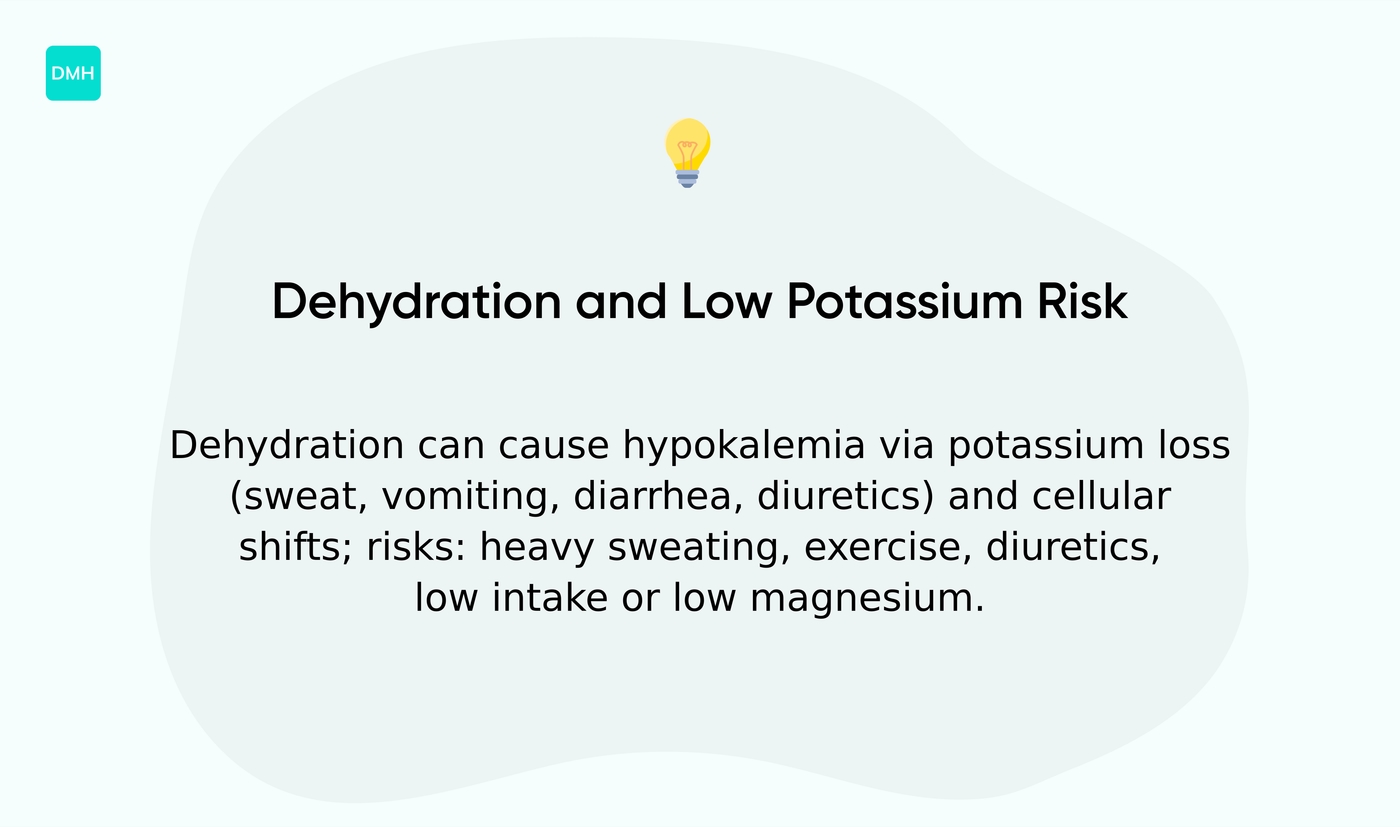
Dehydration can affect potassium balance and may contribute to low potassium levels in some people.
Normal serum potassium ranges from about 3.5 to 5.0 mmol/L. Levels below 3.5 mmol/L define hypokalemia. Fluid loss alone can lower blood volume and concentrate electrolytes.
Some studies suggest sweat may contain around 5 mmol/L potassium. Large sweat losses over hours can remove measurable potassium.
Dehydration often occurs with vomiting or diarrhea. Those conditions cause direct potassium loss from the gut. Diuretics and certain medicines increase urinary potassium loss. A person using diuretics who becomes dehydrated faces higher hypokalemia risk.
Dehydration may also trigger shifts of potassium into cells. Alkalosis, insulin release after rehydration, and beta-agonist exposure move potassium from blood to cells. Those shifts can drop serum potassium rapidly even if total body potassium is unchanged.
Risk rises with heavy exercise, hot climates, or prolonged vomiting and diarrhea. Athletes losing several liters of sweat can lose dozens of millimoles of potassium over a day. Low dietary intake or low magnesium levels make recovery slower and hypokalemia more likely.
For lab details about how dehydration alters blood tests, see dehydration blood test results for common patterns and values.
This content is for informational purposes only and may be associated with general evidence. Always consult a qualified healthcare professional for medical advice specific to your situation.
Does alcohol use lower potassium
Chronic heavy alcohol use may lower potassium levels. If you drink heavily, your potassium may fall over time.
Low blood potassium, or hypokalemia, refers to serum potassium below 3.5 mmol/L. Normal range is about 3.5 to 5.0 mmol/L.
Alcohol often leads to poor dietary intake. Many people with alcohol use disorder eat fewer potassium-rich foods such as bananas, potatoes, and leafy greens.
Recurrent vomiting episodes remove potassium from the body. Vomiting and diarrhea cause rapid losses and can produce acute hypokalemia.
Alcohol can irritate the gut and trigger diarrhea. Gastrointestinal losses may lower potassium within days.
Alcohol alters kidney handling of electrolytes and fluid. This may cause impaired kidney function and renal potassium wasting in some patients.
Low magnesium often occurs with heavy drinking and makes potassium repletion harder. Some studies suggest rates of hypokalemia among hospitalized people with alcohol-related illness range from about 10% to 30%.
Low potassium can cause muscle weakness and abnormal heart rhythms. Evaluation usually requires blood tests, ECG, and assessment of fluid and magnesium status.
Always consult a qualified healthcare professional for advice specific to your situation. Not medical advice; content for educational purposes only.
Are there temporary causes of low potassium
Transient hypokalemia may follow events that shift potassium into cells or cause short-term losses. Normal serum potassium ranges from 3.5 to 5.0 mEq/L.
Intense physical activity can cause brief drops in serum potassium. Some studies suggest high-intensity exercise can lower levels by about 0.1–0.5 mEq/L in the short term. This is often reversible within hours of rest and rehydration.
Medications and treatments can prompt temporary changes. Insulin and beta-agonists drive potassium into cells and can create rapid falls in blood potassium during treatment of high blood sugar or asthma.
| Temporary Cause | Mechanism | Recovery Time |
|---|---|---|
| Exercise-induced hypokalemia | Heavy exertion and sweat losses | Hours with rest and fluids |
| Intracellular potassium shifts | Insulin, alkalosis, or beta-agonists | Hours to days |
| Reversible potassium losses | Short bouts of vomiting, diarrhea, or diuretics | Days once trigger stops |
Folate deficiency has been reported in some cases alongside low potassium, though the link appears variable and may differ by population. Refeeding after prolonged fasting can produce marked intracellular shifts and transient hypokalemia.
Electrolyte recovery often occurs within days with correction of the trigger. Individual responses vary and underlying disorders can change risk.
Always consult a qualified healthcare professional for medical advice specific to a situation. Not medical advice; content for educational purposes only.
What medical tests identify the cause of low potassium
To find what causes low potassium, clinicians use targeted tests. These tests narrow down urinary loss, shifts into cells, or poor intake.
Blood tests measure the serum potassium level. Normal range is about 3.5–5.0 mEq/L. Labs often include sodium, chloride, bicarbonate, creatinine and magnesium. A low magnesium level may explain persistent potassium loss.
Learn about the chloride blood test as part of this panel.
Urine testing helps separate renal from nonrenal losses. A 24-hour urine potassium above 20 mEq/day suggests renal wasting. A spot urine potassium-to-creatinine ratio over 13 mEq/g points the same way. Order a urine potassium test when lab values remain unclear.
An ECG detects electrical effects on the heart. Look for flattened T waves, prominent U waves, ST depression and arrhythmias. Severe hypokalemia under about 2.5 mEq/L raises arrhythmia risk.
Specialized tests include plasma renin and aldosterone for hyperaldosteronism. Measure cortisol if Cushing’s syndrome is suspected. Genetic testing can identify Gitelman or Bartter syndromes. Imaging or endocrine referral may follow abnormal hormone results.
Always consult a qualified healthcare professional for medical advice specific to your situation. This content is for informational purposes only.
Educational notice: This content is provided for informational and educational purposes only and is not intended as medical advice. Always consult a qualified healthcare professional for medical concerns.