Low hemoglobin can turn simple tasks into marathon efforts and leave people unsure why they’re so tired.
It’s not just fatigue—low hemoglobin means the blood isn’t carrying enough oxygen to tissues, which can cause breathlessness, dizziness, and other worrying symptoms.
This article explains common causes (from iron deficiency and vitamin B12 problems to chronic disease and genetic disorders), how hemoglobin is tested, and what treatment options exist.
You’ll find practical steps for how to increase hemoglobin quickly and sustainably, including diet, supplements, and when medical treatment is needed.
Expect clear information on normal hemoglobin levels for men, women, children, and pregnant people, and guidance on when to seek immediate care.
By the end, you will understand likely causes of low hemoglobin, how tests are interpreted, and realistic timelines for recovery.
What is low hemoglobin
Hemoglobin is a protein inside red blood cells. It binds oxygen in the lungs and releases it to tissues.
Low hemoglobin describes a lower-than-normal hemoglobin concentration. Medicine often uses the term anemia to describe that state. Low hemoglobin reduces oxygen delivery to organs, which can cause fatigue, shortness of breath, dizziness, and pale skin.
Levels below about 13 g/dL for men and 12 g/dL for women often indicate low hemoglobin, according to the World Health Organization. Low hemoglobin may be associated with iron deficiency, vitamin B12 or folate lack, blood loss, chronic disease, or inherited disorders such as thalassemia or sickle cell disease.
Detecting low hemoglobin usually involves a hemoglobin test within a complete blood count. Additional tests may assess iron stores and red blood cell size. Low hemoglobin can signal an underlying health issue that may need medical evaluation.
Not medical advice; content for educational purposes. Consult a healthcare professional. Always consult a qualified healthcare professional for medical advice specific to your situation.
What is a normal hemoglobin level
Normal hemoglobin values vary by age, sex, and pregnancy status. Hemoglobin carries oxygen in red blood cells, so low hemoglobin often signals anemia or another underlying issue.
| Population | Normal Range (g/dL) | Anemia Threshold (g/dL) |
|---|---|---|
| Adult men | 13.8–17.2 | Below 13.0 |
| Adult women | 12.1–15.1 | Below 12.0 |
| Pregnant (1st/3rd trimester) | 11.0–13.0 | Below 11.0 |
| Pregnant (2nd trimester) | 10.5–13.0 | Below 10.5 |
| Newborns | 14.0–24.0 | Varies by age |
| Children (1–12 years) | 10.0–14.0 | Below 11.0 |
Values below about 8 g/dL often indicate severe anemia. Such levels may cause pronounced fatigue, shortness of breath, chest pain, or fainting—these are examples of dangerously low levels.
A hemoglobin of 8 g/dL may mean transfusion or urgent management is considered depending on symptoms and cause. Causes may include iron deficiency anemia, vitamin B12 deficiency, blood loss, chronic disease, or bone marrow problems. A hemoglobin test appears on a CBC and pairs with hematocrit and ferritin to clarify diagnosis.
Not medical advice; content for educational purposes. Consult a healthcare professional. Always consult a qualified healthcare professional for medical advice specific to your situation.
What are the symptoms of low hemoglobin
Low hemoglobin means fewer red blood cells carry oxygen to tissues. Symptoms can vary from person to person and may be subtle at first. (You might not even notice until you’re halfway up the stairs and gasping for air!)
- Fatigue and weakness. Energy drops and tasks feel harder. Symptoms often become noticeable when hemoglobin falls below about 10 g/dL.
- Shortness of breath. Breathing becomes quick during light activity or at rest.
- Rapid heartbeat. The heart beats faster to meet oxygen needs.
- Pale skin or pale inner eyelids. Mucous membranes may look less pink than usual.
- Headaches and lightheadedness. Head pain may appear with low iron levels; see does anemia cause headaches for discussion of possible links.
- Dizziness or fainting spells. Feeling faint may occur with activity or when standing quickly.
- Cold hands and feet. Extremities may feel persistently cool.
- Brittle nails or hair loss. Nails may become fragile and break easily.
- Concentration problems and reduced work capacity. Cognitive focus can decline with low oxygen delivery.
Symptom severity depends on hemoglobin level, the speed of decline, and individual factors. Not medical advice; content for educational purposes. Consult a healthcare professional.
Always consult a qualified healthcare professional for medical advice specific to your situation.
What causes low hemoglobin
Iron deficiency anemia
Iron deficiency anemia occurs when the body lacks enough iron to make normal hemoglobin. Low hemoglobin reduces oxygen delivery and often signals an underlying problem.
Common causes include inadequate iron intake, poor absorption, blood loss from heavy periods or ulcers, and increased needs during pregnancy. Heavy menstrual bleeding often exceeds 60–80 mL per cycle and can deplete iron stores over months. Pregnancy raises iron needs; daily requirements may rise to about 27 mg, according to NIH guidance.
Poor absorption may follow celiac disease, gastric surgery, or long-term antacid use. Chronic stomach ulcers can cause ongoing blood loss. Symptoms often mirror other anemias and include fatigue, pale skin, rapid heartbeat, and headaches. Read more on how headaches link with low iron at can low iron cause headaches.
Ferritin and a CBC often help confirm iron deficiency. Low ferritin usually indicates depleted iron stores. Not medical advice; content for educational purposes. Always consult a qualified healthcare professional for medical advice specific to your situation.
Vitamin B12 and folate deficiency
Vitamin B12 and folate are needed for DNA synthesis during red blood cell production. Vitamin B12 deficiency and folate deficiency anemia interrupt cell division and create fewer, larger red blood cells.
That process may lead to low hemoglobin and symptoms such as fatigue, pale skin, and shortness of breath. Lab findings often show a high MCV, commonly above 100 fL, with reduced hemoglobin levels.
Dietary causes include low intake of animal products for B12 and inadequate green leafy vegetables or fortified grains for folate. Absorption-related causes include pernicious anemia from loss of intrinsic factor, gastric surgery, celiac disease, and long-term use of metformin or proton pump inhibitors.
B12 stores can take years to deplete; folate stores may fall within months, so onset can vary by case. Evaluation often uses serum B12, red cell folate, and methylmalonic acid to clarify the deficit. Not medical advice; content for educational purposes. Consult a healthcare professional.
Chronic diseases and inflammation
Chronic diseases can cause low hemoglobin by changing how the body makes and uses blood. Kidney disease may reduce erythropoietin production and lower hemoglobin.
Cancer can bleed or invade bone marrow and impair production; see what type of cancer causes low hemoglobin for specifics. Rheumatoid arthritis and other inflammatory conditions raise hepcidin, which causes iron sequestration and lowers available iron despite normal ferritin.
HIV/AIDS can suppress the marrow through infection and some medications. Liver disease may enlarge the spleen and destroy cells faster. Diabetes can create low-grade inflammation that affects production, while hypothyroidism may reduce metabolic signals that support red blood cell formation.
You may see hemoglobin drop to levels around 8 g/dL in advanced cases, which often prompts urgent evaluation. Not medical advice; content for educational purposes. Consult a healthcare professional.
Genetic conditions and hemolytic anemias
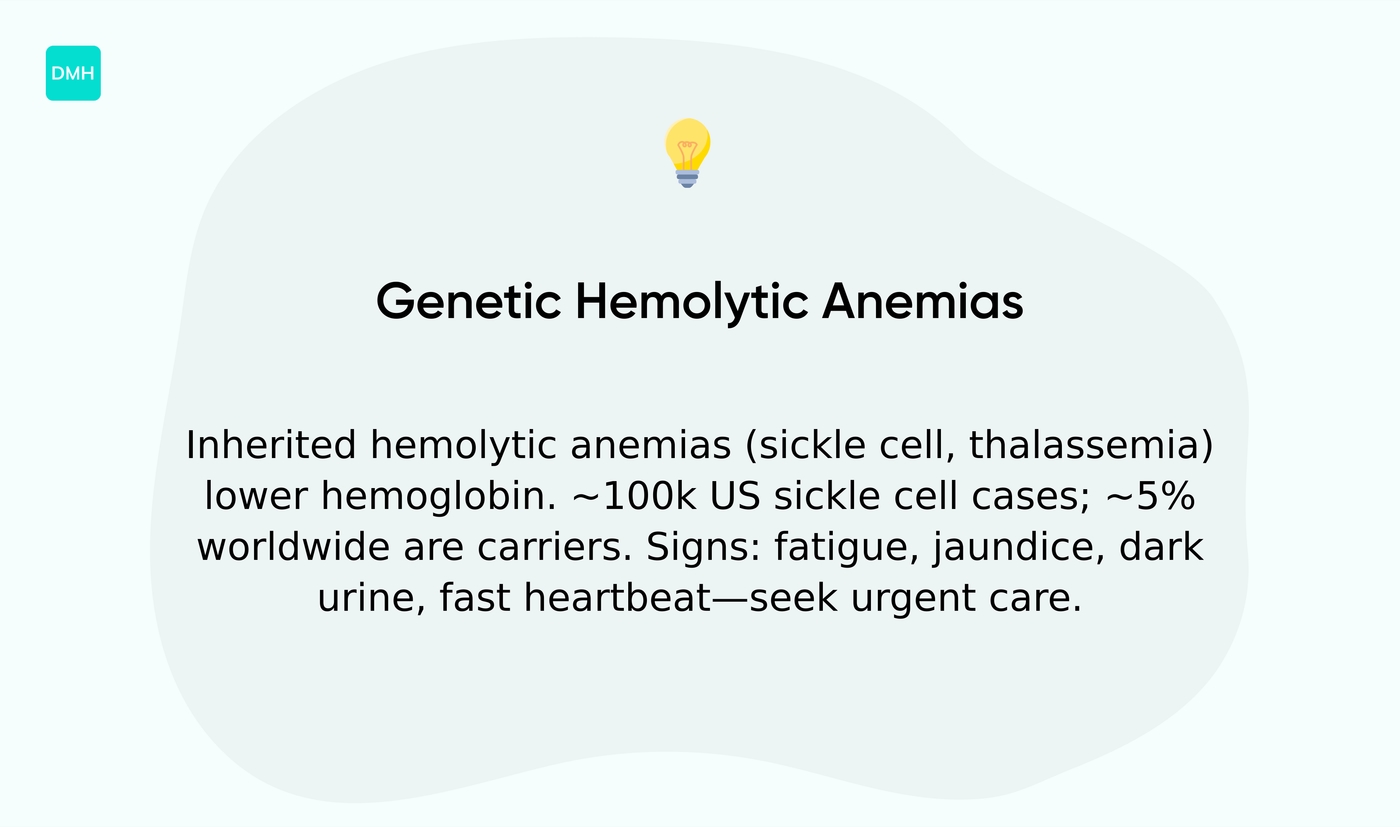
Inherited blood disorders can cause low hemoglobin. They may affect hemoglobin structure or shorten red blood cell lifespan.
Sickle cell anemia alters hemoglobin shape and may trigger hemolysis. Thalassemia, including thalassemia major, reduces hemoglobin production and causes chronic anemia. Autoimmune and inherited hemolytic anemias destroy red blood cells quickly, and bone marrow may not replace cells fast enough.
Sickle cell disease affects about 100,000 people in the United States, according to the CDC. About 5% of the global population carry a significant hemoglobin disorder, per WHO. You may notice fatigue, jaundice, dark urine, or rapid heartbeat. Low hemoglobin symptoms that appear severe may need urgent evaluation.
Not medical advice; content for educational purposes. Consult a healthcare professional. Always consult a qualified healthcare professional for medical advice specific to your situation.
Bone marrow disorders and medications
Bone marrow produces red blood cells. Hemoglobin in those cells carries oxygen. Aplastic anemia means marrow fails to make enough blood cells, and hemoglobin may fall sharply in severe cases.
Typical thresholds: under 12 g/dL for women, under 13 g/dL for men. Severe marrow failure may lower levels below 8 g/dL. Leukemia is a cancer of blood-forming cells that can crowd marrow, so red cell production drops and anemia symptoms appear.
Chemotherapy and some medications suppress marrow activity. Drug groups linked to suppression include certain chemotherapy agents, immunosuppressants, and some antibiotics. Damage to hematopoietic stem cells reduces erythropoiesis and shortens red cell life. That process can cause a low red blood cell count and low hemoglobin.
Low hemoglobin symptoms may include fatigue, shortness of breath, and pale skin. Not medical advice; content for educational purposes. Consult a healthcare professional.
Low hemoglobin in specific populations
Low hemoglobin in women
Women may be more susceptible to low hemoglobin in women because of monthly blood loss from menstruation and higher iron needs in pregnancy. Repeated heavy periods and multiple pregnancies can reduce iron stores over time.
Normal hemoglobin levels for non-pregnant women are about 12.0–15.5 g/dL. Pregnancy can lower hemoglobin; anemia in pregnancy is often defined as hemoglobin below 11.0 g/dL according to WHO. Levels under 8 g/dL may be considered severe and may require urgent evaluation.
Some estimates suggest iron deficiency may account for roughly 50% of anemia cases worldwide. Loss of iron through bleeding is a common mechanism for low hemoglobin in women. Heavy periods that soak a pad or tampon every 1–2 hours, or that last longer than seven days, may signal excessive blood loss. Such bleeding can lead to iron deficiency anemia and symptoms like fatigue or dizziness.
Not medical advice; content for educational purposes. Consult a healthcare professional. Always consult a qualified healthcare professional for medical advice specific to your situation.
Low hemoglobin in men
Low hemoglobin in men often signals blood loss or chronic health conditions. Occult gastrointestinal bleeding can lower hemoglobin gradually over months.
Ulcers, colon polyps, or cancer may cause this bleeding. Some studies suggest occult gastrointestinal bleeding may account for many unexplained cases in older men. For example, a colonoscopy may identify polyps or tumors that cause slow bleeding. (Let’s face it—nobody loves that prep, but it can be a lifesaver.)
Symptoms can be subtle. Kidney disease, inflammatory disorders, and long-term infections can reduce red blood cell production. Nutritional deficiencies like iron deficiency anemia can affect men too. Marked low hemoglobin may indicate serious underlying issues such as malignancy or bone marrow disease.
Evaluation often includes a CBC, iron studies, and imaging as needed. Not medical advice; content for educational purposes. Consult a healthcare professional. Always consult a qualified healthcare professional for medical advice specific to your situation.
Low hemoglobin during pregnancy
Hemoglobin often falls during pregnancy due to blood volume changes. Maternal plasma volume may increase about 40–50%, while red blood cell mass may rise about 20–30%. The net effect may lower hemoglobin by about 1–1.5 g/dL.
The normal hemoglobin levels threshold may differ by trimester. According to WHO, anemia in pregnancy is hemoglobin below 11 g/dL. Second-trimester cutoff may be 10.5 g/dL. Levels that may be dangerous include hemoglobin below 7–8 g/dL.
Severe anemia may be associated with maternal fatigue, shortness of breath, and increased transfusion need. Low maternal hemoglobin may be associated with preterm birth and low birth weight. Routine monitoring with hemoglobin tests and ferritin checks may identify iron deficiency. Iron deficiency anemia is a common cause. Tracking symptoms such as low hemoglobin symptoms can guide evaluation.
Not medical advice; content for educational purposes. Consult a healthcare professional.
Low hemoglobin in children
Low hemoglobin in children often reflects anemia. Hemoglobin carries oxygen in red blood cells. Common causes include poor dietary iron, iron deficiency anemia, rapid growth, chronic illness, and inherited disorders.
According to the WHO, iron deficiency may account for about 50% of pediatric anemia cases worldwide. Infants and toddlers have higher iron needs during rapid growth phases. A toddler who drinks excess cow’s milk may develop low iron and anemia symptoms. (You know, that classic case of too much milk crowding out iron-rich foods.)
Signs may include fatigue, pale skin, fast breathing with activity, poor weight gain, and slow development. Low hemoglobin in a child may be associated with underlying conditions and often needs medical evaluation required to identify the cause.
Not medical advice; content for educational purposes. Consult a healthcare professional. Always consult a qualified healthcare professional for medical advice specific to your situation.
How is hemoglobin tested
Clinicians draw a small blood sample from a vein. Labs run a complete blood count or CBC. The CBC reports hemoglobin and hematocrit values.
Hemoglobin measures oxygen-carrying protein in red blood cells. Hematocrit shows red cell proportion of blood. Hemoglobin below about 12 g/dL in women and 13 g/dL in men is often labeled low.
The CBC gives a mean cell size called mean corpuscular volume (MCV). A low MCV may be associated with iron deficiency anemia. A high MCV may be associated with B12 or folate deficiency.
Iron studies add depth. Low ferritin often points to depleted iron stores. Ferritin under 30 ng/mL commonly suggests low iron. Low serum iron level and transferrin saturation below 15–20% may indicate iron deficiency.
Clinicians may request a blood film. A stained slide shows red cell shape and size. Blood smear analysis can reveal sickle forms, microcytosis, or cell fragments tied to hemolysis or marrow problems. Interpreting results requires clinical context—single tests may not tell the full story.
Not medical advice; content for educational purposes. Consult a qualified healthcare professional for medical advice specific to your situation.
How is low hemoglobin treated
Low hemoglobin management targets underlying causes and raises red blood cell levels. Oral iron therapy may be used for iron deficiency. Hemoglobin can rise by about 1 g/dL every 2–3 weeks with effective oral iron.
Intravenous iron may be used when absorption is poor or oral iron isn’t tolerated. Dietary changes focus on iron-rich foods, vitamin C for absorption, and balanced B12 and folate sources. Vitamin B12 supplementation and folate replacement may help deficiency-related anemia caused by poor intake or absorption.
Active bleeding might require procedures to locate and stop blood loss. Surgical or endoscopic care can be part of the plan. Chronic conditions that cause low hemoglobin can be managed to reduce anemia. Erythropoiesis-stimulating agents may be used in some kidney disease cases.
Blood transfusion therapy may be considered for very low hemoglobin, often around 7–8 g/dL, but thresholds vary by patient and guideline. Symptom improvement can appear within weeks, though full restoration of iron stores often takes several months.
Not medical advice; content for educational purposes. Always consult a qualified healthcare professional for medical advice specific to your situation.
Read also: How Supplements Affect Blood Test Results: Guide
What foods help raise hemoglobin
Low hemoglobin may improve with targeted dietary choices. Diet can support correction of mild iron deficiency anemia.
- Iron-rich foods: Red meat provides heme iron that absorbs well. A 100 g serving of cooked beef supplies about 2.5–3 mg of iron. Lentils and beans supply non-heme iron, roughly 3 mg per 100 g cooked. Spinach and other dark leafy greens contain iron and folate.
- Vitamin C: Vitamin C boosts non-heme iron absorption. A medium orange supplies about 70 mg of vitamin C. Pairing citrus or bell pepper with legumes can increase iron uptake.
- B12 and folate: Vitamin B12 appears in meat, fish, dairy, and eggs. Folate appears in leafy greens, legumes, and fortified grains. Deficiencies in either nutrient can cause low hemoglobin and low red blood cell count.
Tannins in tea and coffee can lower iron absorption when consumed with meals. Calcium-rich foods may reduce iron uptake when eaten at the same time. (So maybe skip the latte with your steak dinner.)
Diet alone may correct mild cases. Severe or persistent low hemoglobin often requires testing, supplements, or treatment of underlying causes. Time to improvement can vary from weeks to months depending on cause and therapy.
Not medical advice; content for educational purposes. Consult a healthcare professional. Always consult a qualified healthcare professional for medical advice specific to your situation.
Read also: Is It Serious To Be Referred To A Hematologist
How can I increase my hemoglobin quickly
Speed of recovery depends on the cause of low hemoglobin and existing iron stores. Oral iron supplements may raise hemoglobin by about 1 g/dL every 2–3 weeks. Intravenous iron can produce measurable rises within 1–2 weeks for many people.
Blood transfusion increases hemoglobin immediately but addresses short-term needs rather than stores. Dietary changes support recovery but act slower than supplements. Eating iron-rich foods and vitamin C together may improve absorption.
What foods should you focus on to boost your levels? Foods to increase hemoglobin include red meat, legumes, fortified cereal, and dark leafy greens. Vitamin B12 or folate deficiency anemia may require specific supplements and can take weeks to months to correct.
Ferritin low suggests depleted stores and may mean treatment lasts 3–6 months to refill iron. Symptom relief often follows measurable hemoglobin rise. Fatigue and shortness of breath may ease after a 1 g/dL increase, often within 2–4 weeks.
Treatment choice influences pace: raise hemoglobin quickly describes urgent options like transfusion. Consider the balance between iron supplements vs diet when planning recovery. Expect a realistic timeline for recovery and follow lab testing to track progress.
Not medical advice; content for educational purposes. Consult a healthcare professional. Always consult a qualified healthcare professional for medical advice specific to your situation.
Read also: What Happens at Your First Hematology Appointment
When should I worry about low hemoglobin levels
Low hemoglobin means your blood carries less oxygen than usual. Hemoglobin sits inside red blood cells and helps move oxygen to tissues.
Symptoms that need immediate medical attention include chest pain, fainting, severe shortness of breath, confusion, and fast heartbeat. Visible heavy bleeding or black tarry stools also require urgent care.
Blood numbers under 8 g/dL often cause marked symptoms. Dangerously low levels under 7 g/dL may prompt urgent evaluation or transfusion, according to the Cleveland Clinic. Individual treatment needs can vary from person to person.
Low hemoglobin may be associated with cancer, internal bleeding, kidney disease, or nutrient deficiencies. Finding the underlying cause matters because delays can allow disease to progress. A hemoglobin test often sits within a complete blood count and helps guide further testing for a low red blood cell count.
If symptoms are mild, timely follow-up with a clinician may identify nutrient causes such as low iron or vitamin B12. Sudden or severe symptoms need emergency assessment. Not medical advice; content for educational purposes. Consult a healthcare professional.
Always consult a qualified healthcare professional for medical advice specific to your situation.
You might also like: How Do You Stop Diarrhea When Taking Iron Tablets
Educational notice: This content is provided for informational and educational purposes only and is not intended as medical advice. Always consult a qualified healthcare professional for medical concerns.