That sudden hot flash or persistent brain fog isn’t something you just have to accept.
Low estrogen symptoms can show up as hot flashes, night sweats, vaginal dryness, low libido, irregular periods, mood swings and dry skin.
(Often mistaken for stress, by the way.)
Recognizing signs early lets you get tested, talk to a clinician and consider treatments that may ease symptoms and support bone and heart health.
This article explains how estrogen deficiency can affect sleep, cognition, sexual function and physical appearance so you can spot patterns rather than guessing.
You’ll learn common symptom clusters across perimenopause, postmenopause and after hysterectomy, plus simple steps for self-monitoring and when to seek care.
By the end, you’ll be able to describe key signs, understand diagnostic options, and feel ready to discuss treatments with your provider.
What is estrogen deficiency
Estrogen deficiency describes a drop in circulating estrogen levels. Estrogen refers to hormones such as estradiol, estrone and estriol that act across many tissues.
Estrogen supports reproductive function by regulating the menstrual cycle and ovarian activity. It helps maintain bone mass—NIH data suggest bone density loss may reach about 2% yearly in some postmenopausal women.
Estrogen also affects mood and cognition. Some studies suggest it modulates neurotransmitters linked to memory and anxiety. Plus, it influences cardiovascular function; evidence shows changes in lipid profiles and vascular health can be associated with lower estrogen.
These combined effects shape overall well-being. Low estrogen symptoms can include hot flashes, night sweats, vaginal dryness, low libido, irregular periods, mood swings, brain fog, fatigue and insomnia.
Estimates vary; some sources report up to 75% of women have vasomotor symptoms during menopause. Many people search for estrogen deficiency symptoms online, looking for clarity on what they’re experiencing.
Low estrogen can occur during perimenopause, menopause and after hysterectomy. Symptoms vary by stage and differ between individuals. Recognition may guide further testing and clinical evaluation.
In my opinion, clear explanations help people notice signs early and seek evaluation. Always consult a qualified healthcare professional for medical advice specific to your situation.
Common symptoms of low estrogen in women
Hot flashes and night sweats
Hot flashes and night sweats occur when low estrogen alters the hypothalamus, the brain’s temperature regulator. Small drops in estrogen can make the hypothalamus trigger sudden heat signals, causing flushing and heavy sweating.
These episodes may wake you from sleep and fragment rest. Poor sleep can lead to daytime fatigue, mood swings, and trouble concentrating. (Ugh, waking up drenched at 3 a.m.—sound familiar?)
Tracking timing and triggers reveals useful patterns. I’ve seen people note triggers such as stress, spicy food, and warm rooms. Some studies suggest symptom frequency varies by age and health status.
Simple measures can lower discomfort: try breathable fabrics, a cool bedroom, and paced breathing when a wave begins. Always consult a qualified healthcare professional for medical advice specific to your situation.
Irregular periods and menstrual changes
Irregular periods and menstrual changes describe shifts in cycle regularity, including missed periods and variable cycle length. Low estrogen affects ovarian function and the hypothalamic-pituitary-ovarian axis.
This hormonal imbalance can disrupt ovulation timing and bleeding patterns. You may notice shorter cycles, longer cycles, or skipped cycles. Some notice spotting or heavier flow.
These changes can occur during perimenopause or after hysterectomy. According to available research, tracking cycle length and symptoms reveals useful patterns. Some people try vitamin C to start a period, though evidence remains limited.
Always consult a qualified healthcare professional for medical advice specific to your situation.
Mood swings and brain fog
Changes in mood and thinking may be associated with low estrogen. Estrogen helps regulate neurotransmitters that affect mood, memory, focus, and stress response.
People with low estrogen symptoms often report mood swings and brain fog. Common signs include concentration problems, short-term memory lapses, irritability, anxiety, and low mood. These symptoms can vary from person to person and may appear during perimenopause, after hysterectomy, or in other estrogen deficiency states.
Some studies suggest estrogen influences serotonin, dopamine, and GABA levels. Most evidence is observational and sample sizes vary, so results can differ across age groups and health status. (You know, that frustrating moment when you walk into a room and forget why you’re there.)
Tracking sleep, stress, and symptom timing helps clarify patterns. Simple symptom logs often reveal triggers and severity. Always consult a qualified healthcare professional for medical advice specific to your situation.
Vaginal dryness and low libido
Vaginal dryness and low libido are sexual health symptoms linked to declining estrogen. These signs affect about 20–40% of women, according to available research.
Symptoms may include painful intercourse, reduced sexual desire, and less natural lubrication. Estrogen decline can thin vaginal tissues and change vaginal pH, which may lead to increased irritation and more pain during sex.
Vaginal dryness symptoms often appear during perimenopause and after menopause. Low libido signs can vary from mild interest loss to significant avoidance. Mentioning both physical and emotional effects matters—I’ve seen people report improved comfort after discussing options with a clinician and trying local measures.
Estrogen decline effects aren’t the same for everyone and may overlap with other causes such as medications or stress. Always consult a qualified healthcare professional for medical advice specific to your situation.
Fatigue and insomnia
Fatigue and insomnia may be associated with low estrogen symptoms. You might notice persistent tiredness and waking at night.
Night sweats and hormonal shifts disrupt sleep, often leaving people with low energy. Estrogen influences sleep regulation via neurotransmitters and the hypothalamus; its decline may alter sleep architecture and increase awakenings.
Observational studies and surveys report up to 75% of women experience sleep disruption. Symptoms include daytime sleepiness, poor concentration, and mood changes.
Tracking sleep patterns and noting hot flashes helps clinicians interpret symptoms. If you notice persistent tiredness or insomnia, share changes with a qualified clinician. Always consult a qualified healthcare professional for medical advice specific to your situation.
Physical signs of estrogen imbalance
Dry skin and hair changes
Estrogen helps keep skin plump and hair strong. Low estrogen can reduce oil and moisture in the skin and scalp.
Low estrogen symptoms often include dry, rough skin and more noticeable fine lines. Some small studies report a 10–30% decline in skin collagen after menopause, which can reduce elasticity and speed visible aging.
Estrogen deficiency symptoms can show as brittle nails and slower wound repair. Reduced moisture retention makes skin feel tight and flaky, while nail layers may split more easily.
Hair thinning signs include lower hair density and increased shedding. Small cohort studies note 10–20% drops in scalp hair counts for some postmenopausal participants, though results vary. Noticing these changes early may prompt useful evaluation and discussion with a clinician.
Always consult a qualified healthcare professional for medical advice specific to your situation.
Weight gain and body composition changes
Low estrogen symptoms often include shifts in body fat and metabolism. Estrogen influences where the body stores fat and how it uses glucose.
Lower levels may be associated with more fat around the abdomen and lesser muscle mass. Some studies suggest menopause and perimenopause link to visceral fat gain and reduced insulin sensitivity, though observational data vary by age and ethnicity.
Noticing tighter waists or looser clothes can be an early, practical sign of these changes. Abdominal fat gain often feels more noticeable than number changes on a scale.
Resistance exercise and adequate protein intake can support muscle retention. These steps may counteract muscle mass loss and an insulin sensitivity decline, though results can vary. Always consult a qualified healthcare professional for medical advice specific to your situation.
Breast tenderness and joint pain
Breast tenderness and joint pain are commonly discussed as low estrogen signs. Estrogen helps regulate inflammation, tissue health, and fluid balance.
Breast sensitivity often mirrors wider hormone shifts. Low estrogen may thin breast tissue and change fluid retention. For more on related symptoms, see common signs of breast problems.
Low back pain and joint aches appear in some people with low estrogen. According to available research, estrogen influences inflammatory pathways and connective tissue integrity. These signs can appear during perimenopause or after hysterectomy.
If you notice breast tenderness, low back pain, or joint aches, tell your clinician. Always consult a qualified healthcare professional for medical advice specific to your situation.
Low estrogen symptoms during menopause and perimenopause
Low estrogen means lower circulating estrogen that can affect reproductive health, bone density, mood, heart function, and overall well-being. Symptoms vary across different stages.
Perimenopause often brings irregular periods, lighter or heavier bleeding, and changing cycle length. Hot flashes and night sweats may start. Mood swings, brain fog, fatigue, and sleep disruption can appear.
Menopause marks 12 months without a period and often intensifies vasomotor symptoms. Vaginal dryness and low libido become more common. Bone loss risk rises with persistent low estrogen.
Postmenopausal low estrogen symptoms can include ongoing joint pain and urinary symptoms. Some studies suggest up to 75% of people experience hot flashes across the transition, while vaginal dryness affects about 20–40% in some surveys.
Abrupt ovarian removal causes faster, often stronger symptoms than gradual age-related decline. Symptoms of low estrogen after hysterectomy depend on whether ovaries remain. The way I see it, tracking the pattern and timing of symptoms helps identify the likely stage.
|
Stage |
Common Symptoms |
Key Notes |
|---|---|---|
|
Perimenopause |
Irregular periods, hot flashes, mood swings, brain fog |
Symptoms begin; cycle changes vary widely |
|
Menopause |
Intensified hot flashes, vaginal dryness, low libido |
12 months without a period; bone loss risk increases |
|
Postmenopause |
Joint pain, urinary symptoms, ongoing dryness |
Long-term monitoring may be needed |
|
After Hysterectomy |
Abrupt onset if ovaries removed; varies if ovaries remain |
Faster symptom onset; severity can be higher |
Expect symptom severity to vary from person to person. Skin and hair changes, weight shifts, and breast tenderness may surface. Pay attention to sleep quality and mood changes as signals of hormonal transition.
Low estrogen symptoms can overlap with other conditions, and lab tests may not always match symptoms. Always consult a qualified healthcare professional for medical advice specific to your situation.
How do you know if your estrogen levels are low
Low estrogen refers to reduced circulating estrogen that affects reproductive, bone, and mood systems. Diagnosis combines symptoms, blood tests, and imaging.
Start with a clear symptom review. Common signs include:
-
Hot flashes and night sweats
-
Irregular periods and vaginal dryness
-
Low libido and mood swings
-
Brain fog, fatigue, and dry skin
Use a symptom assessment checklist with timing and severity notes. A clinician may relate symptoms to menstrual cycle changes or menopause stage.
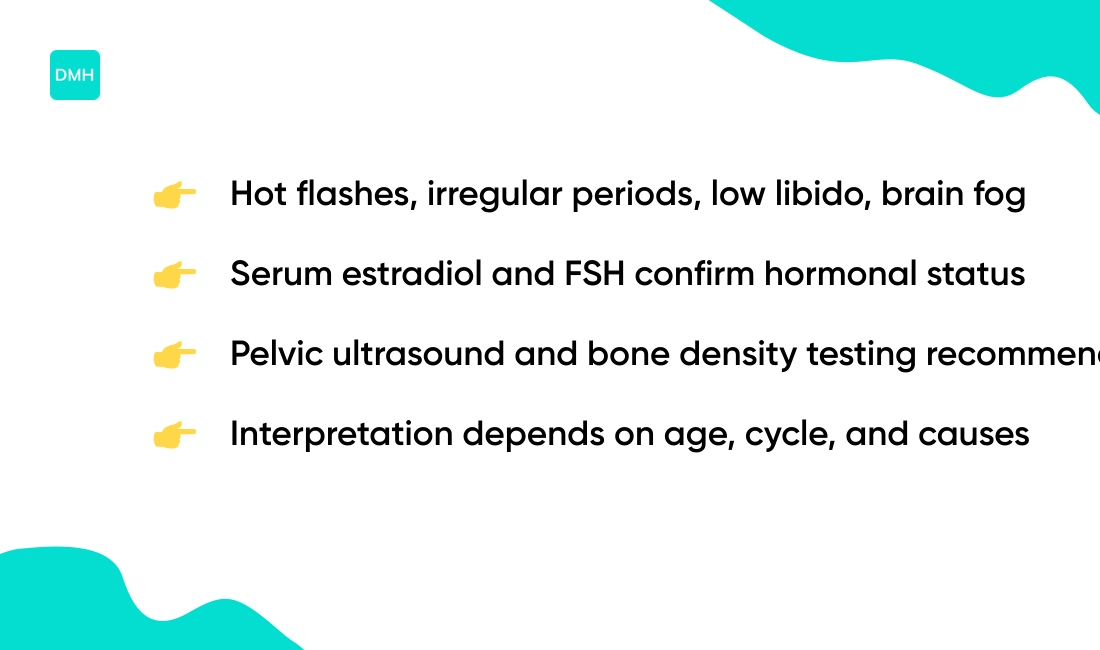
Order laboratory tests after symptom assessment. Serum estradiol (E2) levels give a direct measure, while follicle-stimulating hormone (FSH) helps identify ovarian decline. Thyroid and prolactin tests can rule out other causes.
Request targeted imaging when needed. Pelvic ultrasound may assess ovarian structure, and bone density testing assesses long-term risk of bone loss.
Interpretation depends on age and cycle phase. Lab ranges vary between laboratories, and single tests can be inconclusive—repeat testing may be helpful. Markedly elevated FSH often accompanies low estradiol in ovarian failure or menopause.
In younger people, a pregnancy test helps rule out pregnancy-related changes. Medications, chemotherapy, and surgical removal of ovaries can cause estrogen decline. Mood and sleep changes may overlap with anxiety or depression; mental health evaluation can clarify causes.
According to NIH, lab timing and clinical context matter. A detailed history combined with blood hormone tests clarifies diagnosis. Find a concise resource on low estrogen symptoms for further reading.
Always consult a qualified healthcare professional for medical advice specific to your situation.
You might also like: Foods to Avoid While Taking Spironolactone
Long-term health risks of untreated low estrogen
Prolonged estrogen deficiency can be associated with several serious health issues. Estrogen supports bone maintenance, so low levels may be linked to rapid bone density loss.
Research shows postmenopausal bone loss can approach one to two percent per year in some people, increasing fracture risk. (NIH)
Estrogen also affects cardiovascular function. Low estrogen symptoms in women can be linked to adverse lipid changes and a higher heart disease risk. Some observational studies report increased heart disease rates after menopause, though results vary and more research is needed.
Urogenital tissues need estrogen for strength and moisture. Decline can lead to vaginal dryness and urinary incontinence, which can reduce quality of life and sexual comfort.
Other long-term effects include persistent fatigue, mood changes, and higher odds of osteoporosis-related fractures. Fractures may raise morbidity in older adults according to population studies.
I’d say that awareness of these risks matters. If you experience lasting symptoms of low estrogen, clinical evaluation may clarify possible causes and options. Evidence varies by study type and population, so individualized assessment is important.
Always consult a qualified healthcare professional for medical advice specific to your situation.
Read also: How To Tell Anxiety Symptoms From Real Illness
When to see a doctor for estrogen deficiency symptoms
Estrogen deficiency can cause a range of signs from menstrual changes to bone loss and mood shifts. Some symptoms warrant prompt medical attention.
When should you actually pick up the phone and call your doctor? Here’s the thing:
-
Severe or sudden heavy vaginal bleeding
-
Chest pain, shortness of breath, or fainting
-
Sudden severe pelvic pain or fever
-
Marked memory loss, suicidal thoughts, or severe mood changes
Consider scheduling a consultation when symptoms persist for more than six weeks or when daily life suffers. Primary care clinicians or gynecologists usually start the evaluation.
Expect a focused history and physical exam. Blood tests may measure estradiol, FSH, and thyroid function. Imaging or bone density testing can be ordered if fracture risk appears elevated.
A referral to an endocrinologist or gynecologist may follow for complex cases. See guidance on what doctor to see for PMDD for referral questions.
Personalized plans often balance symptom relief with long-term risk assessment. Tailored care can improve sleep, sexual health, and bone outcomes. Low estrogen symptoms and estrogen deficiency symptoms can vary from person to person—some studies suggest outcomes differ by age and medical history.
Always consult a qualified healthcare professional for medical advice specific to your situation.
Read also: How Long Does Ashwagandha Take for Anxiety Relief?
Educational notice: This content is provided for informational and educational purposes only and is not intended as medical advice. Always consult a qualified healthcare professional for medical concerns.