If you’re dealing with GERD, you know that choosing the right foods can make or break your day.
Some fruits and vegetables calm your stomach, while others trigger painful flare-ups.
The good news? Plenty of delicious, low-acid options can help you manage symptoms without sacrificing flavor.
Let’s dive into the best choices and how to use them in your daily meals.
What are the best low-acid fruits for GERD
Bananas for acid reflux
Bananas are one of the gentlest fruits you can eat when reflux strikes. Their natural antacid properties and high fiber content help neutralize stomach acid and absorb excess liquid.
A medium banana packs about 3 grams of fiber and sits at a pH near 5—much milder than citrus.
Ripe bananas coat the esophageal lining and reduce irritation fast. You can eat half to one medium banana after a trigger meal or blend it into a low-acid smoothie with oatmeal.
Just watch portion size; overeating any fruit can increase stomach volume and pressure. (Nobody wants that extra bloating, right?)
Try this simple test: add one ripe banana to your daily snack or morning oatmeal for two weeks and track how your symptoms respond.
Melons for acid reflux
Melons—watermelon, cantaloupe, and honeydew—are cooling, hydrating, and incredibly GERD-friendly. Watermelon has a pH near 5.2 to 5.6, while cantaloupe and honeydew range around 6.0 to 6.7.
These melons are also low in calories. One cup yields roughly 46 to 61 calories, making them safe for frequent snacks.
Their high water content—over 90% for watermelon—dilutes gastric acid and soothes the esophagus. Plus, they’re naturally sweet without added sugars that can worsen reflux.
Ever wonder why a chilled melon salad feels so soothing after a heavy meal? That’s the hydrating effect at work, calming inflammation and reducing heartburn.
Start with one cup of melon after meals and note any changes. You can pair it with oatmeal or low-fat yogurt for a balanced, reflux-safe snack.
Pears and apples for GERD
Pears and apples are classic low-acid fruits that absorb digestive liquids and slow digestion—both helpful for easing reflux triggers. Pears deliver about 5 to 6 grams of fiber per medium fruit, while apples supply roughly 4 grams plus pectin, a soluble fiber that soothes the gut.
They also add vitamins, potassium, and polyphenols without raising stomach acid. You can eat them peeled or with skin, baked, or stewed to improve digestibility.
A warm, stewed apple after dinner can help many people sleep without heartburn. Try a single serving and note symptom changes over three days.
If you notice reduced reflux, add a pear or apple to your regular snacks.
Berries and other alkaline fruits
Berries like strawberries, blueberries, raspberries, and blackberries provide antioxidants and milder acidity than citrus. They’re packed with vitamin C, flavonoids, and polyphenols that support reduced inflammation in the esophagus.
Raspberries and blackberries give about 6 to 8 grams of fiber per cup. Blueberries and strawberries provide about 3 to 4 grams per cup.
A medium peach adds roughly 2 grams and gentle sweetness without triggering symptoms.
Coconut water has a near-neutral pH and rehydrates quickly. Fresh coconut meat supplies fiber and medium-chain fats that slow digestion and can reduce acid spikes.
A daily half-cup of mixed berries can make a real difference for many people. Swap citrus for berries in smoothies or snacks and test your tolerance over a week.
What are the best vegetables for GERD
Leafy greens for GERD
Spinach, kale, and lettuce rank as top low-acid vegetables for GERD. They’re mildly alkaline, with a pH near neutral (6 to 7), and help neutralize stomach acid while adding fiber that reduces reflux episodes.
Spinach supplies potassium and magnesium. Kale gives vitamin K and fiber. Lettuce hydrates and adds bulk, which supports digestive health without overloading your stomach.
A raw spinach salad or a low-acid smoothie with banana can soothe symptoms quickly. Aim for one cup of greens per meal—steam them lightly or blend with banana and melon for a refreshing drink.
Try to hit two cups of greens daily. Use them raw in a simple salad or steam for one to two minutes to keep nutrients intact.
Root vegetables for acid reflux
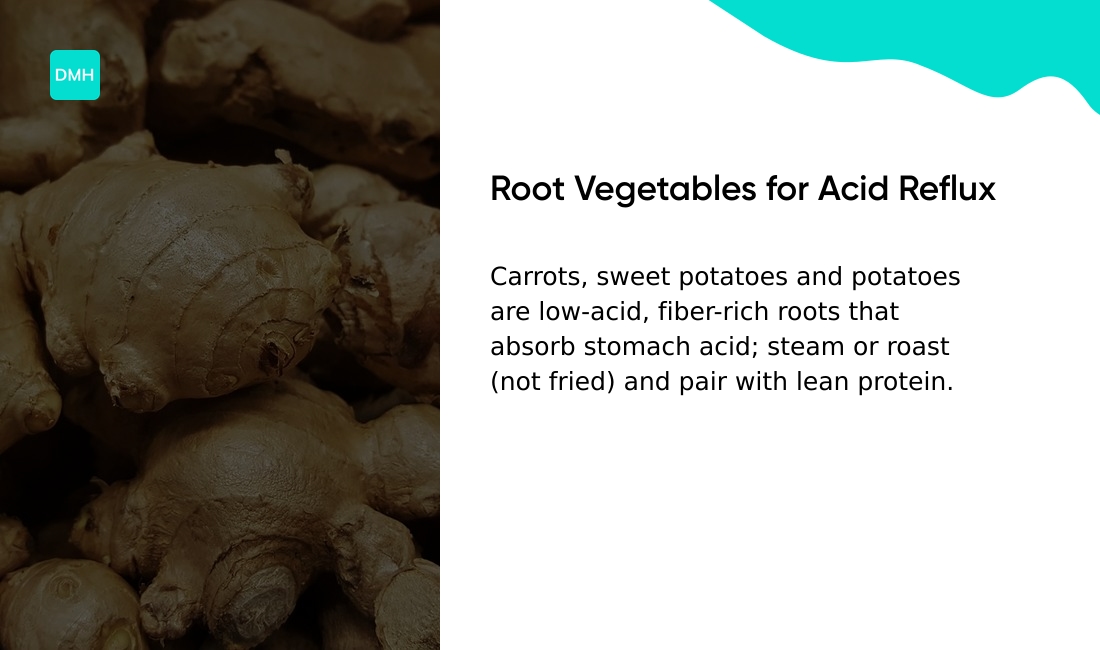
Root vegetables like carrots, sweet potatoes, and potatoes offer complex carbohydrates and fiber that absorb stomach acid and soothe digestion. Carrots provide about 3 grams of fiber per cup, sweet potatoes deliver roughly 4 grams per medium serving, and a potato with skin adds about 3 grams.
These low-acid vegetables are filling and versatile. Choose steamed or roasted options and avoid fried or buttery preparations that can trigger reflux.
Roasted sweet potatoes feel the gentlest on most stomachs and help promote healthy digestion. Swap fries for baked root vegetables and track your symptoms for a week.
Pair root vegetables with lean protein and whole grains for balanced meals. Make a simple bowl by adding steamed roots, lettuce, and a light vinaigrette.
Adjust servings based on your tolerance and comfort.
Cruciferous and green vegetables
Cruciferous and green vegetables—broccoli, cauliflower, asparagus, green beans, Brussels sprouts, and peas—are low-acid vegetables with minimal fat and high fiber content. Most contain under 1 gram of fat per 100 grams, and fiber runs from about 2 to 6 grams per 100 grams.
- Broccoli — 2.6 g fiber per 100 g
- Cauliflower — 2.0 g fiber per 100 g
- Asparagus — 2.1 g fiber per 100 g
- Green beans — 3.4 g fiber per 100 g
- Brussels sprouts — 3.8 g fiber per 100 g
- Peas — 5.7 g fiber per 100 g
Regular servings help reduce reflux triggers. Fiber absorbs acid and slows stomach emptying, which soothes symptoms.
Steam one cup per meal and avoid heavy butter or cream. Steaming keeps these vegetables gentle on your esophagus and useful as part of a GERD-friendly diet.
Mild vegetables and tomato alternatives
Swapping tomatoes for mild, low-acid vegetables can dramatically cut reflux episodes. Cucumbers and zucchini are about 95% water, making them excellent GERD-friendly vegetables that dilute meal acidity.
Celery adds fiber and crunch with a near-neutral pH. Fennel brings a mild anise note while staying gentle on stomachs.
Roasted bell peppers mimic tomatoes with less acid and solid vitamin C—perfect for sauces and toppings.
Cucumbers work best in raw salads for extra moisture. Swap 1 cup of diced tomatoes with 1 cup of chopped zucchini or roasted pepper in your recipes.
These swaps rank among the best low-acid fruits and vegetables for GERD. For more recipe ideas and practical tips, check out how to get rid of heartburn easily.
Which fruits to avoid if you have GERD
Avoid fruits that raise stomach acid or relax the lower esophageal sphincter. Common triggers include acidic citrus fruits like oranges, lemons, limes, and grapefruits.
Their pH sits near 2.0 to 3.5, which can provoke reflux symptoms fast.
Skip pineapple, cranberries, and sour cherries. Tomatoes and tomato sauces belong on the same list—they often relax the esophageal valve and have a pH around 4.3 to 4.9.
Pickled or vinegary fruit preparations make reflux worse.
Avoid canned fruit packed in syrup and raw citrus juices. These deliver concentrated acid quickly. You can swap tomato-based products for roasted bell pepper or cooked zucchini as a simple substitute.
Test one change at a time. Keep a two-week food log and note symptom patterns. What happens when you skip your morning orange juice?
Try a short experiment: remove one high-acid item for seven days and track symptom changes. Pair swaps with low-acid fruits like bananas, melons, pears, and apples to reduce flare-ups.
For guidance on meal timing and related tips, see how to avoid hiccups when eating spicy food.
Read also: How Long After Drinking Coffee Can I Take Medicine
How to prepare low-acid fruits and vegetables for GERD
Gentle cooking methods lower reflux risk without wasting nutrients. Steam, boil, or eat raw to keep vitamins and reduce fat that relaxes the esophageal valve.
Steaming softens fibers in carrots, sweet potatoes, and leafy greens. Aim for 5 to 10 minutes. You keep vitamins and cut gastric workload.
Steaming preserves texture and lowers reflux risk better than frying.
Boil denser roots until tender. Drain and cool before eating. Cold, cooled potatoes or sweet potatoes sit easier in the stomach.
Puree cooked vegetables for a low-acid smoothie or soft side that limits reflux.
Keep fruits simple. Slice bananas, melons, pears, and apples cold. Eat them raw or chilled.
Those non-acidic fruits for GERD coat the esophagus and add fiber without acidity.
Avoid frying or cooking with butter and heavy oils. Fat delays gastric emptying and worsens reflux.
For recipe swaps, use olive oil spray or a light broth sauté. If you need a reference on post-procedure limits, review foods to avoid after endoscopy.
| Cooking Method | Best For | Time | Reflux Impact |
|---|---|---|---|
| Steaming | Leafy greens, broccoli, carrots | 5–10 min | Low |
| Boiling | Potatoes, sweet potatoes, roots | 15–20 min | Low |
| Raw | Bananas, melons, cucumbers | 0 min | Very low |
| Roasting | Bell peppers, zucchini, squash | 20–30 min | Low (no added fat) |
| Frying | None (avoid) | — | High |
Pair low-acid vegetables with oatmeal, brown rice, or lean protein for steady digestion. Start by steaming a batch and using leftovers in salads or bowls.
You’ll also like: How To Get Rid Of Stomach Ache When Trying To Sleep
GERD-friendly meal ideas with low-acid produce
Building meals around alkaline fruits and vegetables paired with whole grains and lean proteins can transform your reflux management. Keep portions modest—aim for 1 cup of cooked brown rice or 1/2 cup of oats with 3 to 4 ounces of turkey, chicken, tofu, or fish.
These amounts lower reflux risk while keeping meals balanced.
Here are some practical meal ideas:
- Low-acid salads: Mix spinach, cucumber, shredded carrot, and pear. Dress with plain yogurt and a drizzle of olive oil. You get fiber and moisture without excess acid.
- Low-acid smoothies: Blend banana, honeydew, a handful of blueberries, and 1/2 cup of cooked oatmeal. Use almond milk for creaminess. Drink slowly to avoid overload.
- Lean proteins: Grill chicken breast with steamed zucchini and mashed sweet potato. Serve over brown rice for a filling, low-acid plate.
- Snack idea: sliced apple with a light smear of peanut butter—use sparingly and read about peanut butter and constipation if you’re concerned.
Starting a meal with a melon or banana item can cut reflux episodes for many people. Try a small melon salad 15 minutes before your main course and note symptom changes.
Test one swap per meal and track symptoms over a week. Small changes add up fast when you’re consistent. (And honestly, your stomach will thank you!)
You might also like: Is Coffee High In Histamine
Educational notice: This content is provided for informational and educational purposes only and is not intended as medical advice. Always consult a qualified healthcare professional for medical concerns.