A sudden coughing fit on a train can make anyone lock eyes and wonder about risk.
People often ask, “is pneumonia contagious” when a household member or coworker comes down with a cough.
That question matters because the germs behind pneumonia—bacteria, viruses, or fungi—can spread, and adults and children worry about getting seriously ill or missing work or school.
This guide breaks down how contagious different types of pneumonia are, when someone’s no longer infectious (including after antibiotics), and practical ways to reduce transmission.
You’ll learn clear signs to watch for, who’s most at risk, and simple prevention and caregiving steps to keep yourself and others safer.
Is pneumonia contagious?
Short takeaway: Pneumonia itself isn’t directly contagious, but the germs that cause it can spread.
Pneumonia is inflammation of the lung air sacs, often caused by bacteria, viruses, or fungi. Symptoms may follow infection of the airways or lungs.
Germs that cause pneumonia can pass between people. Respiratory droplets from coughing and sneezing commonly carry viruses or bacteria that later trigger pneumonia.
Common agents include Streptococcus pneumoniae, Mycoplasma pneumoniae, influenza viruses, RSV, and SARS‑CoV‑2. Contagiousness varies by agent. Bacterial cases may become less infectious within 24 to 48 hours of effective antibiotics, according to available research. Viral infections can be contagious one to two days before symptoms and up to seven to ten days after, though this can vary from person to person.
Is walking pneumonia contagious often depends on the cause. Mycoplasma pneumoniae spreads more easily in close quarters like schools and dorms. Most spread occurs via droplets rather than true airborne transmission.
Aspiration pneumonia results from inhaling food, liquids, or vomit and isn’t contagious. Community acquired pneumonia refers to infections contracted outside healthcare settings and may spread among household contacts.
This content is for educational purposes only and does not replace professional medical advice. If you’re concerned about exposure or symptoms, consider contacting a qualified healthcare professional.
How contagious is pneumonia by type
Is bacterial pneumonia contagious?
Short takeaway: Bacterial pneumonia can spread because the bacteria that cause it pass from person to person.
Bacterial pneumonia describes lung infection caused by bacteria such as Streptococcus pneumoniae or Mycoplasma pneumoniae. Transmission occurs through respiratory droplets from coughs or sneezes and via contaminated surfaces that touch the face.
Community-acquired bacterial pneumonia means the infection began outside a hospital and often spreads in households, schools, or crowded settings.
Antibiotics often reduce contagiousness within 24 to 48 hours after starting treatment, though timing can vary from person to person. Evidence from public health agencies indicates people remain most likely to spread bacteria before treatment and while symptomatic; severity and duration can vary.
For educational purposes only. If concerned, people may consult a qualified healthcare professional.
Quick answer: Yes. The viruses that cause this type of pneumonia can spread between people.
Viral pneumonia refers to a lung infection caused by viruses such as influenza, RSV, adenovirus, and SARS-CoV-2. These viruses travel in respiratory droplets and through close contact.
If you inhale droplets or touch your face after touching a contaminated surface, the virus can reach your airways and lungs.
Contagious periods vary by virus:
-
Influenza can spread about 1 day before symptoms and for roughly 5–7 days after onset, longer in children
-
RSV often incubates 1–4 days and may be shed for 3–8 days, sometimes weeks in infants
-
Adenovirus incubation can be 2–14 days with shedding for 1–2 weeks
-
SARS-CoV-2 may spread about 2 days before symptoms and for about 10 days after in mild cases, longer in severe or immunocompromised cases
For tips on flu exposure and prevention, see prevent the flu after exposure. If concerned, people may consult a qualified healthcare professional for advice specific to their situation.
Is walking pneumonia contagious?
Quick takeaway: Walking pneumonia can spread between people in close contact.
Walking pneumonia refers to milder pneumonia often caused by Mycoplasma pneumoniae. The bacterium spreads through respiratory droplets from coughs and sneezes.
It can be contagious in close quarters—schools, dorms, military barracks, and households are common settings. People may transmit it before they feel sick. The incubation period can run one to three weeks.
After starting appropriate antibiotics, people often become less contagious within 24 to 48 hours. That timeframe can vary from person to person. Evidence comes from public health guidance and observational studies noting outbreaks in close-contact settings.
This content is for educational purposes only. If you’re concerned, consider contacting a qualified healthcare professional.
Is aspiration pneumonia contagious?
Takeaway: Aspiration pneumonia is usually not contagious.
Aspiration pneumonia occurs when food, liquids, or vomit enter the lungs. This causes lung inflammation and possible infection from mouth or stomach bacteria. The condition arises from physical aspiration rather than person-to-person spread.
The CDC describes aspiration as inhaled material that usually doesn’t transmit between people. If aspirated material carries infectious germs, those germs may spread to others, but the pneumonia still originates from the act of aspiration.
Some studies estimate aspiration may account for 10-20% of pneumonia cases in older adults. Risk rises with swallowing problems, stroke, dementia, or heavy sedation.
If you notice fever, trouble breathing, or persistent cough after choking, seek medical assessment. For educational purposes only—consult a qualified healthcare professional if concerned.
How does pneumonia spread from person to person?
Pneumonia itself isn’t directly contagious. But the germs that cause it can spread and potentially lead to pneumonia in others.
Is pneumonia contagious depends on the cause. Bacteria, viruses, and fungi can move between people, though some spread more easily than others.
Spread by droplets occurs when people cough or sneeze. Respiratory droplets carry viruses and bacteria a short distance. Close exposure to an infected person raises risk.
Touching contaminated surfaces can lead to infection. Hands pick up germs from door handles, phones, or utensils. Touching the face then transfers microbes to the mouth, nose, or eyes.
Most common pneumonia agents spread via droplets. A few organisms, such as Mycobacterium tuberculosis, spread by true airborne particles.
Contagiousness varies by type and timing. Viral pneumonia often spreads days before symptoms start. Bacterial pneumonia may become less infectious within about 24–48 hours after starting effective antibiotics, though these periods can vary from person to person.
Evidence from public health sources supports these modes of spread. This content is for educational purposes only—always consult a qualified healthcare professional for medical advice specific to your situation.
How long is pneumonia contagious?
Takeaway: Contagiousness varies by germ, symptom timing, and treatment.
Pneumonia means lung inflammation caused by bacteria, viruses, or fungi. Pathogens can spread before symptoms start and while symptoms persist.
|
Type |
Incubation Period |
Contagious Period |
|---|---|---|
|
Bacterial pneumonia |
1–3 days |
Until 24–48 hours after antibiotics start |
|
Viral pneumonia |
Varies by virus |
1–2 days before symptoms, 5–10 days after |
|
Walking pneumonia |
2–3 weeks |
Until 24–48 hours after antibiotics start |
Bacterial causes such as Streptococcus pneumoniae often have incubation of 1–3 days. You may stop spreading bacteria about 24–48 hours after effective antibiotics begin, though people may remain contagious longer without treatment.
Viruses such as influenza, RSV, and SARS-CoV-2 can spread one to two days before symptoms. Contagiousness often lasts 5–10 days after symptoms start. Children and immunocompromised people can shed virus for weeks.
Mycoplasma pneumoniae incubation often runs 2–3 weeks. Spread occurs in close quarters. Antibiotics commonly reduce contagiousness within 24–48 hours.
Fungal pneumonia rarely spreads person to person. Aspiration pneumonia from inhaled material isn’t contagious.
Return to work or school may be appropriate when fever ends and symptoms improve. For bacterial cases, many clinicians consider 24–48 hours on antibiotics a common benchmark, though durations can vary by age, immune status, and specific pathogen.
Data come from available research and can vary by study design and patient group. For educational purposes only—if concerned about your symptoms, consider contacting a qualified healthcare professional.
Common symptoms of pneumonia
Pneumonia symptoms vary but commonly include chest pain, breathing trouble, fever, cough, chills, and fatigue.
Pneumonia is an infection of the lung air sacs. Symptoms can range from mild to severe.
The most common sign is a persistent cough—either dry or producing mucus. Coughing may worsen at night and can cause coughing in your sleep.
Chest discomfort often feels sharp with deep breaths. People may report sharp chest pain when coughing.
Breathing may feel harder than usual. Shortness of breath can occur during rest or activity and may worsen quickly.
Fever and chills commonly occur. Fever often measures above 38°C (100.4°F), but older adults may have lower or no fever. Fatigue and low energy often last days to weeks. Appetite loss and muscle aches can accompany tiredness.
Early warning signs that may indicate more severe illness include:
-
Very fast breathing (over 30 breaths per minute)
-
Bluish lips or face
-
Sudden confusion
-
Inability to stay awake
These signs can vary from person to person. If you’re concerned about symptoms, consider contacting a qualified healthcare professional for evaluation. This content is for educational purposes only.
Who is at higher risk of catching pneumonia?
You face higher risk if you belong to certain groups.
High-risk groups are people more likely to develop pneumonia after exposure to germs:
-
Children under 2 have immature immune systems and smaller airways
-
Adults over 65 often have weaker immune responses and other health issues
-
Pregnant individuals may have altered immune or lung function
-
People with COPD or chronic lung diseases have damaged lung defenses
-
People with weakened immunity from treatments or conditions may not fight infections well
-
Smokers tend to have impaired airway clearance and higher infection risk
-
Recent hospital or nursing home patients face exposure to resistant bacteria
The mechanism relates to host defenses and exposure. Impaired immunity or damaged lungs let bacteria or viruses take hold. Close contact or hospital stays increase exposure to contagious agents.
Evidence shows higher hospitalization and complication rates for infants and older adults, according to available data. Risk can vary from person to person and with the organism involved. Some studies suggest vaccines lower severe illness risk, with limits in specific groups.
For guidance about infant cough and when to seek care, see when to take baby to doctor for cough. If concerned, people may consult a qualified professional for personalized guidance. For educational purposes only.
You’ll also like: How Long Does It Take To Get Your Taste Back After The Flu
How to prevent catching pneumonia
Takeaway: Simple actions can help reduce your risk of catching pneumonia.
Pneumonia results from bacteria, viruses, or fungi that enter the lungs. People may catch those germs from close contact or contaminated surfaces.
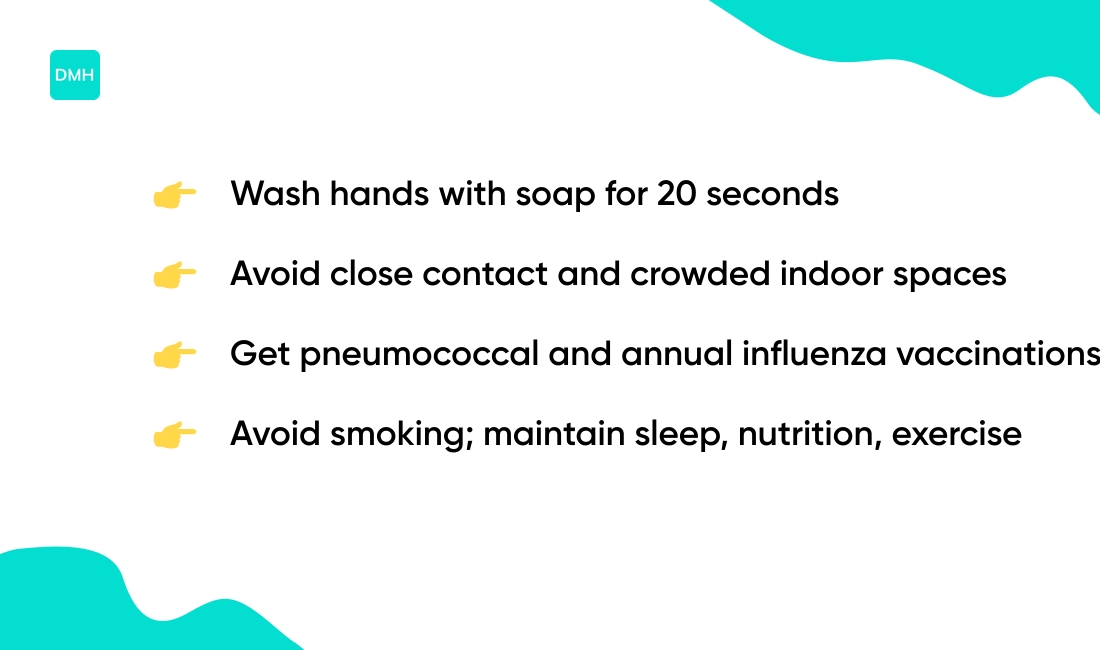
Hand hygiene practices matter. Wash hands with soap for 20 seconds. Use alcohol hand sanitizer with at least 60% alcohol when soap isn’t available.
Avoid close contact with visibly sick people. Stay away from crowded, poorly ventilated indoor spaces when respiratory illnesses circulate.
Vaccination can lower the chance of infections that lead to pneumonia:
-
Pneumococcal vaccination is often discussed for adults 65 and older and for some at-risk groups
-
Annual influenza vaccine is commonly recommended for people six months and older
These shots may be associated with reduced community spread and severe illness, according to available research.
Wearing a well-fitting mask in crowded indoor settings can reduce exposure to respiratory droplets. Cover coughs and sneezes. Clean high-touch surfaces regularly.
Healthy habits support lung defenses. Maintain good sleep, balanced nutrition, regular moderate exercise, and avoid smoking. Smoking is associated with higher risk of respiratory infections.
Public measures can help too. For guidance on community actions, see public health measures. This content is for educational purposes only—if concerned about symptoms or vaccine eligibility, people may consult a qualified healthcare professional.
You’ll also like: When To Go To Hospital For Sinus Infection
Caring for someone with pneumonia safely
Brief takeaway: Caregivers may lower household risk of catching the infections that can cause pneumonia.
Pneumonia refers to an infection in the lungs caused by bacteria, viruses, or fungi. Those germs often spread by respiratory droplets or by touching contaminated surfaces.
Evidence indicates bacterial pneumonia often becomes less contagious about 24 to 48 hours after starting appropriate antibiotics. Viral infections can shed a day before symptoms and commonly continue for about five to seven days, with longer shedding in children and immunocompromised people, according to available guidance from public health agencies.
Here’s how to protect yourself:
-
Wear a mask during close care when coughing is frequent
-
Wash hands frequently with soap for 20 seconds after contact
-
Change shared linens and clean high-touch surfaces daily with household disinfectant
-
Keep the sick person in a separate room when feasible
-
Limit visitors who are at higher risk
-
Use well-ventilated spaces and avoid crowded indoor places during the illness
Household exposure timelines may overlap with other respiratory illnesses. See how long before I get the flu for related timelines.
If signs of worsening breathing, chest pain, persistent high fever, or confusion appear, people may consult a qualified healthcare professional promptly. Content is for educational purposes only and does not replace professional medical advice.
Read also: When To Go To The Hospital For Chest Pain
Educational notice: This content is provided for informational and educational purposes only and is not intended as medical advice. Always consult a qualified healthcare professional for medical concerns.