A sudden nosebleed can be alarming, messy, and surprisingly common.
Knowing how to stop a nosebleed helps you act quickly and avoid swallowing blood or worsening the bleed.
Children, older adults, dry winter air, blood thinners, and high blood pressure all make nosebleeds more likely.
This guide covers immediate steps (positioning, pinching, cold compresses), practical home remedies, and when to seek emergency care.
You will learn clear, evidence-based techniques for stopping a nosebleed fast and preventing future episodes.
Follow these steps and you’ll be able to handle most nosebleeds calmly and safely at home.
What is epistaxis
Epistaxis, commonly called a nosebleed, is bleeding from the nasal cavity or surrounding tissues.
An anterior nosebleed often starts at the front nasal septum at Kiesselbach’s plexus. These bleeds tend to be visible and easier to manage with simple care.
A posterior nosebleed arises from deeper arteries such as the sphenopalatine artery. These bleeds may be heavier and can require medical treatment, especially in older adults or after facial trauma.
Some studies suggest up to 60% of people experience at least one nosebleed in their life. About 6% of cases lead people to seek medical care, so the problem is common but usually not severe.
Children aged roughly 2 to 10 years have frequent anterior nosebleeds. Causes include fragile vessels, nose picking, and upper respiratory infections. Older adults see more posterior bleeds, often linked to blood thinners, vascular changes, or hypertension.
Knowing the source helps when learning how to stop a nosebleed and when to seek care. Recognizing whether bleeding is front or back makes treatment choices clearer and less stressful.
Bleeding patterns vary by age and health status. Always consult a qualified healthcare professional for medical advice specific to your situation.
How to stop a nosebleed fast
Should you lean forward or tilt your head back during a nosebleed
Lean forward to manage a nosebleed effectively. Leaning forward keeps blood out of the throat, reduces nausea, and lowers the risk of inhaling blood.
Tilting the head back can push blood into the mouth and airway. This position may mask how much bleeding actually occurs and can cause choking or stomach upset.
Most people apply firm pressure to the soft part of the nose and breathe through the mouth. Pinch the soft lower nose for 10 to 15 minutes without checking to help stop bleeding.
Leaning forward makes nosebleed treatment simpler and less frightening. This tip supports fast bleeding control and helps caregivers assess severity.
Always consult a qualified healthcare professional for medical advice specific to your situation.
How long should you pinch your nose to stop a nosebleed
Sit upright and lean slightly forward. Pinch the soft, lower third of the nose using your thumb and index finger. Breathe through your mouth while keeping steady pressure.
The single most important step is continuous pressure. Aim for 10-15 minutes sustained pressure on the soft lower third of the nose without checking. Don’t release early to peek — checking may interrupt clot formation and restart bleeding.
According to available research, holding firm pressure without interruption often stops common anterior nosebleeds. If bleeding continues after 15 minutes, some studies suggest clearing any clots from the nostril and applying a topical vasoconstrictor like oxymetazoline or phenylephrine spray (2 sprays into the bleeding side), then resuming compression for another 5-10 minutes. This approach resolves 65-75% of persistent cases.
Rapid or heavy bleeding, bleeding after facial trauma, or bleeding while on blood thinners may require urgent care.
For individualized advice, always consult a qualified healthcare professional for medical advice specific to your situation.
Can ice stop a nosebleed
Cold may help slow nose bleeding by narrowing tiny vessels.
A wrapped ice pack placed on the bridge of the nose and on the back of the neck can constrict blood vessels and support bleeding control.
Use a thin cloth between ice and skin. Apply steady pressure to the soft lower nose for 10 to 15 minutes without checking. Keep the head tilted slightly forward to avoid swallowing blood.
This technique forms part of simple how to stop a nosebleed steps and may help stop bleeding quickly when combined with proper pinching.
Cold works best as an adjunct to firm nasal pinching based on clinical guidance. Always consult a qualified healthcare professional for medical advice specific to your situation.
What causes nosebleeds
Can dry air cause nosebleeds
Low humidity affects nasal tissue in significant ways.
Dry air pulls moisture from the nose. The result is fragile mucosa that tears easily.
Dry nasal membranes lose elasticity and bleed more often. Low indoor humidity under 30% is common during winter heating.
Heated indoor environments speed crusting. Crusts can rip during nose blowing or picking and cause an anterior nosebleed.
Some studies suggest a link between dry air and higher epistaxis rates, though evidence varies by setting. You may notice more nosebleeds at night or during long flights with low cabin humidity.
A bedroom humidifier and regular saline spray can help reduce episodes for some people. Always consult a qualified healthcare professional for medical advice specific to your situation.
Can high blood pressure cause nosebleeds
Hypertension, or high blood pressure, may be associated with nosebleeds (epistaxis). The nasal mucosa holds many small blood vessels. High arterial pressure can stress those fragile vessels and make bleeding harder to stop.
Some studies suggest a modest link between elevated blood pressure and more severe or recurrent nosebleeds. Readings above 140/90 mm Hg commonly define hypertension, though risk can vary from person to person.
Managing blood pressure may lower the chance of repeat bleeding for some people. People taking blood thinners or with very high readings may face greater risk and need clinical review.
When learning how to stop a nosebleed, treating underlying factors may help. High blood pressure nosebleeds are often one factor among many. Always consult a qualified healthcare professional for medical advice specific to your situation.
Which medications can trigger nosebleeds
Several medicines may increase the chance of nose bleeding, or epistaxis.
Anticoagulants that reduce blood clotting can raise bleeding risk. Common examples include warfarin, apixaban, and rivaroxaban.
-
Aspirin and NSAIDs may impair platelet function and make small nose vessels bleed more easily.
-
SSRI antidepressant medications can slightly raise mucosal bleeding in some patients.
-
Herbal blood thinners such as ginkgo or high-dose fish oil can add to bleeding risk.
If you wonder how to stop a nosebleed while on these drugs, apply firm pressure to the soft part of the nose for 10–15 minutes and lean forward. Low platelet counts can also increase risk; see more on dangerous platelet levels.
Having a simple plan helps you act calmly during a bleed. Always consult a qualified healthcare professional for medical advice specific to your situation.
Does picking your nose cause nosebleeds
Nose picking can damage fragile nasal tissue in multiple ways.
Narrow vessels sit near the front nasal septum. Picking can rupture nasal blood vessels and cause immediate bleeding.
Small tears cause mucous membrane trauma. Scabs form and then reopen. That cycle raises the chance of recurrent bleeding.
Most nosebleeds start in the front of the nose. Estimates suggest about 90% are anterior nasal bleeding.
Children often pick their nose and show frequent nosebleeds. People on blood thinners may bleed more from minor trauma.
Reducing nose picking may lower episodes of anterior nosebleeds. Simple habits can help protect the septum.
For immediate nosebleed treatment, sustained pressure on the soft lower nose can stop bleeding fast. Seek medical care for heavy or prolonged bleeding. Always consult a qualified healthcare professional for medical advice specific to your situation.
Home remedies for nosebleeds
Simple at-home options may help stop a nosebleed and lower recurrence.
Pinch the soft lower third of the nose and lean slightly forward. Hold steady pressure for 10 to 15 minutes without checking. This method may stop most anterior nosebleeds.
Saline nasal sprays can soothe dried mucosa. Use a preservative-free saline spray several times daily to keep membranes moist.
Use a humidifier in dry homes. Aim for indoor humidity around 40% to 50% to reduce winter nosebleeds linked to dry air.
Apply petroleum jelly with a cotton swab to the nostril rim. A thin layer may protect fragile tissue and cut bleeding frequency. Plus, water-based nasal gels work well for daily use.
|
Home Remedy |
How It Helps |
Frequency |
|---|---|---|
|
Saline nasal spray |
Moisturizes dry nasal membranes |
2-3 times daily |
|
Humidifier |
Raises indoor humidity to 40-50% |
Nightly in bedroom |
|
Petroleum jelly or nasal gel |
Protects fragile tissue |
Twice daily (morning and night) |
|
Cold compress |
Constricts blood vessels |
During active bleed |
-
Cold compresses on the bridge of the nose can constrict vessels and support bleeding control.
-
Avoid nose picking and forceful sneezing when possible, since trauma provokes bleeding.
-
Gentle nasal saline irrigation after bleeding stops may clear clots and aid healing.
Regular nasal moisturization can help people with frequent episodes. Small studies and clinical guidance support humidification and topical emollients for some patients, though results vary.
For persistent, heavy, or recurrent bleeding, seek professional evaluation. Always consult a qualified healthcare professional for medical advice specific to your situation.
Why do I get frequent nosebleeds
Recurrent nosebleeds mean repeated episodes of nose bleeding. Anterior bleeds cause about 90% of cases.
Chronic dry air dries nasal mucosa and makes vessels fragile. Indoor heating raises risk in winter.
Nasal allergies inflame membranes and increase nose picking or rubbing. See our sinus infection vs allergies guide for symptom overlap.
Anatomical nasal abnormalities such as a deviated septum can concentrate airflow and injure vessels.
Blood clotting disorders and anticoagulant medicines raise bleeding frequency. Von Willebrand disease and low platelets can present with recurrent epistaxis.
High blood pressure can worsen an episode and may be present in older patients. Pregnancy nosebleeds occur in some people due to hormonal changes.
Have you noticed patterns in when your nosebleeds happen? If you have frequent nosebleeds, your clinician may check blood counts, clotting tests, and medication lists. Referral to an ENT specialist may follow for nasal exam and possible cautery.
Simple fixes often help. Humidifiers, saline nasal gel, and avoiding nose trauma can reduce episodes for many people. Always consult a qualified healthcare professional for medical advice specific to your situation.
How to stop a nosebleed in a child
Nosebleeds in children are often anterior and come from small vessels inside the nostril.
Age-appropriate steps parents can try at home include the following.
-
Have the child sit upright. Keep the head tilted slightly forward.
-
Ask the child to breathe through the mouth. Calm breathing may slow the bleed.
-
Pinch the soft lower third of the nose firmly. Maintain pressure without checking for 10 to 15 minutes.
-
Apply a cold compress to the bridge of the nose or the back of the neck for vasoconstriction.
Pinching the nose helps compress the vessel and often stops bleeding. Avoid leaning backward or letting the child swallow blood — swallowed blood can upset the stomach.
For young toddlers, hold them gently and explain each step. Distraction works well. (A favorite cartoon can work wonders!)
A calm voice and steady hands make the most difference. Seek pediatric care if bleeding continues beyond 30 minutes, if bleeding follows a head injury, or if the child looks pale or dizzy.
Children on blood thinners or with bleeding disorders may need urgent assessment. Fast measures often work, but persistent bleeding may require medical treatment. Always consult a qualified healthcare professional for medical advice specific to your situation.
When should I go to the ER for a nosebleed
You may need immediate care if bleeding continues after 30 minutes of firm pressure. Persistent bleeding can signal a more serious bleed.
Seek emergency care when bleeding is heavy, you feel faint, or you cough up blood. Rapid heartbeat, low blood pressure signs, or ongoing dizziness need urgent evaluation.
Posterior nosebleeds are less common. They account for about 5 to 10 percent of cases. A posterior nasal bleed often causes blood to flow down the throat and may require packing or embolization.
Severe facial trauma, obvious fracture, or deep cuts near the nose merit emergency assessment. If bleeding starts after a head injury, visit the ER right away. If nosebleeds follow facial injury or raise concerns about infection, see when to go to the hospital for a sinus infection.
People on blood thinners, those with known clotting disorders, or very low platelets may need faster care. Early evaluation helps avoid complications.
Repeated severe nosebleeds, blood loss requiring transfusion, or treatment-resistant epistaxis need specialist care. Emergency teams can place nasal packing, perform cauterization, or arrange interventional radiology. Always consult a qualified healthcare professional for medical advice specific to your situation.
You might also like: What Happens at Your First Hematology Appointment
Medical treatments for nosebleeds that won’t stop
Advanced options may be discussed for refractory epistaxis.
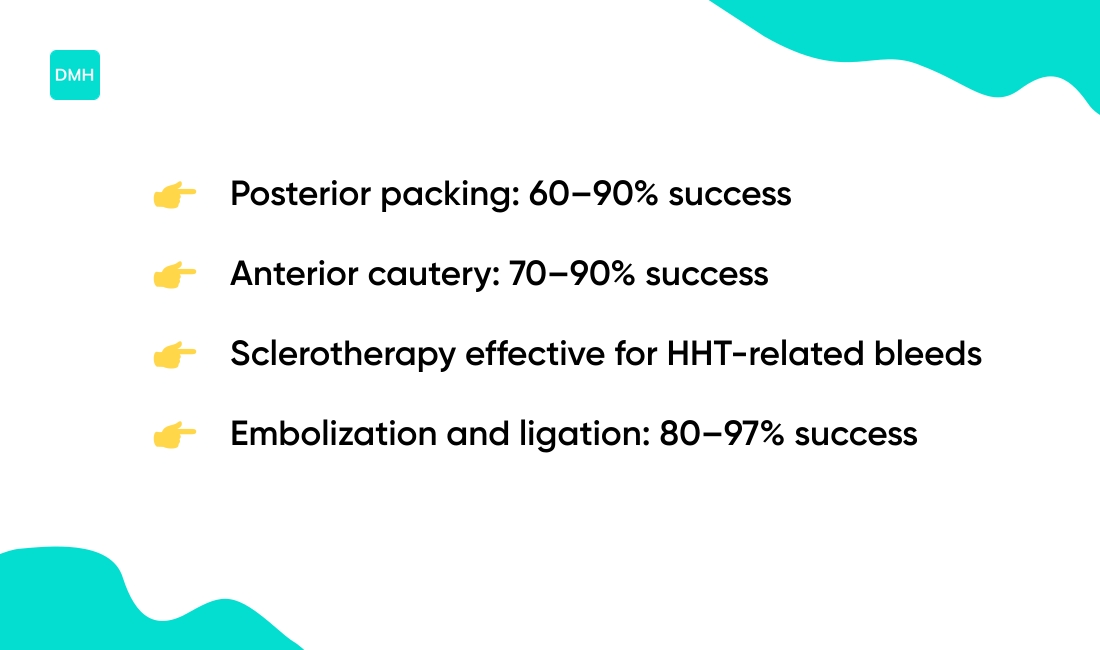
Posterior nasal packing uses inflatable devices or gauze to tamponade bleeding. Reported success rates range from 60% to 90%. Recovery can include nasal discomfort and short hospital observation.
Anterior nasal cauterization targets visible vessels with chemical or electrical methods. Success often falls between 70% and 90% for anterior bleeds. According to available research, chemical or electrical cauterization takes about 10 minutes with numbing and heals in roughly 2 weeks. Most people return to normal activity in a few days.
Sclerotherapy injects an agent to close fragile vessels. Studies suggest sodium tetradecyl sulfate injections can be effective for HHT-related bleeds with low complications. Success rates vary by technique and operator skill. Local swelling and mild pain may follow treatment. The CureHHT guidelines provide detailed information on managing epistaxis in hereditary hemorrhagic telangiectasia patients.
Transarterial embolization is a radiologic option for persistent posterior bleeding. Studies report success rates near 80% to 95% in selected patients. Recovery may require a brief hospital stay and vascular follow-up.
Endoscopic arterial ligation or surgical ligation addresses specific bleeding arteries. Surgical success often exceeds 85% for refractory cases. Some reports indicate success rates around 97% for artery ligation. Recovery time depends on the procedure scope and individual health.
Reported numbers vary across studies and patient groups, and each option carries risks and benefits. The AAFP offers clinical recommendations and procedural details for clinicians and patients on nosebleed management.
For HHT patients, moisturizers plus tranexamic acid may reduce severity according to some studies. Always consult a qualified healthcare professional for medical advice specific to your situation.
You’ll also like: Is It Serious To Be Referred To A Hematologist
How to prevent nosebleeds
Keep indoor humidity at 40-50% to protect nasal mucosa. Dry air nosebleeds rise in heated homes and during winter.
Use a saline nasal spray after waking and before bed to keep membranes moist. Try a gentle, water-based spray for daily use.
Use a humidifier in bedrooms overnight. A small cool-mist unit can lower nosebleed frequency for many patients.
Apply a thin layer of ointment to the nostril rims twice daily. Apply petroleum jelly or a preservative-free nasal gel for best results.
Avoid nasal trauma like nose picking and forceful sneezing. Simple habit changes cut episodes for people prone to anterior nosebleed. Actually, teaching children safe nose-care habits early can make a big difference.
Limit irritants that trigger bleeding. Tobacco smoke, strong odors, and excessive use of topical decongestants may increase risk. Are you exposed to irritants at work or home?
Manage bleeding risk when on blood thinners with clinician guidance. Routine blood pressure checks help identify high blood pressure nosebleeds. Avoid aspirin, NSAIDs, forceful nose blowing, or swimming pool chemicals to prevent recurrence.
Small, consistent steps reduce episodes. Humidification plus nasal ointment can help many people.
Avoid nasal trauma during sports and rough play. Wear protective gear and teach children safe nose-care habits.
Seasonal tips include running humidifiers in winter and avoiding overly dry air from heaters. Monitor symptoms and seek care for frequent nosebleeds. Practical options can be discussed with clinicians. Always consult a qualified healthcare professional for medical advice specific to your situation.
You’ll also like: Mean Platelet Volume (MPV): High, Low, and Normal Range
Educational notice: This content is provided for informational and educational purposes only and is not intended as medical advice. Always consult a qualified healthcare professional for medical concerns.