High hemoglobin means your blood carries more oxygen-carrying protein than normal.
Lab tests flag this as elevated hemoglobin on a complete blood count (CBC).
Levels above lab thresholds prompt further evaluation.
Values vary by age, sex, and lab methods.
Typical cutoffs sit near 16.6 g/dL for males and 15 g/dL for females. Labs may list slightly different ranges.
Common causes include dehydration, smoking, high altitude, COPD, sleep apnea, and polycythemia.
High levels can thicken blood and raise clot risk. Severe elevations can increase odds of heart attack or stroke.
We urge you to review your CBC values and hematocrit. Track symptoms and see your clinician for follow-up. See complete blood count values for reference.
What does high hemoglobin mean on a blood test
Hemoglobin is measured in grams per deciliter. Labs report results as g/dL.
High hemoglobin often signals a process that needs diagnosis. Tests typically check hematocrit, red cell count, and erythropoietin.
Some causes require urgent care, such as very high levels with chest pain or severe headache. Your clinician will decide tests and treatment.
Treatment may include phlebotomy. Hydration often lowers values quickly. Smoking cessation helps when tobacco drives the elevation.
Prompt follow-up reduces risk. If you feel dizzy or short of breath, seek care. If you notice unexplained itching or bruising, tell your clinician.
What is the normal hemoglobin range for adults
What is considered high hemoglobin for males
For men, values above 16.6 g/dL usually qualify as high.
This threshold often marks elevated hemoglobin on a CBC. A hemoglobin blood test reports grams per deciliter.
Labs vary; some list 16.0 g/dL as the upper limit. Dehydration, time of day, and altitude raise readings. Dehydration raises concentration without more red cells.
Men have higher baseline because of the testosterone effect on marrow. Testosterone increases red cell production.
Smoking, sleep apnea, COPD, and testosterone therapy often cause elevated hemoglobin. These can lead to erythrocytosis or polycythemia vera.
We advise repeating the test. Check hematocrit and symptoms. If values stay high, see your clinician for evaluation. They may recommend phlebotomy or targeted treatment.
If your hemoglobin exceeds 16.6 g/dL, contact your provider for next steps.
What is considered high hemoglobin for females
We consider hemoglobin above 15 g/dL in adult females to be high.
Normal female values sit around 12 to 15 g/dL on most labs. A result above 15 g/dL often flags high hemoglobin levels on a hemoglobin blood test. Labs vary, so check the reported hemoglobin normal range on your report.
Hormones and physiology change numbers. Heavy menstrual bleeding tends to lower hemoglobin. Pregnancy lowers values through plasma expansion.
Higher testosterone raises hemoglobin, which can explain elevated readings in some women.
Any value over 15 g/dL deserves repeat testing and a clinical review. If you see elevated hemoglobin, ask your clinician about dehydration, smoking, high altitude, lung disease, erythrocytosis or polycythemia vera and what treatment or follow-up they recommend.
When should I worry about high hemoglobin and hematocrit
Seek urgent care if your hemoglobin reaches 20 g/dL or your hematocrit exceeds 60%.
Hematocrit roughly equals three times hemoglobin. For example, hemoglobin 16 g/dL maps to hematocrit near 48%.
High hemoglobin levels thicken blood and raise clot risk. That raises the chance of stroke, heart attack, or deep vein thrombosis.
When should you head to the ER? Watch for these warning signs:
- Chest pain or pressure
- Sudden severe headache or vision change
- Shortness of breath or fainting
- One-sided leg swelling or warmth
- Unexplained bleeding or easy bruising
- Intense itching after a hot shower
Sudden symptoms or a prior clot history deserve emergency evaluation. If you have high numbers without symptoms, arrange prompt follow-up and repeat testing.
We recommend learning practical steps to lower hematocrit and manage causes. Read how to lower hematocrit for safe options and next steps.
What causes high hemoglobin levels
Polycythemia vera and erythrocytosis
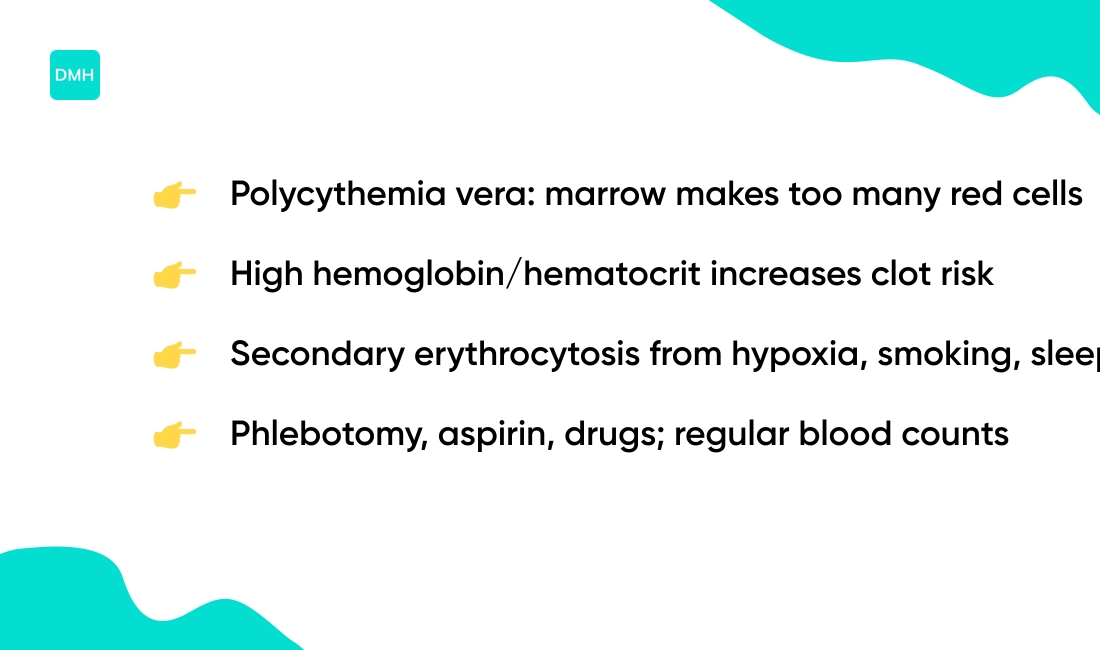
Polycythemia vera is a rare bone marrow disorder. The marrow makes too many red blood cells. Excess cells raise hemoglobin and hematocrit.
That increases clot risk.
Secondary erythrocytosis has a different cause. Low oxygen, smoking, sleep apnea, or altitude raise erythropoietin. Kidneys can overproduce the hormone.
Those factors drive elevated hemoglobin temporarily or until treated.
Treatment for high hemoglobin varies by cause. Doctors use phlebotomy to lower blood volume. Low-dose aspirin and targeted drugs help in polycythemia vera. Regular blood counts track response and safety.
We advise lifelong monitoring for true polycythemia. Early diagnosis and steady follow-up cut complications. Learn more about managing a high red blood cell count.
Lung and heart diseases
Lung and heart conditions drive higher hemoglobin. Damaged lungs and weak hearts lower oxygen reaching tissues.
COPD, emphysema, and chronic bronchitis reduce gas exchange in the lungs. Chronic low oxygen triggers the bone marrow to increase red blood cell production.
Heart failure and coronary disease lower blood flow and arterial oxygen transport. That compensation shows as elevated hemoglobin levels on a CBC.
Obstructive sleep apnea causes repeated nightly desaturations. Those drops prompt chronic reduced oxygen delivery and secondary erythrocytosis.
Oxygen saturation checks and sleep studies help identify causes. Hemoglobin can rise above 18 g/dL in untreated cases.
If a hemoglobin blood test shows high hemoglobin, talk to your clinician. They can check oxygen levels, pulse oximetry, and sleep testing to guide treatment.
Lifestyle and environmental factors
Smoking, high altitude, dehydration, and testosterone can raise high hemoglobin levels. Here’s the breakdown:
- Smoking increases red cell production by roughly 0.5–2 g/dL through chronic low oxygen exposure. Quitting lowers levels over weeks to months.
- Living above 2,000 meters commonly raises hemoglobin by about 1–3 g/dL. Moving to lower altitude usually reduces the value.
- Dehydration concentrates blood. Rehydration often normalizes the count within 24–48 hours.
- Testosterone therapy can push hemoglobin past 16.5 g/dL in men. Dose reduction or stopping typically brings levels down over several months.
Monitoring matters. Patients often return to the normal range after stopping smoking or fixing fluids. Most lifestyle and environmental causes are reversible when you remove the trigger.
Persistent elevation needs medical evaluation for conditions like polycythemia vera.
Other medical conditions
Kidney or liver tumors and hormone imbalances can cause elevated hemoglobin levels. They can push values above the hemoglobin normal range on a hemoglobin blood test.
Kidney tumors such as renal cell carcinoma can secrete erythropoietin and raise hemoglobin. Measured values can climb past 18 g/dL in uncommon cases.
Liver tumors like hepatocellular carcinoma may drive the same effect. Chronic liver disease can change plasma volume and alter measured hemoglobin.
Excess erythropoietin hormone causes secondary erythrocytosis from tumors or long-term low oxygen. Serum EPO and pulse oximetry help sort causes.
Rare genetic conditions include high-oxygen-affinity hemoglobin variants and EPOR or VHL mutations. Genetic testing with hematology referral confirms diagnosis and guides treatment.
Checking EPO, oxygen saturation, and targeted imaging gives the fastest answers. If your hemoglobin is high, ask your clinician for those tests.
What are the symptoms of high hemoglobin
Signs that suggest elevated hemoglobin can be subtle or serious. What does high hemoglobin mean in a blood test? It often means red blood cell levels sit above the normal range on a CBC.
Elevated hemoglobin can cause physical effects. Watch for high hemoglobin symptoms:
- Dizziness or lightheadedness
- Fatigue and weakness
- Headaches and sweating
- Itching, often after warm showers
- Shortness of breath or chest tightness
- Easy bruising or bleeding
- Red, ruddy face or flushed skin
Seek emergency care for chest pain, fainting, sudden weakness, slurred speech, or severe difficulty breathing.
Common causes include smoking, high altitude, COPD, sleep apnea, and dehydration. Rare causes include polycythemia vera or testosterone therapy.
Persistent headaches or unexplained bruising deserve prompt blood testing and medical evaluation. High blood counts can raise clot risk and raise concerns about high hematocrit risk.
Read more at Cleveland Clinic for symptom details and guidance on when to seek urgent care.
You might also like: What Is Neutrophils In Blood Test
Is high hemoglobin dangerous
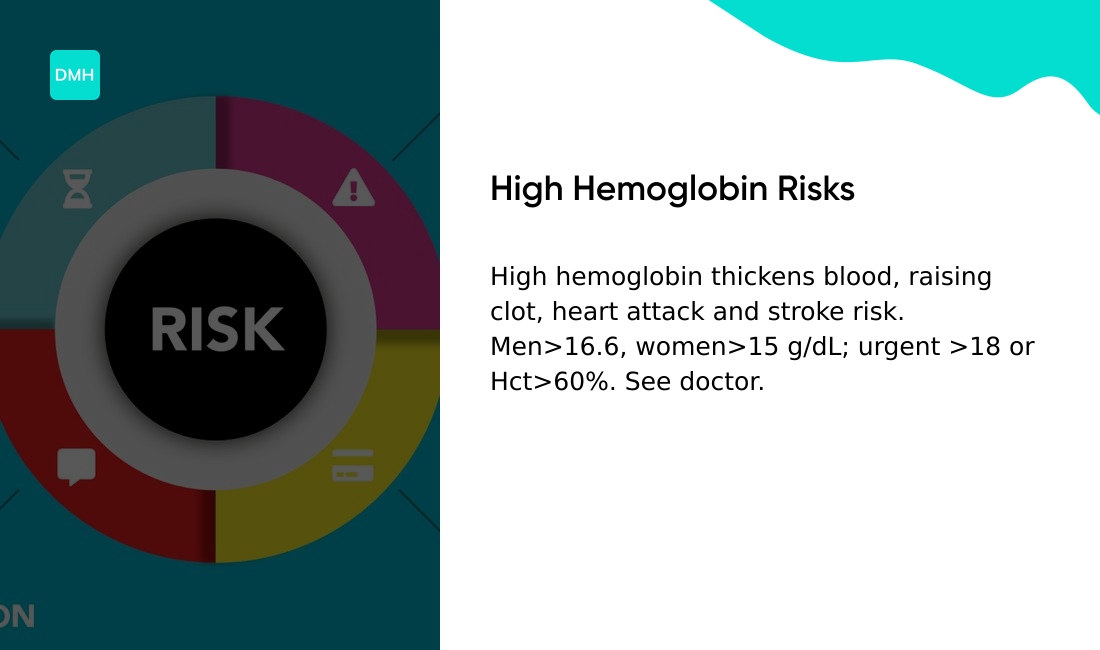
High hemoglobin can be dangerous. It increases blood viscosity and risk for blood thickening.
Thicker blood raises the chance of deep vein thrombosis, pulmonary embolism, and clot formation. That elevates your heart attack risk and stroke risk when levels stay high.
| Gender | High Hemoglobin Cutoff | Urgent Threshold |
|---|---|---|
| Men | Above 16.6 g/dL | Above 18 g/dL |
| Women | Above 15 g/dL | Above 18 g/dL |
| Both | — | Hematocrit over 60% |
Causes include smoking, living at high altitude, dehydration, COPD, sleep apnea, and testosterone therapy. One clear example is dehydration after intense exercise, which can temporarily raise readings.
Watch symptoms like severe headache, chest pain, sudden weakness, trouble speaking, or shortness of breath. Check the hemoglobin test page for lab basics and what numbers mean.
We advise prompt medical review if you have high readings or troubling symptoms. I’d say early testing and treatment lower the chance of serious complications.
See your clinician for further testing. Go to emergency care if you have chest pain or sudden neurologic symptoms.
You might also like: What Is Basophils In Blood Test
How do you lower high hemoglobin levels
We focus on treating the cause and lowering risk quickly.
Phlebotomy to remove excess blood remains the fastest option. Removing 300–500 mL per session often lowers hemoglobin by about 1 g/dL. Clinics schedule repeats until levels sit in the normal range.
Treat underlying disease to stop new red cell production. Address COPD, sleep apnea, or heart disease with appropriate therapy.
Hydration therapy helps correct volume-related rises. Drinking fluids before a blood draw can change a reading by around 0.5 g/dL.
Manage chronic conditions with targeted care. Doctors adjust oxygen therapy, prescribe CPAP for sleep apnea, and review medications like testosterone that raise levels.
Lifestyle changes reduce risk long term. Quitting smoking gives measurable improvement in months. Avoid prolonged high-altitude exposure when possible.
For bone marrow disorders, physicians may use drugs such as hydroxyurea or interferon. Some patients qualify for targeted agents to curb marrow activity and lower hemoglobin safely.
Monitor levels with repeat CBC tests. Bring these treatment options to your clinician and get a clear plan.
You might also like: Is It Serious To Be Referred To A Hematologist
Educational notice: This content is provided for informational and educational purposes only and is not intended as medical advice. Always consult a qualified healthcare professional for medical concerns.