Tonsil stones form when debris collects and hardens in tiny pockets on your tonsils.
Understanding how to get rid of tonsil stones starts with knowing how they form.
These small, often smelly deposits can cause persistent bad breath and discomfort.
What are tonsil stones and what causes them
Tonsillar crypts are natural folds on your tonsils where food particles, dead cells, and mucus lodge. Bacteria break that material down, creating foul odors and the typical tonsil stone smell.
Debris can clump into soft or hard nodules. Small stones often measure 1–3 mm, while larger stones cause visible white spots on tonsils and can make swallowing feel rough.
Post nasal drip drives extra mucus toward the back of your throat. Chronic sinus issues or allergies increase mucus flow. Recurrent infections lead to sticky, caseous material that promotes stone formation.
Poor oral hygiene raises the chance of debris buildup. Dry mouth and large tonsils trap more material. Actually, treating nasal drip and keeping a strict oral routine cuts recurrence dramatically.
We advise regular gargles, tongue cleaning, and targeted removal for visible stones. See an ENT when stones recur often or when swallowing becomes painful—that step will clarify treatment options, including tonsillectomy for tonsil stones as a permanent solution.
Common symptoms of tonsil stones
Tonsil stones symptoms often start with halitosis that brushing can’t fix. You may notice small white or yellow spots lodged in the tonsillar crypts. Roughly 10% of people with recurring tonsil issues report visible stones.
How can you tell if those white spots mean stones or an infection? Watch for high fever, severe throat pain, or swollen lymph nodes. Those signs point to strep throat infections rather than simple tonsil stones.
Tonsil stones can cause a lump sensation, ear pain from referred nerves, or a bad taste. The trapped debris releases sulfur compounds that create a foul odor—that tonsil stone smell will feel persistent even after mouthwash.
Small stones often respond to home care. Salt water gargles, gentle water flosser use, and tongue cleaning reduce recurrence. Practicing careful tonsil stone removal methods lowers discomfort and the need for medical removal.
See an ENT if stones return often or if you have significant pain, fever, or trouble swallowing. Take action early to protect your throat health.
How to remove tonsil stones at home safely
Water flosser for tonsil stones removal
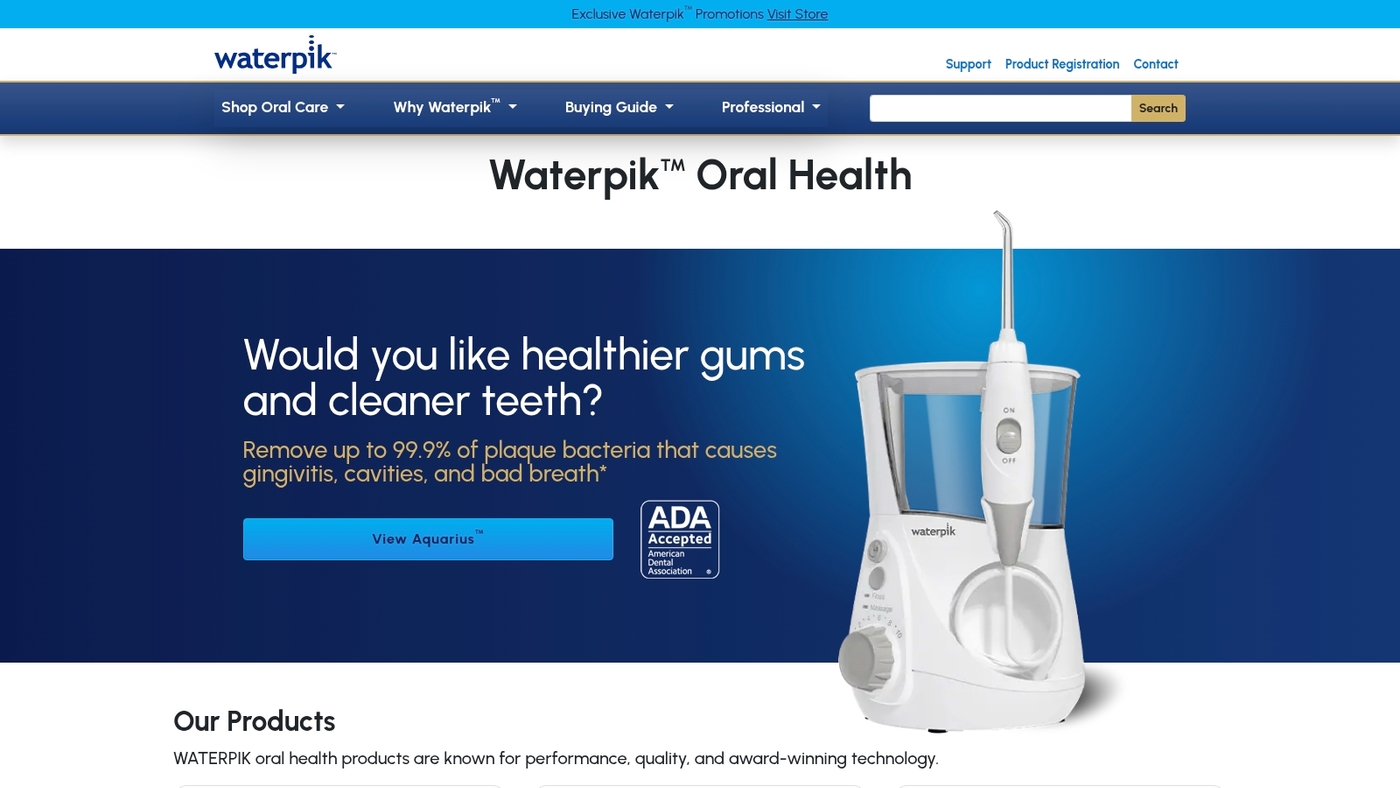
Use a water flosser on low pressure to flush soft, small tonsil stones safely. Set the irrigator to its lowest pulsing setting and aim a narrow tip gently at the tonsillar crypts.
Tilt your head slightly forward and open your mouth so water can exit freely. Aim for the pocket where you see white spots, delivering short 2–3 second bursts and pausing between attempts.
We recommend testing sprays outside the throat before you try this. Brands like Waterpik provide angled tips and fine pressure control that help with tonsil stones removal. This method works best on stones under 5 mm.
Stop immediately if you feel sharp pain or heavy bleeding. See an ENT for large, recurring, or hidden stones. Use this technique as part of a safe plan to learn how to get rid of tonsil stones at home.
Using cotton swabs safely
You can remove visible tonsil stones safely with a gentle, steady technique. This method works only for soft, easy-to-reach stones near the tonsil surface.
Tilt your head and shine a light to locate the stone. Use a moistened, soft cotton swab and press outward, away from the throat. Apply gentle pressure for 5 to 10 seconds and withdraw slowly.
If your gag reflex starts, stop immediately. Don’t force hard or embedded stones—if you can’t safely remove tonsil stones at home, use a low-pressure water flosser or see an ENT.
We recommend caution and gentle technique only. Moist swabs reduce tissue abrasion. Cotton swab tonsil stones removal can work for visible stones, but safety matters more than speed. If you can’t remove a stone in one try, see an ENT for safe removal.
Salt water gargle method
Warm salt water gargle reduces swelling, loosens debris, and helps dislodge small tonsil stones. Mix 1/2 to 1 teaspoon of salt in 8 ounces of warm water and stir until clear.
Take a mouthful, tilt your head back slightly, and gargle for 15 to 30 seconds. Spit, then repeat while you can tolerate the gag reflex.
Do this three times daily after meals to lower bacteria and soothe inflamed tonsillar crypts. It helps remove tonsil stones at home and reduces tonsil stone smell within days.
We recommend pairing this rinse with gentle water flosser use or careful cotton swab tonsil stones removal for stubborn debris. Large, deep stones may not budge, and an ENT can remove them safely. Regular gargles help prevent new stones—try them twice daily for two weeks and see an ENT if stones recur.
Specialized tonsil stone removal tools
Specialized tools make tonsil stones removal safer and more precise. They help you get rid of tonsil stones without injuring tissue and reduce gag reflex.
We recommend a small kit for removing tonsil stones at home: a soft curette, a curved spoon extractor, a silicone-tipped irrigator, and a low-pressure water flosser. Use a tonsil stone remover for firm stones and a water flosser tonsil stones setting at 20–40 PSI to flush soft debris.
Here’s the thing—disinfect tools, work in bright light, pull your tongue forward, use a depressor to expose crypts, and scoop gently. Stop if you see bleeding or strong pain.
If stones lie deep, recur frequently, or cause persistent bad breath, consult an ENT. These dedicated tools beat probing with fingernails. Choose a gentle tonsil stone tool, follow safe technique, and seek professional care for recurring stones.
Professional tonsil stones treatment options
Professional ENT procedures stop recurrent tonsil stones when home methods fail and your quality of life suffers. If you want to know how to get rid of tonsil stones, an ENT can offer lasting solutions.
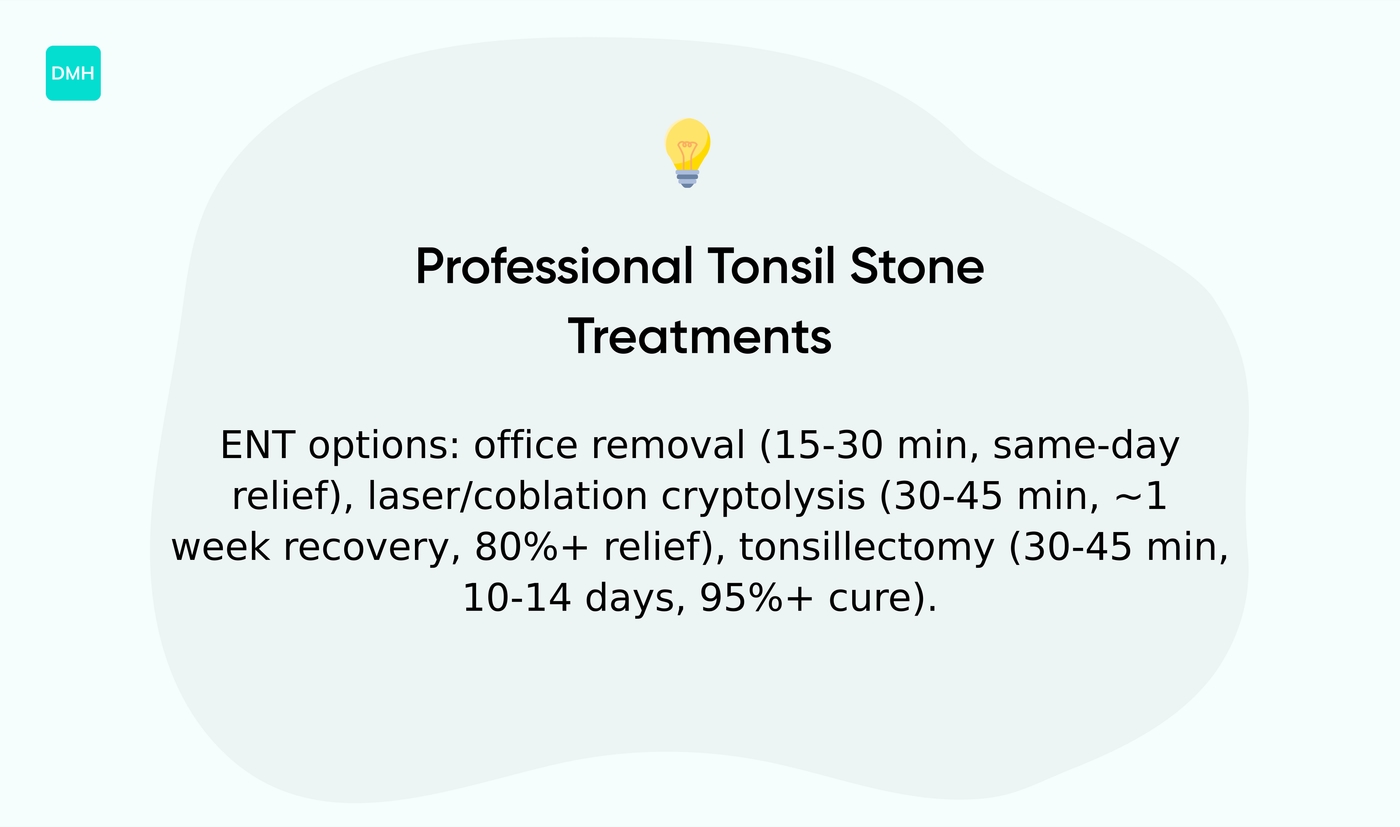
Options include professional tonsil stones removal with specialized instruments, laser cryptolysis procedure, and coblation cryptolysis option. Each targets tonsillar crypts that trap debris, bacteria, and mucus that cause bad breath and white spots on tonsils.
| Treatment Option | Duration | Recovery Time | Success Rate |
|---|---|---|---|
| Office Removal | 15–30 minutes | Same day | Immediate relief |
| Laser Cryptolysis | 30–45 minutes | About 1 week | 80%+ symptom relief |
| Coblation Cryptolysis | 30–45 minutes | About 1 week | 80%+ symptom relief |
| Tonsillectomy | 30–45 minutes | 10–14 days | 95%+ permanent cure |
Office removal uses gentle curettes and suction under local anesthesia for immediate tonsil stones removal. The visit takes 15 to 30 minutes and gives rapid symptom relief for visible stones.
Laser cryptolysis and coblation cryptolysis shrink or smooth the crypts to cut recurrence. Clinical reports show symptom relief in over 80 percent of treated patients. Read more about professional care for recurring tonsil stones and what to expect from an ENT evaluation.
Cryptolysis is a smart middle ground before considering tonsillectomy for tonsil stones. Patients gain many months without stones after a single procedure, with measurable drops in tonsil stone smell and throat discomfort.
We recommend you consult an ENT if stones recur, cause persistent bad breath, or interfere with swallowing. Ask your clinician which option fits your symptoms and recovery priorities.
Tonsillectomy for permanent tonsil stone elimination
Tonsillectomy eliminates tonsil stones permanently for most people. If you want to know how to get rid of tonsil stones, surgery ends recurrence and removes infected tissue.
Surgeons remove the tonsils under general anesthesia in an outpatient setting. Operation time typically runs 30 to 45 minutes. Adults usually recover in 10 to 14 days, while children often recover in 7 to 10 days.
Tonsillectomy stops stones in more than 95 percent of cases. Serious complications are uncommon, with bleeding risk near two percent.
We recommend surgery for frequent stones that cause chronic bad breath or recurrent infections. Consider it for patients with caseous tonsillitis or large crypts that trap debris and mucus from post nasal drip.
Pain peaks around day three to five and slowly eases. Many patients gain immediate relief from persistent halitosis and anxiety about white spots on tonsils. (And honestly, that peace of mind is priceless!)
Surgery has risks and recovery can be painful for some people. Yet permanent relief and more than 95 percent success make tonsillectomy a strong option for long-term tonsil stone prevention and a practical tonsillectomy permanent cure.
Talk with an ENT to weigh benefits and risks and to plan care. See detailed surgical information on the LIV Hospital page on tonsil stones surgery.
How to prevent tonsil stones from returning
Daily oral hygiene routine
We recommend a short, consistent oral routine to reduce tonsil stone risk. These steps stop debris from lodging in tonsillar crypts and reduce white spots on tonsils:
- Brush two minutes twice daily with fluoride toothpaste
- Floss once daily to clear trapped food and plaque
- Tongue cleaning daily using a scraper or soft brush
- Water flosser use after meals set to low pressure for 30 seconds per side
Some people need ENT care for recurring stones. Surgery removes tonsils, but daily care reduces the need for it.
Actually, the water flosser makes the biggest difference. Many users report fewer white spots and less bad breath after consistent use for six months.
Do this routine every day and you’ll learn how to get rid of tonsil stones and lower recurrence. Replace your toothbrush every three months or after illness.
Treating underlying conditions
We recommend treating allergies and chronic sinusitis to lower stone recurrence. That targets mucus and debris that lodge in the tonsillar crypts and feed stone growth.
Use nasal steroid sprays, antihistamines, and saline rinses to reduce mucus and post nasal drip. If you struggle to tell allergy symptoms from sinus infection, read sinus infection vs allergies.
Consistent nasal irrigation and targeted meds cut recurrence most and ease symptoms. Patients often halve episodes after three months of regular rinses consistently.
See an ENT if stones recur despite home care and breath odor persists for months. Your ENT can help you get rid of tonsil stones with medical or surgical care.
Lifestyle and dietary adjustments
Simple lifestyle and diet changes will reduce your tonsil stone risk. Stay well hydrated, avoid dairy products, and develop regular gargling habits to keep tonsils cleaner and limit debris buildup.
We advise you to drink about 8 cups (2 liters) of water daily. Use a water flosser on low pressure after meals to flush food from tonsillar crypts.
A warm salt water gargle at night prevents small stones from forming. Watch your reaction to dairy—many people notice more mucus and worse tonsil stone smell after milk or cheese.
Start with hydration and a nightly gargle as a simple tonsil stone prevention plan. If stones return despite these steps, see an ENT for targeted tonsil stones treatment or removal options.
You’ll also like: How long does it take for salt water to heal gums
Why tonsil stones cause bad breath and smell
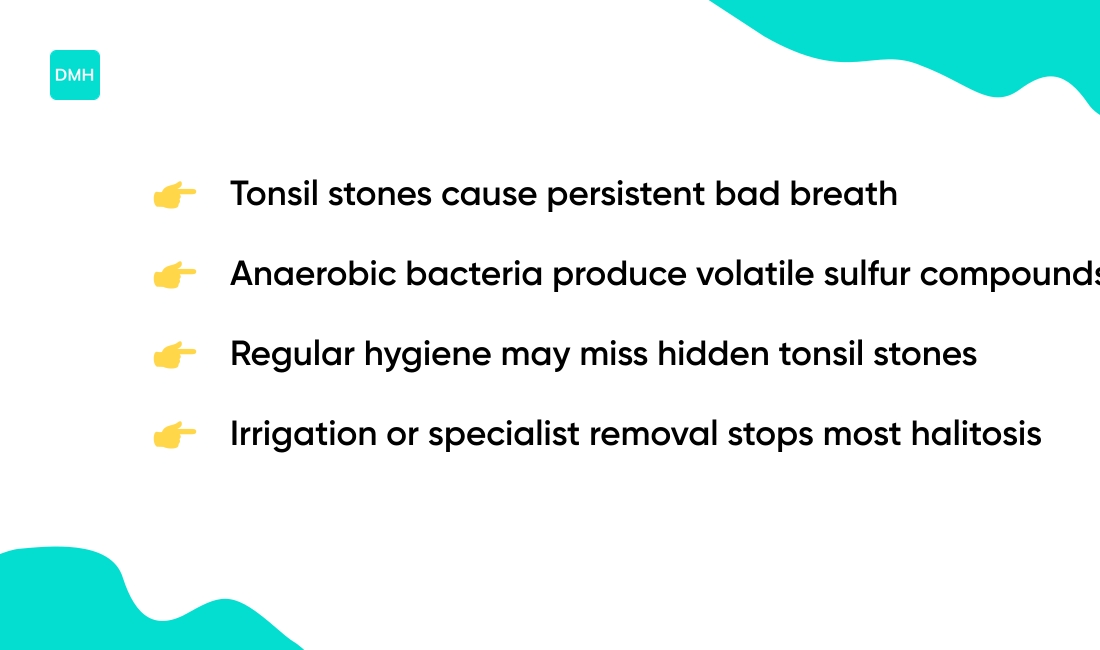
Tonsil stones cause persistent bad breath because trapped debris feeds sulfur-producing bacteria. Tonsillar crypts form deep pockets on your tonsils where food particles, dead cells, mucus and bacteria collect.
The pockets are low-oxygen zones where anaerobic bacteria thrive. These microbes break down proteins and release volatile sulfur compounds.
Hydrogen sulfide and methyl mercaptan create the rotten-egg and cabbage-like odors you detect. These gases register at parts-per-billion levels, so tiny amounts make a strong smell. The stones act like small fermentation chambers that keep producing gases between cleanings.
You can brush and floss daily and still have foul breath because the stones sit out of reach. If you often smell bad even with good hygiene, hidden tonsil stones may be the reason.
Removing the stones and reducing trapped debris stops most cases of halitosis. One practical step is gentle irrigation with a water flosser to flush soft stones. A specialist can remove deeper stones or offer cryptolysis when stones recur.
We recommend inspecting your tonsils after gargling and using targeted removal methods when stones are visible. Take action early to stop the odor and improve comfort.
You might also like: How Long Does It Take To Get Your Taste Back After The Flu
When to see an ENT specialist for tonsil stones
You should see an ENT specialist when tonsil stones recur or cause severe symptoms. If you get recurring tonsil stones more than three times a year, seek evaluation. Repeated episodes suggest deep tonsillar crypts or an underlying issue that home care can’t fix.
Visit an ENT if you have difficulty swallowing, sharp throat pain, fever, or visible bleeding. These signs point to infection or larger stones that risk damage.
When does bad breath become a medical concern? See a specialist when you have persistent bad breath that doesn’t improve with brushing, tongue cleaning, or gargles. Ongoing halitosis often means trapped bacterial debris in the tonsils.
We recommend ENT assessment when stones affect sleep, eating, work, or social life. Quality of life matters more than repeated DIY attempts. If stones stop you from speaking freely or eating comfortably, get a professional opinion.
An ENT can offer targeted options:
- Remove stones safely with specialized instruments
- Treat underlying infections
- Perform laser or coblation cryptolysis
- Discuss tonsillectomy for permanent removal
Try conservative care for a short time. If it fails, escalate care within a few months.
Book an ENT visit when stones recur, cause pain, impair swallowing, or ruin your daily life. Early evaluation saves time and prevents complications.
You might also like: How To Improve Gum Health
Educational notice: This content is provided for informational and educational purposes only and is not intended as medical advice. Always consult a qualified healthcare professional for medical concerns.