A stomach ulcer, also called a peptic ulcer, is a sore that forms in the stomach or the first part of the small intestine, the duodenum.
Acid and digestive enzymes eat away at the protective lining and create an open lesion that can bleed and hurt.
Two main causes drive most cases: infection with H. pylori bacteria and frequent use of NSAIDs such as ibuprofen or naproxen.
H. pylori weakens the mucus barrier and sparks inflammation. NSAIDs block prostaglandins that normally protect the lining, leaving tissue exposed to acid. Common signs include a burning or gnawing pain, nausea, bloating, and dark stools when bleeding occurs.
Treatment aims to remove the cause and let the tissue heal. Stomach ulcer treatment usually combines acid suppression and targeted antibiotics when H. pylori is present. We recommend testing for H. pylori early and stopping NSAIDs under medical guidance to prevent worsening.
Prompt identification of the cause leads to the fastest recovery. Patients often heal within weeks once infection is treated and acid is controlled. Ask your clinician for testing and a clear plan that matches your diagnosis—quick action reduces complications and speeds ulcer healing.
What is a stomach ulcer and what causes it?
The peptic ulcer develops when stomach acid damages the protective mucus layer. Think of it as a painful erosion in your digestive tract that needs proper care to heal.
H. pylori infection accounts for roughly 60–70% of ulcers worldwide. This bacterium burrows into the mucus, triggers chronic inflammation, and leaves the lining vulnerable. NSAIDs come in second—they inhibit protective prostaglandins and expose tissue to corrosive gastric juices.
Less common causes include Zollinger-Ellison syndrome (which cranks up acid production), severe stress from major surgery or burns, and excessive alcohol use. Smoking doubles your risk by reducing blood flow to the stomach and impairing healing.
Have you noticed persistent stomach pain that worsens between meals or at night? That gnawing or burning sensation is your body’s alarm bell. Other red flags include nausea, vomiting, bloating, weight loss, and dark or bloody stools.
Diagnosing the root cause is crucial. Your doctor can order a breath test, stool antigen test, or endoscopy to confirm H. pylori. Blood tests check for antibodies but can’t distinguish active from past infection.
Once you know the trigger, treatment becomes straightforward: eradicate the bacteria with antibiotics, suppress acid with PPIs, and eliminate irritants like NSAIDs. Most ulcers heal in four to twelve weeks when you tackle the underlying cause head-on.
The fastest way to cure a stomach ulcer: medical treatments
Proton pump inhibitors (PPIs) for rapid acid reduction
PPIs like omeprazole and esomeprazole deliver the fastest proven route to acid control. They work by blocking the H⁺/K⁺ ATPase enzyme on parietal cells, effectively shutting down the stomach’s acid pumps.
Lower acid protects the ulcer base and speeds tissue repair. According to the American Academy of Family Physicians, typical healing occurs in four to twelve weeks with proper PPI use.
Common doses range from 20 mg to 40 mg once daily, based on your diagnosis. Symptom relief can appear within days, but mucosal repair takes weeks. (Don’t stop early just because you feel better!)
Pair PPIs with antibiotics if your H. pylori test is positive. You should get testing, a prescription, and a follow-up plan with your clinician to ensure complete healing.
H. pylori eradication with antibiotic therapy
We present two proven regimens that clear H. pylori in most patients. The standard 14-day triple therapy pairs a proton pump inhibitor with clarithromycin and amoxicillin or metronidazole.
Trials show this approach often clears infection within two weeks. The bismuth quadruple therapy uses a PPI, bismuth, tetracycline, and metronidazole for 10–14 days. Both regimens deliver 90%+ eradication rates in contemporary studies when given correctly.
If you take amoxicillin, check guidelines on diet and interactions at foods to avoid while taking amoxicillin. Well, test-of-cure really improves outcomes—get a urea breath or stool antigen test four to eight weeks after therapy.
You should complete the full antibiotic course and follow your clinician’s guidance for the best chance of a lasting cure. Stopping early invites resistance and relapse.
H2 blockers and other acid-reducing medications
We recommend H2 receptor antagonists like famotidine for mild ulcers. They lower acid by blocking histamine receptors on stomach cells, achieving about 70–80% healing at four weeks for peptic ulcers.
They work slower than proton pump inhibitors, which often heal faster. H2 blockers fit well as step-down or second-line therapy when you’re transitioning off PPIs.
You should test for H. pylori and treat it if positive. What is the fastest way to cure a stomach ulcer? Use PPIs plus antibiotics for the quickest results.
H2 blockers reduce nocturnal acid well and come over the counter or by prescription. Common side effects stay mild—think headache or constipation. Tell your doctor about other medicines you take to avoid interactions.
We monitor healing with symptom checks and follow-up tests. This fits common stomach ulcer treatment plans when you need a gentler maintenance option.
Cytoprotective agents and antacids for symptom relief
Sucralfate and antacids coat ulcers and reduce pain quickly. Antacids neutralize stomach acid in five to fifteen minutes for immediate ulcer pain relief.
Sucralfate binds to the ulcer base and forms a viscous barrier that lasts hours. These agents help you feel better fast, but they don’t cure peptic ulcers alone.
You need targeted H. pylori testing and a PPI plus antibiotics for a true cure. Use antacids for symptom control and sucralfate as an adjunctive protective agent.
If you take NSAIDs, stop them and talk to your doctor about safer pain options. We’ve noted pain scores drop within 48 to 72 hours when patients add sucralfate to their regimen. See your clinician for testing if symptoms persist or bleeding occurs.
How long does it take to heal a stomach ulcer?
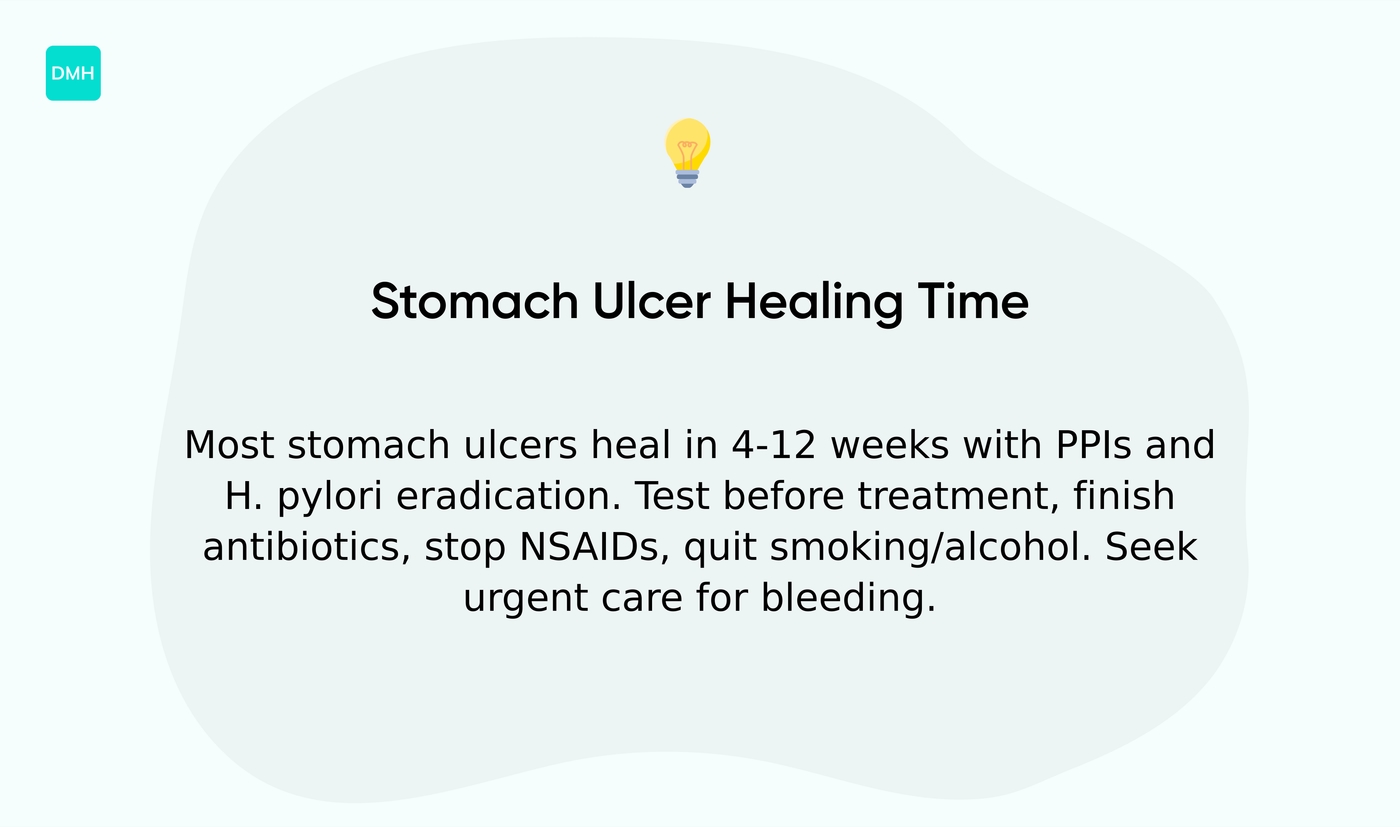
Most stomach ulcers heal in four to twelve weeks with proper treatment. Healing depends on the cause, treatment choice, and your habits.
Stomach ulcer healing speeds up when acid stays low and infection clears. Antibiotics can clear H. pylori in two weeks, while proton pump inhibitors cut acid fast and let tissue repair.
We recommend testing for H. pylori before starting therapy. Confirming infection improves cure rates and avoids needless antibiotics.
Several factors influence your recovery timeline:
- Ulcer size: larger ulcers need more time to close and heal completely.
- H. pylori status: positive infection slows healing unless you eradicate the bacteria.
- NSAID use: ongoing use delays repair and can trigger new ulcers.
- Smoking and alcohol: both reduce healing speed by impairing blood flow.
- Age and health: older age and chronic disease slow recovery.
- Medication adherence: stopping early causes relapse and complications.
Proton pump inhibitors relieve pain within days, yet tissue repair still needs weeks. H. pylori eradication often reaches over 90% with proper combination therapy, but mucosal repair follows later.
See a clinician for testing, full antibiotic courses, and follow-up endoscopy when advised. A clear plan speeds recovery: test, treat, stop NSAIDs, quit smoking, and stick to meds. If you have bleeding or severe pain, seek emergency care.
What stops stomach ulcer pain immediately?
We recommend quick symptom control while you pursue a proper cure. Antacids neutralize stomach acid in about five minutes and provide fast, short-term pain relief.
Here’s your go-to list for rapid comfort:
- Antacid tablets: chew or dissolve as directed for relief within five to ten minutes.
- Sucralfate and coating agents: form a protective layer and ease pain within 20–30 minutes.
- Oatmeal or banana: bland foods buffer acid and calm the stomach lining.
- Avoid triggers: skip spicy foods, coffee, alcohol, and NSAIDs like ibuprofen and aspirin to limit irritation.
- OTC H2 blockers: famotidine lowers acid in one to three hours for longer relief.
We suggest pairing a chewable antacid with a bland snack for the quickest effect. Many people feel better in minutes. (It’s a lifesaver when pain strikes at night!)
Quick relief matters, but it doesn’t cure the ulcer. You should get testing for H. pylori and start prescribed treatment to heal the tissue. For related reflux tips, read our guide to getting rid of heartburn easily.
Seek urgent care for severe pain, vomiting blood, or black stools. A doctor can order antibiotics or proton pump inhibitors to heal the ulcer fully and prevent dangerous complications.
Natural remedies and home treatments for stomach ulcers
Probiotics for gut health and H. pylori management
We recommend probiotics as an adjunct to standard H. pylori therapy. Evidence shows probiotics improve eradication rates by about 10–15% and cut antibiotic side effects.
Choose strains like Lactobacillus, Bifidobacterium, or Saccharomyces boulardii at 1–10 billion CFU daily. Continue for two to four weeks after antibiotics to restore balance.
Support ulcer healing with probiotic yogurt or a supplement. They reduce H. pylori activity while antibiotics do the main work. Probiotics cut antibiotic-associated diarrhea rates by roughly 40%.
Use probiotics alongside PPIs and antibiotics for stomach ulcer treatment. They support how to heal a stomach ulcer when paired with medical care. Probiotics rank among natural remedies for stomach ulcers with evidence-backed benefits.
Speak with your physician before you start. Stop or change therapy only with medical advice to avoid setbacks.
Honey and its antibacterial properties
We recommend raw honey as a supportive option. Lab studies show Manuka honey inhibits H. pylori in vitro—some papers report growth inhibition at roughly 2–10% weight per volume.
Clinical data remain small but promising. Trials show symptom relief and reduced gastric inflammation when honey joins standard therapy.
Use one teaspoon of raw honey twice daily on an empty stomach or with warm water. Do not give honey to infants under one year due to botulism risk.
Honey soothes the stomach lining and can assist eradication of H. pylori when paired with antibiotics and PPIs. Start with prescribed H. pylori treatment first, then add honey as complementary care and tell your clinician. Many patients feel noticeably calmer after adding honey to their routine.
Turmeric, garlic, and other anti-inflammatory foods
We recommend using food to support ulcer treatment alongside prescribed medicines. Curcumin reduces inflammation—this compound in turmeric lowers inflammatory markers and helps tissue repair.
Clinical trials use 500–2,000 mg daily and report reduced C-reactive protein levels. Garlic fights bacteria through allicin, which shows antibacterial activity against H. pylori in lab studies. Human trials are limited but suggest benefit when paired with standard antibiotics.
You can add one teaspoon turmeric to meals or take a 500 mg curcumin supplement with piperine for better absorption. Eat one garlic clove daily if you tolerate it. Avoid high-dose supplements if you take blood thinners or have gallbladder disease.
Modest, consistent use speeds symptom relief and supports healing. Do not stop PPIs or antibiotics—talk with your clinician before adding supplements to your stomach ulcer treatment plan.
Best diet for stomach ulcers: foods to eat and avoid
We recommend a bland, low-acid plan to support healing and reduce pain. Eat soft, gentle foods that coat the stomach lining.
Oatmeal and bananas soothe and provide fiber. Plain yogurt with live cultures aids digestion and may help your stomach ulcer diet. Lean proteins like boiled chicken and eggs repair tissue without triggering acid spikes.
Follow these simple guidelines:
- Eat small meals every 3–4 hours to keep acid levels steady.
- Choose steamed vegetables and cooked fruits over raw, acidic options.
- Drink water, herbal teas, and clear broths—skip carbonated drinks.
Avoid items that irritate the lining: coffee, alcohol, spicy dishes, citrus, tomato-based sauces, high-fat fried foods, and NSAIDs. For a related list, see foods to avoid after endoscopy for overlap in recommendations.
Simple swaps cut flare-ups fast. Replace black coffee with decaf or warm water. Swap fried meals for baked or boiled options. (Your stomach will thank you!)
Diet supports treatment but doesn’t replace prescriptions for H. pylori or acid suppression. Combining diet with antibiotics or PPIs is the ulcer pain relief approach I’d recommend. If you want a concise treatment timeline, consult this guide: Rupa Health on ulcer recovery.
You might also like: Foods to Avoid While Taking Miralax
Lifestyle changes that speed up ulcer healing
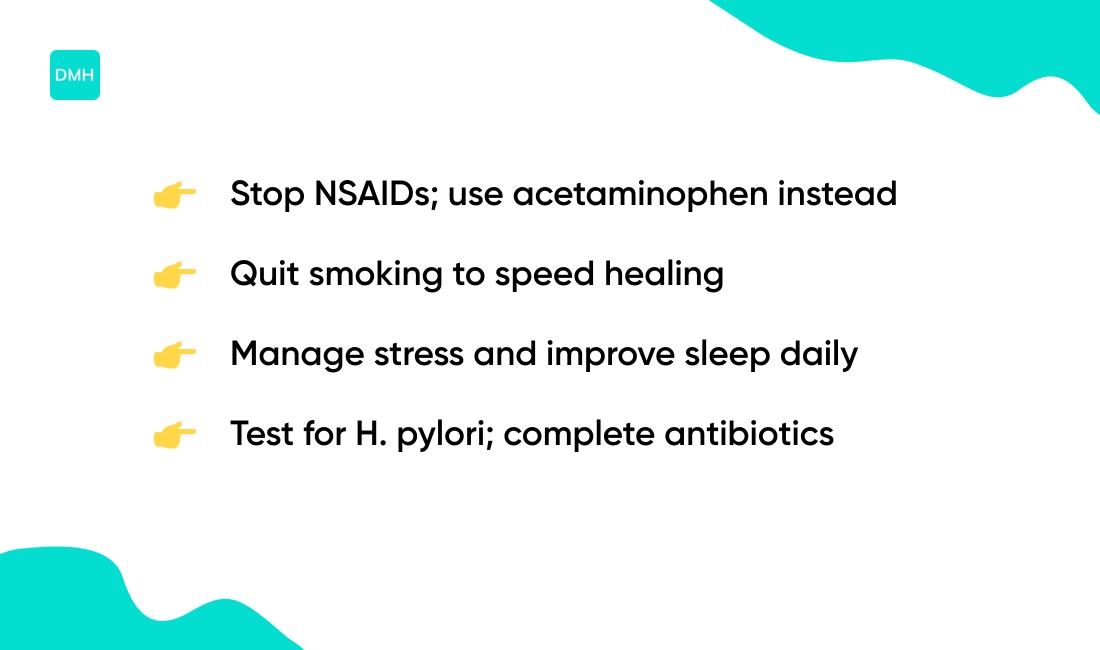
If you ask what is the fastest way to cure a stomach ulcer, pair medical therapy with practical lifestyle shifts. Stop NSAIDs—these drugs weaken the stomach lining and slow healing. Speak with your clinician about safer pain options like acetaminophen.
Quit smoking now. Smoking doubles recurrence risk and delays tissue repair by reducing blood flow. Limit alcohol intake—alcohol irritates ulcers and raises acid production.
Manage stress daily. Deep breathing for ten minutes cuts perceived pain. Try short guided relaxation or a CBT app to reduce flare-ups. (Stress really does mess with your gut!)
Improve sleep hygiene. Poor sleep raises acid and sensitivity. Read tips on how to get rid of stomach ache when trying to sleep to lower nighttime pain.
Here’s the bottom line: quitting NSAIDs and tobacco speeds recovery more than diet tweaks alone. Test for H. pylori and complete prescribed antibiotics if positive. Combined treatment with a proton pump inhibitor heals most ulcers in four to twelve weeks.
| Lifestyle Change | Impact on Healing | Action Step |
|---|---|---|
| Stop NSAIDs | Reduces irritation, allows lining to repair | Switch to acetaminophen with doctor approval |
| Quit smoking | Doubles healing speed, cuts recurrence risk | Use nicotine replacement or counseling |
| Limit alcohol | Lowers acid production, reduces inflammation | Avoid or limit to 1 drink per week |
| Manage stress | Decreases acid spikes and pain perception | Practice 10 min daily breathing or meditation |
| Improve sleep | Enhances tissue repair, lowers sensitivity | Elevate head of bed, avoid late meals |
We advise a short plan: stop irritants, lower stress, fix sleep, and follow medical treatment. Talk to your doctor before changing medicines to avoid complications.
Read also: How To Get Rid Of Bitter Taste From Medicine
When to see a doctor for stomach ulcer treatment
Seek emergency care if you vomit blood or pass black, tarry stools. We urge you to call emergency services for severe abdominal pain, fainting, or rapid heartbeat—these signal bleeding or perforation.
Watch for these warning signs:
- Severe, sudden stomach pain that doesn’t ease.
- Fainting or lightheadedness from blood loss.
- Persistent vomiting, especially with blood or coffee-ground material.
- Dark or bloody stools indicating gastrointestinal bleeding.
- Rapid heartbeat or shortness of breath from anemia.
H. pylori testing matters for an accurate cure. Breath, stool, and endoscopy tests find the bacteria. Confirming H. pylori guides correct antibiotics and improves cure rates. Read the Mayo Clinic overview for diagnosis and treatment details.
Avoid antibiotic resistance by never self-prescribing antibiotics. Improper antibiotic use lowers eradication rates and creates resistant strains. You should not take leftover antibiotics or stop a prescribed course early.
See your doctor if pain worsens or symptoms last more than a week. Your clinician can order tests, start a proton pump inhibitor, and prescribe the right antibiotic regimen when needed. Early action prevents complications and speeds healing.
You’ll also like: How Long After Drinking Coffee Can I Take Medicine
Educational notice: This content is provided for informational and educational purposes only and is not intended as medical advice. Always consult a qualified healthcare professional for medical concerns.