Eye twitching can be annoying, right?
That little flutter in your eyelid often shows up without warning.
Most episodes are harmless and fade on their own.
But understanding the causes and knowing when to seek help can bring real peace of mind.
Let’s dive into what triggers these spasms and how you can stop them.
What is eye twitching
We call eye twitching myokymia.
Myokymia means tiny, involuntary muscle contractions around the eyelid.
These contractions feel like a flutter, a brief tug, or a pulse. They come and go without warning and often last just seconds.
Eye twitching most often affects one eye at a time. One eyelid may flutter while the other stays still, and the twitch can involve the upper or lower lid independently.
Involuntary eyelid spasms describe the physical movement you feel. Common eye twitching causes include fatigue, stress, caffeine, and screen strain.
I’d say most episodes are harmless and resolve on their own. (Honestly, they usually disappear before you even think about calling a doctor!)
If you notice persistent twitching that spreads or lasts days, seek care. Occasional myokymia rarely signals a serious condition.
Ocular myokymia differs from blepharospasm and hemifacial spasm in severity. If you want to protect your eyes, reduce triggers and rest your eyes regularly.
What causes eye twitching
Can stress cause eye twitching
Many readers ask, “why is my eye twitching” after a stressful week.
Stress and anxiety can trigger involuntary eyelid contractions called myokymia. Stress raises cortisol, and high cortisol levels increase nerve excitability, making small muscles more likely to spasm.
Anxiety amps up blinking and muscle tension. That makes eyelid muscle spasms more likely to appear on one side. You may notice twitches during busy workdays or after poor sleep.
Mild twitches respond well to simple changes. Try five minutes of deep breathing twice daily, sleep seven to eight hours, and cut back on caffeine and screens.
If an eye twitch lasts longer than a week, spreads to your face, or affects vision, see an eye doctor or neurologist. Early evaluation rules out blepharospasm or other problems.
Can lack of sleep cause eye twitching
Sleep loss can trigger eyelid myokymia. Fatigue causes small eyelid muscle spasms.
Have you been burning the midnight oil lately? If you ask “why is my eye twitching,” check your rest hours first. Many cases stop within 48–72 hours with improved sleep.
We recommend aiming for 7–8 hours nightly. Short naps of 20 minutes reduce acute tiredness and lower twitch risk.
Lack of sleep increases neuronal excitability, elevates stress hormones, and can worsen magnesium depletion.
Prioritizing sleep provides the fastest relief for most people. These simple eye twitching remedies often work fast.
Try warm compresses and cut late caffeine. Seek medical attention for twitches lasting more than one week or those that spread.
Limit screens 30 minutes before bed to improve sleep quality. Magnesium supplements of 200–400 mg nightly help some people with muscle spasms.
Does caffeine cause eye twitching
We get many questions about eye twitching after coffee.
Caffeine stimulates the nervous system and raises nerve firing. That extra excitability can trigger eyelid myokymia.
An 8-ounce regular coffee has about 95 mg caffeine. Daily intakes above 200 to 300 mg often link to more twitching. Cutting back can lower your eyelid myokymia risk.
Alcohol disrupts sleep and can worsen eyelid spasms. Nicotine acts as a stimulant and increases nerve excitability.
Actually, cutting caffeine helps most people fast. Try to reduce caffeine intake to under 200 mg per day.
Avoid late-night drinks and limit alcohol use to improve sleep. Track your symptoms for one week. If twitching lasts more than two weeks, see your doctor.
Can too much screen time trigger eye twitching
We hear many ask, “why is my eye twitching?”
Prolonged screen use causes dry eyes and eyelid spasms. Bright screens and glare increase eye strain. That strain triggers myokymia or ocular myokymia in one eye.
Blink rate drops while you stare, causing surface dryness and irritation. Common eye twitching causes include fatigue and caffeine.
Try blue light glasses and proper lighting to ease strain. Use lubricating drops for dry eyes and rest your eyes often.
Simple changes reduce digital eye strain and stop eyelid muscle spasms fast. Adjust screen brightness to match room light and reduce glare.
Position your screen slightly below eye level to lower eyelid strain. Humidifiers can ease dry eyes during long desk sessions.
Lubricating eye drops are a top eye twitching treatment at home. If twitching persists for weeks, seek medical advice for possible blepharospasm.
Which vitamin deficiency causes eye twitching
We check nutrients when people ask why their eye is twitching.
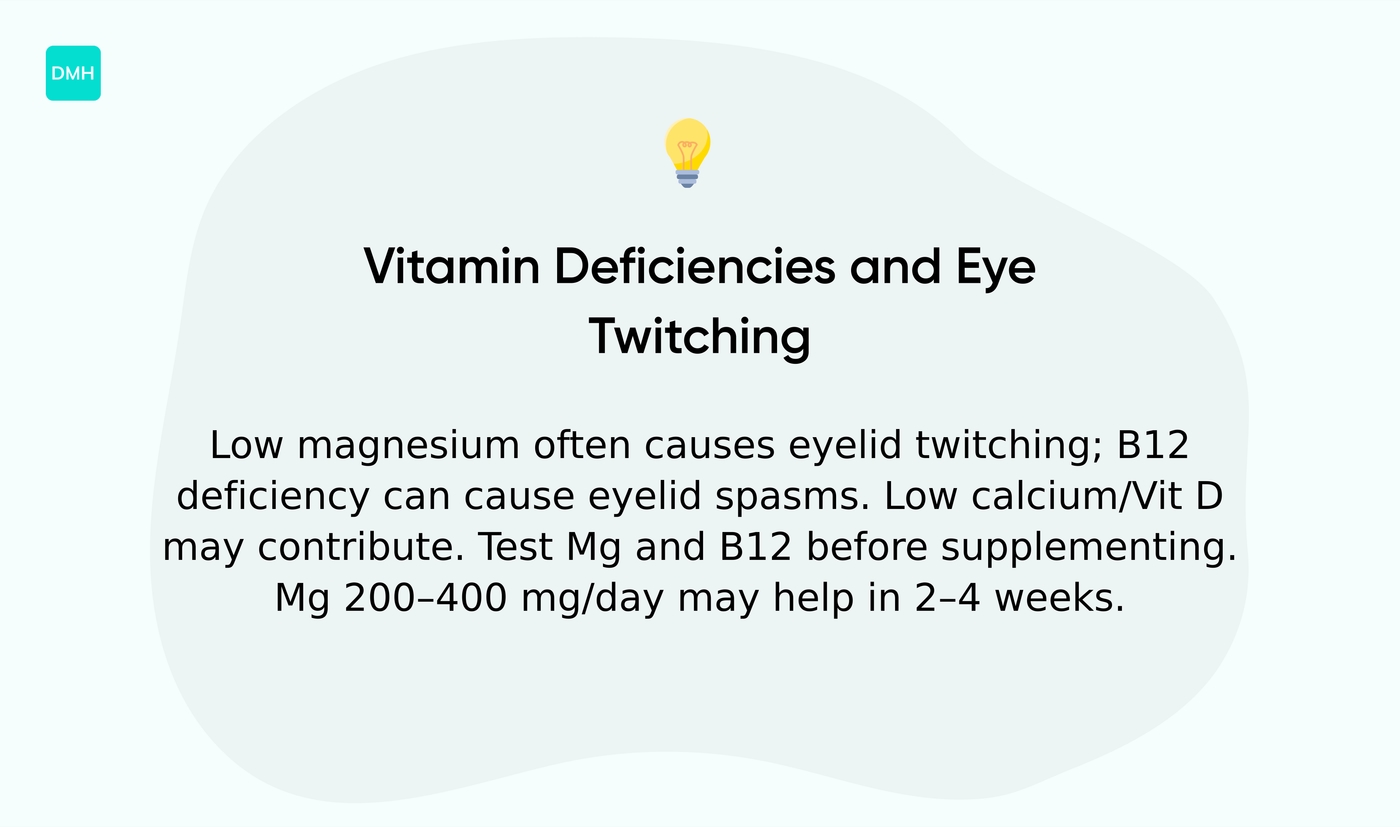
Eye twitching causes often include low magnesium. Magnesium controls nerve and muscle excitability, and low magnesium can raise eyelid myokymia risk. Some trials report reduced cramp frequency after magnesium supplementation.
Vitamin B12 deficiency harms nerve function. B12 shortfall can cause tingling, weakness, and rare eyelid spasms. A serum B12 test helps rule out neuropathic causes.
Low calcium and low vitamin D change muscle contraction. Low calcium may trigger small muscle fasciculations, while low vitamin D links to muscle pain and weakness.
Over-the-counter magnesium doses commonly range 200–400 mg daily. Many people notice less twitching within two to four weeks.
Checking magnesium and B12 first makes sense. Ask your clinician for blood tests before starting supplements.
What is the difference between myokymia and blepharospasm
Myokymia, often called ocular myokymia, is a fine, rapid eyelid twitch. It usually affects one eye for short spells. Triggers include stress, fatigue, caffeine, and dehydration.
We separate mild eyelid twitch from serious spasms by pattern and impact. Most cases of eye twitching causes point to myokymia and will ease with rest and small lifestyle changes.
Benign essential blepharospasm produces stronger, sustained blinking or tight closure of both eyelids. Symptoms can blur vision and interfere with daily tasks. Look for persistent, forceful spasms that last minutes or recur many times per day.
Hemifacial spasm involves one side of the face beyond the eyelid. It causes intermittent contractions of cheek and mouth muscles. The usual cause is irritation of the facial nerve, sometimes from a blood vessel pressing on the nerve.
| Condition | Affected Area | Duration | Severity |
|---|---|---|---|
| Myokymia | One eyelid | Seconds to minutes | Mild, harmless |
| Blepharospasm | Both eyelids | Minutes, recurrent | Moderate to severe |
| Hemifacial Spasm | One side of face | Intermittent | Moderate to severe |
Watch for red flags: twitches that spread to the face, block your vision, grow worse over days, or come with facial weakness or pain. Those signs need a neurologic exam and possible imaging.
Read more from the Mayo Clinic for guidance on when to seek care.
How do I stop my eye from twitching
Get adequate sleep and rest
Aim for 7-8 hours of quality sleep every night. A steady bedtime within 30 minutes helps your nervous system recover.
Fatigue often triggers eyelid muscle spasms. Proper rest stops most eyelid spasms within days to weeks.
We recommend tracking sleep for two weeks to spot patterns. Note when twitches start after poor sleep or long workdays.
The best answer to “why is my eye twitching” is often sleep loss. Start by fixing your sleep first.
Here’s what works: set a wind-down alarm 30 minutes before bed, dim lights, stop screens, avoid caffeine after 2 p.m. Track results and adjust.
See an eye doctor if twitches persist more than two weeks or you notice other neurological signs.
Reduce caffeine and alcohol intake
Caffeine and alcohol often trigger eyelid spasms.
We recommend lowering intake to curb eye twitching. Aim to limit caffeine intake to about 200 mg daily—that equals about two regular cups of brewed coffee.
Aim to reduce alcohol consumption to one standard drink on most days. One standard drink equals 14 grams of pure alcohol.
Try swapping one coffee for decaf each day. Set a caffeine cutoff by mid-afternoon.
Avoiding caffeine after 2 PM helps most people. Choose healthier alternatives like herbal tea or sparkling water.
Magnesium-rich foods support nerve and muscle function. Track servings with a simple app and taper intake by about 25% weekly. If twitching persists, see your clinician for other causes.
Manage stress through relaxation techniques
We recommend simple relaxation methods to reduce eye twitching linked to stress.
Yoga, meditation, and deep breathing exercises calm the nervous system. When was the last time you took a real break?
If you ask why your eye is twitching, check your stress and anxiety levels first. Try ten minutes of guided meditation each morning.
Short sessions work better than long routines for most people. Practice deep breathing three times daily with a 4-6-8 cycle for two minutes.
Yoga boosts body awareness and lowers stress hormones in many studies. Track results for two weeks to see change.
Pair relaxation with good sleep and hydration to limit triggers. Use these simple eye twitching remedies to reduce spasms over days.
Limit caffeine and late alcohol to help your nerves calm. Plus, reduce screen time and blink often to fight digital eye strain. If spasms persist beyond a month, see your doctor for evaluation.
Use artificial tears for dry eyes
We recommend preservative-free artificial tears for mild dry eyes.
“Why is my eye twitching” often links to dryness. They soothe irritation that often sparks an eyelid twitch.
Choose lubricating eye drops labeled preservative-free for frequent use. Dry corneas send nerve signals that trigger myokymia.
Regular lubrication calms the surface and helps reduce eye twitching. Drops cut twitch episodes for many people.
Avoid decongestant “redness” drops—those can worsen dryness and prolong twitching. Apply drops every two to four hours as needed.
Use drops as one of your eye twitching remedies. Seek care if twitching lasts over a week or causes eyelid closure. Neurologic signs need prompt evaluation.
Read also: Why Is My Anxiety Worse in the Morning?
Apply the 20-20-20 rule for screen breaks
We recommend the 20-20-20 rule for screen breaks. Look 20 feet away for 20 seconds every 20 minutes.
This rule reduces eye twitching by lowering strain and blink suppression. It can ease headaches behind the eyes caused by prolonged focus.
Set a visible timer on your phone or laptop to cue breaks every 20 minutes. Use a 20-second breathing exercise while you look away to relax your eyelids.
Track your screen hours and cut nonessential use by 30% if twitches persist. If twitching continues for more than a week, see a clinician for evaluation.
Short breaks likely reduce symptoms by about 30% in people with digital eye strain. Timers can help you notice fewer twitches within days.
You might also like: Sinus Infection Vs Allergies
When should I worry about eye twitching
Most eyelid twitching, or myokymia, stops on its own. A single eye twitch that lasts a few seconds is common. But certain signs mean you should reach out to a doctor.
How do you know when it’s time to worry? Here’s the thing—watch for these red flags:
- Eye twitching warning: twitching that lasts more than seven days
- Spasms that force your eyelid to close, affecting reading and driving
- Twitching that spreads to your cheek, mouth, or neck
- New facial weakness, numbness, or droop on one side
- Sudden vision changes, double vision, or persistent eye pain
- Slurred speech, confusion, or trouble walking—these signs need emergency care
- Recent head injury or eye trauma with ongoing spasms
Spasms that grow worse over weeks may signal blepharospasm or hemifacial spasm. These require evaluation by a neurologist or ophthalmologist.
We advise you to contact a provider if symptoms match any red flag above. Early assessment helps catch treatable causes.
If you want a reliable summary of warning signs and next steps, see the Cleveland Clinic guide.
If your twitching limits daily tasks or comes with neurological signs, seek immediate care. But if it’s brief and isolated, try rest, hydration, and reduced caffeine first.
You’ll also like: How Far Away Should Your Phone Be When You Sleep
Educational notice: This content is provided for informational and educational purposes only and is not intended as medical advice. Always consult a qualified healthcare professional for medical concerns.