
Cloudy urine isn’t something to ignore.
Seeing cloudy urine can mean anything from harmless dehydration to an infection or a kidney issue, and it’s often accompanied by smells, pain, or sediment.
Knowing the likely causes and when to seek care makes a big difference in getting the right treatment quickly.
This guide explains how doctors and simple at-home checks distinguish harmless changes (like concentrated morning urine) from conditions that need antibiotics, diabetes management, or stone treatment.
You’ll learn clear signs to watch for, common causes across age groups and sexes, and practical steps to help relieve symptoms or prepare for a medical visit.
By the end you’ll be able to spot warning signs and take the next steps with more confidence.
What is cloudy urine
Cloudy urine appears murky or opaque instead of clear. Normal urine ranges from pale yellow to amber, and clarity often reflects hydration status and waste concentration.
Cloudiness can stem from cells, mucus, crystals, or bacteria. Some causes are harmless. Others may indicate infection or metabolic changes.
Milky or very opaque urine often means fat, pus, or high amounts of protein. Clinicians sometimes describe that appearance as turbid—meaning suspended particles scatter light and block clarity.
Cloudy urine differs from foamy urine. Foamy urine shows bubbles that persist after voiding. That pattern can relate to rapid urine flow or excess protein. Cloudy urine shows visible particles or a cloudy tint rather than persistent bubbles.
Small white particles or sediment may represent mucus, crystallized minerals, or cells. A foul odor or burning with cloudiness may be associated with urinary tract infection or sexually transmitted infection. Sweet or fruity smells can relate to high blood sugar.
If you notice sudden, persistent, or painful cloudiness, consider discussing it with your clinician. This content is for educational purposes and not medical advice. Always consult a qualified healthcare professional for guidance specific to your situation.
What causes cloudy urine
Dehydration and concentrated urine
Insufficient fluid intake, heavy sweating, fever, or illness may be associated with reduced urine volume and higher solute concentration. That process often produces dark colored urine and a cloudy or turbid appearance.
You may notice strong thirst, low urine output, feeling tired, or lightheadedness. Urine can smell stronger and show fine sediment or white particles.
Laboratory checks often show a rise in urine specific gravity. Values above 1.020 commonly suggest concentration; values above 1.030 suggest marked concentration. Plus, severe dehydration can bring on dry mouth, dizziness, and reduced skin elasticity.
Consider increasing fluid intake and tracking voiding volume. Most adults benefit from about 1.5 to 2 liters per day, though needs vary by activity, climate, and health status. See the page on dehydration blood test results for more lab context.
Not medical advice. Always consult a qualified healthcare professional for guidance tailored to your situation.
Urinary tract infections (UTIs)
Bacteria enter the urinary tract and trigger an immune response. The body sends white blood cells, which form mucus and pus in urine—creating cloudiness.
Pyuria often shows as more than 10 white blood cells per high-power field on microscopy. Common symptoms include burning with urination, frequent urges, foul odor, and pelvic pain.
Urine may contain white particles or sediment and look turbid or milky. Some people report cloudy, smelly urine that’s hard to ignore. Dipstick tests can show nitrites or leukocyte esterase.
High white blood cell counts in urine often accompany infections. Laboratory thresholds and findings may vary by lab.
This information is for educational purposes and not medical advice. Consider discussing symptoms with your clinician.
Sexually transmitted infections (STDs)
Chlamydia and gonorrhea are bacterial sexually transmitted infections that commonly produce genital discharge. Inflamed mucous membranes attract immune cells and mucus, which can make urine appear turbid or milky.
CDC reported about 1.8 million chlamydia cases and 616,000 gonorrhea cases in the United States in 2019. The immune response often releases white blood cells and pus into genital fluids, and those fluids can mix with urine.
Mixing may lead to cloudy, smelly urine or visible unusual genital discharge. Typical symptoms include genital pain, painful urination, and discharge that differs from an individual’s normal pattern. Many infections remain asymptomatic, so people may not notice early signs. (That’s why routine screening matters.)
Not medical advice. You may wish to discuss persistent cloudy urine, genital pain, or painful urination with a qualified healthcare professional for evaluation and testing.
Diabetes and excess sugar
Uncontrolled high blood sugar can make urine look cloudy. When blood glucose rises above about 180 mg/dL, kidneys may spill glucose into urine.
It can produce a fruity smell when the body forms ketones from fat. People with high sugar levels may report excessive thirst, increased hunger, fatigue, and frequent urination.
Longer term high glucose is associated with more infections and slower healing. White blood cells and mucus can make urine look turbid or milky. Glucose loss can make urine appear turbid rather than foamy.
Some studies suggest a twofold higher urinary infection risk in people with diabetes, though findings vary by study. Some people report white particles or sediment that settle when urine stands.
Have you noticed a sweet or fruity odor alongside cloudiness? If you notice persistent cloudy urine or that distinctive smell, consider contacting a clinician.
This content is for educational purposes only. Always consult a qualified healthcare professional for medical advice specific to your situation.
Kidney stones and crystals
Stone fragments and crystals can make cloudy urine and leave visible sediment. Sediment in urine often appears as tiny grains or white flakes.
Crystals form when urine becomes concentrated and minerals precipitate out. Common types include calcium oxalate and uric acid crystals. Tiny fragments create white particles and give a turbid or milky appearance.
These stones can cause sudden flank pain. Some people report severe back pain that radiates to the groin. Nausea, vomiting, and fever may occur—and fever may signal an infection that needs prompt evaluation.
Estimates suggest about 1 in 10 people may develop stones in their lifetime. Stones under 5 mm often pass without surgery. Stones larger than 5 to 6 mm may require urologic procedures and imaging.
You may wish to discuss symptoms and options with a clinician. Read about ginger and kidney health for related kidney questions.
Cloudy urine in specific populations
What causes cloudy urine in women
Cloudy urine in women often reflects vaginal fluid mixing with urine. Mucus, white particles, or sediment from discharge can make urine look turbid or milky.
Vaginal discharge from bacterial imbalance may be a common factor. Bacterial vaginosis involves a shift in vaginal bacteria and may be associated with thin gray discharge. Some surveys report BV in about 29% of reproductive-age women.
Yeast infections produce thick white discharge that can appear as flakes or sediment in urine. Chlamydia and gonorrhea may create pus and cloudy urine with pain or unusual odor.
Hormonal changes around ovulation or pregnancy can increase secretions and change urine appearance. Cloudy urine after sex often follows semen or extra vaginal fluid.
Persistent cloudiness, foul smell, pain, or blood may signal infection and you may wish to discuss this with your clinician. Always consult a qualified healthcare professional for medical advice specific to your situation.
What causes cloudy urine in men
Cloudy urine in men often relates to prostate problems, urinary infections, or ejaculate residue.
Prostatitis means inflammation of the prostate gland. Inflamed prostate tissue may release protein and white blood cells into urine, producing a milky or turbid appearance.
Benign prostate enlargement becomes common with age. About half of men show signs by age 60. Enlarged prostate can slow urine flow and promote infection, which can create sediment in urine.
Ejaculate left in the urethra can make urine look cloudy after sex. Sexually transmitted infections may cause cloudy, smelly urine with discharge.
Persistent cloudiness with pain, blood, fever, or foul odor may indicate infection or other conditions. Consider discussing symptoms with a clinician. This content is for educational purposes only. Always consult a qualified healthcare professional for medical advice specific to your situation.

Can pregnancy make urine cloudy
Pregnancy often brings changes that may make urine look cloudy. Hormonal shifts increase mucus and fluid in the genital tract. That increase can mix with urine and create a cloudy appearance.
Pregnancy also raises the risk of urinary tract infection. Some studies estimate asymptomatic bacteriuria occurs in about 2 to 10% of pregnancies. Bacteria and pus lead to sediment and visible particles. Presence of white blood cells or protein can make urine turbid or milky.
Increased estrogen drives greater vaginal secretions. More secretions can show as increased vaginal discharge in the urine sample. Stones, crystals, or high sugar levels may also cause cloudiness.
Seek medical evaluation if cloudiness persists, or if you notice burning with urination, fever, back pain, blood in urine, or foul odor. Findings vary, so you may wish to discuss results with your clinician.
Always consult a qualified healthcare professional for medical advice specific to your situation.
Why is my child’s urine cloudy
Pediatric cloudy urine may be linked to simple causes or infections. Dehydration concentrates urine, and concentrated urine can look dark, turbid, or milky.
Bacterial infections prompt immune cells and pus to appear in urine. Presence of white blood cells or pus can make urine cloudy and give a foul smell.
Dietary factors may leave visible sediment. High-phosphate foods, dairy, or excess vitamin supplements can produce mucus in urine or white particles.
Collecting a clean urine sample can help clarify the cause. Offering extra fluids may reduce cloudiness from concentration.
You may wish to contact your child’s clinician if cloudiness lasts more than 48 hours or if your child has fever, belly or back pain, blood in urine, painful urination, or low urine output.
This content is for educational purposes and not medical advice. Always consult a qualified healthcare professional for concerns about your child.
Symptoms that accompany cloudy urine
Cloudy urine may be associated with several warning signs that suggest infection or other issues. Many symptoms point to specific causes and help clinicians evaluate risk.
-
Burning with urination. Common in urinary tract infections and some STDs.
-
Increased frequency and sudden urgency to urinate. Often seen with bladder inflammation.
-
Pelvic or flank pain. Sharp back pain may indicate kidney involvement or stones.
-
Blood in urine. Pink or red tint can signal infection, stones, or kidney disease.
-
Fever above 38°C (100.4°F). Suggests a spreading infection that may need prompt care.
-
Nausea, vomiting, or chills. May occur with severe kidney infections or obstructing stones.
-
Unusual genital discharge or pain with sex. Can point to STDs or vaginal conditions.
-
Foul-smelling urine. Strong odors often accompany bacterial growth or certain foods.
-
White particles, mucus, or visible sediment. May reflect pus, protein, or crystals.
Symptom clusters help narrow likely causes. For example, burning plus frequency often points toward a urinary tract infection. Cloudy urine with fever and flank pain raises concern for a kidney infection.
Individuals may wish to discuss persistent or severe signs with a clinician. For more details and signs to watch for, see the Cleveland Clinic guide on cloudy urine.
Always consult a qualified healthcare professional for advice tailored to personal health.
What do white particles and sediment in urine mean
White specks or a gritty layer in urine often make it look cloudy or milky. People call this white urine particles or sediment in urine.
Mucus shed from the urinary tract can float in urine. This mucus often appears stringy or filmy. Protein can clump and make urine look cloudy—a condition called proteinuria that may be associated with kidney issues or heavy exercise.
Crystals form when urine chemistry shifts. Uric acid and calcium oxalate crystals can cause visible grains or sand. White blood cells and pus suggest infection. Urinary tract infections often produce cloudy urine with burning, frequency, or a foul smell.
Sperm or vaginal discharge may cloud urine after sex. Pregnant people may report increased discharge that mixes with urine. Fat droplets and bacteria create milky or turbid urine in some metabolic or infectious conditions.
Lab tests identify these components more reliably than sight alone. Small, brief sediment after dehydration or a protein-rich meal often resolves with fluids. Persistent sediment, blood, fever, pain, or strong odor may be associated with disease and merit clinical evaluation.
Urinalysis and microscopic exam usually clarify the cause. You may wish to discuss findings with your clinician to match test results to symptoms.
Why is my urine cloudy in the morning
Morning cloudiness in urine often reflects overnight concentration. Kidneys reduce urine output during 6 to 8 hours of sleep. Lower fluid intake concentrates salts, proteins, and cells—that concentration can make urine look turbid or milky.
Small amounts of mucus, sloughed cells, or crystals can settle overnight. These particles create visible mucus in urine or a milky appearance. Bacterial growth in the bladder can produce pus and a cloudy pattern with odor.
Cloudy urine that clears after drinking water likely links to dehydration or concentration. Persistent cloudiness, foul smell, blood, fever, burning or pelvic pain may signal infection or other issues. Some metabolic conditions, such as poorly controlled diabetes, can change smell and clarity.
Cloudy urine after sex can follow vaginal or penile discharge. In women, vaginal fluids may mix with urine. In men, prostate secretions can have a similar effect. Sediment in urine may look like white particles the next morning.
Simple checks help. Drink water and note changes within a few hours. Keep a log of symptoms and frequency. If cloudiness persists, or if you have pain or fever, consider discussing with your clinician.
This content is for educational purposes and not medical advice.
What foods cause cloudy pee
High intake of some foods can change urine appearance. Urine pH normally ranges from 4.5 to 8.0. Shifts above 7 may allow minerals to precipitate.
High alkaline foods include many fruits and vegetables. Citrus, bananas, spinach, and potatoes often raise urine pH. An alkaline urine environment can lead to calcium phosphate or struvite crystals—those crystals can make urine look cloudy or milky.
Phosphorus-rich foods include dairy, red meat, nuts, and cola drinks. High phosphate levels can produce visible sediment when urine concentrates. Phosphate crystals often appear as white particles or gritty sediment.
Large protein meals can change urine appearance too. Protein can create froth or foam, which differs from cloudy urine caused by mucus or crystals.
Dietary shifts may change urine within 24 to 48 hours. Hydration usually clears temporary cloudiness. Persistent cloudiness lasting more than two days may deserve evaluation.
Look for warning signs that suggest infection or other conditions. Pain, fever, blood, strong foul odor, or burning with urination may be associated with urinary tract infection, diabetes, or kidney issues.
Consider discussing persistent or worrying symptoms with your clinician. This content is for educational purposes only. Always consult a qualified healthcare professional for medical advice specific to your situation.
You’ll also like: What Is A Dangerous White Blood Cell Count
When to see a doctor for cloudy urine
Cloudy urine can stem from harmless changes or signal infection or other conditions. Here’s the thing—certain signs warrant prompt evaluation.
-
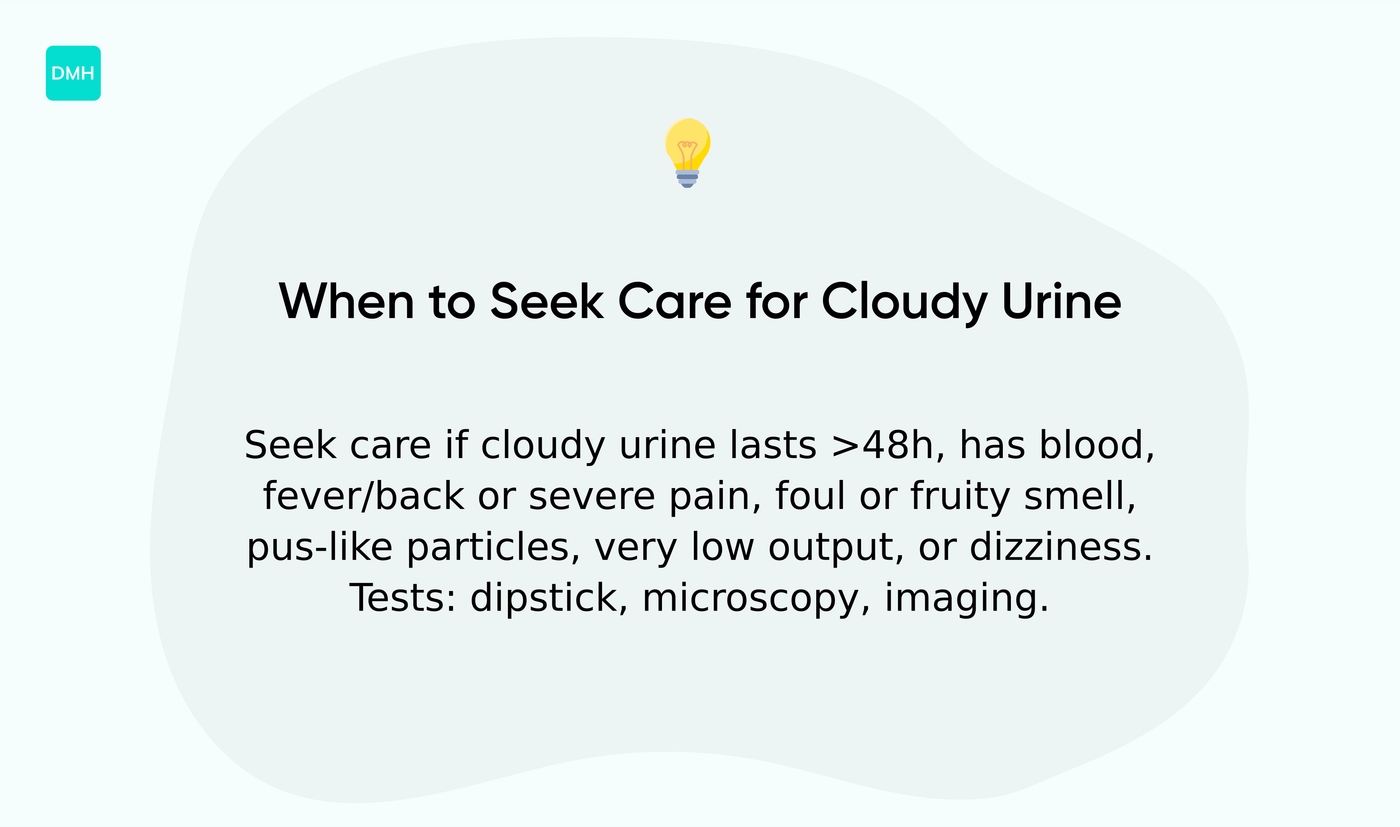
Persistent cloudy urine that lasts more than 48 hours may warrant medical evaluation. Some clinicians view prolonged cloudiness as a sign to test urine for infection, blood, or protein.
-
Blood in urine or visible red tint requires prompt assessment. Blood can be linked to infections, kidney stones, or less common kidney issues.
-
Fever and pain with cloudy urine suggests a spreading infection. Back pain or severe abdominal pain may indicate kidney involvement.
-
Cloudy urine with a strong foul smell or pus-like white particles may be associated with urinary tract infections (UTIs) or sexually transmitted infections (STIs).
-
A sweet or fruity odor alongside cloudiness can be associated with high blood sugar or possible diabetes-related issues.
-
Very low urine output, dizziness, or signs of severe illness alongside cloudiness may need urgent care.
Clinicians use urine dipsticks, microscopy, and sometimes imaging to identify causes. Findings vary by age, pregnancy status, and medical history.
This content is for educational purposes and not medical advice. Consider discussing symptoms with your clinician for personalized evaluation.
You might also like: CBC With Differential Values And Meanings
Treatment options for cloudy urine
Management depends on the underlying cause. Cloudy urine tied to simple concentration often improves with fluid adjustments. Clinicians use targeted approaches for infections, metabolic issues, and structural problems.
|
Cause |
Common Treatment Approach |
Key Considerations |
|---|---|---|
|
Dehydration |
Increase fluid intake to 1.5–2 liters daily |
Adjust for activity, heat, and health conditions |
|
Urinary Tract Infection |
Antibiotics based on culture results |
Review food interactions with specific antibiotics |
|
High Blood Sugar |
Improved glucose control and monitoring |
Individual targets vary; discuss with clinician |
|
Kidney Stones |
Fluids and pain control; procedures for larger stones |
Stones under 5 mm often pass naturally |
Hydration strategies help when urine looks dark or turbid from concentration. Aim for about 1.5 to 2 liters of fluids per day for most adults, with adjustments for activity, heat, and health conditions. Clear, pale urine suggests adequate hydration; persistent cloudiness may need testing.
Bacterial urinary tract infections and some sexually transmitted infections commonly prompt antibiotic therapy after a urine test. Clinicians often prescribe antibiotics based on culture results and local resistance patterns. If nitrofurantoin enters the plan, review foods to avoid while taking nitrofurantoin to reduce side-effect risks.
Elevated blood sugar can produce cloudy, sweet-smelling urine. Improved glucose control and routine monitoring can reduce glycosuria that may cloud urine. Discuss medication options and target ranges with a clinician—individual goals can vary.
Stone fragments and crystals create sediment and sharp pain in some people. Small stones may pass with fluids and pain control. Larger stones may require procedures such as extracorporeal shock wave lithotripsy or ureteroscopy.
Home remedies like cranberry products show mixed evidence for infection reduction. Avoid irritants such as excess caffeine and alcohol if symptoms occur. Monitor changes and seek evaluation for persistent or painful cloudy urine.
Not medical advice. Consult a qualified healthcare professional for medical guidance specific to your situation.
Read also: High White Blood Cell Count: Causes, Symptoms and more
Educational notice: This content is provided for informational and educational purposes only and is not intended as medical advice. Always consult a qualified healthcare professional for medical concerns.