Globulin is a group of blood plasma proteins that support your immune defenses, carry substances, and help control inflammation.
Your liver makes some globulins.
Your immune system makes others.
Globulins circulate in plasma alongside albumin.
Labs report them as serum globulin or derive them from total protein minus albumin.
What is globulin in a blood test
When you see “globulin” on your lab report, you’re looking at a diverse family of proteins that do heavy lifting in your bloodstream. These aren’t just filler — they’re active players in immunity, transport, and inflammation control.
Here’s how the main types break down:
- Alpha globulins (alpha‑1 and alpha‑2) act as enzyme inhibitors and include acute phase proteins that rise with inflammation.
- Beta globulins help transport iron and lipids and include complement proteins involved in immune response.
- Gamma globulins are the immunoglobulins — antibodies that identify and neutralize germs.
- Each type has a distinct role, so patterns in globulin levels guide diagnosis and further tests.
Knowing these categories makes your lab results clearer and helps you ask focused questions of your clinician. Typical lab panels list globulin levels and an A/G ratio.
Use those numbers with symptoms and other tests for a full picture of your health.
Types of globulins and their functions
Alpha and beta globulins
Alpha and beta globulins are vital regulators of inflammation and molecular transport. Think of them as the logistics crew that keeps your tissues safe and your nutrients moving.
Alpha-1 proteins, such as alpha-1 antitrypsin, inhibit destructive enzymes in tissues. They provide an enzyme inhibition function that limits protease damage.
Alpha-2 proteins, like alpha-2‑macroglobulin, rise during acute inflammation and trap circulating proteases.
Beta globulins include transferrin and certain lipoproteins. Transferrin performs the iron transport role, carrying up to two ferric ions per molecule to marrow. Beta-lipoproteins carry cholesterol and support the lipid metabolism role.
Checking specific globulin fractions clarifies unexplained abnormal total protein or A/G ratio results. You can confirm these fractions with serum protein electrophoresis and discuss abnormal values with your clinician.
Gamma globulins and immunoglobulins
Gamma globulins act as your immune system’s main antibodies. They bind viruses and bacteria, stop pathogens from entering cells, and tag invaders for removal by other immune cells.
Major antibody tasks include neutralization, opsonization, and complement activation. These actions reduce infection risk and speed recovery.
Five immunoglobulin classes exist: IgG, IgA, IgM, IgE, IgD. IgG makes up about 75% of serum antibodies, IgM accounts for roughly 10%, and IgA about 15%.
| Immunoglobulin | Percentage of Serum | Primary Function |
|---|---|---|
| IgG | ~75% | Long-term immunity, neutralization |
| IgM | ~10% | Early infection response |
| IgA | ~15% | Mucosal protection |
| IgE | <1% | Allergic reactions, parasite defense |
| IgD | <1% | B-cell activation |
If you ask “what is globulin in blood test,” gamma globulins form the antibody fraction clinicians check. Check lymphocyte counts via this guide on lymphocytes in blood test to see immune activity.
Measuring immunoglobulin levels helps clarify unexplained infections. Ask your clinician for a serum globulin or immunoglobulin panel if you have frequent infections or abnormal globulin levels.
Globulin vs albumin differences
Globulin vs albumin highlights distinct functions that matter for diagnosis. Albumin is made by the liver and keeps fluid inside blood vessels. Normal albumin range sits at 3.5–5.0 g/dL.
Low albumin suggests liver dysfunction or protein loss.
Globulins come from the liver and immune cells and include alpha, beta, and gamma fractions. Normal globulin range is 2.0–3.5 g/dL and shifts with infection or immune activation.
Albumin is a small single-chain protein near 66 kDa. Immunoglobulins can reach about 150 kDa and vary by class, so their structures and transport roles differ.
The albumin globulin ratio and total protein test guide further testing like serum protein electrophoresis. Checking both serum globulin levels and albumin gives a clearer clinical picture for patient care.
How is globulin measured in a blood test
Globulin measurement is a simple lab calculation that gives useful clinical insight. Lab runs a total protein test and measures albumin separately.
Technicians subtract albumin from total protein to report serum globulin in g/dL.
Example: total protein 7.0 g/dL minus albumin 4.0 g/dL equals globulin 3.0 g/dL. That result sits within the common globulin normal range of 2.0 to 3.5 g/dL.
A routine blood draw takes under five minutes and uses standard venipuncture. You don’t need fasting or special prep for a basic globulin test; drinking water can ease the draw.
Labs vary, so clinicians interpret globulin levels alongside the albumin globulin ratio and clinical signs. This subtraction method gives a fast snapshot and can trigger the right follow-up tests like serum protein electrophoresis.
A high globulin level may reflect chronic infection, autoimmune disease, or blood malignancy. Low globulin levels can indicate liver dysfunction, kidney loss, or malnutrition.
Clinicians often order serum protein electrophoresis to pinpoint abnormal patterns. The A/G ratio usually runs near 1.0 to 2.5 and helps flag immune or liver issues.
If your globulin levels fall outside the globulin normal range, talk with your clinician to plan follow-up. You can bring prior test results to speed diagnosis.
What is a normal globulin level
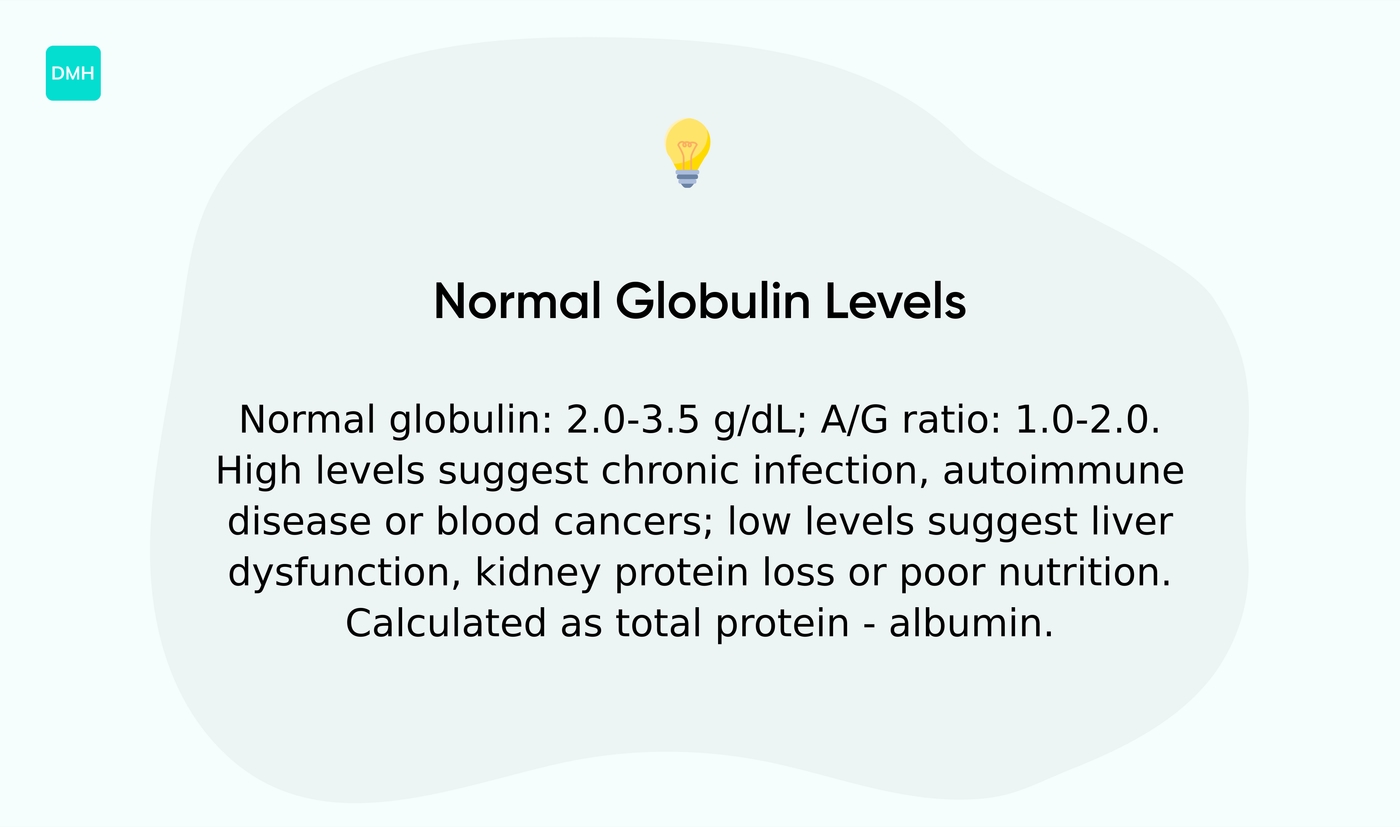
A normal globulin level ranges from 2.0 to 3.5 g/dL. Labs may report slight differences in their reference ranges, and age can shift values for children and older adults.
If you ask “what is globulin in blood test,” it refers to the serum globulin fraction measured in g/dL. Clinicians rarely use the number alone.
Doctors compare globulin to albumin using the albumin globulin ratio. A typical A/G ratio ranges from 1.0 to 2.0. High globulin levels often indicate chronic infection, autoimmune disease, or certain blood cancers.
Low globulin levels suggest liver dysfunction, kidney protein loss, or poor nutrition.
Clinicians derive serum globulin by subtracting albumin from total protein measured on a total protein test. The blood draw takes minutes and needs little preparation.
Checking both globulin levels and the A/G ratio gives a clearer picture than a single value. Tracking trends over time helps most.
Example: a globulin of 3.6 g/dL with an A/G ratio below 1.0 often prompts further testing, such as serum protein electrophoresis. Ask your clinician for follow-up if results fall outside 2.0–3.5 g/dL.
Understanding the albumin globulin ratio
The albumin‑globulin ratio is a straightforward screen for protein balance in blood. The A/G ratio equals albumin divided by globulin.
Labs derive globulin by subtracting albumin from total protein.
Typical albumin sits at 3.5–5.0 g/dL. Typical globulin sits at 2.0–3.5 g/dL. That produces a normal A/G range near 1.0–2.5. Values vary by lab and age.
Example: albumin 4.2 g/dL and total protein 7.0 g/dL give globulin 2.8 g/dL. The ratio equals 4.2 ÷ 2.8, or 1.5.
A low A/G ratio usually means one of two patterns: low albumin or high globulin. Low albumin suggests reduced liver production or albumin loss through kidneys. High globulin reflects increased antibody or inflammatory protein production.
Common causes include chronic immune disorders and some blood cancers. Clinicians use the ratio as a flag and follow up with liver panels, urine protein testing, and albumin ÷ globulin checks like serum protein electrophoresis.
Pairing the A/G ratio with targeted tests clarifies the cause quickly. If your ratio is below about 1.0, ask your clinician for follow‑up tests and a clear next step.
What does high globulin mean
Chronic infections and inflammation
Chronic infections cause increased globulin production. Persistent infections such as TB, hepatitis, and HIV trigger the immune system response and make more antibodies and inflammatory proteins.
Your globulin in blood test can reflect these changes. You may see high globulin levels above 3.5 g/dL. Gamma globulins, mainly IgG, often rise the most.
Antibodies are gamma globulins. Alpha globulins include inflammatory proteins. These shifts lower the albumin globulin ratio.
The globulin normal range is about 2.0 to 3.5 g/dL. Clinicians combine the globulin test with total protein and A/G ratio. We often recommend follow-up tests within 4 to 8 weeks if levels stay high.
Serum protein electrophoresis identifies specific antibody spikes. That test helps detect monoclonal bands seen in blood cancers. Tracking immunoglobulin levels helps you and clinicians spot ongoing inflammation early.
Autoimmune disorders
Elevated globulin is a clear sign of immune overactivity. Lupus, rheumatoid arthritis, and Sjögren’s syndrome often show a gamma globulin rise.
The immune system overproduces antibodies that raise serum globulin levels.
Normal globulin sits near 2.0–3.5 g/dL. You may see high globulin levels above that range and a low albumin globulin ratio. An A/G ratio below 1.0 commonly points to excess immunoglobulins.
Checking specific immunoglobulin panels helps. In my experience, globulin can hit 4.2 g/dL and targeted testing often confirms autoimmune antibody patterns.
Ask your clinician about immunoglobulin levels and serum protein electrophoresis when tests show persistent elevation. Early testing guides clear, practical next steps for treatment and monitoring.
Blood cancers and multiple myeloma
A marked rise in globulin is a red flag for possible blood cancer. Multiple myeloma drives one plasma cell clone to overproduce a single antibody.
This creates a large monoclonal spike on a globulin test.
Gamma and total serum globulin can climb well above the normal 2.0–3.5 g/dL range. Values of 4–10 g/dL appear in active disease. Hodgkin’s lymphoma and other lymphomas can change immunoglobulin production and create polyclonal or monoclonal patterns.
Serum protein electrophoresis is indispensable for diagnosis. If you have high globulin levels, ask your clinician for SPEP to look for an M‑spike.
An M‑spike often leads to bone marrow testing and targeted treatment. If you wonder what is globulin in blood test, know that identifying monoclonal proteins guides care and monitoring.
Other factors affecting globulin levels
Other factors often cause temporary changes in globulin levels. These shifts can affect your globulin in blood test result without signaling disease.
Common causes include dehydration that concentrates serum proteins and raises measured globulin by roughly 5–10%. Pregnancy increases certain immunoglobulins and total globulin. Small rises of 0.2–0.6 g/dL in pregnancy are usually not concerning.
Chronic liver disease alters protein production. The liver can lower albumin while gamma globulins climb, shifting the A/G ratio.
Certain medicines change results. Estrogen therapy, oral contraceptives, steroids, and IV immunoglobulin can raise serum globulin modestly.
Re-test after rehydration or four to six weeks if your result is mildly high. Seek care sooner if you have fatigue, swelling, or frequent infections. A repeat test often clarifies whether high globulin levels are temporary.
What does low globulin mean
Low globulin levels often signal reduced protein production or excess protein loss. They most commonly point to liver damage or heavy protein loss through the kidneys.
A low globulin result is a prompt to investigate underlying causes. Check total protein and albumin, then calculate the A/G ratio to guide next steps. Normal serum globulin ranges about 2.0 to 3.5 g/dL.
Common causes include:
- Liver or kidney disease that impairs protein synthesis or increases loss
- Nephrotic syndrome with heavy urinary protein loss
- Malnutrition or malabsorption disorders
- Immune deficiencies that lower immunoglobulin levels
A low value on a routine total protein test often reflects one of these issues. Ask your clinician about repeating the globulin test and ordering targeted tests such as albumin, urine protein, and serum protein electrophoresis when an immune or cancer cause is suspected.
These tests help separate globulin types and find specific deficits. Timely follow-up within two to four weeks prevents missed diagnoses.
If you have swelling, frequent infections, unexplained fatigue, or other worrying signs, schedule a visit and request the relevant tests. Your provider will link results to your history and recommend treatment or nutrition support as needed.
Read also: Is It Serious To Be Referred To A Hematologist
What is serum protein electrophoresis used for
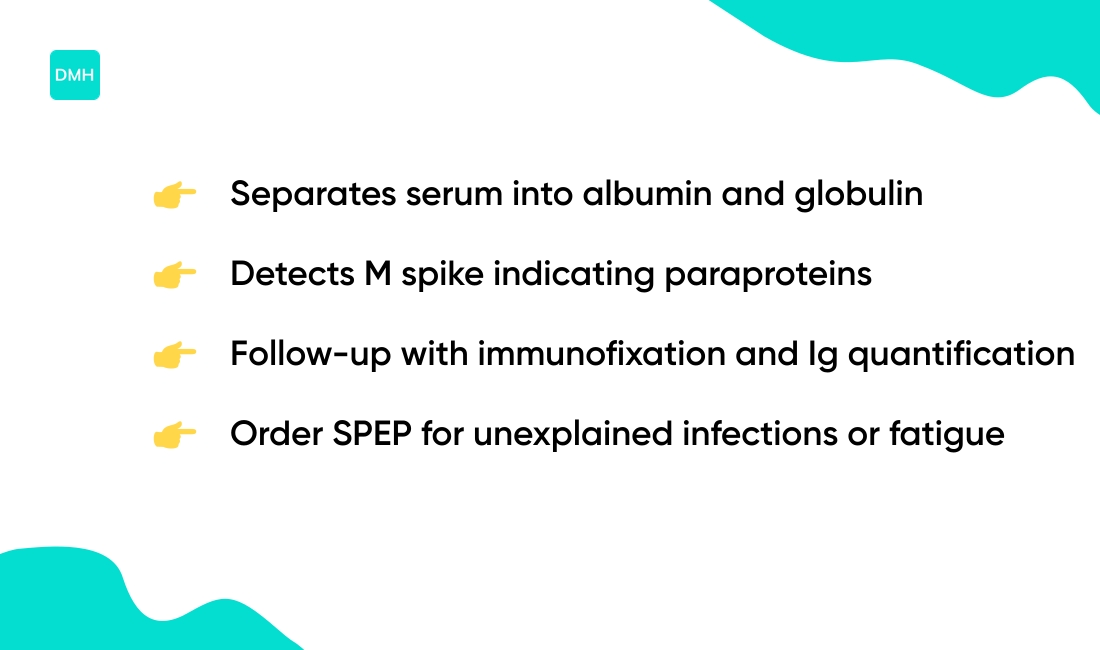
Serum protein electrophoresis is a targeted test to separate serum proteins and guide diagnosis. The test divides serum into albumin and globulin regions.
Lab staff run serum on a gel or capillary.
An electric field moves proteins by size and charge. The output shows distinct bands for alpha, beta, and gamma regions.
SPEP detects a sharp monoclonal spike called an M spike. An M spike often reflects paraproteins seen in multiple myeloma. Follow-up with immunofixation identifies the antibody type, such as IgG or IgA.
That step clarifies abnormal immunoglobulin levels.
SPEP helps diagnose immune disorders. It finds low or missing bands that suggest specific antibody losses. It finds broad increases that point to chronic inflammation or infection.
Pairing SPEP with total protein and A/G ratio improves interpretation. Use the normal globulin range of 2.0–3.5 g/dL as a reference. If you see abnormal results, request immunofixation and quantitative immunoglobulin testing.
Ask your clinician for SPEP when abnormal globulin levels, unexplained infections, or persistent fatigue appear. Early testing speeds diagnosis and guides treatment for paraprotein disorders and antibody deficiencies.
Read also: What Happens at Your First Hematology Appointment
When should I worry about my globulin levels
Prompt medical review is needed for globulin results that stay outside the normal range or occur with worrying symptoms. Normal serum globulin levels sit near 2.0–3.5 g/dL.
Readings above 3.5 g/dL or below 2.0 g/dL deserve attention when they repeat on separate tests.
We recommend repeating an abnormal test in 2–4 weeks and tracking symptoms closely. But when should you act faster?
You should seek evaluation sooner if you have unexplained fatigue, visible swelling, or frequent infections. Low globulin can follow liver or kidney problems. High globulin can signal chronic infection, autoimmune activity, or certain blood disorders.
Ask your clinician for targeted follow-up tests such as serum immunoglobulin levels and serum protein electrophoresis. A complete blood count helps assess immune cells—see the guide on CBC with differential values and meanings for context.
Seek urgent care if you develop sudden severe symptoms, like high fever, rapid swelling, unexplained bleeding, or breathing difficulty. If two tests spaced weeks apart remain abnormal, request specialist referral and detailed testing.
Bottom line: repeat abnormal results, watch for the listed symptoms, and push for SPEP and immunoglobulin quantification when needed. Acting early gives clearer diagnosis and faster treatment options.
You’ll also like: Low White Blood Cell Count: Causes, Symptoms, Leukopenia
How to manage abnormal globulin levels
Addressing abnormal globulin levels starts with finding the root cause, supporting your immune system, balancing protein intake, and working closely with your clinician. We follow a clear stepwise plan: confirm abnormal results, treat the underlying condition, adjust lifestyle and diet, then monitor trends with repeat tests.
Treatment targets depend on the cause:
- Treat infections with appropriate antimicrobials
- Manage autoimmune disease with immunomodulatory therapy
- Refer to a hematologist for suspected blood cancers
- Use immunoglobulin replacement for some antibody deficiencies
Support your body with simple habits. Sleep eight hours when possible. Reduce stress through short daily walks or breathing exercises.
Keep vaccines current. Quit smoking and limit alcohol.
Focus on diet to restore serum protein levels. Aim for balanced dietary protein at 0.8–1.2 g/kg body weight per day unless your doctor advises otherwise. Eat complete proteins, include legumes, and correct malabsorption with a nutritionist if needed.
Monitor lab values and symptoms. Repeat the globulin or total protein test in four to twelve weeks, depending on cause and treatment. Ask for serum protein electrophoresis when levels stay high or the A/G ratio stays abnormal.
If your globulin exceeds typical ranges or trends upward, see a specialist. Modest dietary shifts and basic immune care produce measurable changes within weeks for many people.
Your next step is to discuss a tailored plan with your healthcare provider and schedule follow-up testing.
You’ll also like: Low Red Blood Cell Count: Causes, Symptoms And Treatment
Educational notice: This content is provided for informational and educational purposes only and is not intended as medical advice. Always consult a qualified healthcare professional for medical concerns.