Herpes sores can be painful and frustrating, but the right treatment makes a real difference.
Most people want to know how to heal herpes sores faster and what actually works.
Well, the good news is that antiviral medications, smart home care, and early action can shorten outbreaks and ease discomfort.
This guide walks you through proven treatments, natural remedies, and practical tips to speed healing and reduce future flare-ups.
What causes herpes sores and how long do they last
Herpes is a virus that hides in nerve cells and flares up on skin or mucous membranes when triggered.
HSV-1 and HSV-2 enter through tiny breaks in the skin. The virus travels along nerve fibers to a ganglion, where it stays dormant. Stress, illness, or sun exposure can reactivate it, though your immune system usually limits each episode.
The typical outbreak follows a predictable pattern. A tingling stage often starts hours before a sore appears. Blisters form within 24 to 48 hours, then ulcers develop and crust over. Most outbreaks heal in 7 to 14 days.
First infections can last longer—often two to three weeks.
Treatment changes that timeline. Oral antivirals cut viral replication and shorten healing by about one to three days when started early. Valacyclovir for cold sores works best if you begin at prodrome (that first tingle). Topical creams like docosanol give mild relief but rarely beat oral pills for speed.
What if you could stop a sore before it fully develops? Acting fast matters most. Start antivirals at the first sign, keep the area clean and protected, use cold compresses for pain, and avoid picking scabs. See your provider for the right prescription and dose.
Does valacyclovir make cold sores go away faster
Oral valacyclovir is one of the most effective treatments for quick cold sore relief. It converts to acyclovir in the body and stops viral replication, which limits blister formation and speeds healing.
Episodic dosing typically uses two 2 g doses—take the second dose twelve hours after the first. If you start at tingling, you often cut healing time by about 1–2 days.
Suppressive therapy uses 500 mg to 1 g once daily for people with frequent recurrences. Your clinician will pick the dose based on how often outbreaks occur and your kidney function.
Valacyclovir has higher bioavailability than acyclovir, which allows less frequent dosing. Efficacy matches famciclovir in clinical trials. Topical acyclovir cream works less well than oral therapy.
Ease of use improves real-world results. Patients who start at prodrome and follow one-day regimens often heal faster and feel better sooner.
Is acyclovir cream effective for herpes sores
Oral antivirals outperform topical treatment for most outbreaks.
Drugs like valacyclovir and oral acyclovir can shorten healing by about 1–3 days and cut viral shedding. Topical acyclovir cream offers modest benefit for pain and healing when applied at the initial tingle, but it stays on the skin and can’t reach infected nerve cells—so virus suppression is limited.
Use cream for mild lip sores, when you can’t take pills, or to ease surface pain during healing. But oral pills give the best chance to heal herpes sores faster if you start early.
We recommend oral antivirals for most outbreaks and suggest cream as an adjunct for symptom relief.
Famciclovir and other prescription options
Starting antivirals at the first tingle makes a big difference.
Famciclovir often uses a single 1500 mg dose for labial outbreaks. Studies show it shortens lesion time when taken early. Valacyclovir usually uses a two-dose 2 g regimen for cold sores, while acyclovir needs more frequent dosing and may be less convenient.
Valacyclovir and famciclovir offer the best balance of speed and ease. Acyclovir cream has limited impact versus oral pills.
Choose treatment based on timing, pill burden, kidney function, and price. For a practical plan, start therapy within 24 hours of prodrome. That action often reduces outbreak length and helps you heal faster with fast cold sore treatment.
Home remedies to speed up herpes outbreak healing
Cool compresses and ice packs for immediate relief
Cold reduces swelling and numbs pain. Cold therapy is a simple step for how to heal herpes sores faster because it lowers inflammation and eases discomfort right away.
Apply a wrapped ice pack for 10 to 15 minutes. Repeat every hour while pain is high. After pain eases, use cold every 3 to 4 hours. Limit sessions to 20 minutes to avoid tissue damage.
Place a thin cloth between skin and pack. Never press hard on blisters. Stop if skin blanches or feels numb.
Use clean cloths or single-use cold packs to avoid spread. Don’t share packs or reuse towels on different sites.
Gel packs or a bag of frozen peas mold nicely to the area. Gentle, regular cold helps you feel better and can speed up herpes outbreak healing while you follow antiviral care.
Proper wound care to prevent infection
Clean sores with a soft touch. Use gentle soap and lukewarm water for about 20 seconds. Rinse well under running water and dab dry with a clean towel.
Pat the area until barely damp. Keep sores dry to limit bacterial growth. Cover only if the sore oozes or rubs against clothing. For tips on protecting fragile skin and small blisters, see how to heal blisters fast.
Apply ointment when skin breaks. Use a thin layer of antibiotic ointment twice daily for pus, rising redness, or increasing pain. If a scab is closed, use a thin film of Vaseline to prevent cracking. Petrolatum often reduces scab cracking and helps skin finish healing with less soreness.
Pain relief with over-the-counter medications
Using OTC pain relievers can ease discomfort during outbreaks.
Acetaminophen cuts pain without thinning blood. Ibuprofen and naproxen lower inflammation and swelling. Aspirin reduces pain and inflammation in adults—but avoid aspirin for children under 18.
Follow label dosing and limit acetaminophen to 3,000 mg per day. For tips on how to heal herpes sores faster, pair meds with antivirals early.
Short courses of NSAIDs help reduce outbreak pain and make healing feel faster. Pair medication with cool compresses and good wound care to manage discomfort and speed up healing.
| Medication | Adult Dose | Daily Maximum | Notes |
|---|---|---|---|
| Ibuprofen | 200–400 mg every 4–6 hours | 1,200 mg | Reduces inflammation and pain |
| Acetaminophen | 500–1,000 mg per dose | 3,000 mg | Avoid if liver risks present |
| Naproxen | 220–440 mg every 8–12 hours | 660 mg | Longer-acting anti-inflammatory |
Tell your clinician if you take blood thinners, have ulcers, kidney disease, or are pregnant. Stop medication if you get stomach pain or allergic signs, and seek medical advice for frequent outbreaks.
How to heal a cold sore scab faster
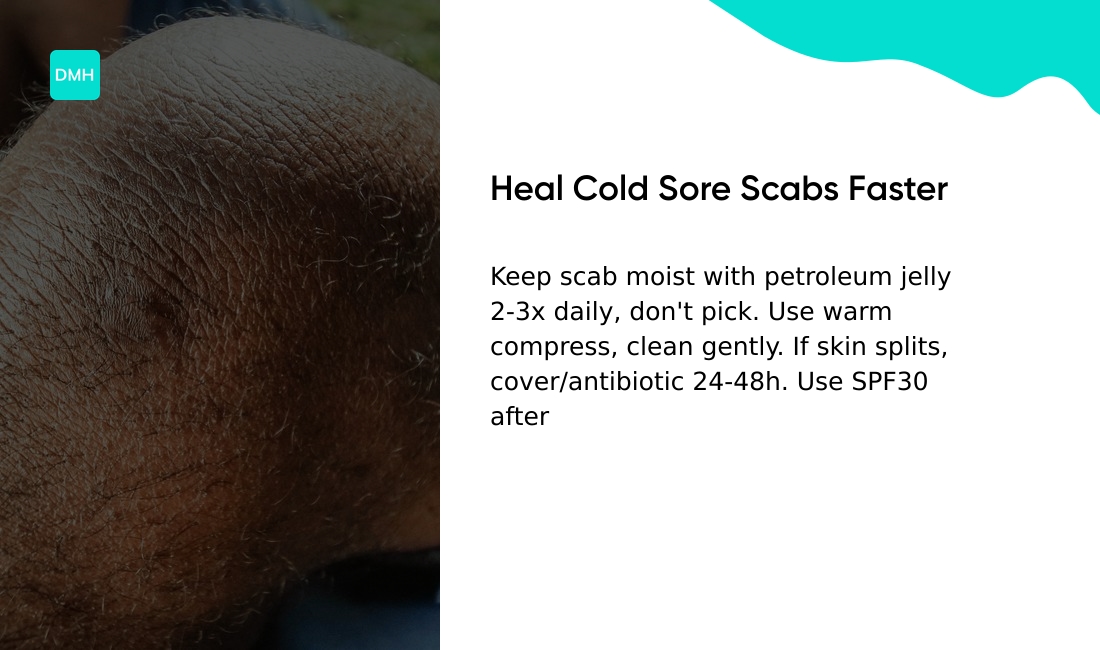
Keep the scab moist to speed repair. Apply a thin layer of petroleum jelly or dimethicone two to three times daily to keep skin moist. These emollients reduce cracking and lower scab loss.
Avoid picking scabs—picking delays healing and raises scar risk. Use a warm compress for pain and clean gently with mild soap and water. If skin splits, cover lightly and consider an antibiotic ointment for 24–48 hours.
Sun protection matters. Use SPF 30 lip balm once the scab falls to protect healing skin. Protect the area during sleep by using a soft barrier like petroleum jelly to prevent rubbing. Read more about treating picked skin here: heal skin picking wounds overnight.
What is the best cream for herpes sores
Topical creams can reduce pain and speed healing a little, but oral drugs shorten outbreaks more effectively.
Docosanol 10% (Abreva) blocks viral entry. Apply at the first tingle and use five times daily until healed. Clinical trials show healing time drops by about a day when started early.
Penciclovir and acyclovir creams deliver modest benefit for symptoms. Oral antivirals like valacyclovir beat topical use for faster recovery and lower transmission risk. Start pills within 48 hours of symptoms for best results.
Docosanol Abreva cream helps with pain and blister closure. Topical zinc oxide may soothe and protect skin, with limited data suggesting small gains in healing speed. Oral antiviral therapy gives the largest, most consistent reduction in outbreak time.
Lysine creams lack strong proof. Oral lysine shows mixed study results for reducing recurrence frequency. If you try a lysine product, use it alongside proven care—not instead of it.
Starting treatment fast matters most. Treat at the tingling stage, use an effective topical like docosanol for mild outbreaks, and switch to oral antivirals for larger or painful episodes. Talk to a clinician for prescription options and personalized dosing.
Natural remedies that help herpes sores heal quickly
Do lysine supplements help cold sores heal faster
L-lysine may limit HSV replication by competing with arginine, an amino acid the virus needs to replicate. Supplements can offer a modest benefit when started at the first tingle.
A typical outbreak dose is 1,000 mg of L-lysine supplements three times daily. A maintenance dose is 500–1,000 mg daily.
Small randomized trials report shorter lesion healing and fewer recurrences for some people. One trial found healing faster by about one to two days. These studies are limited in size and quality, so effects vary.
Don’t exceed 3,000 mg per day without medical advice. People with kidney disease or pregnancy should avoid supplements unless cleared by a clinician.
Support healing with food. Eat eggs, dairy, poultry, fish, and legumes for dietary lysine sources. Use early antivirals plus lysine and good wound care to heal faster.
Lemon balm cream and licorice root extract
Herbal topicals can be useful adjuncts for herpes care.
Lemon balm cream contains antiviral compounds that block HSV replication and ease inflammation. Small clinical trials found modest symptom shortening—often one to two days. Apply at first tingle, using a pea-sized amount every three hours. Patch test an inner forearm first.
Licorice root extract contains glycyrrhizin with antiviral effects shown in lab studies. Topical gels with extract may calm sores and support skin repair. Apply twice daily, but avoid application inside the mouth or on raw mucosa.
These herbs may reduce healing time modestly and improve comfort when paired with antivirals. Start treatment at prodrome and talk to your clinician before combining therapies.
Does zinc oxide speed up cold sore healing
Zinc supports immune function and helps skin repair. It aids collagen formation and limits oxidative damage in wounds.
Topical zinc creates a moist barrier and may reduce viral activity at the site. Lab data and small clinical trials report modest benefits for lesion closure—evidence shows a small drop in healing time for some users, often around one day. This effect varies by product strength and how soon treatment starts.
Oral zinc helps systemic immunity, but study results for outbreak shortening remain mixed. Typical dietary needs run 8–11 mg daily. Short-term therapeutic doses of 15–30 mg are common. Avoid long-term intake above 40 mg to prevent copper deficiency.
Apply an OTC zinc oxide ointment at the first tingle and pair it with prescribed antivirals when available. Topical zinc offers a small, useful boost to healing while you follow medical treatment.
Is tea tree oil safe and effective for cold sores
Tea tree oil shows antiviral activity in lab studies, but human evidence is limited.
Use tea tree oil only diluted in carrier oil with proper dilution methods. Aim for 1% to 2% on lips and never apply undiluted. Human research is limited to small trials and case reports, so results remain uncertain. Direct use on a cold sore often causes irritation.
Gentler, evidence-backed options include safer alternative oils. Neem oil, lemon balm, and licorice extracts show antiviral activity and better tolerance for lips.
Patch test on the forearm for 24 hours before use. Stop if redness or burning appears, and see your clinician for frequent outbreaks.
How to stop a cold sore at the tingling stage
Acting fast during the prodrome phase makes all the difference.
Oral antivirals work best to stop blister development. Starting pills within 24 hours of tingling cuts healing time, lowers pain, and shortens symptom duration. This approach helps you learn how to heal herpes sores faster.
- Take valacyclovir or famciclovir as your clinician prescribes.
- Apply docosanol cream at first tingle for local relief.
- Use a cool compress for ten minutes every hour to reduce swelling.
- Keep the area clean and avoid touching or picking the spot.
Oral antivirals block virus replication and help shorten outbreak duration. Studies show healing time drops by about one to two days when treatment starts early.
For quick cosmetic cover, see how to hide a cold sore. Use simple cover until lesions heal.
Fast antiviral treatment at the first tingle often means fewer blisters and less pain. Talk to your provider for same-day prescriptions if tingling appears—that step gives you the best chance to stop blisters and avoid a full outbreak.
You might also like: How To Get Rid Of Acne When Nothing Works
How to reduce herpes outbreak time and frequency
A layered plan can shorten healing and cut recurrence rates.
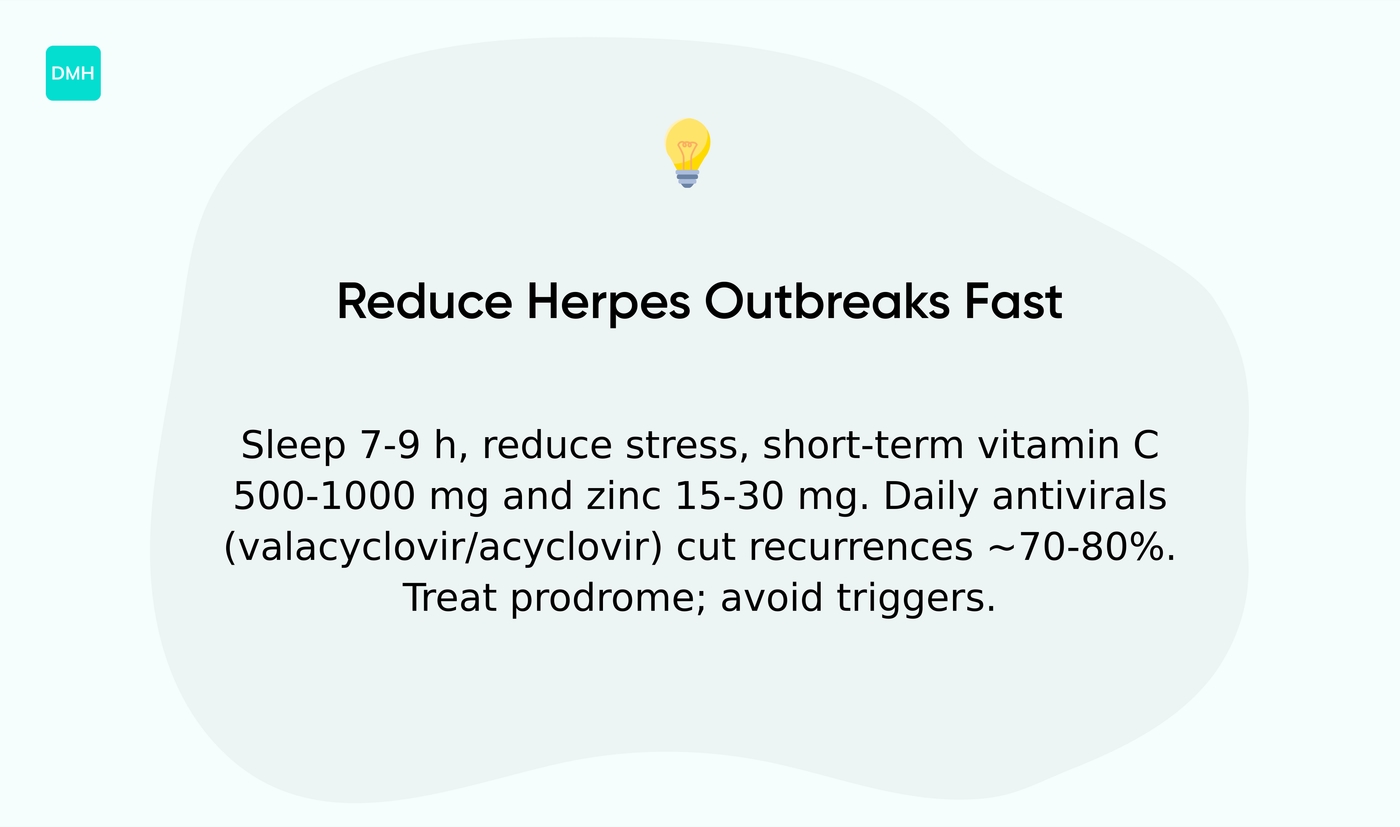
Prioritize sleep. Aim for 7–9 hours each night to help immune recovery and lower flare risk. Use stress management techniques like daily breathing exercises, short walks, and 10 minutes of meditation to calm nerves and lower cortisol.
Support immunity with vitamin C and zinc. Try 500–1,000 mg vitamin C and 15–30 mg zinc daily as a short-term measure. For practical vitamin C dosing, see how many Emergen-C packets a day.
Suppressive antiviral therapy makes the biggest measurable difference for frequent outbreaks. Daily valacyclovir or acyclovir can cut recurrence rates by about 70–80% for many people. Talk to your provider about dosing and risks.
Avoid clear triggers like sun exposure, lip trauma, sleep loss, and high-arginine foods when you notice a prodrome. Treat tingling right away with oral antivirals or approved topical options to limit blister formation.
Keep wounds clean and dry, and avoid picking scabs. Use gentle care and short courses of OTC pain relief as needed to speed comfort and healing. Combine these steps to reduce outbreak time and learn how to heal herpes sores faster.
Read also: Castor Oil Packs: Natural Remedy for Health Benefits
How to heal genital herpes sores fast
Focused steps can speed healing for genital herpes sores.
- Wear loose cotton underwear to reduce rubbing and moisture.
- Avoid tight clothing that traps heat and slows healing.
- Clean gently with diluted Betadine or mild soap and water. Pat dry.
- Use cool compresses for pain control and to lower swelling.
- Avoid sex until all sores crust and heal to stop spread.
Starting antivirals early makes the biggest difference. Prescription medicines like valacyclovir or acyclovir can shorten outbreaks and cut viral shedding.
Seek prescription antivirals when an outbreak is new, very painful, numerous, or when you’re pregnant or immunocompromised. Your clinician will advise the right drug and timing.
Many patients report less pain and faster scab formation within 48 to 72 hours after starting treatment. Keep wounds clean, wear breathable clothes, and follow your provider’s plan to speed healing and reduce recurrence.
Read also: What Do You Put On Skin After Fluorouracil Treatment
When to see a healthcare provider
Herpes outbreaks often resolve with self-care, yet some signs need medical attention.
Prompt evaluation matters for high fever, severe pain, or many spreading sores. When should you actually call your doctor?
- Eye pain, vision changes, or eyelid sores—seek immediate care.
- Fever over 101°F, chills, or feeling faint.
- Difficulty urinating or severe genital pain.
- Rapidly spreading redness, pus, or signs of bacterial infection.
- Pregnant people during an active outbreak, and newborns exposed to sores.
- People with HIV, cancer, or on immunosuppressants.
A clinician exam matters for accurate testing and treatment choice. Lab confirmation guides decisions and reduces mistaken treatment. A clear test leads to a professional diagnosis.
A prescriber can start antivirals promptly to shorten outbreaks and lower transmission risk. If access is limited, seek urgent care or telemedicine within 48 hours of prodrome or blister onset.
Watch for worsening symptoms despite home care. Seek emergency services for breathing trouble or severe systemic illness. Your provider will tailor a plan that may include episodic pills, suppressive therapy, or local wound care. Follow up if symptoms return or worsen.
Read also: How To Use Oil On Face