Face fat and puffiness can feel frustrating, right?
You look in the mirror and wonder why your cheeks look fuller than you’d like.
Well, the good news is you can take real steps to slim your face.
This guide walks you through proven diet, exercise, and lifestyle strategies to reduce facial bloating and support lasting fat loss.
Let’s dive in.
What causes face fat and puffiness
Face fat and puffiness stem from genetics and lifestyle factors. Understanding the root causes helps you figure out how to lose face fat effectively.
Genetics set your facial shape and where your body stores fat. You can’t change your genes, but you can absolutely change your daily habits.
Overall body fat directly influences cheek fullness. Losing 1–2 pounds per week usually leads to gradual facial slimming over time.
Water retention causes that annoying morning puffiness. Excess sodium forces your body to hold onto water. Aim for 1,500–2,300 mg of sodium daily to keep puffiness in check.
Alcohol dehydrates you initially, then triggers rebound water retention. Cutting alcohol for just a week often reduces facial bloat noticeably.
Poor sleep raises cortisol and increases swelling. Getting 7–9 hours nightly helps reduce face puffiness and supports overall recovery.
Chronic stress keeps cortisol elevated and may increase fat storage around your face and neck. Simple stress-management habits can lower that hormone and help you reduce face fat.
Hormonal changes during pregnancy, menopause, or thyroid issues shift fat and fluid balance. See a clinician for testing if changes feel sudden or severe.
Dietary choices shape facial appearance too. High refined carbs and processed foods increase stored fat and bloating. Focus on protein, fiber, and whole foods to support fat loss and de-bloat your face.
In my opinion, sleep and salt are the fastest levers for visible change. Tracking sodium, sleep quality, and alcohol intake for two weeks gives you clear signals for next steps toward a slimmer face.
Can you target fat loss in the face
Here’s the thing: you cannot target fat loss in your face alone. Spot reduction simply doesn’t work. Fat cells release stored energy across your entire body, not from a single area.
Fat loss in the face follows overall body fat reduction. Hormones and genetics determine where you store fat and where you lose it first. Expect changes as you lose about 1–2 pounds per week. Aim for 150 minutes of moderate cardio weekly and two to three strength sessions to create a calorie deficit.
Practical steps speed visible change. Cut 300–500 calories daily from your diet. Boost protein and fiber intake. Reduce excess sodium and limit alcohol to minimize puffiness. Drink plenty of water to help flush out retained fluids.
Some people see facial definition sooner than others. Learn which areas lose fat first in this helpful piece: what parts of the body lose fat first. If you want faster results, add focused strength work and maintain steady overall body fat loss.
Takeaway: stop chasing spot reduction. Build a consistent plan combining diet, cardio, strength training, quality sleep, and low sodium to achieve a slimmer face over weeks to months.
Best diet strategies to reduce face fat
Foods to reduce face bloating
Potassium-rich foods and anti-inflammatory options help reduce facial water retention. They calm puffiness and restore definition quickly.
- Vegetables: cucumber, celery, spinach — high water content, low sodium
- Fruits: watermelon, berries, banana — natural potassium and antioxidants
- Whole grains: oats, brown rice — aim for 25–30 g of fiber daily
- Lean proteins: chicken breast, salmon, tofu — support metabolism and muscle
- Anti-inflammatory picks: turmeric, ginger, fatty fish — reduce swelling
- Avoid: high-sodium processed foods and ready meals; choose low-sodium options under 300 mg per serving
Swapping one salty snack for fresh fruit and water can show visible de-bloating in just a day or two for many people (seriously, it’s that quick).
We recommend tracking your sodium intake and choosing fresh food swaps. Start by replacing one processed snack with a vegetable or fruit today.
How to de-bloat your face in the morning
Want to flush morning puffiness fast? De-bloat your face with these five simple steps you can do in under ten minutes.
- Drink plain water: 500 ml upon waking to reset fluid balance
- Cut salt the night before: limit overnight water retention
- Elevate your head while sleeping: prevents fluid pooling in your face
- Apply a cold compress: hold on cheeks and under the jaw for two minutes
- Gentle massage: work toward lymph nodes for 2–5 minutes to move trapped fluid
Try this quick routine before breakfast. The massage step usually gives the most visible change right away.
How much salt causes face puffiness
Keep your daily sodium under 2,300 mg to reduce facial puffiness effectively.
Sodium pulls and holds water in soft tissues, creating a puffy face and swollen cheeks through water retention.
Diets above 3,000 mg sodium often cause visible bloating within 24–48 hours. Aiming for 1,500 mg helps if you retain fluid easily.
I’d say swapping salty snacks for fresh fruit and plain protein cuts cheek puffiness within days.
| Daily Sodium Intake | Effect on Face | Recommendation |
|---|---|---|
| Under 1,500 mg | Minimal puffiness | Ideal for fluid-sensitive individuals |
| 1,500–2,300 mg | Moderate retention | Standard healthy target |
| Over 3,000 mg | Visible bloating | Cut processed foods immediately |
- Read food labels and pick items under 200 mg sodium per serving
- Cook at home and skip packaged sauces and broths
- Drink water and limit alcohol to help flush excess salt
This approach supports how to lose face fat by reducing bloating. Start tracking daily sodium intake for one week and aim under 2,300 mg.
Effective exercises to lose face fat
Cardio workouts for face fat reduction
Steady cardio burns body fat and slims your face over time. Have you been skipping cardio because it feels boring? Well, mixing up your routine helps.
Aim for at least 150 minutes of moderate aerobic activity or 75 minutes of vigorous exercise per week. Try brisk walking 30 minutes five days weekly, or interval running 20 minutes three times weekly.
Moderate intensity means you can talk but not sing. Vigorous intensity leaves you able to say only a few words between breaths. Use a heart rate target of about 50–70% of max for moderate and 70–85% for vigorous effort.
Pair cardio with a daily calorie deficit of 300–500 kcal to lose roughly 0.5–1 lb per week. Add two sessions of resistance training weekly to preserve muscle and boost metabolism.
Consistency matters more than intensity for facial change. Track your workouts and weight weekly. Start with three sessions this week and build toward your goal.
Strength training to boost metabolism
Strength training builds muscle mass and raises your resting metabolic rate. Muscle tissue burns about 6–15 calories per day per pound. Add five pounds of muscle and you burn roughly 30–75 more calories daily. That small boost helps you lose face fat when you maintain a calorie deficit.
Aim for 2–3 full-body resistance sessions weekly. Use compound moves like squats, deadlifts, rows, and presses. Do 8–12 reps and 3 sets per exercise. Increase weight when 12 reps feel easy. Track progress with photos every two weeks.
If your goal is learning how to lose face fat, pair lifting with modest calorie control and some cardio. Combining strength work with sensible eating firms cheeks and helps you get rid of that double chin. Try two sessions this week and add one more when you feel ready.
Do jawline exercises really work
Jawline exercises can firm the muscles, but they don’t reduce fat directly.
Studies show mixed results and small gains in muscle tone without true fat loss. You might see subtle definition after months of consistent practice. That subtle change can make your jawline look sharper even if cheek fat remains.
Plus, pairing facial moves with a calorie deficit and regular cardio works better if you want to learn how to lose face fat.
- Do facial resistance moves 3–5 times weekly for 10 minutes
- Add 150 minutes of cardio per week to burn overall body fat
- Track weight and photos monthly to measure real change
Start with two weeks of consistent practice and focus on your diet to see actual results. These slim face tips work best when you combine exercise with steady weight loss.
Does face yoga help slim the face
Face yoga tightens facial muscles and improves tone, but it doesn’t remove fat. Small trials show modest muscle lift and firmer skin after regular practice. Many search “face yoga for weight loss,” yet studies show no true fat reduction in the face.
We recommend 5–10 minutes of focused practice daily. Pair that routine with cardio and a calorie-controlled diet to lose face fat and reduce overall body fat.
Face yoga helps your muscle definition and posture. Expect subtle changes in 6 to 12 weeks with daily practice. Use face yoga exercises as mobility drills, not as a fat-burning tool. Combine these slim face tips with strength training and hydration for faster results. Take weekly photos to track progress and stay consistent.
Lifestyle changes for a slimmer face
Prioritizing sleep, stress control, hydration, and solid daily habits can slim your face naturally.
Aim for 7–9 hours of sleep each night. Drink 2–3 liters of water daily. Keep sodium under 2,300 mg to reduce retention.
Lower cortisol by using stress tools you can stick with: brisk walks, 5-minute breathing breaks, or short guided meditation sessions.
Avoid smoking and cut back on alcohol to reduce puffiness and facial fat retention.
Adequate quality sleep reduces under-eye puffiness. Managing cortisol levels limits stress-related weight gain. Consistent healthy habits beat quick fixes every time.
- Sleep schedule: go to bed and wake up at the same time daily
- Hydration: sip water throughout the day, start with 250 ml each morning
- Diet: choose whole foods, limit processed snacks and salty meals
Small, steady changes give the safest and best facial slimming results. Clients often lose noticeable cheek puffiness after six to eight weeks of better sleep and lower salt intake.
For more practical steps on how to lose face fat, check out AARP’s guide.
Non-surgical procedures to reduce face fat
Non-surgical treatments can slim your face and define your jawline with less downtime than surgery. Wondering which option suits you best?
Kybella targets submental fat with injections of deoxycholic acid. Typical plans use 2–6 sessions spaced four to six weeks apart. Swelling lasts days to weeks. See how to get rid of double chin for prep and recovery tips.
Dermal fillers add cheek and jawline structure to create a slimmer appearance. Results appear immediately and last 12–24 months. This works best if you need contour, not fat loss.
CoolSculpting and SculpSure reduce fat with controlled cooling or laser heat. Expect about 20–25% fat loss per treated area after one cycle. You may need repeat sessions for visible change.
FaceTite melts fat and tightens skin with radiofrequency energy. It gives faster contouring than noninvasive devices but involves small incisions.
Ultherapy uses focused ultrasound to lift tissue. Results build over 2–6 months as collagen firms the area naturally.
RF microneedling stimulates collagen and can firm sagging after weight loss. Typical plans use three treatments spaced four weeks apart.
Non-surgical routes suit people seeking modest, reversible change with predictable recovery. For alternatives to buccal fat removal, read about non-surgical options.
Always consult a board-certified provider to match treatment to your goals and skin type. Takeaway: pick the method that fits your downtime tolerance, target area, and expected fat loss.
Surgical options for permanent face fat removal
Surgery offers the most permanent way to lose face fat. You can achieve lasting cheek reduction and a defined jawline with the right procedure.
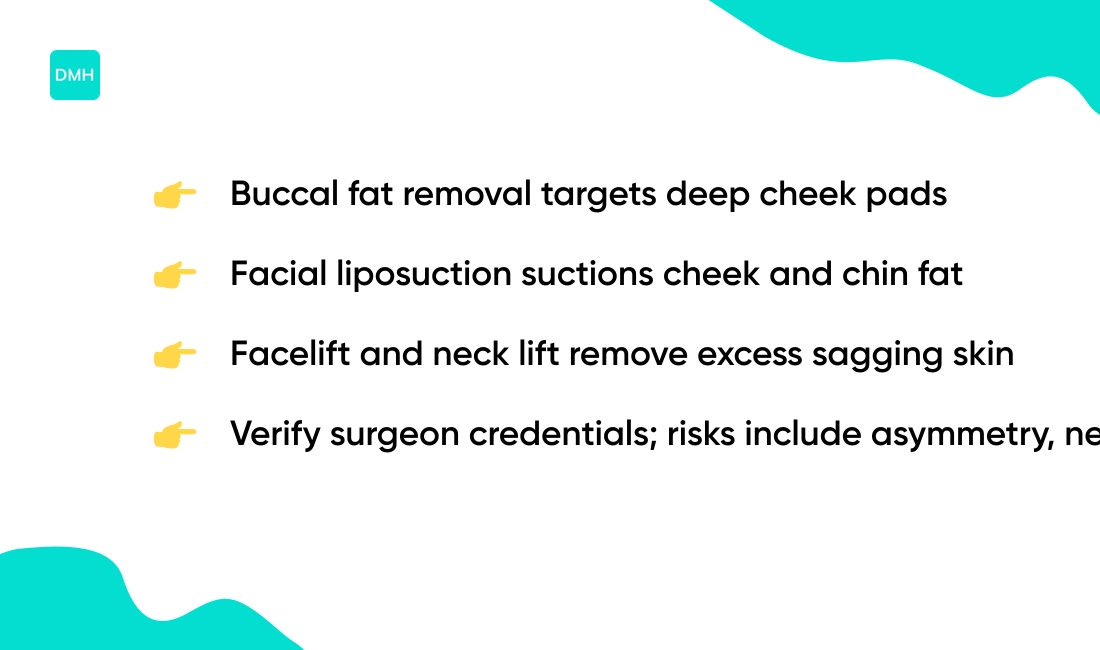
Buccal fat removal targets deep cheek fat pads. Surgeons remove fat through an intraoral incision. Recovery takes one to four weeks. Risks include asymmetry, nerve irritation, and potential long-term hollowing (which can age your face prematurely).
The facial liposuction procedure removes subcutaneous fat from the cheeks, jaw, and under the chin. Surgeons use small incisions and suction cannulas. Expect bruising, swelling, and temporary numbness. Scarring stays minimal with good technique.
Facelift and neck lift suit patients with excess skin or sagging after significant weight loss. Surgeons reposition tissue and remove redundant skin. Results last many years, but aging and weight changes affect outcomes. These operations carry infection, hematoma, and scarring risks.
Conservative fat removal plus attention to aging produces the best long-term look. 2026 trends favor tailored plans, fat preservation when needed, and combined neck contouring for optimal jawline definition. Surgeons now use imaging and small-volume approaches more often.
Key risks: over-resection, asymmetry, prolonged swelling, nerve injury. You should verify board certification, review before-and-after photos, and ask about revision rates. A detailed consultation and realistic photos of expected results matter.
You can pair surgery with lifestyle steps to maintain results: steady weight, low-sodium diet, and targeted skin care. If you want to get rid of double chin or slim cheeks permanently, book a consultation and get a personalized plan.
Read also: How Long Does It Take For Skin To Reattach After Lipo
How long does it take to slim down your face
Expect visible facial slimming after about 4–12 weeks if you lose weight at a steady rate of 1–2 pounds per week.
That pace equals roughly 4–8 pounds per month. Facial fat reduces as overall body fat falls, so your timeline depends on how much you need to lose.
We recommend steady weight loss plus skin care steps like learning to tighten skin after weight loss naturally to limit sagging.
Factors that speed or slow results include:
- Genetics and age affect how fat and skin respond
- Starting body fat: higher body fat often shows faster facial changes
- Water retention from salt, alcohol, poor sleep, or hormones can mask progress
Slow, consistent change beats quick fixes. Clients often notice slimmer jaws and reduced cheek fullness after six weeks of steady weight loss and better sleep habits.
Avoid rapid weight loss. Losing more than 3 pounds a week raises the risk of loose skin and muscle loss (not to mention potential “Ozempic face” effects). Use a safe calorie deficit, do 150 minutes of cardio weekly, add resistance training, and watch sodium and alcohol to de-bloat effectively.
Takeaway: aim for 1–2 pounds weekly, track progress with photos, and combine diet, cardio, and strength work to lose face fat and achieve slim cheeks.
You’ll also like: How To Tighten Skin On Legs
Common myths about losing face fat
Most quick fixes won’t help if you want to lose face fat. Chewing gum, facial rollers, and apps can change appearance briefly but don’t remove fat. Real change needs overall fat loss and lower puffiness.
Chewing gum myth: chewing works muscles, not fat. You might see firmer jaw muscles after weeks, but gum feels like a shortcut that rarely moves the needle on facial fat.
Spot reduction claim: you can’t target one area for fat loss. Fat cells shrink across your entire body with a calorie deficit. Aim to lose 1 pound per week for steady results.
Quick fixes: many gadgets promise fast results. Massage tools and cold rollers can drain fluid and show quick contours for hours. Those effects don’t equal actual fat loss.
- Cut 300–500 calories daily to start steady weight loss
- Do 150 minutes of moderate cardio weekly to burn calories
- Lower sodium and alcohol to reduce face fat and puffiness
Tracking food and sodium for two weeks helps you spot what bloats your face most.
Face exercises and face yoga for weight loss may tighten muscles and improve tone. They lack strong proof for fat loss but can help definition when combined with weight loss.
Action step: focus on diet, cardio, and hydration to de-bloat your face. Expect visible change in weeks, not days.
You might also like: How To Tighten Skin On Stomach Fast
Educational notice: This content is provided for informational and educational purposes only and is not intended as medical advice. Always consult a qualified healthcare professional for medical concerns.