Most couples finish meaningful work in about three to five months.
Therapists typically plan between eight and twenty sessions.
The common midpoint sits near twelve sessions.
What is the average length of couples therapy?
Well, here’s a clear baseline: most couples finish meaningful work in about three to five months. Therapists typically plan between eight and twenty sessions, with the common midpoint sitting near twelve sessions.
This pattern defines the couples therapy duration you can expect when you start treatment.
Weekly sessions speed progress. Biweekly meetings stretch the timeline. Session length usually runs fifty to ninety minutes to fit both partners and give everyone room to speak.
Starting earlier shortens treatment. I’ve seen couples cut their sessions in half when they seek help within months of conflict rather than waiting years.
Use the guideline of how many sessions as a planning tool. Ask for a 12-session plan and check progress at session eight. That creates a practical average completion timeline you can actually track.
If you want results, commit to regular sessions and the homework your therapist gives. Try scheduling an initial assessment now and set a clear review point at eight sessions.
How many sessions do most couples need in counseling?
Research finds the typical number near a 12-session average. According to OpenCounseling, about 65.6 percent finish within 20 sessions.
Short-term work of 6 to 8 sessions fixes specific habits. Deeper issues like betrayal often need 20 or more sessions — sometimes stretching across six months or longer.
A clear plan speeds progress. Aim for weekly sessions to build momentum. Most couples finish core work in three to five months with weekly meetings.
So how long should couples therapy last for your relationship? Try twelve sessions and plan a mid-course check.
In my opinion, schedule an 8-session review. Use that meeting to track progress and change goals. You save time and money by measuring results early.
Weekly sessions speed change. Biweekly meetings lengthen the timeline and slow momentum, which can add months to your total treatment time.
Sessions usually last 50 to 90 minutes. Longer meetings let both partners speak and let the therapist coach in real time.
Budget for 12 to 20 sessions when planning. Ask about sliding scale fees or brief focused models if cost concerns you.
Factors that determine how long couples therapy lasts
Severity and complexity of relationship issues
Problem type drives how long therapy lasts. Simple communication problems often resolve in 6 to 12 sessions.
Research shows the average length sits near 12 sessions, and about 65.6 percent of couples finish within 20 sessions.
You’ll see faster change with skill-building work. Ongoing resentment, repeated betrayal, or abuse require extended treatment and trust rebuilding. Infidelity often pushes the timeline past 20 sessions and may stretch across months.
Co-occurring mental health or substance use raises the couples therapy duration significantly.
Early help shortens total treatment. I’ve seen couples halve the number of sessions by starting within months of repeated conflict rather than waiting years.
You should plan for a flexible marriage counseling timeline. Check progress at eight sessions and adjust frequency based on your goals and therapist feedback.
Therapeutic approach and methodology used
Therapy choice shapes session count and timeline for couples. Brief models often end in 6–12 sessions, meaning many couples complete therapy in 3–5 months.
Therapist training, certification, and technique speed or slow progress. Emotionally Focused Therapy often runs 8–20 sessions, with many couples improving by session 10–12 on average.
The Gottman Method tends to span 10–20 sessions with early structured assessment and follow-up plans.
You can expect short-term therapy to end in 6–8 sessions for specific issues. Psychodynamic or trauma-informed work often needs 20–40 sessions and includes attachment and emotion work regularly.
Ask your therapist how long couples therapy should last and about their certification and supervision.
Timing of seeking help and relationship history
Timing is a major driver of therapy length. Long relationship histories embed patterns that demand more sessions.
A 2.68-year delay before seeking help adds months to treatment. It can double a typical 3-5 month timeline and add six to ten sessions.
Studies link that delay to deeper patterns and more complex therapy needs. Starting sooner cuts long-term maintenance needs.
Wondering how long couples therapy should last? Start sooner. Early intervention cuts couples therapy duration and lowers the number of couples therapy sessions. That produces shorter treatment and better outcomes.
Book an assessment now to limit months in therapy and speed recovery.
Couple’s commitment and attendance consistency
Steady participation drives faster progress in couples therapy. Your attendance and at-home practice often decide how long couples therapy should last for your relationship.
Most couples complete treatment between 8 and 20 sessions, with the average running near 12 sessions. When partners show regular session attendance and consistent homework completion, they move toward the shorter range.
Counseling frequency matters. Weekly sessions produce faster gains than biweekly visits and improve the timeframe for couples therapy results.
Consistency beats occasional intensity. Weekly work reduces avoidant patterns and speeds skill building.
Schedule weekly meetings and pick two short practice tasks per week. You’ll likely cut months from the therapy timeframe and see earlier gains in communication and trust.
How long is Gottman Method couples therapy?
The Gottman Method therapy follows a clear timeline you can plan around. Expect a targeted program that balances assessment, skill work, and follow-up.
A typical course starts with a 1–3 session assessment phase. Clinicians use questionnaires and couple interviews to map patterns. Sessions usually last 60–90 minutes.
You should plan for 8–20 sessions overall. Many couples finish in 3–6 months. Research and clinic reports show an average near 12 sessions for measurable gains.
You’ll do weekly work between sessions. Homework focuses on communication skills, conflict rituals, and rebuilding fondness. Consistent practice speeds recovery and shortens the marriage counseling timeline.
The structured feedback and concrete exercises make progress visible early. Most couples notice better communication within 3–4 sessions.
Deeper issues like betrayal often require extended treatment beyond 20 sessions.
If you prefer online options, try top-rated online therapy for couples to match scheduling needs and keep momentum. Track attendance, homework completion, and progress every 8 sessions to gauge whether to continue or shift focus.
How long does EFT for couples usually take?
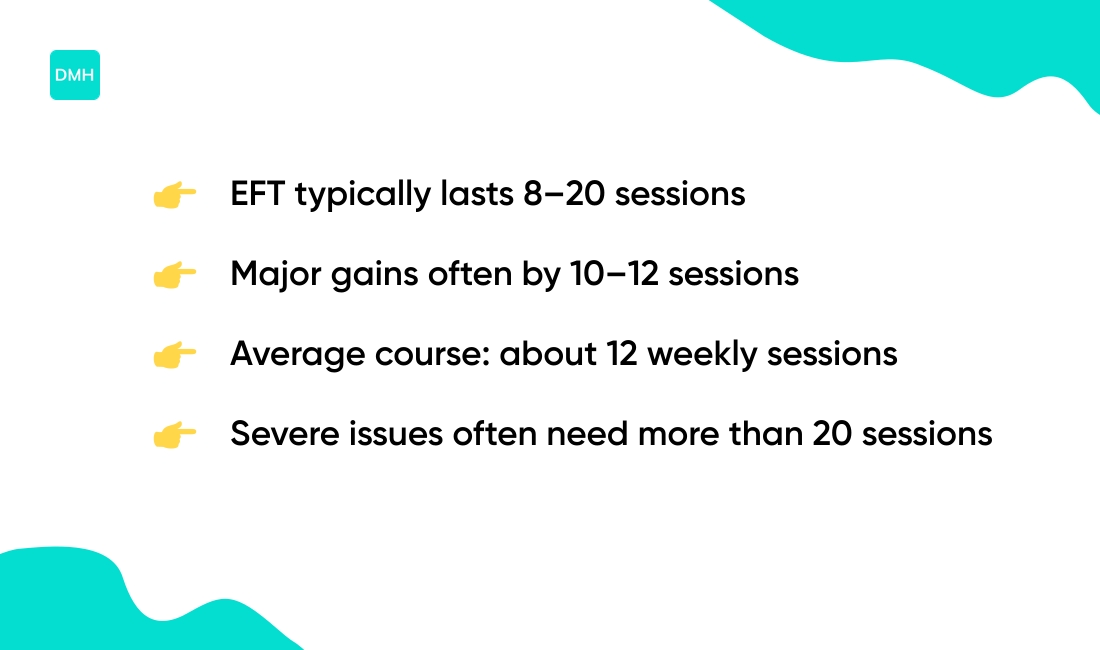
Plan for an 8 to 20 session course for Emotionally Focused Therapy. Searches for how long couples therapy should last usually return the 8 to 20 session range.
EFT couples therapy often yields major gains within 10 to 12 sessions. Research shows a 70-75 percent recovery rate in that span, with 90 percent demonstrating significant improvement.
Typical couples therapy duration lands around 3 to 5 months with weekly sessions. That matches an average of about 12 sessions for many couples.
How many sessions couples therapy requires depends on your goals. Skill work or prep for major decisions may close in 6 to 8 sessions.
EFT’s focus on emotional bonding speeds healing. I’ve seen couples report clearer communication and less reactivity after just a few sessions.
Severe issues like betrayal or trauma need more time. Those cases often extend beyond 20 sessions and include individual care.
Delaying help raises session counts. Couples wait about 2.68 years on average before starting therapy, which often increases complexity.
Couples counseling frequency matters. Weekly sessions keep momentum and shorten the overall duration.
Check progress around session eight. If progress stalls, ask the therapist for a concrete plan or consider therapist consultation.
Budget for at least a dozen sessions. That gives room for assessment, targeted work, and a short maintenance phase. Your timeframe for couples therapy results will vary by history and commitment.
Set a clear goal and track changes each month.
How often should couples attend therapy sessions?
Starting with weekly sessions builds momentum and safety. You see faster change with weekly meetings.
Twelve weekly sessions take about three months, while twelve biweekly sessions stretch to about six months — a clear weekly versus biweekly trade-off.
Research finds an average of 12 sessions for couples therapy, and about 65.6 percent of cases end within 20 sessions.
Consistency beats sporadic visits. I’ve watched couples halve their total time when they keep weekly appointments and do the work between sessions.
You increase therapy effectiveness by keeping appointments, doing homework, and avoiding gaps longer than two weeks.
Plan for roughly three to six months based on frequency and severity of issues. Adjust your couples counseling frequency when progress slows or goals are met.
If cost limits weekly visits, combine biweekly sessions with short check-ins or online modules to maintain progress.
Try weekly sessions for the initial eight appointments and reassess at that checkpoint. Track communication, conflict frequency, and emotional safety to judge whether to continue weekly or shift to maintenance.
How long is a typical couples counseling session?
A typical couples counseling session runs 50–90 minutes. Therapists allot more time to hear two perspectives and to guide exercises that involve both partners.
This extra space lets couples practice communication in session and get immediate feedback.
Individual therapy most often lasts 45–60 minutes. Couples sessions tend to be longer sessions to cover shared dynamics, joint homework, and safety checks when needed.
Assessment sessions can run to 90 minutes. Evidence-based models like Gottman and EFT often start with longer intake appointments to map patterns and set goals.
Booking one longer session early saves time. You cut repeated recounting and move faster to skills work and healing.
Practical tip: ask your provider about session length, whether split or extended appointments fit your needs, and how session length ties to how long couples therapy should last overall.
Weekly 50–90 minute sessions speed skill learning. If timing or cost is an issue, try biweekly 75-minute sessions or an intensive weekend format.
When can couples expect to see improvement?
You can expect clearer communication within a few sessions. Most couples report noticeable changes after 3-4 sessions, often showing better communication fast.
Our data shows a deeper healing timeline for complex issues. Short problems often resolve in 6-8 sessions. Betrayal, deep resentment, or trauma commonly need 20 or more sessions.
EFT often produces meaningful shifts within 10-12 sessions. Research reports a 70-75 percent improvement rate in that window.
Research shows the average length of couples therapy is about 12 sessions. One study finds 65.6 percent of cases finish within 20 sessions.
If logistics matter, try flexible options like online counseling. See our online therapy tips for long-distance couples for practical steps.
Your effort changes the timeline. Regular sessions and consistent session attendance shorten the total treatment time.
Track progress at an eight-session checkpoint. Expect clearer patterns, improved conflict skills, and safer interactions.
How long couples therapy should last depends on your goals and past history. Schedule an assessment and set a clear plan.
Short-term vs long-term couples counseling
Can couples therapy be short term?
Short-term couples therapy can work. It fits clear, limited goals and motivated partners.
We recommend 6–8 sessions for premarital counseling. Brief plans work for targeted skill work or single, time-bound issues like a parenting plan or money conflict.
Focused homework and weekly attendance make short plans effective. I’ve seen communication improve in 3–4 sessions and measurable trust shifts by session six.
Wondering how long couples therapy should last? If your goals are specific, try a six-session plan and reassess at session six.
If problems run deeper, plan for more sessions and track progress every two months.
When is long-term couples therapy recommended?
Long-term couples therapy fits cases of betrayal, chronic conflict, deep trauma, or co-occurring mental illness. You should expect more than 20 sessions when trust or PTSD needs rebuilding or when one partner has persistent depression or substance use.
We extend care to six months or longer for severe attachment injuries and repeated betrayals. EFT can produce gains in 10–12 sessions for many couples, yet complex history often requires sustained work.
How long couples therapy should last depends on severity, consistency, and whether you add individual treatment. Steady weekly sessions and focused tools speed progress.
If anger drives fights, try our anger management classes alongside couples work to improve outcomes and shorten the overall timeframe.
How long does premarital counseling usually last?
Plan for 4–8 premarital counseling sessions. Typical premarital counseling length covers communication skills, expectation-setting, and building a stable foundation before marriage.
Starting with a short, structured plan reduces later conflict. I’ve seen couples adopt new habits after four focused meetings.
You should expect weekly 60- to 90-minute sessions with brief homework between meetings. Most couples finish in about two months with steady attendance.
Track progress at session four and adjust goals if needed. Book one session now and measure how your communication changes over the next month.
Intensive couples therapy weekends and their effectiveness
Intensive therapy weekends condense 12–15 hours of focused work into 2–3 days. Therapists combine assessment, coaching, and skill practice to address urgent patterns.
This format fits couples who need rapid change or who can’t attend weekly sessions.
These weekends jumpstart progress for couples facing a crisis. Sessions target interaction cycles and teach concrete repair moves. Clinical reports show short intensive blocks can match several months of weekly therapy when couples engage fully.
You should consider an intensive weekend if time constraints, travel, or a looming separation push you to act. Ask about total hours, follow-up sessions, and homework before you book.
Intensive options shorten the overall timeframe while keeping the same recovery goals.
How does therapy cost relate to duration?
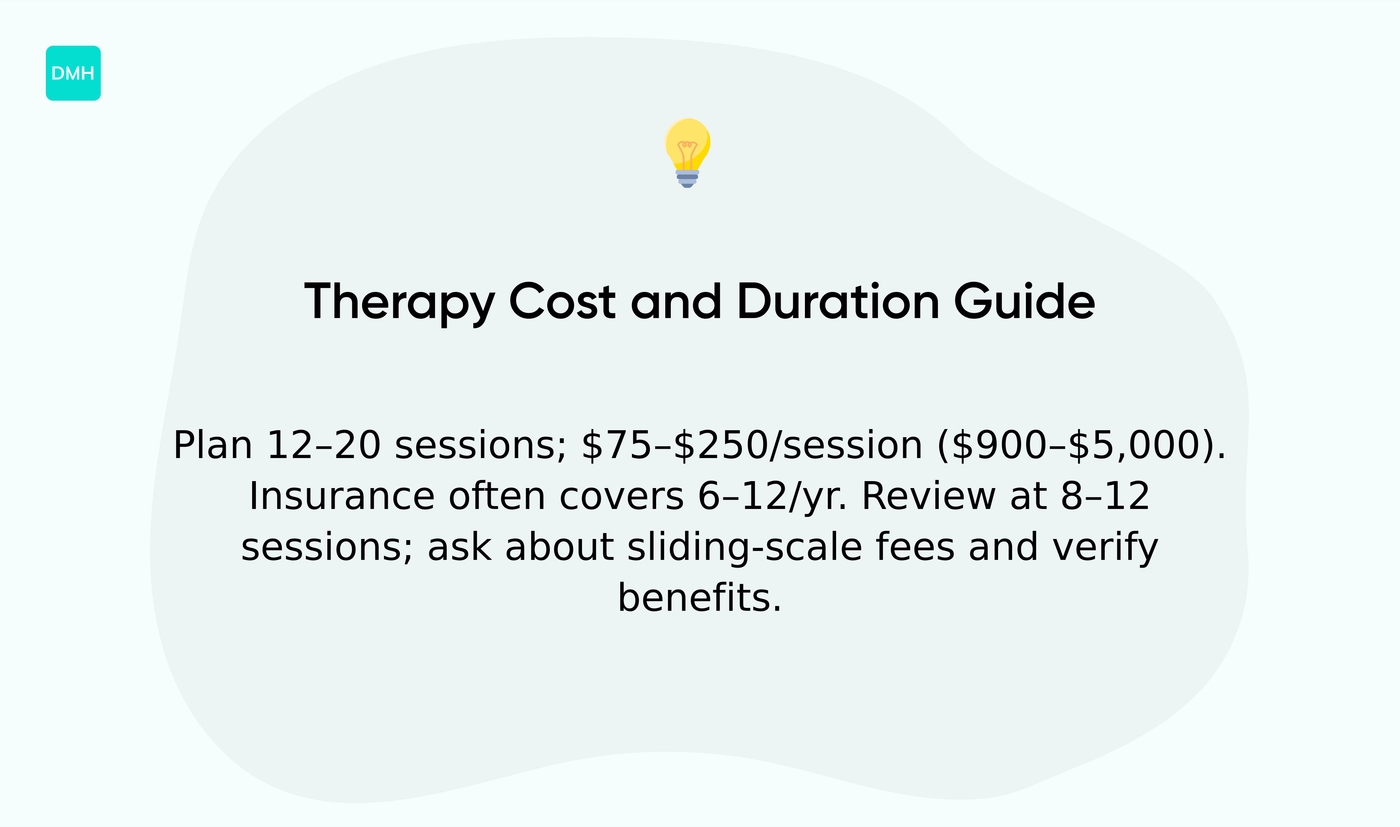
Plan finances around 12–20 sessions. Many couples reach durable change inside that span, so planning your budget to match the timeline makes sense.
Session fees usually run $75 to $250. That yields a total of $900 to $5,000 for 12–20 sessions. Knowing those numbers lowers stress and improves commitment.
Insurance often limits visits or requires preauthorization. Typical plans cover 6–12 sessions per year and offer $10–$50 copays. Out-of-network reimbursement varies and reduces your net cost savings.
Use checkpoints to balance cost and care. Review progress at 8–12 sessions and align those reviews with your goals so you avoid paying for unfocused work.
| Cost Factor | Typical Range | Action Step |
|---|---|---|
| Session Fee | $75–$250 | Ask about sliding scale options |
| Total Sessions | 12–20 sessions | Set 8-session checkpoint |
| Insurance Coverage | 6–12 sessions/year | Verify benefits before first visit |
| Total Investment | $900–$5,000 | Negotiate brief treatment plan |
Practical steps to balance cost and care:
- Ask about sliding scale fees or group therapy to cut hourly cost
- Negotiate a brief treatment plan with clear milestones and a projected session count
- Confirm insurance benefits before the first appointment to avoid surprises
Budgeting helps you focus on outcomes rather than sessions. Pick a plan, track progress, and adjust if needed. Ask your therapist for a timeline tied to your therapeutic goals and watch costs align with results.
You might also like: How to Stop an OCD Spiral: 5 Effective Strategies
When to reassess progress in couples therapy
We recommend an 8-session checkpoint to reassess progress in couples therapy. This point gives enough sessions to learn skills and test them in real life.
Most couples notice better communication within 3–4 sessions. The average length of couples therapy is 3–5 months with about 12 sessions for many couples.
Eight sessions give a clear signal about whether therapy is working for your relationship.
Signs of clear progress:
- Fewer heated arguments and calmer tone in conflicts
- Homework completed and new patterns practiced between sessions
- Emotional safety improves and partners report feeling heard
- Progress toward specific goals you set with your therapist
Warning signs to address:
- No measurable change by session eight — problems repeat without new tools
- One partner withdraws or refuses homework and attendance slips
- Trust worsens after a disclosure or betrayal and safety doesn’t improve
- Poor fit with the therapist or method limits progress
Try a frank mid-course review with your therapist now. Set concrete measures and a short plan to test fixes.
You can increase session frequency, switch to EFT or Gottman methods, or add individual sessions. If agreed changes fail, consider a new therapist or a planned end to therapy.
You might also like: What Does a PTSD Episode Look Like?
Signs it’s time to end couples counseling
Progress shows up in clear outcomes: steady improvements, fewer crises, and partners solving problems together. When those outcomes hold, you can shift from regular therapy to maintenance check-ins.
Ending therapy is a decision, not a deadline. I’ve seen couples stop after reaching goals and stay stable for months when they kept skills active.
Consider ending if you see these signs:
- Sustained communication improvements across at least four sessions
- Conflict resolution skills that stop fights from escalating
- Both partners complete homework and use new skills in daily life
- Trust and affection return to a steady level for two months
- Problems get solved between sessions without therapist mediation
Let outcomes guide you more than session counts. Typical couples therapy duration ranges widely, so focus on the number of couples therapy sessions that produce real change.
Transition to maintenance sessions every 4–8 weeks when signs persist. Schedule a brief review with your therapist to confirm readiness and set a clear follow-up plan.
You’ll also like: Why Is My Anxiety Worse in the Morning?
Educational notice: This content is provided for informational and educational purposes only and is not intended as medical advice. Always consult a qualified healthcare professional for medical concerns.