Common dietary supplements can disrupt lab accuracy and affect up to 4 in 10 blood tests through biochemical interactions or assay interference.
Some supplements change blood chemistry.
Some interfere with assay machines.
The result can look like disease or hide a real problem.
Do supplements affect blood test results
Tell your provider about all supplements before blood work.
Biotin thyroid test issues show up often. Biotin can skew immunoassays and produce false thyroid, hormone, cardiac, and cancer marker results. The FDA has reported adverse events linked to biotin interference, including one death from a missed heart attack.
Elevated creatinine levels occur with creatine use. Labs may flag kidney dysfunction in healthy people who use creatine supplements.
High‑dose vitamin C can alter certain glucose methods and give falsely high sugar readings. Omega‑3s and niacin can shift lipid panels. Herbs like echinacea, green tea extract, and turmeric may raise liver enzyme values.
In my opinion, the biotin problem causes the most clinical confusion. I’ve reviewed cases where users stopped biotin and labs normalized within days.
Stop timing varies by supplement. Timing ranges from 1 day to 1 week depending on the test. You should ask your lab which supplements to pause and for how long.
Tell your clinician what you take. Request test methods that avoid known interferences when available. That keeps results accurate and decisions safer.
Which supplements can interfere with blood test results
Biotin interference with thyroid and hormone tests
We recommend telling your lab about biotin use before testing. Biotin provides a clear example of how supplements interfere with blood test results.
Biotin binds to streptavidin used in many immunoassays. That binding skews signals and produces biotin test interference. Tests affected include TSH, Free T3 and Free T4.
Cardiac markers, many hormone panels and some cancer markers can report false values. Labs can report falsely low or falsely high values depending on the assay design. Studies show interference at doses up to 650 times the daily intake.
Here’s the thing: patients should stop high-dose biotin before blood work when possible. Stop biotin at least 48 hours before testing. Ask the lab if you need 72 hours. Read practical guidance from the Thyroid Foundation.
Share your supplement list with your clinician to avoid false thyroid results.
Creatine effect on kidney function tests
Creatine supplements increase serum creatinine because the body converts extra creatine into creatinine. This rise can show as elevated creatinine levels on routine blood work.
Lab equations use creatinine to estimate GFR. A higher creatinine can lower eGFR and mimic false kidney dysfunction in otherwise healthy people.
Daily dosing of 3–5 g often produces measurable changes within days. Athletes and people with high muscle mass see larger shifts. Tests that rely on creatinine can misclassify kidney health if the clinician doesn’t know about supplement use.
We recommend you disclose creatine use before testing. Stop creatine 48–72 hours before blood work when possible.
Ask your provider whether repeat testing or alternative markers, like cystatin C, make sense for you. I’d say telling your clinician prevents unnecessary worry and extra tests. Pause creatine briefly and record the dose you took most recently.
Vitamin C impact on blood glucose tests
We warn that high-dose vitamin C can skew blood sugar measurements.
Oral gram doses and IV ascorbic acid may cause falsely elevated readings on some point-of-care meters and certain colorimetric lab assays. Studies and case reports show misclassification of glycemia after large doses.
If you take more than 1 g per day, stop 48 hours before glucose testing. Tell the lab if you had an IV vitamin C infusion within 24 hours.
You should report all supplements to your provider because supplements interfere with blood test results and can change diagnosis or treatment. If a reading looks off, ask for a lab method using hexokinase or venous plasma glucose instead.
Fish oil and niacin effects on cholesterol tests
We explain how common lipid supplements change lab numbers.
Omega-3 fish oil lowers triglycerides significantly at 2–4 g daily. Studies report a 20–45% fall over weeks.
High dose niacin raises HDL and can lower LDL and triglycerides within weeks. Typical HDL gains range 15–35%.
Most shifts reflect real lipid changes rather than assay errors. Evidence for direct test interference remains limited.
If you worry that supplements interfere with blood test results, tell your clinician and list doses on your lab form. I’d say pausing high-dose niacin before a baseline lipid panel makes interpretation clearer, but ask your doctor first.
For an untreated baseline, consider stopping omega-3s for several weeks under medical guidance. Track supplements so your provider can interpret lipid panel results accurately.
Herbal supplements affecting liver function tests
We flag herbal supplements as a common source of abnormal liver blood tests.
Echinaaca, green tea extract, turmeric and concentrated curcumin can raise ALT and AST. Plant compounds can change assay signals or cause mild liver injury.
This creates herbal supplements interference that alters liver enzyme readings and leads to false positive results.
Green tea extract has the strongest signal in case reports. I’ve seen labs return to normal within 2–4 weeks after stopping the supplement.
If you need accurate liver panels, stop supplements before blood test for at least 7 days when feasible. Tell your clinician about any herbal use so they can interpret ALT and AST correctly.
How long to stop supplements before blood test
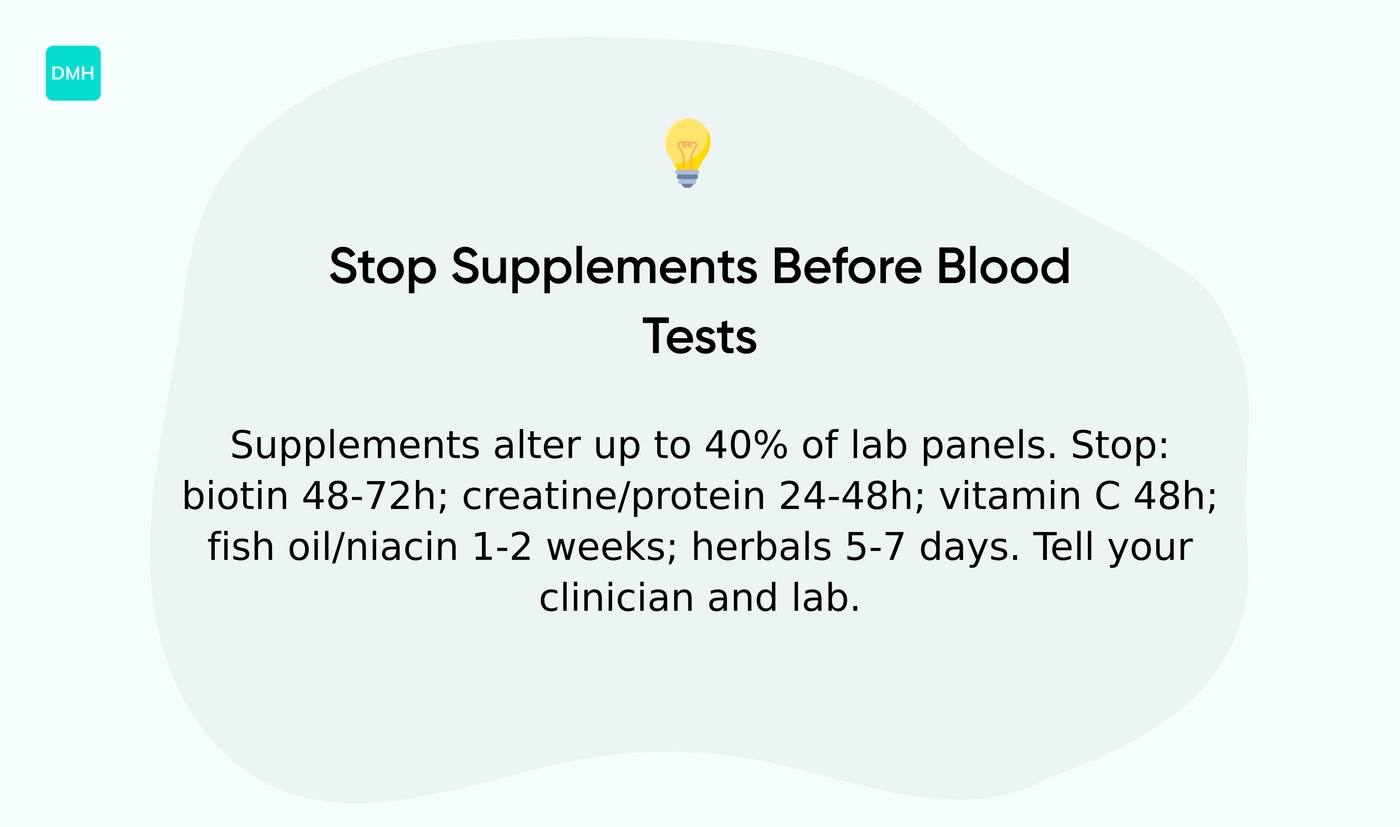
Supplements can interfere with blood test results and change values in up to 40% of lab panels through biochemical effects or assay interference.
We recommend clear stop times based on the supplement and the test to cut false results. Here’s a practical breakdown:
| Supplement | Stop Time Before Test | Tests Affected |
|---|---|---|
| Biotin | 48–72 hours | Thyroid, hormone, cardiac markers |
| Creatine | 24–48 hours | Kidney panels (creatinine, eGFR) |
| Vitamin C (high-dose) | 48 hours | Glucose tests |
| Fish oil & Niacin | 1–2 weeks | Lipid panels |
| Herbal supplements | 5–7 days | Liver enzyme tests |
| Protein powder | 24–48 hours | BUN, creatinine |
Biotin disrupts many immunoassays and can cause false thyroid and hormone readings. Stop high-dose biotin at least 48 to 72 hours before testing.
Creatine raises serum creatinine and can mimic kidney dysfunction. Pause creatine 24 to 48 hours before kidney panels.
High-dose vitamin C can skew some glucose methods. Avoid vitamin C for 48 hours prior to glucose testing.
Fish oil and niacin can change triglycerides and cholesterol. Hold these for 1 to 2 weeks when precise lipid numbers matter.
Herbal supplements like echinacea, green tea extract, and turmeric can alter liver enzymes. Stop herbal products 5 to 7 days before liver tests.
Vitamin K changes INR and affects people on warfarin. Don’t change warfarin or vitamin K without a clinician’s advice.
Protein powders can raise BUN and creatinine temporarily. Skip heavy protein supplements for 24 to 48 hours before kidney tests.
Tell your provider every supplement you take. I really think a short pause often prevents misdiagnosis and wasted repeat tests. Ask your lab for test-specific guidance when possible.
Do vitamins affect fasting blood work
We recommend clear instructions before a fasting draw.
Most routine multivitamins don’t change standard fasting blood work like glucose or lipid panels. Standard multivitamins stay reliable after a normal dose because they contain low amounts.
But you should pause high-dose vitamins that skew assays. High-dose biotin can falsify thyroid and hormone tests. Stop biotin at least 48 hours before a draw.
High-dose vitamin C can alter some glucose assays. Stop large vitamin C doses 24 to 48 hours before testing.
Magnesium and zinc rarely affect metabolic panels. Skip them on the morning of the test if the lab measures serum mineral levels. That step avoids falsely high trace element readings.
B vitamins can affect B12 assays when taken just before sampling. Hold a morning B12 dose until after the blood draw for an accurate result.
If you need a CBC explained, see CBC with differential values and meanings for guidance on counts and interpretation.
Tell your provider about all supplements. We ask patients to list doses and timing. This simple step prevents misreadings and unnecessary follow-up tests.
My practical rule: keep daily multivitamins unless told otherwise, and stop high-dose or assay-linked supplements before testing.
Specific supplement concerns and blood test interactions
Does vitamin K affect PT/INR blood tests
We tell patients on warfarin to report any vitamin K use to their prescriber. Vitamin K drives clotting factor production and can lower INR readings.
Warfarin blocks vitamin K recycling. Extra vitamin K opposes that effect and shortens prothrombin time. Changes often show up within 24 to 72 hours as short‑lived clotting factors turn over.
This is one clear way supplements interfere with blood test results. If you start or stop vitamin K supplements, expect more frequent INR checks and dose adjustments.
Ask your provider before changing doses or stopping medication. Patients do better when they keep intake steady and notify your clinician about any supplements.
Tracking servings of leafy greens helps keep INR stable. Aim for consistent vitamin K rather than abrupt changes.
Can ashwagandha impact thyroid lab results
Ashwagandha can change thyroid lab values in some studies. Small randomized trials included about 50 people and lasted eight weeks.
Researchers reported increased T4 and decreased TSH. That shows blood test results for thyroid panels can shift after supplementation.
We advise baseline thyroid labs before you start ashwagandha. Anyone on levothyroxine or with a thyroid condition must be cautious.
Tell your clinician about all supplements. Check thyroid hormone levels at baseline and again six to eight weeks after starting.
Consider pausing the herb 7–14 days before a scheduled test to reduce confounding. If TSH falls or T4 rises noticeably, your clinician may adjust medication or repeat tests. Watch symptoms closely and get labs when dose changes occur.
Does protein powder affect kidney function blood tests
We note that high protein intake from supplements can change common kidney markers.
Eating large amounts of protein or using protein powder raises blood urea nitrogen and can nudge creatinine upward. Labs may read these shifts as reduced kidney function when kidneys are actually fine.
Athletes who use protein powders often show BUN and creatinine changes after heavy intake.
For routine testing, stop protein powder 24–48 hours before your draw. If you take creatine, plan 48–72 hours or tell your clinician because creatine converts to creatinine and can cause elevated creatinine levels.
Clear disclosure prevents unnecessary follow-up and stress. We recommend you list all supplements on the lab form and ask your provider whether to pause them. These steps reduce false alarms from temporary lab changes.
You’ll also like: What Foods To Avoid If Alkaline Phosphatase Is High
Can turmeric or curcumin interfere with blood tests
Stop turmeric or curcumin 48–72 hours before tests that check liver enzyme tests, inflammation markers, or blood clotting.
Curcumin can raise ALT and AST in some case reports and small trials. Curcumin’s anti-inflammatory effect can lower CRP and ESR, causing deceptively low inflammation readings.
Curcumin may inhibit platelet function and interact with anticoagulant assays. That can affect PT/INR and bleeding assessments for people on blood thinners.
We advise telling your lab about any herbal supplements so clinicians can interpret abnormal labs correctly. People taking high doses or long-term turmeric should consult their clinician before testing.
You should pause supplements and note dose and timing on your requisition.
You’ll also like: How Long Does A Vitamin B12 Shot Last
How to prepare for blood work when taking supplements
We tell patients to list every pill, powder, and liquid they take before a blood draw.
Have you considered how many supplements you actually take each day? Many people don’t realize how supplements interfere with blood test results. Share brand names, doses, and when you took the last dose.
Follow these simple timing rules to stay on track:
- For thyroid panels, stop biotin 48–72 hours before testing
- Pause creatine 48 hours before kidney panels to avoid false positives
- Hold high vitamin C doses 24–48 hours before glucose tests
- Stop herbal products 5–7 days before liver enzyme tests
- Bring a printed supplement list to every appointment
Creatine can raise serum creatinine and mimic kidney disease. That helps labs avoid repeat testing and misinterpretation of creatine elevated creatinine.
High vitamin C can alter some glucose methods. Niacin and fish oil may shift lipid readings. Herbal products can change liver enzymes. Ask which vitamins to avoid for fasting blood tests.
If you can’t delay testing, record exact supplement timing on the lab form. Labs can note possible assay interference. Mention tests like CBC and learn what neutrophils mean at neutrophils in blood test.
I really think clear disclosure prevents wrong diagnoses and repeat visits. Ask your clinician for test-specific pause times. Follow written lab instructions when given.
Plus, recent news from January 2026 highlights that biotin can mask cancer recurrence in survivors by falsifying PSA, TSH, estrogen, or testosterone levels — delaying critical therapy. (That’s a scary thought, right?) Always inform your healthcare team about supplement use within 10 days prior to testing.
You might also like: How Long To Rid Body Of Vitamin B6 Toxicity
Educational notice: This content is provided for informational and educational purposes only and is not intended as medical advice. Always consult a qualified healthcare professional for medical concerns.