Nicotine acts as a fast stimulant and reaches your bloodstream almost immediately, which explains why people feel effects within seconds after inhaling or using nicotine products.
This rapid entry determines nicotine detection window and influences how long nicotine stays in your system.
What is nicotine and how does it metabolize in the body
Inhaled nicotine reaches the brain in about 10 seconds. (That’s faster than most people realize!)
Nicotine’s half-life sits around 1–2 hours. The liver converts most nicotine into cotinine through the CYP2A6 enzyme.
Cotinine has a longer half-life, about 15–20 hours, so labs use it to measure exposure. Why does this matter for testing? Well, cotinine sticks around much longer than nicotine itself, making it the go-to marker for detecting tobacco use.
Nicotine metabolism and elimination happens mainly in the liver. Kidneys clear cotinine in urine.
Blood and saliva tests detect nicotine for a shorter time than urine and hair tests. Hair tests can record use for months.
We recommend testing for cotinine when you need reliable results. Cotinine gives a clearer picture of recent and regular use than nicotine alone.
Key numbers to remember: nicotine half-life 1–2 hours, cotinine half-life 15–20 hours, brain uptake ~10 seconds. If you want to pass a nicotine test, focus on the cotinine timeline and factors that affect nicotine clearance time like metabolism, frequency of use, and product type.
What is the half-life of nicotine and cotinine
Nicotine exits the body quickly while cotinine remains much longer.
If you ask how long does nicotine stay in your system, remember the key numbers.
The nicotine half-life runs about 1 to 2 hours. The liver converts nicotine to cotinine via enzymes such as CYP2A6. Cotinine forms in higher amounts and clears slower.
The cotinine detection time averages 15 to 20 hours for its half-life. That slower decline produces larger, longer-lasting concentrations in blood, urine, and saliva.
Labs measure cotinine because it gives a wider and more reliable detection window.
The nicotine detection window for many tests shrinks because nicotine drops quickly. Cotinine can persist across days in urine and several days in blood or saliva.
Frequent users show higher cotinine levels that extend detection further.
Testing for cotinine makes results clearer for patients and clinicians. My experience reviewing lab reports shows cotinine cuts false negatives in most cases.
We recommend asking your lab which marker they report and what cutoff they use. Know the cutoff and timing before you test.
Takeaway: nicotine clears fast; cotinine tells the longer story. Ask for cotinine if you need an accurate read on recent nicotine use.
How long does nicotine stay in your system by test type
How long does nicotine remain detectable in urine
Nicotine appears in urine for about 2–4 days. Nicotine detection window covers that span.
Occasional users typically have cotinine detectable for 2–4 days. Heavy or daily users can test positive up to 10 days and, rarely, three weeks.
Medical News Today summarizes these ranges.
Most labs measure cotinine rather than nicotine. Test cutoffs and lab methods change the cotinine detection time.
Here’s the thing: time and steady hydration help lower levels and speed nicotine clearance time. I’ve seen short detox tips fail with frequent use.
We suggest timing a test at least 10 days after quitting if you smoked heavily. Talk to your provider for guidance on how to pass a nicotine test.
How long can nicotine be detected in blood tests
Nicotine appears in blood for about 1–3 days, while its metabolite cotinine can linger up to 10 days after your last tobacco use.
Blood testing targets cotinine because it has a longer half-life than nicotine. Nicotine half-life runs 1–2 hours. Cotinine half-life runs 15–20 hours in most people.
Occasional users clear both compounds faster. Heavy or daily users accumulate cotinine, which lengthens the detection window.
Many labs use a 10 ng/mL cutoff for blood cotinine.
Lab sensitivity and cutoff levels change nicotine detection time across facilities. This factor directly affects your odds to pass a nicotine test and the overall nicotine clearance time.
The 10-day guideline answers how long does nicotine stay in your system for blood tests. Plan to stop nicotine at least 10 days before a blood screen to improve your chance of testing negative for cotinine.
How long does nicotine show up in saliva tests
Saliva tests detect nicotine for 1–4 days and cotinine for 4–7 days in oral fluid samples.
Saliva catches nicotine short-term because nicotine’s half-life is about 1–2 hours, while cotinine has a 15–20 hour half-life so tests often target it. This explains the nicotine detection window and typical cotinine detection time.
What’s the best way to prepare for a saliva test? Stop all nicotine use now; hydrate, exercise, and sleep to support metabolism, but time matters most.
A clean saliva test depends mainly on days free of nicotine rather than quick fixes, so consider blood or urine testing for a longer nicotine clearance time.
How long is nicotine or cotinine detectable in hair follicles
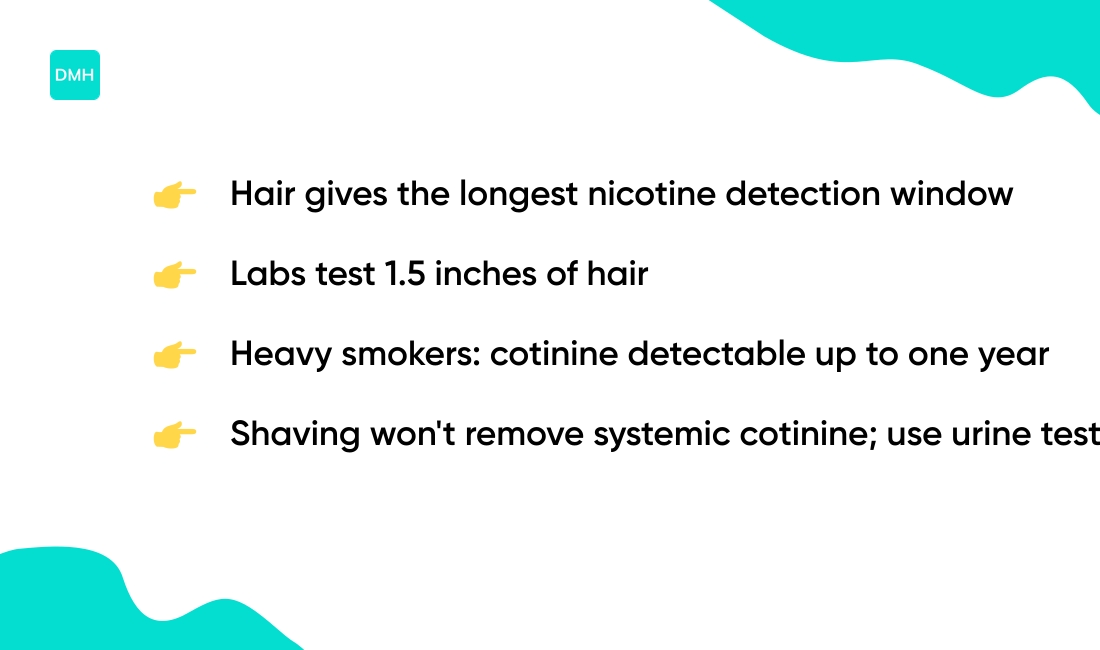
Hair gives the longest nicotine detection window.
Hair follicle testing looks for cotinine trapped in hair shafts. Hair grows about 1 cm per month. Labs usually test 1.5 inches of hair, which captures roughly 3 months of history.
That equals a three months window for most people.
If you ask how long does nicotine stay in your system, hair often gives the longest record. Hair tests reveal long-term exposure better than urine or blood.
Heavy tobacco users often show cotinine for much longer. Studies and lab reports note detection up to a year in chronic smokers.
Shaving hair doesn’t erase systemic cotinine; the body still holds metabolites. If you need a negative result, stop use early and focus on urine or saliva tests, which clear faster.
What affects nicotine clearance time in the body
Frequency and amount of nicotine use
Frequency and amount control detection windows. That directly changes how long does nicotine stay in your system during testing.
Occasional users clear nicotine and cotinine in urine within 2–4 days. Frequent heavy users accumulate cotinine in tissues and body fat.
Urine cotinine detection often reaches 10 days and rarely up to 3 weeks. Blood tests show cotinine for up to 10 days. Hair testing can record months or even a year of exposure for chronic users.
Nicotine half-life equals 1–2 hours. Cotinine half-life runs about 15–20 hours, prolonging detection.
Tracking daily intake gives the best estimate of your nicotine detection time. Plus, understanding your nicotine clearance time before scheduling any test helps you plan better.
Stop nicotine and allow several days for cotinine to fall below typical cutoffs.
Individual metabolism and genetics
Genes and metabolism determine nicotine persistence. Liver enzymes convert nicotine to cotinine. Variants in CYP2A6 speed or slow that process.
This directly affects nicotine metabolism and elimination.
Age, body mass and health affect liver enzyme activity. Your overall metabolic rate sets a baseline.
Smoking more often raises cotinine baseline and slows clearance. See a similar clearance example at how long does a vitamin B12 shot last.
Knowing your rate helps time tests. Light users often test negative within 3 to 4 days. Heavy users should expect up to 10 days or longer.
Genetics largely predict nicotine clearance time. Plan for 7 days for moderate users. Avoid nicotine and heavy secondhand smoke during that window.
Talk with your clinician for personalized timing.
Type of nicotine product used
The nicotine product you use changes how long nicotine stays in your system.
Cigarettes and vaping show similar nicotine detection time. Urine and saliva often clear in 2–7 days for occasional users and up to 10 days for heavy users.
Blood follows a shorter window: about 1–3 days for nicotine and up to 10 days for cotinine.
Chewing tobacco can prolong cotinine presence because oral tissues hold nicotine longer. Hair testing can record use for months, with detectable cotinine for up to 3 months or more for long-term users.
Nicotine replacement therapy yields lower peaks but can still trigger a positive cotinine test for several days after last use. Actually, vaping clearance most often mirrors smoking, not a faster exit.
If a test matters, stop nicotine use well before screening and discuss options with your clinician. We recommend checking the specific test type to set realistic timing goals.
How long after quitting will a nicotine test be negative
A standard nicotine test often turns negative about 8–9 days after you stop using nicotine. That reflects 4–5 half-lives of cotinine, the liver metabolite labs measure as the best marker.
We recommend planning for at least two weeks before urine or blood testing. Many people clear cotinine within that window, but some need more time.
| Test Type | Occasional Users | Heavy Users |
|---|---|---|
| Urine | 2–4 days | 10 days (rarely up to 3 weeks) |
| Blood | 1–3 days | Up to 10 days |
| Saliva | 1–4 days | 4–7 days |
| Hair | Up to 3 months | Up to 1 year |
Factors that extend detection include slow metabolism, frequent vaping or smoking, high BMI, age, and some genetics.
If you need to pass a test, stop all nicotine sources, drink water, stay active, and allow time for natural clearance. Consult a clinician for tailored advice.
You’ll also like: How long does it take for salt water to heal gums
How can I flush nicotine out of my system quickly
We recommend practical steps you can take to speed nicotine elimination.
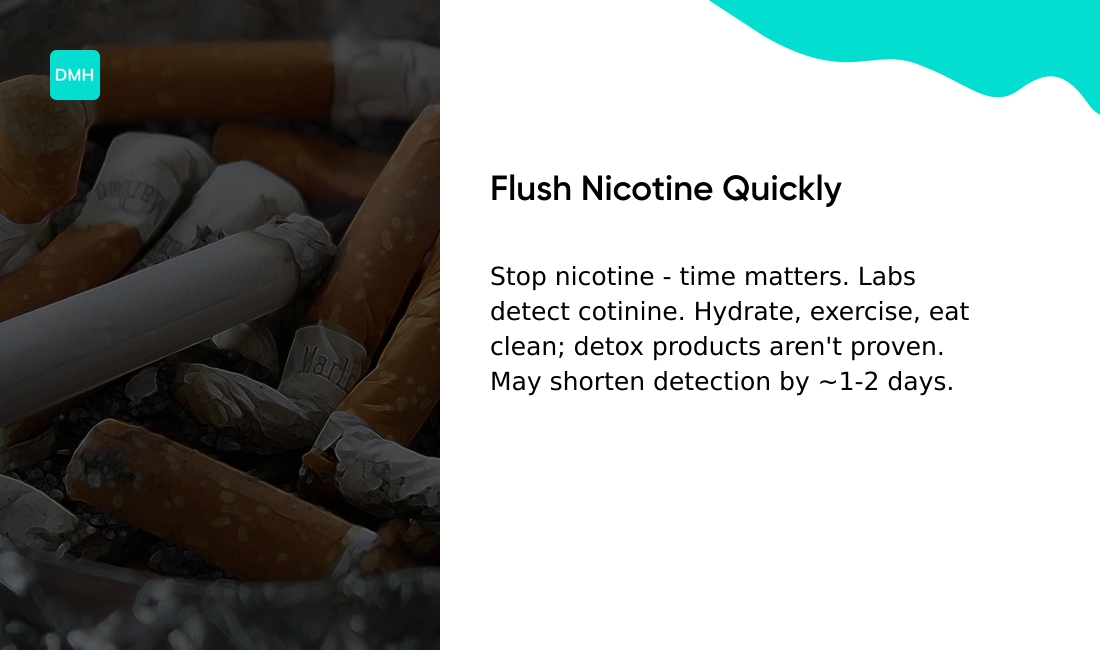
Time remains the biggest factor. Nicotine half-life runs about 1–2 hours. Cotinine half-life runs about 15–20 hours, and labs test cotinine.
- Hydrate. Drink water to support kidney filtration and urine output. This may dilute urine but won’t change liver metabolism.
- Move your body. Short bursts of high-intensity exercise raise metabolism and blood flow. I’d say this helps shave a day or two from nicotine detection.
- Eat clean. Fiber, lean protein, and vitamin C foods support liver and kidney function and aid elimination.
- Stop nicotine use now. Stopping removes ongoing input and lets levels fall on a predictable schedule.
Detox kits and cleansing drinks promise fast results. Scientific data gives little support for large shifts in cotinine levels from those products.
Trusting them can give false confidence.
Expect only modest gains from lifestyle actions. You may shorten a nicotine detection window by a day or so if you act early and consistently.
Track your nicotine clearance time and plan tests with that timing in mind.
Try these steps and consult your clinician for testing advice. Stop nicotine, hydrate, exercise, and wait.
Read also: How To Prevent The Flu After Being Exposed
Common questions about nicotine testing and detection
We answer common nicotine testing questions in plain terms.
Nicotine has a 1–2 hour half-life and cotinine lasts 15–20 hours. Urine, blood, and saliva tests detect cotinine most reliably.
What cutoff levels do employers use? Workplace urine cutoffs often sit near 200 ng/mL; lower cutoffs around 10 ng/mL can show passive exposure.
Brief secondhand smoke exposure usually raises cotinine under 10 ng/mL. That level rarely triggers standard employer screens.
Nicotine patch, gum, and lozenges raise cotinine like smoking and vaping. Employers who test for nicotine may not accept nicotine replacement therapy as exempt.
Blood tests detect cotinine for up to 10 days in regular users. Urine and saliva clear faster for light users, often within 2–7 days. Hair testing records nicotine use for months and can detect long-term patterns.
Stopping nicotine use gives you the best chance to pass a nicotine test. Support clearance with hydration, active exercise, and healthy sleep to speed metabolism.
Watch cotinine cutoff levels and the specific nicotine detection window your lab uses. Stop use now and check your lab’s cutoff so you can plan a clear timeline.
Read also: How To Get Rid Of Bitter Taste From Medicine
Educational notice: This content is provided for informational and educational purposes only and is not intended as medical advice. Always consult a qualified healthcare professional for medical concerns.