AST testing can feel confusing when you see those numbers on your lab report.
Let me break it down for you.
This enzyme lives inside your cells, and when those cells get damaged, AST spills into your bloodstream.
Your doctor uses this marker to spot liver trouble, heart issues, or muscle injury—and the level tells a story about what’s happening inside your body.
What is AST in a blood test
AST in blood test stands for aspartate aminotransferase. It’s an enzyme tucked inside your liver, heart, and muscle cells.
When cells break down or get injured, they release AST into your bloodstream. That’s when your doctor can measure it.
Labs often label this test as the SGOT test on your paperwork. Both names refer to the same enzyme, so don’t let the jargon throw you off.
Results show up in units per liter (U/L). A mild bump in AST might point to inflammation or a tough workout. But when levels spike above 500–1,000 U/L? That’s a red flag for serious tissue damage.
Doctors rarely look at AST alone. They compare it with ALT and other liver markers to pinpoint whether your liver, heart, or muscles are the source of trouble. That comparison shows up as AST test results in your report.
Ever wonder why one test isn’t enough? Well, symptoms, medications, and even yesterday’s gym session can shift your AST reading. Tracking trends over time gives you—and your doctor—a much clearer picture than a single snapshot.
I’d say repeat testing after you’ve rested helps rule out false alarms from exercise. Keep a copy of every lab report and watch how your numbers change with follow-up tests. Ask your provider what your specific result means for your health.
What is the normal range for AST levels
The AST normal range shifts with age and sex. Adult men typically fall between 8–48 U/L, while women range from 8–43 U/L.
AST levels by age vary through childhood. Boys often test between 8–60 U/L, and girls between 8–50 U/L.
AST in newborns can climb as high as 150 U/L right after birth, then drop over the next few days. (That’s completely normal, by the way.)
AST is the same enzyme you might see labeled SGOT on older lab forms. You’ll get the full story when you read it alongside ALT and other liver function tests.
Here’s the thing: labs use different machines and reference methods, so expect minor variation in reported ranges. That’s why trending your AST over time matters more than obsessing over one number.
Compare your result to the lab’s printed range and share any trends with your clinician. If your AST sits modestly above the limit, your doctor will check medications, alcohol use, muscle injury, or heart concerns.
Marked elevations demand fast action. Readings above 500 U/L often signal severe injury and need urgent assessment.
Keep every lab copy. Ask for ALT and other liver function test results when you review AST test results—that combo helps your clinician zero in on the cause.
What causes high AST levels
When liver cells get injured, they dump AST into your bloodstream. That’s what raises the number on your AST in blood test.
Common culprits include hepatitis, cirrhosis, alcohol-related damage, fatty liver disease, and drug toxicity. Each one leaves a distinct pattern.
Hepatitis often pushes high AST levels to 100–500 U/L. Cirrhosis causes chronic, mild-to-moderate rises. Alcohol-related injury tends to drive AST above ALT, creating an AST/ALT ratio over 2.
Acetaminophen overdose and certain medications destroy liver cells fast—sometimes spiking AST above 1,000 U/L. I really think checking your drug history and alcohol intake helps you make sense of your AST test results.
Compare the AST liver enzyme with ALT to narrow down the damage site. Repeat testing and your clinical picture determine the next steps.
Non-liver causes of high AST
Plenty of conditions outside the liver can jack up your AST blood test results. Heart attack, muscle injury, pancreatitis, shock liver, and hemolysis all fit the bill.
A heart attack can push AST into the hundreds. Doctors pair troponin with AST to confirm cardiac damage.
Muscle trauma or rhabdomyolysis might spike AST above 1,000 U/L. Measuring creatine kinase (CK) helps identify muscle as the source. Pancreatitis and hemolysis usually cause moderate AST rises, while low blood flow to the liver may produce sky-high readings from widespread cell death.
We recommend comparing AST with ALT and ordering targeted tests like CK and troponin to pin down the cause. Repeating the test after rest and reviewing symptoms gives you the clearest answer for high AST levels—and clarifies whether your heart, muscle, or blood cells are involved.
Medications that can increase AST
Statins, certain antibiotics, NSAIDs, and many chemotherapy drugs can raise AST levels on an AST blood test.
Review recent prescriptions with your clinician if your AST in blood test comes back elevated. Check the Corewell Health test update for lab-specific details on new testing methods.
Statins cause mild AST rises in about 1% of users. Antibiotics like isoniazid and some macrolides can trigger larger spikes. NSAIDs rarely cause liver injury, but when they do, you’ll see elevated AST. Chemotherapy often produces clear, dose-related increases that doctors monitor closely.
Vitamin B6 acts as a cofactor for aminotransferase activity. Low B6 can lower measured enzyme activity and give you falsely low AST results. Checking vitamin status helps avoid misreadings and prevents unnecessary testing down the road.
Can exercise raise AST levels
Yes. Strenuous exercise can bump up AST levels temporarily.
Muscle stress damages fibers and releases AST into your blood. This comes from muscle tissue breakdown rather than liver injury in many cases.
An elevated AST in blood test can reflect muscle injury after a tough workout. Typical rise equals 1.5–3× baseline on lab reports, and values often stay under 200 U/L after intense sessions.
Plan to retest after rest—ideally 48–72 hours later. We always ask about recent workouts before jumping to a liver disease diagnosis.
Clinicians should measure CK and check symptoms first. AST often rises within 24–48 hours after muscle injury, then falls slowly over days to weeks as muscles heal.
If levels stay high after rest, see your clinician. They can test ALT, bilirubin, and review medications. Persistent rises may need imaging or a specialist referral.
What is the difference between AST and ALT
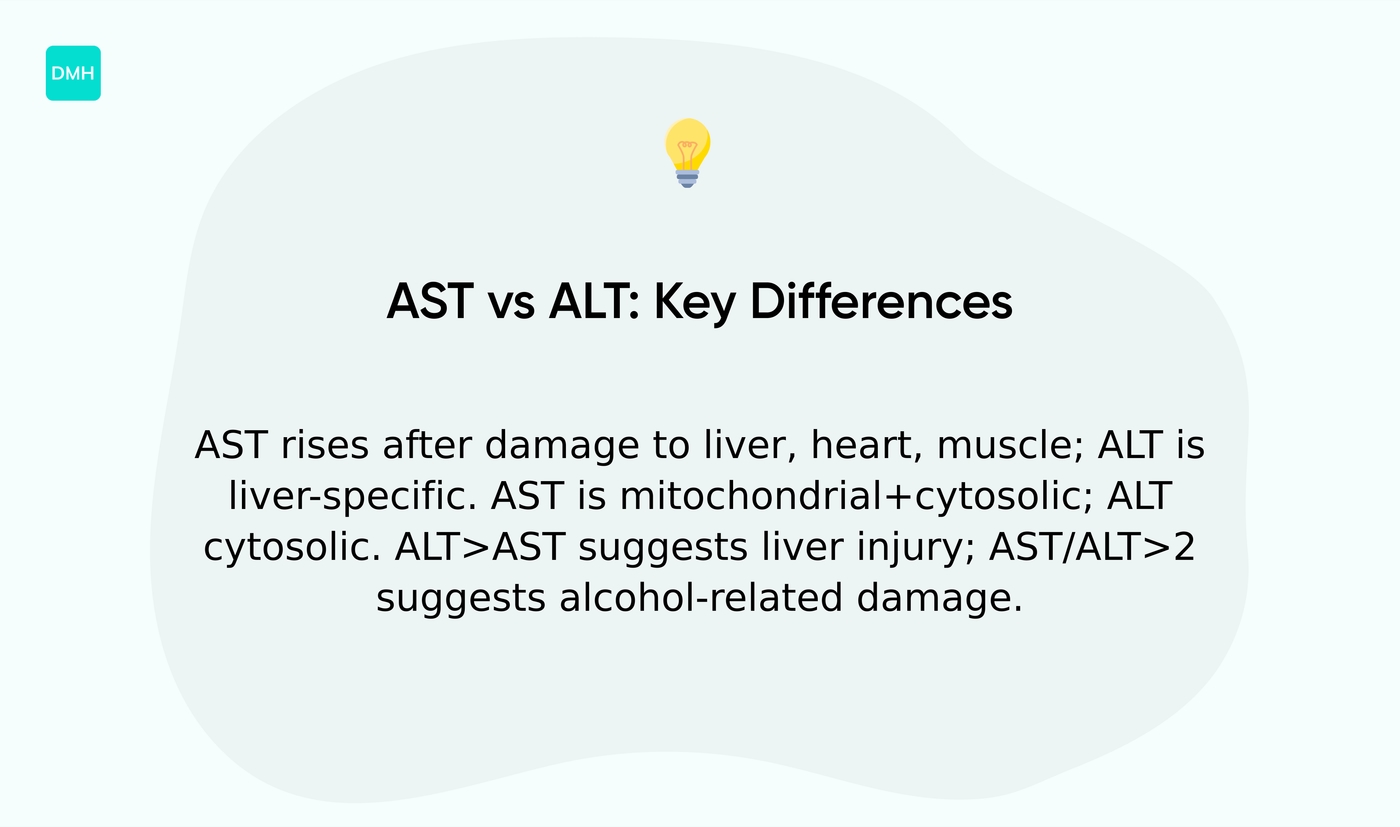
AST in blood test means aspartate aminotransferase. It shows up after damage to several tissues. ALT stands for alanine aminotransferase and stays mostly inside liver cells.
AST appears in liver, heart, skeletal muscle, kidney, and red blood cells. ALT concentrates in the liver. That location difference matters when you’re trying to figure out what’s wrong.
Cell location plays a role, too. AST lives in mitochondria and cytosol, while ALT sits mainly in the cytosol.
Doctors order both tests to narrow the damage source. If ALT rises more than AST, the liver’s likely the culprit. If AST rises with normal ALT, suspect muscle or heart injury.
The AST to ALT ratio helps refine the diagnosis. A ratio above 2 often points to alcohol-related injury. Running both tests gives clearer clues than a single value—I’ve seen muscle injury push AST way above liver levels.
Look at patterns, not single numbers. Compare AST levels with ALT and with other liver function tests for the full picture. If you see unexpected values, ask your clinician about repeat testing and causes like medication, exercise, or heart issues.
Use results to guide next steps: further imaging, cardiac enzymes, or focused liver evaluation.
What is the AST to ALT ratio and why does it matter
The AST to ALT ratio compares two liver enzymes to reveal likely causes of liver damage. Both are measured in U/L on an AST in blood test.
A ratio over 2 suggests alcoholic liver disease. A ratio between 1 and 1.5 signals developing fibrosis. A ratio above 1 points to cirrhosis onset.
Say AST reads 120 U/L and ALT reads 50 U/L. The ratio is 2.4—pointing toward alcohol-related injury. A ratio below 1 often reflects viral hepatitis or nonalcoholic fatty liver disease.
Use the ratio with clinical history, imaging, and other labs like GGT and bilirubin. We pair the ratio with symptoms, alcohol history, and trends in ALT and AST levels to guide next steps.
The ratio gives quick, practical clues you can act on. I’ve seen it change testing and treatment plans within days. It guides testing priorities—order confirmatory tests, consider abstaining from alcohol, and retest after a few weeks to track progress.
How to interpret AST test results
What does low AST mean
Low AST blood test results usually don’t signal a health problem. Check the lab’s reference range on your report.
Values below the lab’s lower limit—often around 8 U/L—count as low. A single low value is rarely meaningful. Ask for repeat testing if the number surprises you.
Common drivers include lab variation, sample handling, and low vitamin B6. Pregnancy and some medications lower readings, too. Review your supplements and meds with your provider.
Focus on trends and symptoms rather than one low result. Schedule follow-up if you have symptoms or if other liver tests fall outside the AST normal range. Tracking repeat low AST levels helps your doctor decide next steps.
What level of AST is dangerous
AST levels above 500 to 1,000 U/L usually indicate severe tissue damage. Causes include acute viral hepatitis, shock liver, and large tumors. These high AST readings show up as AST in blood test results and appear on SGOT test panels.
Values over 500 U/L deserve same-day care. High AST levels often need imaging and repeat labs to find the source.
If you see readings this high, call your doctor or head to the emergency department. Bring recent lab results and a list of medicines for faster assessment.
Seek immediate medical attention if you have jaundice, severe pain, weakness, or confusion. Early treatment limits damage and improves outcomes.
How quickly do AST levels change after liver injury
AST enters the blood within 6–12 hours after liver cell damage. It often peaks around 24–48 hours. AST peak timing helps you know when to test.
Its half-life averages about 17 hours. Levels fall as liver cells recover or after treatment. Mild injury can normalize in 3–7 days, but severe injury can keep AST high for weeks.
Trends matter more than single values. If your AST in blood test shows elevation, get repeat testing at 48–72 hours to track rise or fall.
Pair AST with ALT and clinical signs for a clear picture. Repeat testing and imaging guide treatment and recovery monitoring. If AST rises above 500–1,000 U/L or you have severe symptoms, seek urgent care right away.
When should I get an AST blood test
AST blood test helps spot liver or muscle damage. Get tested with symptoms or known risk factors.
Look for jaundice, dark urine, belly pain, unexplained fatigue, or sudden muscle weakness. Those are your body’s alarm bells.
Have diabetes, obesity, chronic hepatitis, or heavy alcohol use? Ask for testing at diagnosis and yearly for fatty liver risk.
Starting liver-impacting drugs like statins or chemotherapy? Get a baseline test before treatment. Repeat at six to twelve weeks after dose changes.
Taking high doses of acetaminophen? Stop and test if you feel sick after an overdose or prolonged use. Pregnant and dealing with severe itching, upper abdominal pain, or high blood pressure? Your clinician should check liver enzymes to assess preeclampsia or cholestasis.
Routine screening fits people with risk factors or abnormal liver imaging. High AST levels above 500 U/L need urgent evaluation.
Emergency testing is urgent for severe abdominal pain or jaundice with confusion. Seek care immediately for rapid declines or bleeding.
Baseline testing reduces surprises and helps guide safer care. Talk about AST test results with your doctor and set clear follow-up plans and treatment goals together.
Read also: How To Lower Hematocrit – Dailymedicalhealth
How to prepare for an AST blood test
No special fasting is usually needed for an AST blood test. Your provider may request fasting if the order includes lipid panels—standard fasting time is 9 to 12 hours.
Morning draws give you consistent baselines. Bring a medication and supplement list to your appointment.
Rest affects results. Skip heavy exercise for 48 hours before the draw and avoid alcohol for 24 hours before testing.
- Fast 9–12 hours only when lipids are ordered
- Stop strenuous workouts 48 hours before the test
- Avoid alcohol 24 hours before the sample
- Take usual prescribed meds unless told otherwise
- Note symptoms and recent injuries for the clinician
Tell your clinician about drugs that can raise AST levels, such as statins or high-dose acetaminophen. Ask if you should pause any medication.
Expect normal results if no recent muscle injury or alcohol use occurred. If values look high, your clinician may order repeat testing after rest. Clear pre-test habits reduce unnecessary follow-ups.
You might also like: What Foods To Avoid If Alkaline Phosphatase Is High
How to lower elevated AST levels
Here are clear steps you can use to lower elevated AST levels from an AST blood test:
- Limit alcohol – Stop or reduce drinking. Alcohol damages the AST liver enzyme and raises AST levels quickly
- Manage weight – Lose 5–10% of body weight to cut liver fat and lower AST in many people with fatty liver
- Adjust medications – Review prescriptions with your doctor. Drugs like statins and high-dose acetaminophen can raise AST (but don’t stop meds without guidance)
- Improve your diet – Eat more vegetables, lean protein, and whole grains. Cut added sugar and saturated fat to help ALT and AST levels
- Exercise regularly with moderate intensity – Vigorous workouts can raise AST from muscle breakdown, so rest before retesting
- Treat underlying conditions – Viral hepatitis, heart injury, and muscle disorders need targeted therapy to bring AST into the AST normal range
- Monitor progress – Repeat AST test results in 4–12 weeks after changes and track trends with your provider
Small, steady steps produce the best results. I’ve seen AST levels fall into the 8–48 U/L range for males and 8–43 U/L for females after weight loss and stopping alcohol.
Talk with your doctor about a plan that suits your medical history and AST test results.
Read also: What Level Of Platelets Is Dangerous
AST test cost and availability
AST testing is affordable and widely accessible. You can get results the same day at many labs and clinics.
Typical self-pay cost for a standalone AST test runs $15–$70. A liver panel or comprehensive metabolic panel that includes AST often costs $20–$150. Insurance usually covers the test when a provider orders it as medically necessary, and Medicare covers lab tests with a physician order.
Ask whether the lab bundles AST with other liver markers. Bundling lowers out-of-pocket expenses and improves diagnostic clarity.
You may see AST ordered with a CBC with differential or a full liver panel. Walk-in clinics, primary care offices, hospitals, and national labs offer testing. Direct-to-consumer labs let you pay cash and skip a doctor’s visit when allowed in your state.
Ordering AST as part of a panel saves money and gives clearer context for results. Check your insurer policy and verify lab prices before the test. Request a copy of the results and compare AST values with ALT and bilirubin for a better assessment.
Plus, a recent 2025 study from Sweden and Finland introduced the CORE model—a simple blood test predicting liver disease risk years before symptoms with high accuracy. If you need help reading your results, bring them to your clinician for personalized guidance.
| Test Type | Typical Cost (Self-Pay) | Insurance Coverage |
|---|---|---|
| Standalone AST | $15–$70 | Usually covered with medical necessity |
| Liver Panel (includes AST) | $20–$150 | Usually covered with medical necessity |
| Comprehensive Metabolic Panel | $20–$150 | Usually covered with medical necessity |
You might also like: RBC Distribution Width (RDW): High, Low, and What It Means
Educational notice: This content is provided for informational and educational purposes only and is not intended as medical advice. Always consult a qualified healthcare professional for medical concerns.