That tired, unexplained ache that won’t quit might be trying to tell you something.
Vitamin D deficiency is a common but often overlooked cause of fatigue, bone pain, mood changes and weakened immunity.
This guide explains how to recognize low vitamin D, when to test, and which treatments (sun, diet, supplements) actually work.
You’ll learn the key symptoms, common causes, safe dosing recommendations, and how to raise levels without taking unnecessary risks.
Whether symptoms are subtle or severe, understanding your vitamin D status can speed recovery and reduce fracture and infection risk.
You’ll also get practical steps for testing, choosing D3 supplements, and when to seek medical supervision for high-dose therapy.
Read on to get clear, evidence-based answers you can act on.
What is vitamin D deficiency
Vitamin D deficiency means blood levels of 25-hydroxyvitamin D sit too low to support normal body processes. This nutrient helps the body absorb calcium and supports bone mineralization.
Vitamin D also supports muscle function and immune responses. Cells use vitamin D signals to regulate growth and inflammation.
Many labs measure 25-hydroxyvitamin D to assess status. Low vitamin D commonly describes levels that fall below a threshold set by expert groups.
|
Status |
ng/mL |
nmol/L |
|---|---|---|
|
Deficient |
Below 20 |
Below 50 |
|
Insufficient |
20–30 |
50–75 |
|
Sufficient |
30–50 |
75–125 |
Deficiency is defined as levels below 20 ng/mL, which equals about 50 nmol/L. Values between 20 and 30 ng/mL often appear as insufficient in reports. Levels above 30 ng/mL generally appear within a sufficient range for bone health.
Some studies suggest levels below 20 ng/mL may be associated with higher risks of bone pain, muscle weakness, and certain infections. People with darker skin, limited sun exposure, obesity, or malabsorption have higher risk of low levels.
Testing uses a simple blood draw called a 25-hydroxyvitamin D test. Results vary by lab method and units, so clinicians interpret results in context. Some individuals feel truly tired or notice subtle aches when levels stay low for months.
Vitamin D levels need interpretation alongside symptoms, medical history, and other lab values. Not medical advice, content for educational purposes, consult a professional.
What are the symptoms of vitamin D deficiency
Can low vitamin D cause fatigue
Some studies suggest vitamin D deficiency may be associated with persistent tiredness and low energy. Vitamin D influences muscle and immune cell function through effects on mitochondria.
Research links low vitamin D to reduced mitochondrial function. Cell studies report lower ATP and weaker muscle cell activity. (You know, that feeling when even coffee doesn’t help?)
A common lab test measures 25-hydroxyvitamin D in blood. Levels below 20 ng/mL (50 nmol/L) often define deficiency.
Observational studies show higher fatigue scores in people with low levels. Some small trials report modest fatigue improvements after correcting low levels. People with darker skin, obesity, or limited sun exposure often have lower levels.
Evidence varies by study design, population, and duration of follow-up. If fatigue persists, discuss testing and options with a clinician. Not medical advice, content for educational purposes, consult a professional.
Vitamin D deficiency bone pain and muscle weakness
Vitamin D deficiency reduces calcium availability for bone building. Levels below 20 ng/mL (50 nmol/L) may impair bone mineralization, causing achy bones and tenderness.
Low vitamin D can weaken skeletal muscle. People often describe deep muscle aches and reduced strength during simple tasks. Poor mineralization and weaker muscles can increase fall and fracture risk.
Older adults with low levels face higher rates of hip and wrist fractures in observational studies. Blood tests that measure 25‑hydroxyvitamin D help identify deficiency and guide treatment.
Supplements and dietary sources can raise levels, which may improve pain and strength for some individuals. Learn about strategies to prevent osteoporosis and support bone health.
Not medical advice, content for educational purposes, consult a professional.
Does vitamin D deficiency lead to depression or anxiety
Low vitamin D links to mood changes. Some studies suggest people with low vitamin D have higher rates of depression and anxiety.
The brain contains vitamin D receptors in the hippocampus, prefrontal cortex, and amygdala. Some observational studies find about 40% higher odds of depression when levels fall below 20 ng/mL.
Randomized trials give mixed results. Supplementation may help depressive symptoms in people who are deficient, but findings vary by study. The link with anxiety remains uncertain.
Could your mood be tied to your vitamin D status? The overall mood disorders link needs more study. If you have mood symptoms and low test results, discuss them with a clinician.
Not medical advice, content for educational purposes, consult a professional.
Can vitamin D deficiency cause hair loss
Vitamin D helps regulate hair follicle cycling and the immune response. Hair follicles express vitamin D receptors that influence growth phases.
Observational studies show lower 25‑hydroxyvitamin D levels in people with alopecia areata. Some studies report similar findings for telogen effluvium. Small trials describe hair regrowth after vitamin D supplements in select patients.
Animal studies show vitamin D receptor loss causes defective hair cycling in mice. Evidence varies by study design and sample size, so overall findings remain limited.
Severe vitamin D deficiency usually means 25(OH)D below 20 ng/mL. Clinicians sometimes evaluate iron status and thyroid function alongside a vitamin D deficiency test. Correcting low levels with supplements may be associated with hair improvement in some patients.
Evidence doesn’t prove direct causation between low vitamin D and all hair loss. If you notice unexplained thinning, consider a 25(OH)D blood test and clinical evaluation. Not medical advice, content for educational purposes, consult a professional.
Vitamin D deficiency and immune system health
Vitamin D deficiency may be associated with higher risk of respiratory infections. Recent research found severe deficiency (below 15 nmol/L) raised hospitalization risk for respiratory tract infections by 33% compared to sufficient levels (at least 75 nmol/L).
Each 10 nmol/L increase in blood vitamin D linked to a 4% lower risk. See the University of Reading study for the full report.
Deficiency is commonly defined as levels below 50 nmol/L. Many labs report levels under 20 ng/mL as deficient. Evidence comes mainly from observational studies, which show association rather than proven cause.
Vitamin D affects innate immunity and inflammatory responses. Other health and social factors often co-occur with low vitamin D. Some studies suggest benefits from modest increases in vitamin D status for infection risk, though findings vary by study design and population.
People with frequent infections or low levels may discuss testing with a clinician. Not medical advice, content for educational purposes, consult a professional.
What causes low vitamin D levels
Vitamin D deficiency results when intake and production fail to meet the body’s needs. Low vitamin D can affect bones, muscles, and immune function. A common lab threshold for deficiency is below 20 ng/mL (50 nmol/L).
-
Limited sun exposure — Skin makes vitamin D when UVB rays hit bare skin. Indoor work, heavy clothing, and high-latitude winters reduce UVB. Many people who work nights or live above ~37° latitude make little vitamin D for months.
-
Dark skin pigmentation — Melanin reduces UVB-driven synthesis. People with darker skin often need longer sun exposure to make the same amount of vitamin D as lighter-skinned people.
-
Malabsorption disorders — Conditions like celiac disease, Crohn’s disease, and some gastric surgeries impair absorption of fat and fat‑soluble vitamins. This can lower blood vitamin D despite normal intake.
-
Obesity — Vitamin D can become sequestered in fat tissue, and blood levels often appear lower in people with higher body mass index.
-
Aging — Older adults show reduced skin capacity to manufacture vitamin D and may get less sun exposure.
-
Dietary insufficiency — Few natural foods contain vitamin D. People who avoid fortified foods and fatty fish can have low intake.
Testing with a 25‑hydroxyvitamin D blood test helps identify deficiency. If you have symptoms or risk factors, discuss testing with a clinician. Not medical advice, content for educational purposes, consult a professional.
Who is at risk for vitamin D deficiency
Vitamin D deficiency in women vs men
Recent data show gender gaps in vitamin D deficiency prevalence. A 2026 Chinese hospital study found prevalence at 25-hydroxyvitamin D below 20 ng/mL is 13.1% in females and 5.8% in males.
Several factors may explain the gap. Sun exposure patterns and body fat distribution affect blood levels. Hormonal differences and reproductive biology also play a role.
Pregnant women face unique considerations, including higher nutrient needs and altered metabolism. Some studies suggest low maternal 25(OH)D links to reduced neonatal vitamin D stores and changes in early bone health.
Guidelines differ on testing and supplementation during pregnancy, and findings vary by study design. Not medical advice, content for educational purposes, consult a professional.
Vitamin D deficiency in adults by age group
Prevalence of vitamin D deficiency shifts with age. Adolescents show the highest rate at 18.2%. Young adults aged 18–39 report a 17% prevalence, while rates fall in middle age and vary by lifestyle.
Low vitamin D often links to limited sun exposure, low dietary intake, higher body mass index, and darker skin pigmentation. Absorption and enzyme changes with age also affect levels.
New guidelines for adults over 75 highlight targeted assessment and care. The Endocrine Society advises against routine vitamin D testing or extra supplementation for most healthy adults under 75, as diet and sunlight suffice for many. Supplements are recommended without testing for adults over 75 (may lower mortality), pregnant women (reduces complications), and pre-diabetics (may prevent diabetes progression).
Older adults face higher risk of low vitamin D effects on bone health and immune response. These age group patterns help clinicians and public health teams set testing strategies and plan vitamin D deficiency treatment options.
Evidence varies by study design and population, so findings may not apply to every individual. Not medical advice, content for educational purposes, consult a professional.
Vitamin D deficiency in children
Vitamin D deficiency affects many children. A cross-sectional study reported a 40.3% rate in ages 1–10, with 25.3% insufficient and 34.5% sufficient.
Low vitamin D can change growth parameters. Research links low levels with slower linear growth and reduced bone mineral density. Signs of low vitamin D in children include delayed height gain, bone pain, muscle weakness, and delayed motor milestones.
Severe, prolonged deficiency can lead to rickets. Adequate dietary sources and vitamin D supplements can reduce the risk of rickets and support bone mineralization, according to available research. (Well, nobody wants to see their kid struggle with weak bones.)
Testing with a 25-hydroxyvitamin D blood test helps clinicians assess levels. Results vary by age, skin tone, geographic location, and sun exposure. Some studies suggest population rates and outcomes differ by region and study design.
Not medical advice, content for educational purposes, consult a professional.
How is vitamin D deficiency diagnosed
What is a normal vitamin D level
The common lab test measures 25-hydroxyvitamin D in ng/mL or nmol/L. Labs report levels that help classify status. Ranges used by many clinicians:
-
Vitamin D deficiency: below 20 ng/mL (<50 nmol/L).
-
Low vitamin D (insufficient): 20–30 ng/mL (50–75 nmol/L).
-
Vitamin D level (sufficient): 30–50 ng/mL (75–125 nmol/L).
Some experts note optimal levels for specific outcomes may fall near the upper part of the sufficient range. Evidence varies by study, population, and health outcome.
Individual needs can vary because of age, skin tone, body weight, and health conditions. If your test shows low levels, clinicians often monitor response after lifestyle or supplement changes. Not medical advice, content for educational purposes, consult a professional.
When to get tested for vitamin D deficiency
Vitamin D deficiency is measured with a 25‑hydroxyvitamin D blood test. Levels below 20 ng/mL (50 nmol/L) often indicate deficiency.
Testing suits people with persistent fatigue, bone pain, muscle weakness, frequent infections, or unexplained hair loss. People with darker skin, obesity, malabsorption, chronic kidney disease, limited sun exposure, or those over 75 face higher risk.
New guidelines limit routine screening. Clinicians often reserve testing for high‑risk groups and specific symptoms. Do you fall into one of these categories?
Supplements can alter lab values; see the guide on supplements and blood test results for details. Testing frequency can vary by condition and treatment plan. Retesting after 8–12 weeks of therapy often occurs when clinicians treat confirmed deficiency.
If you have symptoms, consult a qualified healthcare professional. Not medical advice, content for educational purposes, consult a professional.
Vitamin D deficiency treatment
How much vitamin D should I take for deficiency
If a lab shows low vitamin D deficiency levels, clinicians may use supplements to raise levels. Typical regimens vary by age and severity.
-
Vitamin D supplements for adults: commonly 1,000–4,000 IU daily. The Institute of Medicine lists 4,000 IU as a general upper limit.
-
Severe deficiency: clinicians sometimes use higher short-term courses, for example 50,000 IU weekly for several weeks under medical supervision.
-
Children and infants: many pediatric guidelines list 400 IU daily for infants and roughly 600–1,000 IU for older children, based on age and weight.
-
Pregnant people: typical intake starts near 600 IU daily, with some clinicians supporting 1,000–2,000 IU in specific cases.
-
Older adults: common ranges are 800–2,000 IU daily to help maintain bone health and muscle function.
Individual needs vary by baseline level, body weight, absorption, and medication use. If your test shows low levels, consult a qualified healthcare professional. Not medical advice, content for educational purposes, consult a professional.
What are the best vitamin D supplements (D2 vs D3)
Vitamin D exists as ergocalciferol (D2) and cholecalciferol (D3). Vitamin D3 usually comes from animal sources or lichen, while vitamin D2 often comes from yeast or mushrooms.
Some studies suggest D3 raises serum 25‑hydroxyvitamin D more effectively than D2. Trials report about 1.5–2 times larger increases with D3 and longer maintenance of levels. Many clinicians favor D3 for better absorption and lasting effect.
Vegan options include lichen-derived D3 or D2 from fungi. Look for softgels or liquids that list third-party testing. Third-party tested labels may indicate consistent potency.
Taking supplements with a fat-containing meal may improve absorption. Testing blood 25(OH)D helps match dose and timing for recheck. Not medical advice, content for educational purposes, consult a professional.
What is the best time of day to take vitamin D supplements
People with vitamin D deficiency often ask about the best time to take supplements. Taking vitamin D supplements with a meal that contains fat improves absorption.
Many people take with meals to increase uptake. Some studies suggest higher blood levels when the dose accompanies the largest daily meal. Evidence on morning versus evening dosing remains mixed.
Some individuals report mild sleep changes with evening doses, but findings vary. Consistent timing matters for steady levels and adherence. Linking a dose to breakfast or bedtime helps people avoid missed doses.
Include a source of dietary fat, such as salmon or half an avocado, with the dose. Some medications can affect vitamin D metabolism, so timing or dose may vary by patient. Not medical advice, content for educational purposes, consult a professional.
How long does it take to correct vitamin D deficiency
Restoring vitamin D deficiency often takes about three months. Correction speed can vary by starting level, age, body weight, and season.
Absorption issues, certain medications, and malabsorption disorders may slow progress. People with darker skin often need more sun exposure to raise levels. Severe deficiency often requires longer monitoring than mild deficiency.
Some studies report measurable rises within eight weeks with clinical regimens, but findings vary. Clinicians commonly retest blood 8–12 weeks after an intervention to check response. Retesting confirms whether levels reach sufficient levels or need a different plan.
After sufficiency, many people adopt maintenance steps like safe sun, diet, and vitamin D supplements. Periodic checks every six to twelve months may track long-term stability. If you have symptoms or abnormal results, consult a qualified healthcare professional.
Not medical advice, content for educational purposes, consult a professional.
Do I need a prescription for high-dose vitamin D
Prescription-strength vitamin D often refers to a 50,000 IU dose given as a weekly capsule. Clinicians may use it for severe vitamin D deficiency confirmed by a blood test showing very low levels. This approach can correct levels faster than over-the-counter supplements.
Over-the-counter vitamin D supplements work for mild insufficiency and maintenance. People with malabsorption, kidney disease, or parathyroid disorders may need prescription therapy and specialist care. Learn more about which doctors manage parathyroid issues at parathyroid disease specialists.
High doses can raise blood calcium and cause symptoms such as nausea or weakness. Clinicians typically monitor blood levels and calcium during treatment. Not medical advice, content for educational purposes, consult a professional.
How to increase vitamin D levels naturally
What foods are high in vitamin D
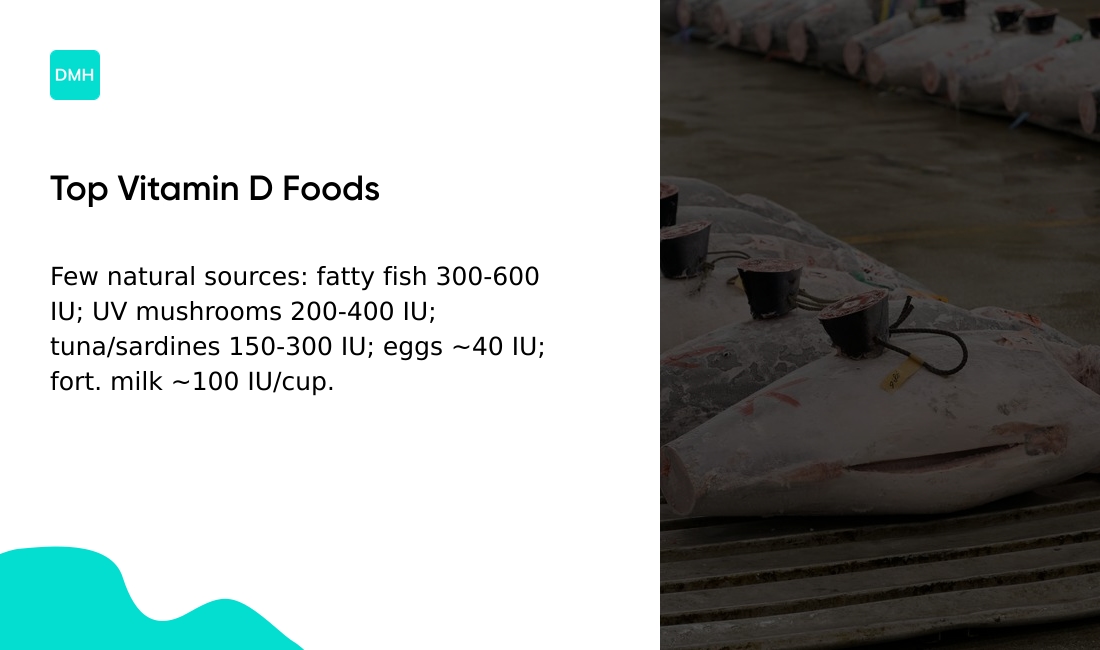
Food can help raise vitamin D levels. People with low vitamin D may use food as one part of a plan. Here’s the thing: very few foods naturally contain vitamin D, so fortified options matter.
-
Fatty fish: Salmon, mackerel, sardines. A 3.5 oz (100 g) cooked portion may provide about 300–600 IU.
-
Egg yolks: One large yolk contains roughly 40 IU. Pasture‑raised eggs may contain more.
-
Fortified plant milks: Most fortified cow and plant milks supply about 100 IU per cup (240 ml).
-
Mushrooms: Mushrooms exposed to UV light can offer 200–400 IU per 100 g. Regular mushrooms have much less.
-
Canned tuna and sardines: Often provide 150–300 IU per typical serving (2–3 oz).
-
Fortified cereals and orange juice: Can add 40–100 IU per serving.
Values vary by product and preparation. Not medical advice, content for educational purposes, consult a professional.
Can I get enough vitamin D from sunlight alone
Sunlight can raise vitamin D levels by triggering skin production. Skin converts 7‑dehydrocholesterol into previtamin D3 when UVB photons hit. The liver then forms 25‑hydroxyvitamin D and kidneys make active calcitriol.
Short midday exposure of 10–30 minutes often produces vitamin D for many people. Production varies by skin tone, age, body weight and sunscreen use. Factors that reduce synthesis include:
-
Latitude above 37° and winter months with weak UVB
-
Darker skin pigmentation requiring longer exposure
-
Cloud cover, pollution and indoor lifestyles
Sunlight alone may not meet needs for people at risk of deficiency. Dietary sources or supplements can help raise levels when sun is insufficient. Vitamin D deficiency can affect bone and muscle health and immune response.
Not medical advice, content for educational purposes, consult a professional.
Does sunscreen affect vitamin D production
Sunscreen reduces the UVB rays that make vitamin D in skin. Sunscreens with SPF 15 may block roughly 93% of UVB. SPF 30 may block about 97%.
Laboratory studies show near-complete blockage when sunscreen is applied perfectly. Real-world use tends to be patchy and less frequent. (Let’s be honest — who applies sunscreen perfectly every time?) Many people still produce some vitamin D despite regular sunscreen use.
Short, unprotected sun exposure can raise vitamin D for many people. Light skin may need about 10–30 minutes at midday. Darker skin often needs longer.
Diet and vitamin D supplements provide reliable alternatives. Fortified foods help maintain levels without extra sun. Testing for vitamin D deficiency gives clear information about your status. Discuss test results with a clinician to interpret levels and treatment options.
Not medical advice, content for educational purposes, consult a professional.
Read also: How To Prevent Kidney Stones: Complete Guide
Can taking too much vitamin D be harmful
Long-term high doses of vitamin D from supplements can cause harm. Research links prolonged intakes above 4,000 IU daily to increased risk of toxicity.
Vitamin D toxicity often shows as high blood calcium. Excess calcium can cause nausea, vomiting, abdominal pain, frequent urination, and muscle weakness. Severe cases may lead to kidney stones, kidney damage, and heart rhythm changes.
Clinicians describe excess vitamin D as hypervitaminosis D. Blood markers include 25‑hydroxyvitamin D levels above about 150 ng/mL and elevated serum calcium above roughly 10.5 mg/dL.
Most guidelines list 4,000 IU daily as a general safe upper limit for adults. Toxicity usually follows sustained intakes far above that, such as doses near 10,000 IU daily over months. Individual risk can vary by age, kidney function, body weight, and medications.
If you take high-dose supplements and notice symptoms, seek medical evaluation. A provider can order a 25‑hydroxyvitamin D test and a serum calcium test to check levels. For information on risks tied to other supplements, see too much vitamin C symptoms and risks.
Not medical advice, content for educational purposes, consult a professional.
You’ll also like: What Vitamin Deficiency Causes You To Crave Salt
Vitamin D deficiency and longevity
A recent trial found daily 2,000 IU vitamin D3 slowed telomere shortening in adults over 50. Telomeres are DNA caps that shorten as cells divide. Shorter telomeres often relate to higher risk of age-related illness.
Researchers gave participants 2,000 IU vitamin D3 daily and tracked telomere length over time. The group on vitamin D showed a slower rate of shortening than the comparison group. Mechanisms may include reduced inflammation and better cellular repair.
Anti-inflammatory effects and cellular health support appear in study discussions. Evidence remains limited, though. Trial size, follow-up length, and participant mix can affect results. Larger and longer trials need to confirm links to lifespan.
Low vitamin D links to fatigue, bone pain, and immune changes. These outcomes may interact with cellular aging, but findings vary by study design. For more detail, see the trial coverage at Prevention.
Not medical advice, content for educational purposes, consult a professional.
You’ll also like: Prenatal Vitamin Mechanism Of Action
Educational notice: This content is provided for informational and educational purposes only and is not intended as medical advice. Always consult a qualified healthcare professional for medical concerns.