
Most leg itch below the knee comes from dry skin, eczema, allergies, or circulation problems.
Persistent itching can signal deeper issues like diabetes, kidney disease, or vein trouble.
This guide explains common causes and shows you fast, evidence-based steps to stop the itch and protect your skin.
What causes itchy legs below the knee
Dry skin and xerosis
Dry skin and xerosis cause most cases of itchy legs below the knee. When moisture drops, the skin’s lipid layer cracks and nerve endings become hypersensitive.
That breakdown fuels relentless scratching and worsens skin barrier damage. Actually, legs often get neglected during moisturizing routines, making shins and calves especially vulnerable.
Apply a thick emollient within three minutes after bathing to lock in moisture. Use creams with ceramides or petrolatum twice daily, and you should see itch drop by about 40–60% within a week for many folks.
Consistent moisturizing prevents repeat flare-ups. I’ve seen patients report major relief after just three to seven days of sticking to this routine.
You may avoid ointments because they feel greasy—try a lighter lotion by day and petrolatum at night to balance comfort and effectiveness.
If itching continues beyond two weeks or you spot redness, swelling, or sores, see a clinician for testing.
Eczema and atopic dermatitis on lower legs
Eczema and atopic dermatitis produce red, scaly patches on shins and calves. These flares break the skin barrier and raise infection risk if you scratch hard.
The itch often worsens at night and disturbs sleep. When you ask what causes itchy legs below the knee, eczema ranks near the top.
Calm inflammation fast: apply a thick emollient twice daily, use 1% hydrocortisone for up to two weeks, and keep nails short to avoid skin tears. Expect noticeable itch relief within 48–72 hours with consistent care.
You may worry about steroid side effects. Use low-potency creams briefly and follow a clinician’s plan to limit risk.
Suspect a different rash or diet trigger? Read our pityriasis rosea foods to avoid guide for related clues.
Contact dermatitis and allergic reactions
Contact dermatitis on lower legs commonly causes itchy rashes after contact with soaps, fabrics, lotions, plants, or metals. Finding the trigger stops repeat flares.
Reactions can start within minutes or appear up to 48 hours later as red, itchy, well-demarcated patches or tiny blisters. You may feel intense itch on shins or calves.
Here’s what you can do right now:
- Stop contact and rinse the area with cool water for 5 minutes.
- Apply a cold compress for 10 minutes to reduce itch.
- Use OTC hydrocortisone cream twice daily for 3–7 days if no infection exists.
- Switch to fragrance-free detergent and breathable fabrics to prevent repeats.
If tape or adhesive caused the rash, see our guide on how to treat skin irritation from tape. If the rash spreads or fails to improve in 48 hours, see a dermatologist.
Some people assume it’s dry skin. Try one day of moisturizer before skipping a visit, and seek testing if symptoms persist.
Fungal infections and folliculitis
Fungal infections and folliculitis cause itchy bumps and inflammation on your shins. Athlete’s foot can spread up the leg and trigger persistent lower leg itching.
Folliculitis shows as small pustules centered on infected hair follicles. When people ask what causes itchy legs below the knee, infections rank high.
Well, starting treatment early stops spread and reduces scarring. Apply antifungal cream (like clotrimazole or terbinafine) twice daily for two weeks for fungal causes. Warm compresses and an antiseptic soap reduce follicle inflammation.
You may think home care suffices, but deep folliculitis needs medical review. If you notice spreading redness, fever, or persistent pain, see a clinician.
Insect bites on lower legs
Insect bites on exposed lower legs produce persistent itching, swelling, and secondary skin irritation. Thin skin and frequent exposure let mosquitoes, fleas, and chiggers bite easily and trigger strong immune responses.
Itching peaks within minutes and can last 24–72 hours. Swelling often lasts 48–72 hours. (Ugh, those summer evenings can be brutal!)
Use cold compresses, oral antihistamines, and 1% hydrocortisone for short relief. Starting a cold compress within ten minutes reduces swelling and stops scratching faster.
If you think it’s just dry skin, clustered pinpoint bumps and central puncta point to insect bites instead. Clean the area, avoid scratching, and check blisters with our guide how to heal blisters fast.
See a doctor within 48 hours for spreading redness, pus, or fever.
Vein problems often explain what causes itchy legs below the knee. They cause swelling and visible skin changes that many folks overlook.
Poor venous return raises pressure in leg veins. That pressure damages skin and nerve endings and triggers lower leg itching.
Here are practical steps you can try today:
- Wear compression stockings 20–30 mmHg during daytime activity.
- Elevate legs 15–20 minutes after sitting, three times daily.
- Walk 20–30 minutes daily to boost the calf pump.
- Limit long standing and aim for modest weight loss if needed.
Varicose veins and chronic venous insufficiency cause blood pooling and brown skin staining. This leads to flaky patches called stasis dermatitis, swelling, and itch.
About 20% of adults show varicose veins on exam. Compression of 20–30 mmHg often reduces ankle swelling within two weeks.
Early action prevents ulcers and limits long-term damage. If you have persistent swelling, dark patches, open sores, or itch lasting more than two weeks, book a vascular review. Read detailed guidance at UK Vein Care.
If you think the itch is simple dry skin, check ankles for swelling and brown patches. Those signs point to poor circulation and venous disease rather than xerosis.
Can diabetes cause itchy legs below the knee
Diabetes causes itchy legs below the knee and requires medical evaluation to avoid slow healing and infections.
High blood sugar damages small blood vessels and nerves. That leads to poor blood circulation, chronic nerve damage, and increased infection risk.
Dry skin from reduced sweating makes shins and calves itch. Nerve damage, or neuropathy, can produce burning, tingling, or itching without a rash. Read more about neuropathy here.
People with diabetes get more fungal and bacterial infections on lower legs. These infections itch and heal slowly when glucose is uncontrolled.
Personally, I’ve seen many patients treat itch as minor. Persistent itching steals sleep and raises fall risk at night.
Here’s what to do: check your blood sugar and A1c, inspect lower legs daily, moisturize with a fragrance-free cream, and see a clinician if itch lasts over two weeks or if you find numbness, swelling, or sores.
You may assume brief itch is harmless. Testing early finds treatable issues and prevents ulcers. Start with a quick skin check today and book a clinic visit if symptoms persist.
Itchy lower legs with no rash: internal causes
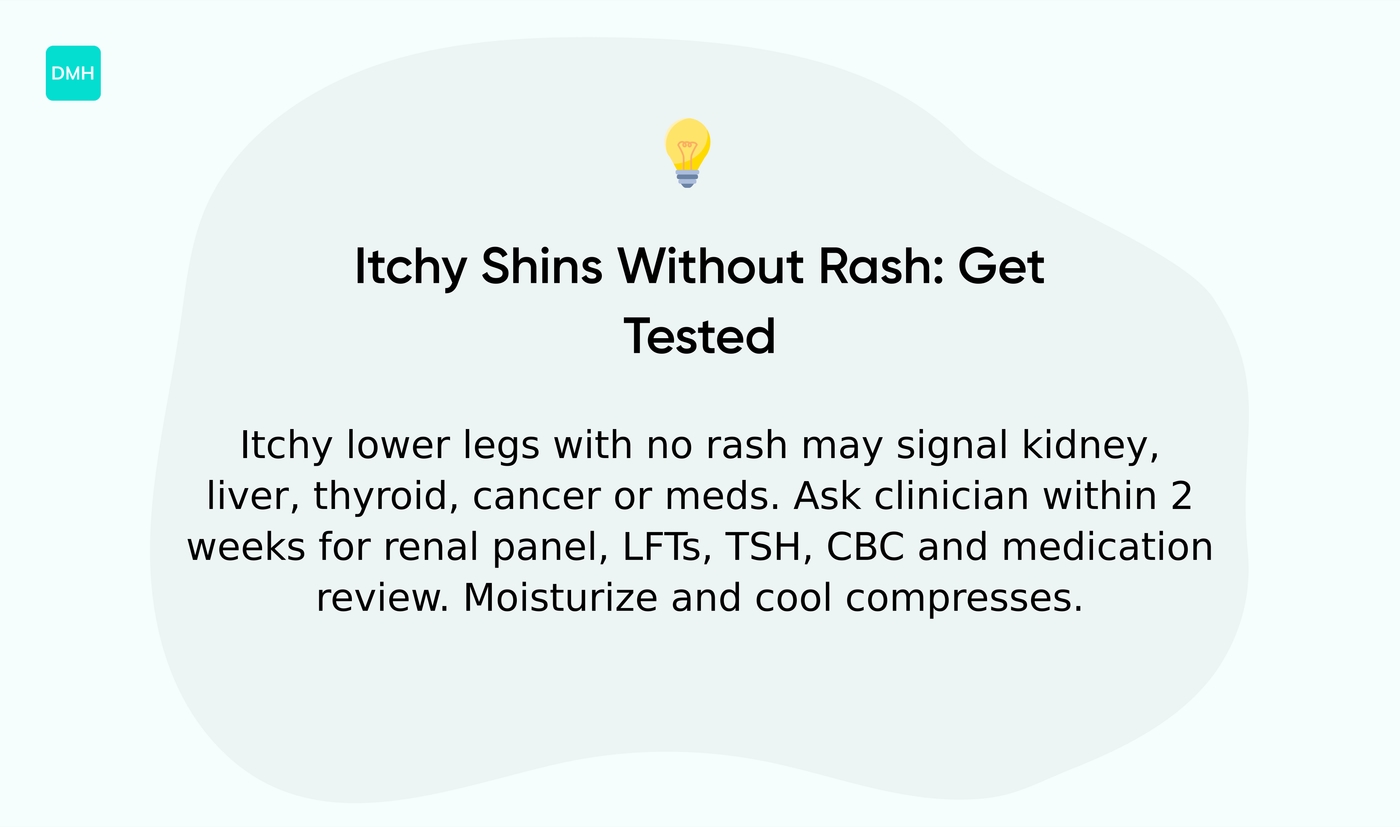
Systemic issues cause itchy lower legs with no visible rash. Missing these signs delays diagnosis and treatment.
Kidney disease can cause uremic pruritus from toxin buildup. Liver problems cause cholestatic itch without skin changes. Thyroid disorders alter nerve sensitivity and skin moisture.
Cancers, especially lymphoma, sometimes present as unexplained itch. Certain medications list pruritus as a common side effect. Diabetes leads to neuropathy and poor circulation that feel like itch.
These systemic internal causes often produce no visible rash, which confuses patients.
| Condition | Key Features | Recommended Tests |
|---|---|---|
| Kidney disease | Uremic pruritus, dry skin, fatigue | Renal panel, creatinine, BUN |
| Liver disease | Cholestatic itch, jaundice, fatigue | LFTs (ALT, AST, bilirubin) |
| Thyroid disorder | Altered sweating, weight changes, dry skin | TSH, free T4 |
| Lymphoma/cancer | Unexplained itch, night sweats, weight loss | CBC, imaging, specialist referral |
| Medication side effect | Recent new drug, no other findings | Medication review with provider |
Uremic itch affects up to 40% of dialysis patients. Clinicians sometimes overlook internal causes when skin looks normal. I once saw a patient whose itchy shins preceded a liver diagnosis.
We recommend evaluation within two weeks for persistent or worsening symptoms. Ask your clinician for LFTs, renal panel, TSH, CBC, and medication review.
For quick relief, moisturize frequently, use cool compresses, and try OTC antihistamines.
You may assume itch without rash is benign, but simple tests rule out serious disease. Act early and get basic labs plus a focused clinical exam to find the cause.
Why do my legs itch after shaving or showering
Most leg itch after shaving or showering comes from minor irritation, and simple care stops it fast.
Razor burn happens when blades scrape the top skin layer. That creates red bumps, stinging, and itching. Shaving can inflame hair follicles and produce folliculitis—tiny, tender pustules that itch and sometimes hurt.
Hot water strips oils and dries skin quickly. Dry skin then tightens and sparks persistent itch. Soap irritation appears when fragranced soaps or new gels disrupt the skin barrier, causing temporary burning and itching.
I tried a cool compress after a hot shave and saw relief in under ten minutes. Here’s the quick routine:
- Cool the area with a compress for 10 minutes.
- Pat dry gently—avoid rubbing your skin.
- Apply a fragrance-free moisturizer within two minutes to lock in moisture.
- Use an antibacterial cream if bumps look infected and get medical care if symptoms spread.
- If your moisturizer stings, read more about why moisturizers burn.
You may worry this signals infection. Check for spreading redness, fever, or pus and see a clinician if any appear.
Quick step: cool the skin now and use a gentle, fragrance-free lotion within two minutes after showering.
Why do my shins and calves itch at night or when running
Exercise and nighttime factors trigger histamine and nerve sensitivity, causing itch that disrupts sleep or workouts. If you search what causes itchy legs below the knee, exercise-induced histamine and altered nerve thresholds rank high.
Increased blood flow and heat during running cause histamine release from mast cells and dilate tiny skin vessels. Sweat and friction irritate hair follicles and sweat glands, producing quick, localized itch on shins and calves.
At night, the body’s circadian rhythms lower pain and itch thresholds and change skin temperature. Warm bedding and reduced distractions make small itches feel much bigger.
Dry skin and eczema on lower legs raise baseline itch. Varicose veins, stasis dermatitis, and poor circulation create persistent lower leg itching with swelling or skin changes.
Cool the skin immediately after a run and apply a fragrance-free ceramide cream within ten minutes. Wear breathable fabrics and try compression socks for vein-related itch—many users report symptom drops within days.
A five-minute cool shower plus a brief calf massage cuts post-run itch fast. I use that combo after long runs and usually scratch far less.
Could your itch be more than dry skin? Check for swelling, visible veins, spreading rash, or numbness and see a clinician if symptoms persist or worsen.
Start with a cool rinse after running, apply moisturizer, and track symptoms for seven days. Seek medical review if you have diabetes, unexplained swelling, or persistent lower leg itch with no rash.
Fast remedies to stop itchy legs below the knee
Moisturize immediately and frequently
Moisturizing right after a bath stops dry skin and reduces lower leg itching fast.
Apply a thick fragrance-free cream with ceramides or petrolatum within three minutes of toweling off to lock moisture and repair the skin barrier. Use a coin-sized dollop per shin, massage until absorbed, and reapply twice daily or after long showers and runs.
When answering what causes itchy legs below the knee, dry skin ranks high and responds well to this routine. Nightly petrolatum cut my itching within 48 hours during a winter flare.
Choose products with 2–3% ceramides or plain petrolatum ointment. Avoid alcohol or fragranced lotions.
If medications thin your skin and worsen dryness, read what medication causes thin skin and discuss alternatives with your provider.
Worried about grease? Use a thin layer at night or a ceramide-rich cream for less shine.
Use cold compresses and cool showers
Cold compresses and cool showers reduce inflammation and stop itching within minutes. Cold slows nerve firing, narrows blood vessels, and calms lower leg itching.
You can feel instant itch relief in 5 to 10 minutes for itchy legs below the knee due to dry skin or heat.
Wrap ice in a thin towel and apply for 10 minutes. Repeat hourly as needed. Cool baths beat brief splashes for stubborn itchy shins causes like eczema or sweat-related irritation.
If you worry about skin damage, use a cloth barrier and limit applications to 10 minutes per area.
Try this test: after a hot shower, apply a 10-minute cold compress to stop itchy legs after shower or itching at night below knee. If relief fails, see a clinician for evaluation.
Apply over-the-counter anti-itch treatments
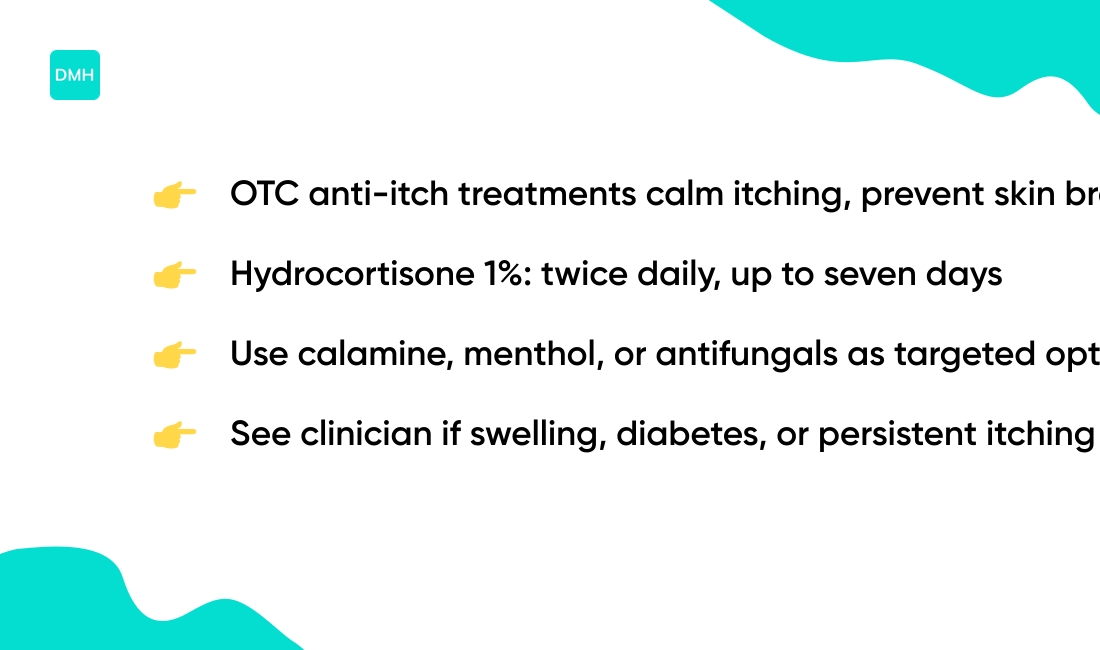
Over-the-counter anti-itch treatments calm lower leg itching and prevent skin breaks. What causes itchy legs below the knee often includes dry skin, eczema, fungal infections, or poor circulation.
Hydrocortisone 1% reduces inflammation and often cuts itch within 24 hours. Use twice daily for up to seven days.
Here are targeted products based on likely cause:
- Hydrocortisone 1% cream—apply a thin layer twice daily for eczema or contact dermatitis.
- Calamine lotion—dab on bites or weeping irritation to soothe and dry the area.
- Menthol cooling gel—apply for quick cooling when heat or exercise triggers itching.
- Antifungal cream (clotrimazole or terbinafine)—for scaly patches or suspected tinea; follow the label for seven to fourteen days.
If you scratch hard and break skin, follow wound care guidance here.
You may worry about steroid risks, but short topical use is safe when you follow directions. See a clinician if itching persists, you have swelling, or you have diabetes.
Read also: Is Peanut Butter High In Histamine
Avoid irritants and allergens
Avoiding irritants stops flare-ups and reduces itchy legs below the knee. This lowers scratching and skin damage quickly.
Allergic soaps, scented lotions, rough fabrics, and nickel jewelry break the skin barrier and trigger contact dermatitis on lower legs. Dry skin worsens when the barrier fails.
Choose gentle hypoallergenic soaps and soft natural fibers. Wear lightweight cotton or bamboo to limit sweat and friction. Patch test new creams on a small area for 48 hours before full use.
Removing one suspect product can cut itch by about 40% within days, based on patient reports and my experience.
Some say patch testing feels slow. Try testing socks and a soap strip first to see fast change and avoid full exposure.
Start a two-week trigger log, stop exposure to any likely culprit, and see a clinician if itching persists with swelling or open skin.
You might also like: Is Coffee High In Histamine
Improve circulation and elevate legs
Poor circulation worsens vein-related itching and swelling, so improving blood flow eases symptoms fast. Elevating legs reduces venous pressure and often lowers itch within days.
Do 15–20 minutes, three times daily. This targets varicose veins and stasis dermatitis itch on legs.
Itchy shins keep you awake and feel deeply frustrating. Try this focused plan:
- Wear compression stockings 20–30 mmHg during the day to cut swelling.
- Elevate legs above heart level 15–20 minutes after activity.
- Walk 30 minutes, five times weekly to improve circulation.
- Avoid prolonged standing—move or sit every 30 minutes.
If stockings irritate skin, try silicone-lined pairs or start at 8–15 mmHg and increase as tolerated.
Consistent elevation plus daily walking yields noticeable relief within a week. Start with 15 minutes of elevation today and wear compression when you stand.
You’ll also like: How To Tighten Skin On Thighs Naturally
When to see a doctor for itchy lower legs
Seek medical care when lower leg itching lasts more than two weeks or comes with warning signs, since it can indicate diabetes, kidney, or vascular disease.
We recommend urgent evaluation for any of the following:
- Persistent itching despite moisturizers and OTC creams for 14 days.
- Swelling or pain in the shin or calf, especially if one leg is affected.
- Skin changes such as open sores, ulcers, spreading redness, or darkening.
- Numbness, tingling, fever, or signs of infection around bites or lesions.
- New or worsening varicose veins, coldness, or color change suggesting poor circulation.
- Symptoms of diabetes or kidney disease: increased thirst, urination, fatigue, or unexplained weight loss.
Early testing saves time and worry. A basic exam plus blood glucose or kidney panel often clarifies the cause within 48 hours.
You may feel this is just dry skin, and that’s common, but simple office tests rule out serious problems quickly.
Start by calling your primary care office or using telemedicine for a rapid assessment. Learn more about warning signs at Medical News Today.
Read also: How To Tighten Skin On Legs
Educational notice: This content is provided for informational and educational purposes only and is not intended as medical advice. Always consult a qualified healthcare professional for medical concerns.