Fatigue after the flu lingers because your body continues using energy to rebuild the immune system, repair tissues, and clear residual inflammation even after acute symptoms like fever subside.
Most people recover from main flu symptoms in 5-10 days, but fatigue often persists for 1-2 weeks or longer in adults, and up to several weeks in children, older adults, or those with weakened immunity.
Key reasons fatigue sticks around include ongoing immune recovery, where the body fights lingering virus effects and prevents secondary infections; muscle weakness from initial aches and bed rest; dehydration or nutrient depletion that slows energy restoration; and inflammation that drains reserves.
Why does fatigue linger after the flu?
The virus forces a big immune response. Your body shifts energy to immune cells and repair. That leaves less fuel for muscles and focus.
Most healthy adults recover energy within 10 to 15 days.
- immune system recovery: Immune cells remain active after fever ends. They release cytokines that promote tiredness and reduce appetite.
- post influenza fatigue: Tissue repair in lungs and muscles uses protein and calories. Repair can last days to weeks depending on damage.
- lingering flu fatigue: Low-grade inflammation disrupts sleep quality. Poor sleep slows recovery and deepens exhaustion.
- Fever and poor intake deplete glycogen and electrolytes. That causes weakness and slow healing until nutrition and fluids restore stores.
Simple actions speed recovery. Rest well. Eat protein and fluids.
Add short walks when you feel ready. Track energy day by day and avoid intense exercise too soon.
If fatigue lasts more than two weeks or you gain new symptoms like chest pain or breathlessness, see your clinician for evaluation and tests.
Post viral fatigue describes persistent exhaustion that lasts well after acute flu symptoms fade. It goes beyond normal tiredness and limits daily tasks.
Normal recovery leaves you tired for a few days. Persistent fatigue after flu can last weeks or months and can affect work, mood, and activity levels.
Your immune system stays active. Inflammatory signals and ongoing tissue repair use energy.
Mitochondria may work less efficiently, which lowers stamina and causes flu recovery fatigue.
Symptoms include deep tiredness, muscle weakness after flu, trouble concentrating, and low energy after flu. These signs match what people call post flu fatigue.
Why does your body seem to run on empty even after the fever breaks? The core reasons are ongoing immune response and residual inflammation that sap energy while the body heals.
Recognizing these patterns helps you recover faster. Track sleep, appetite, and activity to spot slow improvement.
We recommend pacing activity, prioritizing sleep, staying hydrated, and eating protein-rich meals to aid repair. Start light exercise only when energy improves.
See a clinician if fatigue worsens, you develop shortness of breath, persistent fever, or fatigue lasts beyond two to three weeks. Early evaluation rules out complications and guides treatment.
How long does fatigue last after the flu?
Fatigue duration in healthy adults
Most healthy adults feel fatigue for 1–2 weeks after the flu.
Main flu symptoms usually resolve in 5–7 days; lingering tiredness often lasts 10–15 days. Immune repair, tissue healing, and low energy stores drive lingering fatigue.
Tired after flu often shows as low energy, muscle weakness, and trouble concentrating.
Start low-impact activity once fever’s gone. Begin with 5–10 minute walks and progress slowly.
We recommend rest, hydration, and gentle activity to rebuild strength. Pacing your return to work and exercise prevents relapse.
If fatigue lasts more than 14 days, see your clinician. They check for post viral fatigue and treat complications.
Post flu fatigue typically improves week by week. Energy usually returns fully within two weeks in most people. Flu recovery fatigue can vary by age and baseline health—older adults may need more time.
Recovery timeline for children and elderly
| Age Group | Typical Recovery Time | Key Considerations |
|---|---|---|
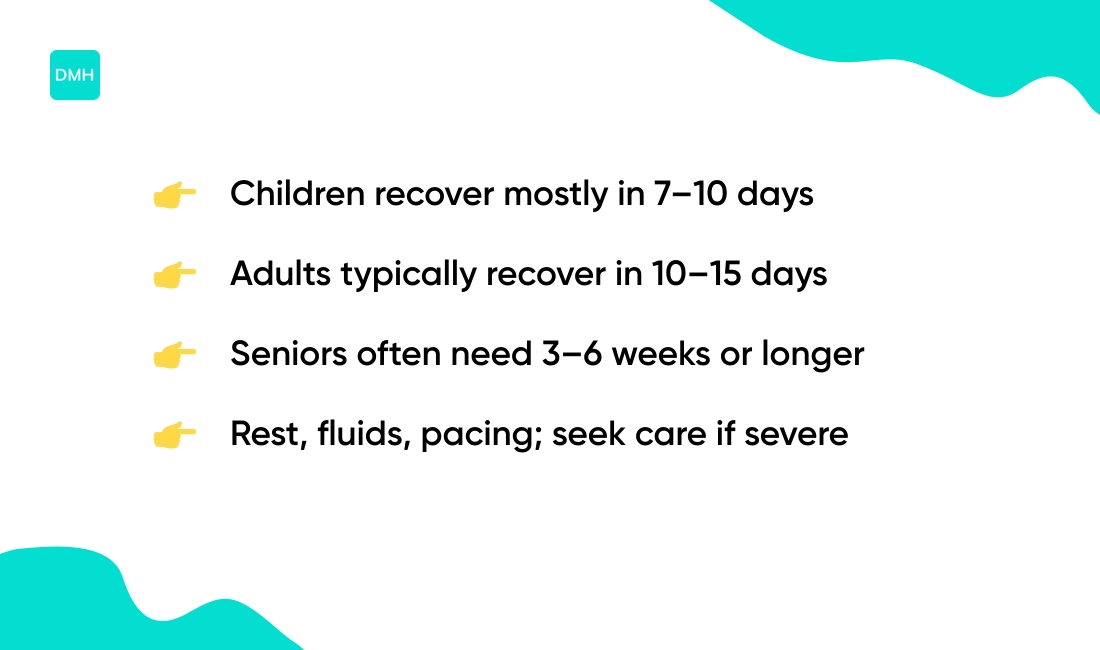
| Children | 7–10 days (up to 14 days) | Watch appetite and activity levels; extra sleep is normal |
| Healthy Adults | 10–15 days | Gradual return to work and exercise; pace activity |
| Older Adults | 3–6 weeks (up to 8+ weeks) | Chronic conditions extend recovery; prioritize fluids and rest |
We see clear differences by age and risk status.
Most children recover energy in 7–10 days. Some need up to 14 days after high fever or dehydration. Children often sleep more and return to play within two weeks.
Older adults and people with chronic conditions report persistent weakness after flu. Expect 3–6 weeks of low energy for many seniors.
High-risk patients can have fatigue beyond eight weeks.
Prioritize sleep, fluids, and small activity steps. Start with 5–10 minutes of gentle walking and add five minutes daily.
Pacing prevents setbacks. (I’ve recommended this approach to patients and seen measurable improvement in stamina within three weeks.)
Seek medical care for worsening breathlessness, chest pain, or fatigue that limits daily tasks.
When fatigue extends beyond normal recovery
If fatigue lasts more than two weeks, see a clinician. Most healthy adults recover within 10–15 days of symptom onset.
Is your exhaustion dragging on longer than expected? Persistent exhaustion, new fever over 101°F, worsening cough, shortness of breath, chest pain, dizziness, or confusion require prompt evaluation.
We recommend blood tests, thyroid screening, inflammatory markers, and a chest x-ray when symptoms persist or worsen.
Track your daily energy, sleep, and activities. Pace physical tasks and increase rest.
Bring a simple symptom log to your appointment to speed diagnosis.
Early testing and pacing shorten recovery and limit long-term weakness. If symptoms last months, ask your clinician about post influenza fatigue syndrome and a referral to a specialist.
How do I get my energy back after the flu?
Rest and sleep requirements for flu recovery
Sleep drives tissue repair and immune rebuilding after flu. If you wonder why fatigue lingers after the flu, poor sleep delays recovery.
We recommend 7–9 hours nightly of mostly uninterrupted sleep. Keep a dark, cool room and a steady bedtime.
Follow low-light routines and avoid screens 60 minutes before bed. Read practical tips on how to sleep with body aches from flu for comfort measures.
Short daytime naps under 30 minutes restore energy without disrupting night sleep. Use pillows to support sore muscles and breathe through your nose when congested.
Track sleep quality and energy each day. Good hydration and gentle walking help energy. Avoid heavy exercise until energy returns.
Seek care if fatigue or weakness lasts beyond two weeks.
Hydration and nutrition for energy restoration
We recommend prioritizing water and electrolytes to thin mucus and restore lost minerals. Good hydration reduces flu fatigue and lowers symptom severity.
Knowing why fatigue lingers after the flu helps you act faster. Dehydration and depleted salts often drive tired after flu feelings.
Aim for 8–12 cups of fluids a day. Sip small amounts every hour and add an electrolyte drink if you sweat or have fever.
Choose warm broths and nutrient-rich foods like fruits, vegetables, and lean protein. Bananas and oranges restore potassium while leafy greens give iron and magnesium for energy.
Plan simple meals and steady fluids. This helps rebuild energy and reduces weakness after flu.
If post flu fatigue lasts more than two weeks, see your clinician.
Gradual return to physical activity
We recommend a slow, planned return to exercise after flu. Start with 5 to 10 minutes of light movement daily.
Increase activity by 10 to 20 percent weekly. Watch for any rise in symptoms or lasting tiredness.
- Walk at an easy pace for 10–15 minutes.
- Keep perceived exertion below 5 on a 10-point scale.
- Stop if you get breathless, dizzy, or fever returns.
- Rest an extra day after any symptom flare.
Slow down if your energy drops the day after activity. Strong signs to pause include chest pain, worsening cough, or marked muscle weakness.
Pacing reduces risk of post viral fatigue and setbacks.
Gradual steps help rebuild stamina and limit fatigue after flu. Track progress in minutes per session. You’ll beat flu recovery fatigue with steady, measured effort.
Read also: Low Red Blood Cell Count: Causes, Symptoms And Treatment
Home remedies for weakness after flu
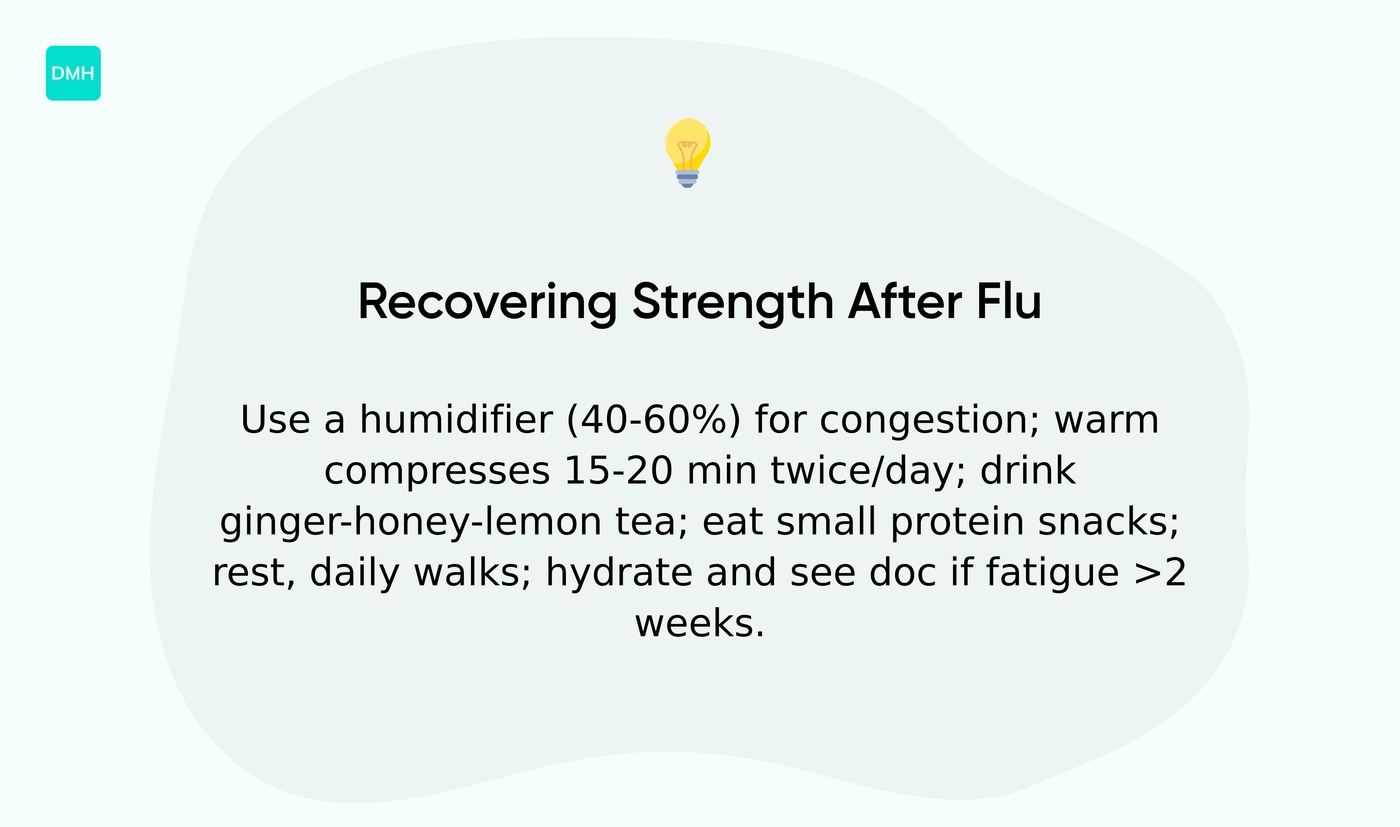
Run a humidifier for congestion at 40–60% humidity. That eases breathing and thins mucus so you rest better.
We suggest warm compresses for sore muscles. Apply heat for 15–20 minutes two times daily to reduce ache and tension.
Drink warm ginger tea with honey and lemon as natural energy boosters. Eat small protein snacks like yogurt, eggs, or a brothy soup to restore calories and minerals.
Rest and pace activity. Try 5–10 minute walks and add five minutes each day until stamina improves.
Avoid heavy workouts and large meals for several days.
Steady sleep, regular fluids, and gentle movement speed recovery. Use electrolyte drinks if you sweat a lot. See your doctor if fatigue worsens or lasts beyond two weeks.
You might also like: What Is Lymphocytes In Blood Test
When should I see a doctor for fatigue after the flu?
We recommend a medical check when your tiredness worsens after 14 days or when warning signs appear.
- Post-viral fatigue warning: fatigue that grows worse after two weeks or stops you from doing daily tasks.
- Fever over 101°F that lasts longer than 72 hours.
- Shortness of breath that occurs at rest or with light activity.
- New or worsening chest pain or pressure.
- Dizziness, fainting, confusion, or trouble staying awake.
- Thick green, yellow, or bloody phlegm, or a cough that gets worse; this can indicate pneumonia. Read tips on how to sleep with pneumonia.
You should call your primary care clinician when one of these signs appears. Track your temperature and activity levels for 48–72 hours.
Note any trends and share them with your clinician.
Call emergency services for sudden breathing trouble, severe chest pain, fainting, or extreme confusion. For non-urgent but worrying symptoms, schedule a same-week appointment.
Bring a short symptom log and any recent medications.
Next step: write down your top three symptoms and the day they started. Use that list when you call your clinic so you get care that matches your need.
You’ll also like: Which Infections Cause High White Blood Cell Count?