Cortisol is a stress hormone released by the adrenal glands.
It supports blood sugar, metabolism, inflammation control, and wakefulness.
Cortisol follows a daily rhythm and often rises by about 50% within 30 minutes of waking.
Short spikes help you respond to danger and boost energy for action.
But here’s the thing — long spikes cause real harm. Chronic elevation can raise blood pressure and weaken immune defenses. High cortisol shifts calories into visceral fat and promotes belly fat storage through insulin and appetite changes.
Elevated nighttime cortisol fragments sleep and lowers slow-wave sleep, which harms recovery and memory. Many people link high cortisol with weight gain, poor sleep, anxiety, and low energy.
The good news? You can act to reduce cortisol levels and protect health. Simple daily habits beat complex fixes most of the time.
For practical steps to lower cortisol naturally, try deep breathing, short walks, consistent sleep, and targeted supplements. Track stress and sleep for seven days to spot patterns and reduce spikes. Try a five-minute diaphragmatic breathing session tonight and note how your sleep changes.
Common symptoms of high cortisol
High cortisol causes visible physical and mental signs: weight gain, sleep problems, anxiety, and extra fat around the waist.
Cortisol raises blood sugar and shifts energy into abdominal fat storage. That pattern makes belly fat worse and keeps weight from shifting despite diet changes.
Physical signals include unusual weight gain, acne flare-ups, muscle weakness, higher blood pressure, and slow healing from minor injuries. Mental signs show as persistent worry, mood swings, poor focus, and panic-like episodes with chest tightness.
Read more about anxiety and chest pain if you notice chest symptoms with stress.
Sleep suffers when cortisol stays high. You may wake at night or feel wired in the morning. (Ugh, that 3 a.m. stare at the ceiling — am I right?) Poor sleep then keeps cortisol elevated, which worsens energy and mood.
When did you last track your stress patterns? Simple tracking helps you spot high cortisol early. Measure your waist, log sleep for seven nights, and try diaphragmatic breathing five minutes each morning to reduce stress and lower cortisol naturally.
Quick methods to lower cortisol immediately
Deep breathing exercises to reduce cortisol quickly
Diaphragmatic breathing lowers cortisol fast. A 2019 study found five minutes of slow, deep belly breaths reduced cortisol and eased anxiety.
If you want to know how to lower cortisol, practice 5 minutes, 3–5 times daily to reduce cortisol levels and calm the nervous system.
- Sit or lie comfortably with one hand on your chest and one on your belly.
- Inhale through your nose for 4 counts and feel your belly rise.
- Exhale through your mouth for 6 counts and feel your belly fall.
- Continue for 5 minutes and notice lower tension and steadier breathing.
We recommend guided breath tracks on apps like Insight Timer or Calm. I really think short, regular sessions stick best for busy schedules.
Start a 5-minute guided session now and track how you feel.
Meditation and mindfulness practices
Meditation, yoga, tai chi, and qi gong lower cortisol and help you manage stress fast. They slow breathing, activate the vagus nerve, and drop heart rate.
Studies show regular practice produces measurable cortisol declines over weeks, while single sessions can lower salivary cortisol within 30 minutes. Short daily sessions beat occasional long ones.
I’ve tried 10-minute guided meditations and noticed calmer mornings within a week.
A simple routine works best: 10 minutes of guided meditation each morning or a 15-minute tai chi flow in the afternoon. Use a breath-focused cue and keep pace slow.
Try this action: perform a 10-minute guided practice today and log your stress before and after for 2 weeks to see real change in how to lower cortisol.
Forced laughter and mood-boosting activities
Short laughter and intimacy breaks can lower cortisol fast. They trigger endorphin release and cut stress hormones within minutes.
Laughter raises oxytocin and endorphins while it helps reduce cortisol levels quickly. Starting with five minutes twice daily gives immediate relief and clearer mood.
- Fake laugh out loud for 5 minutes until it feels real.
- Hold a partner or pet for five calm minutes to boost oxytocin.
- Watch a silly clip to trigger natural laughter and stress drop.
These simple steps help you learn how to lower cortisol and lower cortisol naturally while you use breathing exercises and movement for faster results. Start a five-minute session now and note mood and stress changes within the hour.
Best supplements to lower cortisol
Ashwagandha for cortisol reduction
We recommend ashwagandha to lower serum cortisol. Multiple 2019 randomized trials used KSM-66 or Shoden at 100–600 mg daily and found significant cortisol reductions after eight weeks.
Some studies reported cortisol reductions versus placebo often exceeding 20% and improved anxiety scores. This adds a practical option for how to lower cortisol naturally. For more on dosing and anxiety evidence, see ashwagandha anxiety relief on our site.
Ashwagandha acts on the HPA axis to reduce stress hormone release. It’s one of the better-studied adaptogens for cortisol control.
Side effects were mild and uncommon, such as stomach upset and drowsiness.
Try a standardized extract at about 300 mg daily for eight weeks. Track sleep and stress while you try it. Consult your healthcare provider before starting.
L-theanine and green tea benefits
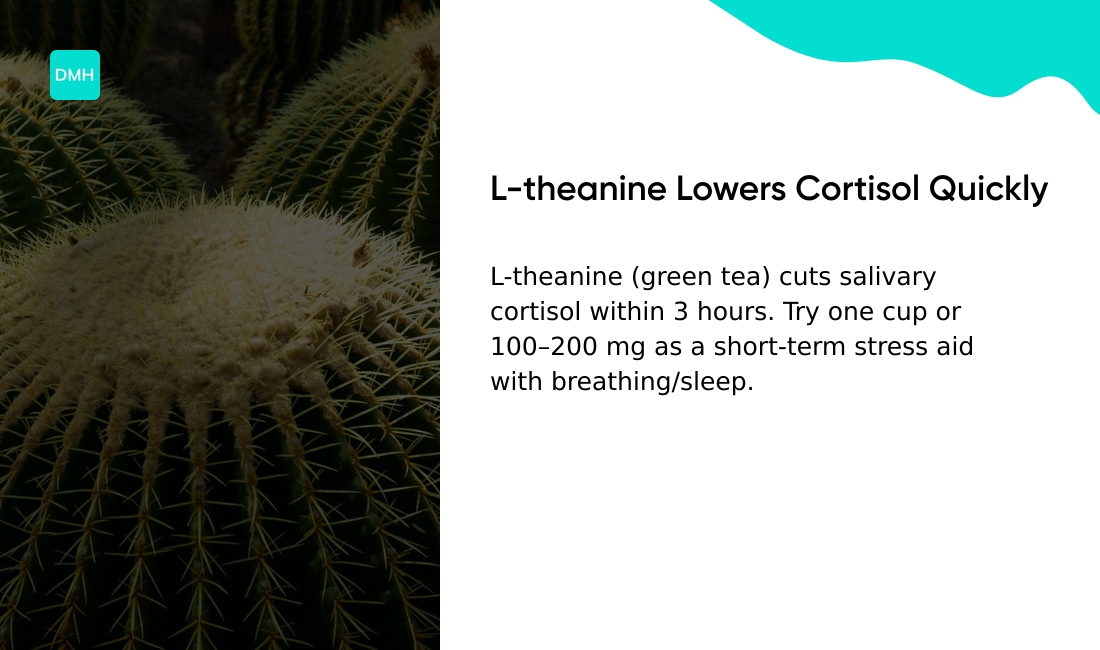
L-theanine from green tea reduces salivary cortisol within three hours. A 2016 trial measured a clear drop in saliva cortisol after a single L-theanine dose, showing fast stress relief.
This effect helps explain why green tea feels calming during stress and supports how to lower cortisol strategies.
We suggest using green tea or a supplement as part of your plan to reduce cortisol levels. A simple cup or a 100–200 mg L-theanine dose can help when you feel tense. (I’ve tried L-theanine before meetings and felt calmer within a few hours.)
Use this as a short-term tool alongside breathing exercises and sleep habits. Try one cup of green tea or a 100 mg L-theanine supplement and note your stress level after three hours.
Magnesium for cortisol and sleep
Magnesium lowers cortisol and boosts sleep quality. Clinical trials used 200–400 mg nightly and report better sleep scores and lower cortisol after 4–8 weeks.
We favor magnesium for cortisol and sleep because it calms the nervous system and supports GABA activity. I’d say magnesium glycinate feels gentle and effective.
Use magnesium as part of a plan to lower cortisol. Pair it with sleep hygiene and diaphragmatic breathing.
If you have kidney disease or take medications, consult your clinician first. Try 200–400 mg magnesium glycinate nightly for four weeks and track your sleep.
Best adaptogens for managing cortisol
We recommend specific supplements to help lower cortisol naturally and support sleep and mood. Rhodiola, omega‑3 fish oil, vitamin C, and Lactium show human trial benefits for stress reduction and lower cortisol markers.
| Supplement | Daily Dose | Key Benefit |
|---|---|---|
| Rhodiola | 200–400 mg | Less fatigue, lower cortisol under stress |
| Omega‑3 fish oil | 1–3 g EPA/DHA | Smaller cortisol spikes after stress |
| Vitamin C | 500–1,000 mg | Blunts cortisol responses in short trials |
| Lactium | 150 mg | Reduced perceived stress across 28 days |
Saffron 28 mg, lemon balm 300 mg, and ginseng 200 mg appear promising as emerging options. Personally, combining a proven adaptogen like rhodiola with omega‑3s often gives the fastest relief for sleep and mood.
Try rhodiola 200 mg each morning for two weeks and track your stress and sleep; consult your clinician if you take medications.
Foods that lower cortisol naturally
Plant-based, fiber-rich foods help you lower cortisol naturally. Fiber stabilizes blood sugar and reduces inflammation — two factors that raise stress hormones.
- Bell peppers — rich in vitamin C and fiber to support stress response.
- Broccoli — fiber and sulforaphane help control inflammation and glucose.
- Guava — roughly 5 g fiber per medium fruit and a strong vitamin C source.
- Green tea — provides L-theanine, which can lower salivary cortisol within hours in some studies.
- Whole grains — swap refined carbs for whole grain options to steady blood sugar and hormones.
We recommend replacing processed sweets with these foods to reduce cortisol levels and improve sleep. Sipping green tea and choosing a vegetable snack cut afternoon stress noticeably.
Start small: add one high-fiber item to a meal today and track your stress and sleep for two weeks to see change.
Does exercise lower cortisol or increase it
Moderate exercise for 30–50 minutes usually lowers cortisol and improves mood. It raises endorphins and improves cortisol clearance through better sleep and blood sugar control.
Walking, easy jogging, cycling, and brisk hiking fit this sweet spot for most people. If you want to know how to lower cortisol, choose consistent moderate cardio three times weekly. Steady sessions beat sporadic hard training for stress management.
But intense or long workouts can raise stress hormones temporarily. High-intensity intervals and endurance sessions over 60 minutes often elevate cortisol. That rise helps performance short term but may harm recovery and sleep when repeated often.
We recommend 30–50 minutes of brisk walking or easy jogging most days. Try low-impact StairMaster benefits sessions when you need shorter, steady cardio.
Start with three 30-minute walks per week and track sleep, mood, and energy. If your goal is to lower cortisol naturally, increase gentle movement and prioritize rest.
Read also: Can Stress or Anxiety Lower White Blood Cell Count?
How to lower cortisol at night for better sleep
Lowering cortisol at night improves sleep quality and daytime energy. Cortisol wakes you from deep sleep and raises overnight glucose. You sleep lighter and feel wired when levels stay high.
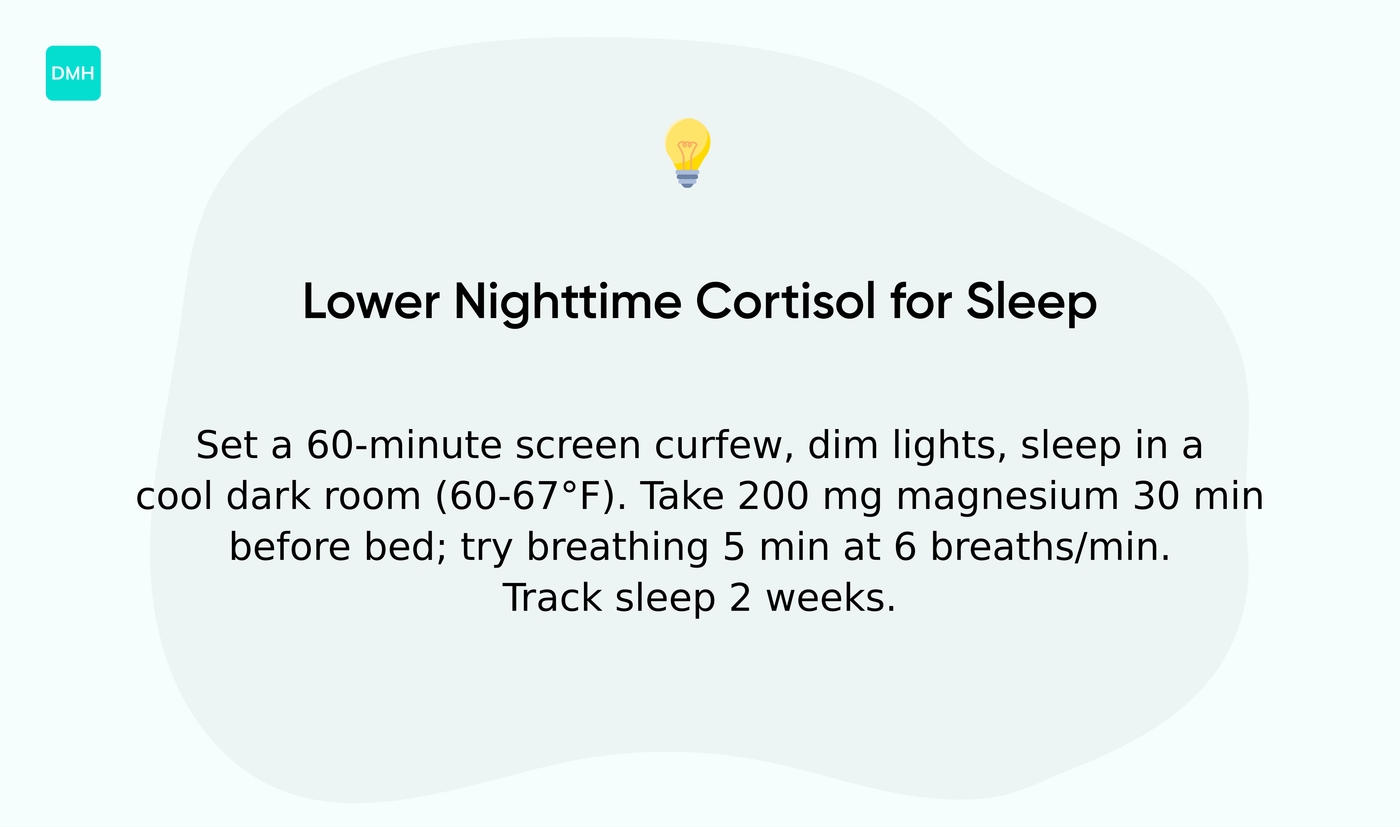
- Lower cortisol naturally: keep a 30–60 minute wind-down routine. Dim lights and stop screens 60 minutes before bed.
- Keep your room cool and dark. Aim for 60–67°F and blackout curtains to boost slow-wave sleep.
- Cut caffeine by early afternoon. A 30-minute walk in the evening helps without spiking cortisol.
- Sleep and cortisol: try breathing for 5 minutes at 6 breaths per minute to shift to the parasympathetic state.
- Supplements to lower: magnesium 200–400 mg, L-theanine 100–200 mg, or low-dose melatonin 0.5–3 mg. Ashwagandha 300–500 mg nightly can lower serum cortisol over weeks.
We recommend testing one change at a time so you can see what helps your sleep. If anxiety wakes you early, read why anxiety can feel worse in the morning for targeted tips.
Limiting blue light and adding magnesium deliver the fastest improvements. Try this tonight: set a 60-minute screen curfew and take 200 mg magnesium 30 minutes before bed. Track sleep for two weeks and adjust from there.
You might also like: What Does Sleep Apnea Sound Like
How to lower cortisol in the morning
We recommend a three-part morning routine to lower cortisol quickly. Gentle movement, controlled breathing, and a steady breakfast stabilize hormones and mood.
Start with 10 minutes of light activity. Gentle morning movement like walking or yoga raises parasympathetic tone and reduces the cortisol awakening response.
Do 5 minutes of focused breathing. Controlled diaphragmatic breathing with 4-6 second inhales and 6-8 second exhales calms the nervous system. Limit caffeine to one small cup if you feel wired and avoid large doses before mid-morning.
Choose a protein-rich breakfast with fiber and healthy fats to steady blood sugar and reduce stress hormones. Pairing protein with fiber lowers cortisol more reliably than sugary breakfasts.
If you use supplements to lower cortisol, consider magnesium or ashwagandha for cortisol support after checking with your clinician. Keep routines simple and consistent for measurable gains: 10 minutes movement, 5 minutes breathing, balanced breakfast.
Actionable step: tomorrow morning walk 10 minutes, do 5 minutes of diaphragmatic breathing, and eat 20 grams protein within 60 minutes of waking.
Read also: How Far Away Should Your Phone Be When You Sleep
How long does it take to lower cortisol levels
We can lower cortisol levels faster than many expect with a clear timeline and targeted actions. Short-term nervous system work gives minutes of relief. Hormonal shifts need weeks of consistent change.
- Immediate: 5 minutes of diaphragmatic breathing triggers the parasympathetic system and can reduce cortisol levels in minutes, per 2019 research.
- Hours: L-theanine or green tea often lowers salivary cortisol within about 3 hours after a dose.
- 1–2 weeks: Better sleep, less sugar, and regular 30–50 minute moderate exercise usually cut daily stress and improve mood.
- 4–8 weeks: Ashwagandha trials show measurable serum cortisol drops after consistent dosing for eight weeks.
- 3 months+: Habit changes plus supplements produce the most stable hormone balance and weight benefits.
Pairing brief daily breathing with sleep fixes gives the fastest, most reliable drop in stress hormones. We recommend tracking symptoms and starting one habit this week to measure progress.
Begin 5 minutes of diaphragmatic breathing twice daily and reassess symptoms and sleep after two weeks. What’s one change you can start today?
You might also like: How Many Calories Do You Burn In A Sauna
Educational notice: This content is provided for informational and educational purposes only and is not intended as medical advice. Always consult a qualified healthcare professional for medical concerns.