Don’t exercise with the flu.
It raises risk of heart complications and prolongs recovery.
Influenza can inflame heart tissue and trigger myocarditis. That can cause chest pain, lightheadedness, and dangerous rhythm changes.
Read more on the medical risks here: exercising with the flu.
High-intensity activity diverts energy away from infection fighting. This creates a weakened immune response and can lengthen illness by several days. Intense workouts raise stress hormones and reduce immune cell function for about 24–48 hours.
Fever, vomiting, and sweating increase fluid loss.
Dehydration worsens heart strain and slows tissue repair. Going to the gym while contagious risks spreading the virus. You can shed influenza for roughly 5–7 days after symptoms begin, infecting others via droplets or equipment.
We recommend rest until you’re fever-free for 24 hours without medication and feel energetic enough for light activity.
Honestly? Skipping a few workouts beats risking myocarditis or infecting someone else. If you have chest pain, severe breathlessness, a racing pulse, or worsening symptoms seek medical care right away.
Why exercising with the flu is dangerous
Pushing through a workout when you have the flu isn’t just uncomfortable—it’s genuinely risky.
Your body is already fighting a serious infection, and adding physical stress can backfire fast.
Here’s what happens when you exercise during active flu infection:
| Risk Factor | What Happens | Potential Consequence |
|---|---|---|
| Heart inflammation | Flu virus inflames heart muscle | Myocarditis, arrhythmias, chest pain |
| Immune suppression | Exercise stress hormones reduce immune function | Longer illness, secondary infections |
| Dehydration | Fever + sweating depletes fluids | Increased heart strain, slower healing |
| Virus spread | Contagious for 5–7 days after symptoms start | Infecting gym-goers and teammates |
The heart risk deserves special attention. Influenza can directly attack cardiac tissue, causing inflammation that weakens pumping function. When you add exercise stress on top of that, you’re basically asking your already-struggling heart to work overtime.
Plus, intense activity temporarily suppresses your immune system for 24–48 hours post-workout. (Not exactly what you need when battling infection!)
Why risk long-term damage for one training session?
Your body needs rest, fluids, and time to heal. The gym will still be there next week.
When is it safe to exercise after the flu
The above-the-neck rule explained
Only resume light exercise when your symptoms stay above the neck.
Runny nose and a mild sore throat? Usually safe. Chest congestion, body aches, persistent cough, or shortness of breath? Not safe.
These below-the-neck signs raise heart and lung risks. We recommend you be fever-free for 24 hours without medication and feel energetic before trying a workout. Respecting these limits reduces the chance of myocarditis and prolonged recovery.
Quick checklist before you lace up those sneakers:
- Stay fever-free 24 hours
- Start with 10–15 minutes of walking
- Stop if pulse rises more than 10 bpm above normal or symptoms worsen
- Eat and drink normally without nausea
- Sleep quality has returned to baseline
If you were recently exposed, read our guide to prevent the flu after exposure for extra caution.
How long to wait to exercise after a fever
Wait at least 24 hours fever-free without fever-reducing medication before you resume exercise.
Measure your resting pulse each morning. It should not exceed your usual resting heart rate by more than 10 beats per minute. If it does, rest another day. Simple as that.
Assess your energy honestly. You should manage a brisk 10-minute walk without extreme fatigue.
Start with light activity first—walking or gentle stretching work great.
We recommend tracking hydration and sleep quality during recovery. Poor sleep or appetite means your body needs more rest. Actually, these simple checks speed recovery and lower heart risks.
If you feel chest pain, shortness of breath, or severe weakness, seek care. Read practical tips on how to sleep with body aches from flu for better rest during recovery.
Signs you’re ready to return to exercise
Resume activity only after clear recovery signals appear.
But how do you know you’re truly ready?
This lowers heart inflammation risk and avoids symptom relapse:
- Stable vital signs: fever-free for 24 hours without medication
- Resting heart rate near normal—no more than 10 bpm above usual
- Able to eat and drink normally with no vomiting or nausea
- Adequate sleep quality: 7 hours or more of restful sleep nightly
- Major symptoms have resolved or improved for 48 hours
- Feeling mentally ready: you actually want to move and enjoy light activity
- Short walk for 10 minutes causes no worsening of symptoms
Testing with a short walk helps you decide if your body’s ready.
Start with 10–15 minutes of low-impact exercise and monitor closely. Listen to what your body’s telling you.
When to avoid exercise completely
Stop all exercise if you have any of these warning signs:
- Persistent fever above 100.4°F (38°C)
- Chest pain or a tight feeling in your chest
- Severe fatigue that prevents basic daily tasks
- Dizziness, fainting, or near fainting
- Shortness of breath while at rest
- Any below-the-neck symptoms such as chest congestion, a deep persistent cough, or widespread body aches
Get medical help right away for chest pain, marked breathlessness, or a fever lasting more than 48 hours.
Stop workouts at the first sign of worsening symptoms. Call your clinician or go to the emergency department for crushing chest pain, fainting, or rapid breathing.
These warning signs determine when it’s safe to exercise after the flu, so rest, hydrate, and wait for clinical clearance before returning to the gym.
How to safely ease back into exercise after the flu
Best exercises during flu recovery
Start with low-impact movement while you recover from the flu.
Low-impact protects your heart and avoids overtaxing your immune system. It reduces dehydration risk and lowers the chance of relapse. (No one wants to end up back in bed for another week!)
Safe options for early recovery:
- Short walks: 10–15 minutes at an easy pace
- Walking after flu: gentle pace on flat terrain
- Gentle stretching and restorative yoga
- Light cycling with low resistance
- Easy swimming if you’re fever-free and pools feel safe
Wait until you’re fever-free for 24 hours and you feel energetic. Short walks rebuild stamina without setbacks.
For example, a 12-minute stroll around your neighborhood is perfect—no hills, no speed goals.
We recommend starting with 10–15 minutes and tracking symptoms and heart rate. If nasal drip bothers you see how to stop a runny nose when working out.
Stop if symptoms worsen or you feel dizzy.
When to start running or high-intensity workouts
Wait 7–10 days after your fever ends before you try running or high-intensity workouts.
Complete 5–7 days of light to moderate activity before stepping up. Keep sessions short while you assess energy and breathing.
We recommend starting with 15–30 minutes of walking, cycling, or easy jogging and boosting duration before speed.
Cutting intensity and volume by about 50% for the first week prevents setbacks. Moderate activity first gives your immune and cardiovascular systems time to recover.
Monitor resting pulse and stop if it stays more than 10 bpm above your normal.
Gradually rebuild intensity over at least a week to reach pre-illness levels. See a clinician if you get chest pain, severe breathlessness, dizziness, or a return of fever.
Safe progression plan for post-flu exercise
Start with a cautious week-by-week plan for post-flu exercise.
Halve your usual frequency. Train every other day. Increase duration before intensity and require full recovery between sessions.
Wondering exactly when it’s safe to exercise after the flu? This plan answers that question.
Here’s a 4-week framework:
- Week 1: Do half your normal sessions. Walk or cycle 10–15 minutes. Keep effort very light. Monitor resting pulse daily.
- Week 2: Increase to 20–30 minutes. Add gentle stretching and one light strength set. Stop if symptoms return.
- Week 3: Return to usual session count. Keep intensity at 50–60% max. Add short intervals only if you feel normal.
- Week 4: Rebuild intensity to pre-illness levels across the week. Continue rest days to secure recovery.
Easing duration first and watching symptoms prevents relapse and heart strain when returning to the gym.
Relapses happen when people rush back to running after flu—don’t be that person.
Heart risks when exercising after the flu
Don’t resume workouts after the flu if you had fever, chest pain, or severe fatigue.
Myocarditis from influenza can cause sudden heart rhythm problems and reduced pumping function.
We emphasize watching for signs of heart involvement. Influenza can inflame heart muscle and the surrounding lining.
That inflammation weakens the heart and raises the risk of dangerous arrhythmias. Watch for inflamed heart tissue signs early.
Warning signs of cardiac complications:
- Chest pain or tightness that worsens with activity
- Unexplained shortness of breath at rest or during light steps
- Dizziness, fainting, or racing heartbeat
- Extreme fatigue that stops normal daily tasks
Read the American Heart Association guidance for clinical details and tests clinicians use.
Athletes need particular caution because return to high intensity sport raises cardiac stress.
Anyone with chest symptoms should see a clinician before they train.
For competitive athletes, seek a cardiac screen and clearance before you return to sports. Monitor recovery by checking resting heart rate and symptoms. If you feel off, stop and monitor your pulse, then contact a doctor for evaluation.
You might also like: Strep Throat Or Mononucleosis
Cold vs flu exercise guidelines
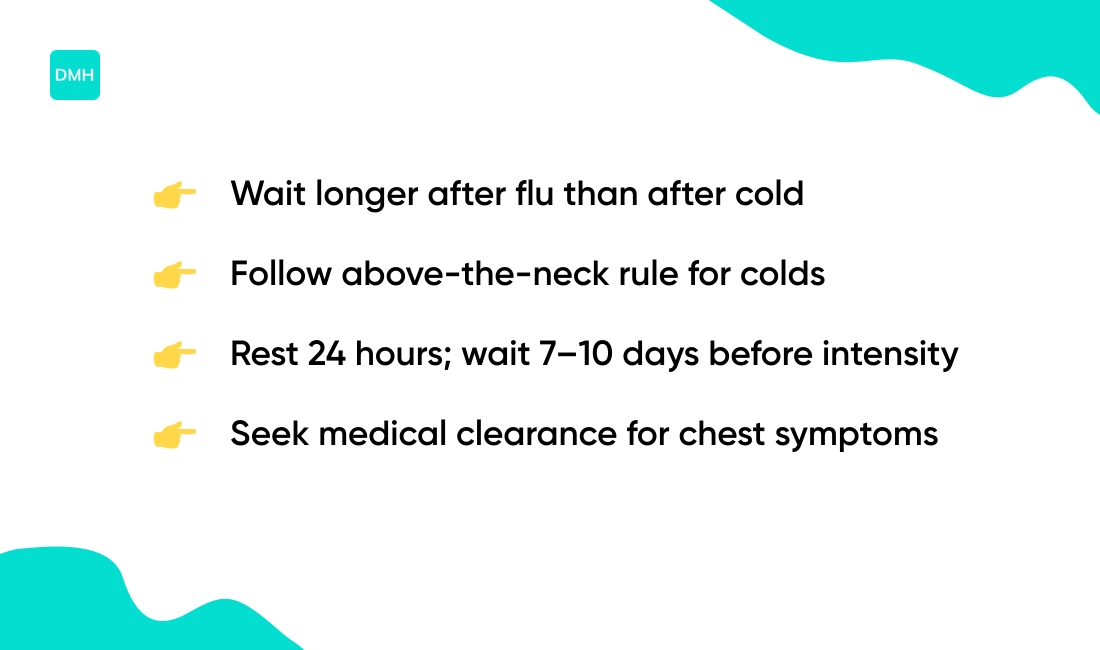
Wait longer after the flu than after a cold before resuming workouts.
The flu hits your whole body and raises the risk of heart inflammation and dehydration. That risk means you need more recovery time before light exercise or running.
With a common cold, follow the above-the-neck rule.
If you have only a runny nose or mild sore throat and no fever, try 24–48 hours of improved symptoms before low-intensity activity like walking.
With influenza, rest at least 24 hours after your fever ends without medication. You should wait about 7–10 days after fever resolution before high-intensity workouts.
This helps lower the chance of myocarditis and long recovery.
Check your resting pulse and energy. If your resting heart rate is more than 10 bpm above normal or you feel unusually tired, skip exercise.
Watch for chest pain, dizziness, or shortness of breath and stop immediately if those appear. Keep longer rest periods in mind for severe symptoms.
We recommend medical clearance for anyone with chest symptoms or prolonged fatigue. Start with short walks and build back slowly to avoid setbacks.
You might also like: Is It Okay To Take A Bath When You Have Colds
Warning signs to stop exercising immediately
Stop exercising at once if you notice any of these symptoms.
They can signal heart strain, severe dehydration, or a worsening infection.
Red flags that demand immediate action:
- Chest pain—pressure, tightness, or sharp pain that starts during activity
- Unusual shortness of breath—you can’t catch your breath at rest
- Extreme fatigue—collapse of energy or inability to complete light tasks
- Dizziness or fainting
- Irregular heartbeat or palpitations that feel fast, skipped, or fluttering
- Worsening flu symptoms during or after exercise, such as higher fever or severe cough
We advise you to stop, sit, and check your breathing and pulse when any sign appears.
Call emergency services for chest pain, fainting, severe shortness of breath, or a very fast irregular pulse.
If breathing or cough worsens after activity, read our guide on how to sleep with pneumonia for tips on comfort and when to seek care.
Err on the side of caution when you wonder when it’s safe to exercise after the flu.
Rest first, get medical advice if symptoms persist, and return to light exercise only after clear improvement and your doctor’s approval. Better safe than sorry—your health is worth protecting.
Read also: How Long Do Chest Colds Last