
A hematology appointment focuses on diagnosing and treating blood problems.
Doctors refer patients for evaluation of anemia, clotting issues, abnormal lab results, repeated infections, or unexplained bruising.
The hematologist reviews prior blood tests, asks about symptoms, family history, and medication use.
They perform a focused exam and order targeted tests to find causes such as iron deficiency, platelet disorders, or blood cancers.
What is a hematology appointment
Your first hematology appointment often starts with a complete blood count and coagulation studies. The specialist may request iron panels, vitamin B12 levels, or genetic testing.
Bone marrow biopsy happens only when test results suggest deeper evaluation.
Early evaluation reduces uncertainty and speeds treatment. Clear test results can cut follow-up visits by about 30 percent, according to recent clinical data.
We recommend bringing prior lab reports, a list of medications with dosages, and concise symptom notes. Plus, bring a support person if you expect complex news or need help remembering details.
What should you ask about next steps and timelines? Request information about result turnaround times and who manages care if treatment starts.
Read is it serious to be referred to a hematologist for common patient concerns and practical reassurance.
Next step: gather your records and list three top questions to ask your hematologist at the visit.
How to prepare for a hematology appointment
What to bring to your hematology appointment
Bring photo ID, insurance, a clear medication list, and recent records to your first hematology appointment. This helps your hematologist review history fast and decide on the right tests.
Pack one folder with these items:
- Photo ID card and insurance cards with policy number
- Medication list with dosages – all current prescriptions and over-the-counter meds
- Printed medical records and recent lab results
- Imaging reports (CT, MRI, ultrasound) if available
- Symptom diary notes with dates and severity
- List of allergies and any concerns you want addressed
- Questions for your hematologist and emergency contact
A support person helps you recall details and ask questions. (Trust me, two sets of ears are better than one!) Gather this folder 48 hours before and bring copies to the clinic.
Medical history and records to gather
Bring prior tests and reports to your first hematology appointment to speed diagnosis and avoid repeat testing. Organized records can save 30 to 45 minutes during your visit.
Here’s what to collect:
- Previous blood tests: CBCs, iron panels, coagulation studies, and lab printouts
- Family health history: relatives with blood disorders, clotting events, or cancers
- Past diagnoses and surgeries: dates, treating clinicians, and short summaries
- Imaging and reports: CTs, ultrasounds, MRIs, X-ray reports, or CDs
- Specialist reports: notes from cardiology, oncology, or other relevant doctors
Collect these items before the visit. Scan documents and upload them to your patient portal, then bring paper copies to the appointment.
Well, organized records cut appointment time and reduce repeat labs – something both you and your doctor will appreciate.
Are fasting or special preparations required
You rarely need to fast before an initial hematology visit. Routine tests like a CBC don’t require fasting before tests.
Some labs, like lipid panels, need an 8 to 12 hour fast.
If you take blood thinners, tell the clinic. Your hematologist appointment may require INR checks or timing adjustments for warfarin or DOACs.
Should you stop your prescription medicines? Never stop without asking your provider first. Bring a full medication list with doses to your hematology consultation.
Calling the office ahead saves time and stress. If your visit may include a bone marrow biopsy or imaging, the clinic will give specific prep instructions.
Action: Call two days before your appointment to confirm any special instructions. Bring recent lab reports and your medication list to avoid delays.
Bringing a support person to your appointment
Bring a trusted friend or family member to your first hematology appointment. A companion gives calm presence during a nervous hematology consultation and offers emotional support.
Your helper can take detailed notes and act as a memory backup for tests, dates, and medication names. Actually, a second set of ears reduces mistakes and confusion.
I’ve seen patients leave a hematologist appointment with clearer next steps when someone sat with them. Ask your companion to write questions you forget and to remind you of follow-up plans.
Bring printed medication lists, recent test results, and a list of questions. Ask your support person to stay for the whole visit and to record key dates and instructions.
What happens during your first hematology appointment
Check-in and registration process
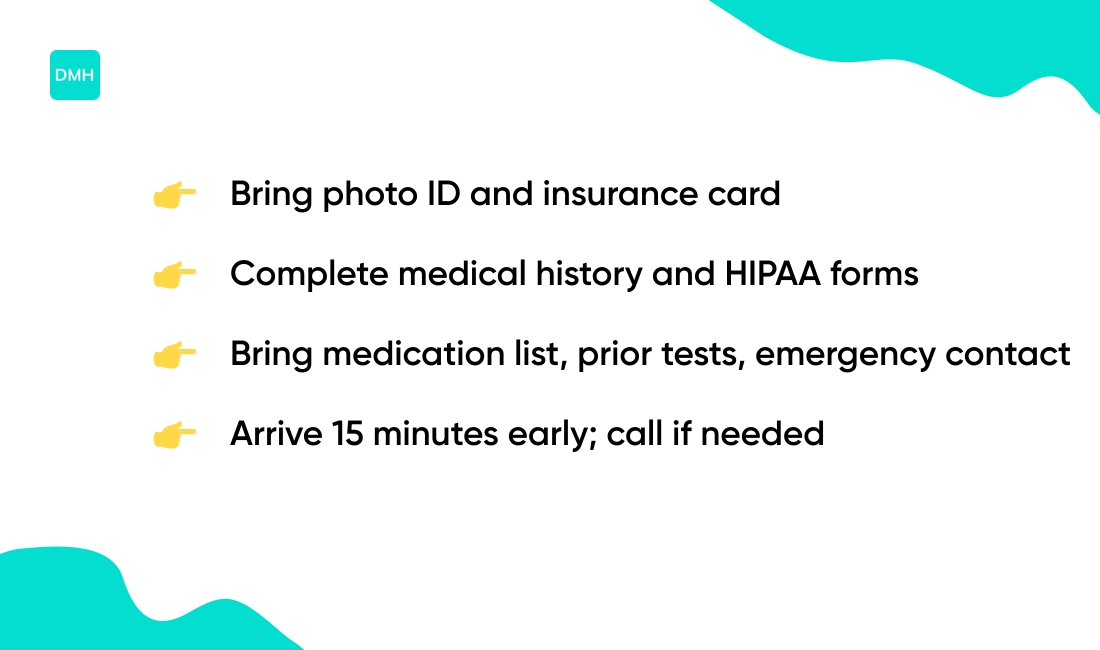
Your first hematology appointment begins at the front desk with identity and insurance checks. Staff will ask for a photo ID and insurance card.
They verify coverage and enter your policy details.
You’ll complete medical history forms and sign HIPAA privacy documents. The team asks about current medications, allergies, and emergency contact information.
Provide any prior blood test results or referral papers.
These administrative tasks aim to prevent billing errors and prepare your care team for the visit. Bringing organized documents cuts wait time and stress.
Arrive 15 minutes early. Bring your ID, insurance, medication list, and a contact name. Call the office if you need help before your hematology consultation.
Meeting your hematology care team
Meet your full hematology care team early. This keeps your first hematology appointment focused and speeds needed tests.
| Team Member | Role |
|---|---|
| Hematologist | Leads diagnosis and treatment plans |
| Nurses | Check vitals and teach procedures |
| Patient Navigators | Book appointments, explain insurance, track results |
| Medical Assistants | Handle blood draws and update records |
Naming one point of contact prevents confusion. I’ve seen clearer care when patients bring a medication list and symptom diary.
For your first hematology appointment, bring photo ID, insurance, medication doses, and questions. Ask about expected hematology tests and follow-up plans.
Prepare a short list of priorities to discuss with your hematologist. Tell them about any family history of blood disorders and past test results.
Medical history review and vital signs
Your first hematology appointment focuses on a clear medical history and simple vital signs that direct testing. Expect questions about symptoms, past diagnoses, family history, medications, allergies, and lifestyle factors.
A nurse or assistant will record blood pressure reading, pulse, temperature, and weight and height. Vitals usually take 5 to 10 minutes.
The clinician will review your history and current meds. Bring exact dosages and recent lab results.
A concise medication list speeds diagnosis and cuts repeat testing.
Bring ID, insurance, medication list, recent labs, and a support person if you want help remembering details. Ask the hematologist about next tests and follow-up timing.
Physical examination and consultation
Expect a focused physical exam that checks lymph nodes, spleen, and liver, plus a clear plan for testing. This exam finds signs that guide your hematology workup.
The clinician looks for swollen nodes and organ enlargement. They inspect skin for bruising or tiny red spots (petechiae).
The doctor asks detailed questions about symptoms, medicines, family history, and bleeding or clotting concerns. They note timing, severity, and any triggers.
During the hands-on exam, the provider will palpate the neck, armpits, abdomen, and groin. They listen for tenderness and measure organ size.
The session ends with a discussion of preliminary findings and likely next tests.
Clear explanations reduce anxiety. Patients leave with more control when the plan is simple and concrete.
Bring prior blood results and a short symptom list. Bring your questions so your hematologist can plan tests and follow up.
What tests are done at a hematology appointment
Blood tests and CBC analysis
A complete blood count gives a clear snapshot of your blood health. A CBC measures red blood cells, white blood cells, platelets, and hemoglobin.
Labs list mean corpuscular volume and differential counts that reveal anemia, infection, clotting problems, or bone marrow issues. For example, a low hemoglobin level below 12 g/dL in women or 13 g/dL in men often signals anemia.
Bring recent lab reports to your first hematology appointment so your hematologist can compare values and speed care. Reviewing trends cuts down on repeat tests and worry.
Check the dangerous white blood cell count reference if your WBC looks high or low. This guide shows common thresholds and what they may mean for your visit.
We recommend noting symptoms and medication changes before the visit. That step gives your team context and helps plan future tests.
Read also: What Level Of Platelets Is Dangerous
Specialized hematology tests
Specialized hematology tests pinpoint causes and guide treatment. At your initial hematology appointment, your hematologist will review symptoms and prior labs.
Tests may include:
- Bone marrow biopsy: examines cell production in marrow
- Genetic panels: identify inherited blood disorders
- Coagulation studies: measure PT, aPTT, and fibrinogen to evaluate clotting function
- Iron panels: check ferritin, serum iron, and transferrin saturation to spot deficiency or overload
- Vitamin B12 levels: detect deficiency causing anemia
- Flow cytometry tests: classify abnormal white cells and narrow diagnosis quickly
Bring prior lab results and a current medication list. Asking which tests match your symptoms keeps the visit focused.
Bring questions and request expected timelines for results so your hematologist can plan treatment and follow-up.
You’ll also like: How to Raise Hematocrit: Natural techniques & Measurements
Imaging and additional diagnostic procedures
Imaging clarifies the cause of abnormal blood tests by checking organs and vessels. It guides diagnosis and treatment plans.
Doctors may order CT scans, ultrasounds, or X-rays to evaluate enlarged organs, blood clots, or structural changes. Ultrasound checks the spleen and veins, while CT scans find deep clots and show organ detail.
Scans often reveal issues that labs miss. They help the hematologist target biopsies or specific blood tests more accurately.
Bring prior imaging and tell the clinic about any contrast allergies. Results often return within 24 to 72 hours, though urgent scans can return sooner.
What should you ask about imaging? Ask your hematologist whether imaging is needed, what each scan will look for, and how urgent it is.
You might also like: Reticulocytes: Functions, Low, high, Normal Ranges, Diagnoses
Questions to ask a hematologist on your first visit
Ask focused questions so you leave with a clear plan. Good questions reveal what your tests mean and what happens next.
You gain control and reduce uncertainty.
Focus on diagnosis, tests, and treatment:
- What is the most likely diagnosis and why?
- Which tests do you recommend and how soon will results return?
- Will I need a bone marrow biopsy or genetic testing?
- What treatment options do you suggest and what is the goal?
- What are common side effects and how do we manage them?
- How will treatment affect daily life and work?
- What follow-up schedule do you recommend?
- Which symptoms require urgent attention or ER visit?
- Are there lifestyle changes or supplements I should consider?
- Should I inform family about genetic risk or testing?
- Who coordinates my care and how do I contact them?
Write these questions down and bring recent labs. Asking about timelines and side effects makes appointments more useful.
Bring a support person to help record answers and make decisions. Your action: print this list, add your personal questions, and bring it to the appointment.
You might also like: What Type Of Cancer Causes Low Hemoglobin