Many people wonder what causes diabetes, but the answer isn’t a single factor.
Identifying the real diabetes risk factors is hard because genetics, lifestyle, and medical conditions often overlap.
This guide breaks down what causes diabetes across type 1, type 2, and gestational forms so you can act earlier.
You’ll learn how insulin production and resistance differ, which risks you can change, and when to seek medical advice.
Expect clear explanations about obesity, family history, medications, sleep, stress, and other common triggers.
Armed with that knowledge, readers will be able to reduce risk through lifestyle changes and informed conversations with clinicians.
What are the main causes of diabetes?
Diabetes is a metabolic disorder that raises blood glucose when the body cannot keep levels normal. Different biological mechanisms cause high glucose across diabetes types.
Broadly, two pathways drive diabetes. One pathway reduces insulin availability—some people develop diabetes because insulin production declines. Autoimmune damage destroys pancreatic beta cells in certain individuals, and loss of these cells lowers insulin output.
The other pathway impairs insulin action at tissues. Many cases begin after insulin resistance develops, so cells need more insulin to use glucose.
Risk factors influence which pathway appears. Excess body fat links to insulin resistance and raises obesity-related diabetes risk. Family history raises susceptibility. A sedentary lifestyle and poor sleep can weaken insulin sensitivity, while pregnancy may trigger gestational diabetes that raises later risk.
Have you considered which pathway might affect you most? Framing causes around insulin production and function clarifies why prevention and care vary by type.
According to CDC data, type 2 diabetes accounts for about 90% of cases, but individual risk can vary from person to person. This information is for informational purposes only. Always consult a qualified healthcare professional for medical advice specific to your situation.
What causes type 1 diabetes?
Autoimmune destruction of the insulin-producing cells causes type 1 diabetes. The immune system attacks the pancreatic beta cells, reducing insulin production.
Genetic susceptibility shapes risk. Specific genes in the HLA region increase the likelihood of autoimmunity. Type 1 diabetes represents about 5–10% of all diabetes cases, according to CDC data.
In genetically susceptible individuals, exposure to environmental agents such as viruses or certain foods appears to trigger this autoimmune response. Some studies suggest enteroviruses such as coxsackie have been linked to higher risk in some research.
Other environmental factors may include early-life exposures, changes in the gut microbiome, and certain toxins. Pancreatic stress from other conditions can alter risk; see pancreatitis warning signs for context on pancreatic health.
We present evidence with caution and clarity. Genetics often sets the stage, while infections or other triggers start the immune attack in many cases. Many details remain uncertain—studies show associations, but causation isn’t fully established.
This information is for informational purposes only and does not replace professional medical advice. Always consult a qualified healthcare professional for medical advice specific to your situation.
What causes type 2 diabetes?
How does insulin resistance develop?
Insulin resistance means cells respond less to insulin’s signal. Cells need more insulin to keep blood glucose within a normal range.
Insulin resistance begins when receptor signaling weakens. Insulin binds to receptors on muscle and liver cells, but that connection becomes impaired.
Fat around organs releases inflammatory molecules that impair cell signaling. Some studies suggest excess intracellular fat blocks insulin pathways in muscle. The pancreas increases insulin production to compensate, but over time, pancreatic beta cells may lose function and blood sugar rises.
Obesity and inactivity are common insulin resistance causes. Genetics and certain medications can contribute as well. Early weight loss and regular movement may help slow progression, based on available research.
This information is for informational purposes only. Always consult a qualified healthcare professional for medical advice specific to your situation.
How does obesity lead to diabetes?
Obesity is a common answer to what causes diabetes, especially when excess fat collects around internal organs. Fat around the abdomen often links to higher diabetes risk.
Excess body fat acts as an active tissue. Visceral fat releases cytokines such as TNF-alpha and IL-6, and these inflammatory signals can damage insulin receptors and create impaired insulin signaling. Cells then need more insulin to take up glucose—a pattern seen in type 2 diabetes.
Fat tissue changes hormone levels. Lower adiponectin and altered leptin signaling can reduce insulin sensitivity, and those hormonal shifts add to insulin resistance causes tied to obesity.
Some studies suggest chronic inflammation from visceral fat stores links obesity and type 2 diabetes. A landmark trial found modest weight loss (5–7%) with lifestyle change cut progression to diabetes by about half in people with prediabetes.
Measuring waist circumference often gives clearer insight than BMI alone; see where to measure waist for body fat for details. Always consult a qualified healthcare professional for medical advice specific to your situation.
Does a sedentary lifestyle cause diabetes?
A sedentary lifestyle means long sitting and low daily movement. It’s often associated with reduced insulin sensitivity and altered glucose metabolism.
Muscle contractions help cells take up glucose independently of insulin. Regular movement increases muscle glucose uptake and insulin response. Some studies suggest moderate aerobic exercise can raise insulin sensitivity by about 20–30% in adults with insulin resistance.
Sedentary habits link to weight gain and visceral fat, which worsen insulin resistance and raise type 2 diabetes risk. Brief walks and standing breaks can lower post-meal blood sugar over time, according to available research.
Results can vary among individuals. This information is for informational purposes only. Always consult a qualified healthcare professional for medical advice specific to your situation.
What causes gestational diabetes?
Gestational diabetes is high blood sugar first detected during pregnancy. What triggers this condition during pregnancy?
Rising pregnancy hormones such as human placental lactogen, progesterone, and estrogen reduce how well insulin works. These changes can create insulin resistance that the body must overcome.
The pancreas tries to make more insulin. Some people can’t increase insulin enough, so blood glucose rises. Gestational diabetes affects about 7% of pregnancies in the U.S., though rates vary by population and testing method, according to CDC data.
Women with gestational diabetes face higher diabetes risk later in life. Some studies suggest up to 50% of affected women may develop type 2 diabetes within five to ten years, but estimates vary by follow-up length and population.
Family history, obesity, older maternal age, and prior gestational diabetes are risk factors that often appear together. Clearer postpartum monitoring helps identify prediabetes or type 2 diabetes earlier and may guide timely care.
This information is for informational purposes only and does not replace professional medical advice. Always consult a qualified healthcare professional for medical advice specific to your situation.
Risk factors for diabetes you cannot change
Is diabetes genetic?
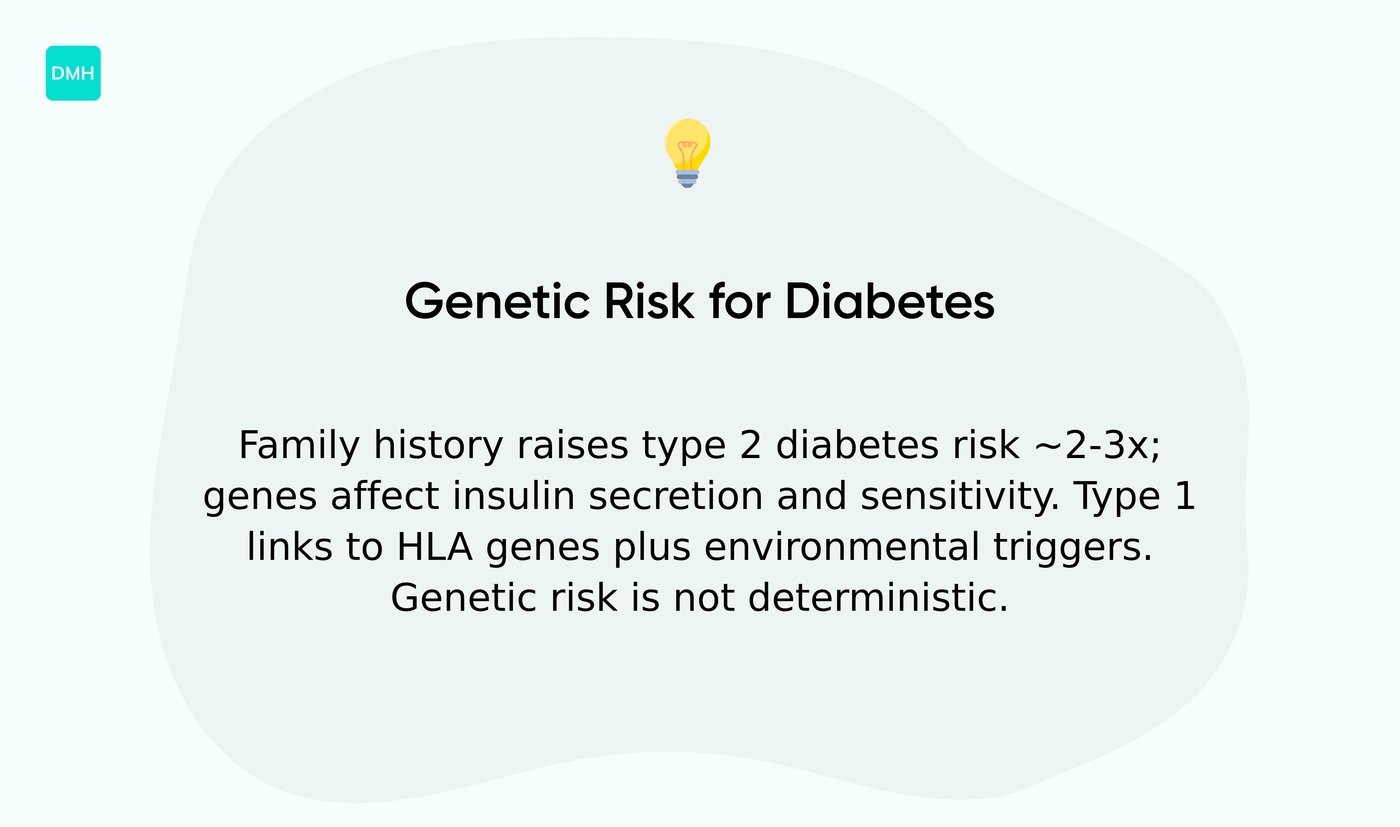
Diabetes risk has a hereditary component. Genes influence insulin production and insulin sensitivity.
Having a parent or sibling with type 2 diabetes raises your risk. Epidemiological studies estimate a two- to threefold increase for many people. Twin studies show higher concordance in identical twins, and that pattern suggests genetic influence but not full determinism.
Type 1 diabetes has genetic links in HLA and other loci. Viral infections and environmental triggers appear to interact with genetic susceptibility.
Knowing your family history of diabetes matters—it can help shape testing and monitoring conversations with clinicians. Genetic predisposition factors don’t guarantee disease, though.
This information is for informational purposes only. Always consult a qualified healthcare professional for medical advice specific to your situation.
How does family history affect diabetes risk?
Family history means one or more close relatives have diabetes. It raises risk through inherited genes and shared lifestyle factors.
The impact depends on the relative and the diabetes type. Having one parent with type 2 diabetes is associated with about a twofold increase in risk, according to cohort studies. A sibling with diabetes also raises risk, and two affected parents increase risk further.
For type 1 diabetes, a child of an affected mother has an estimated 2–4% risk. A child of an affected father may have a roughly 6–9% risk. Concordance in identical twins can reach about 30–50%, based on family and genetic studies.
Shared diet, activity patterns, and obesity add to genetic susceptibility. Gestational diabetes shows similar family links. Knowing your family background can prompt earlier screening and informed discussions with a clinician.
This information is for informational purposes only. Always consult a qualified healthcare professional for medical advice specific to your situation.
Age and ethnicity as risk factors
Age and ethnicity influence diabetes risk. Type 2 diabetes typically appears after age 45, though it’s increasingly being diagnosed in children and adolescents. It develops as insulin production falls and insulin sensitivity declines.
Cellular insulin resistance can increase with age. Pancreatic beta cell function often weakens over decades.
Certain racial and ethnic groups face higher rates. According to CDC data, Black Americans, Asian Americans, Latino/Hispanic Americans, Native Americans, and Pacific Islanders have a greater chance of developing diabetes.
Genetic factors contribute. Social determinants like access to care, diet patterns, and obesity links also affect risk. Screening often begins earlier for higher-risk groups, and weight loss of 5–10% and more activity are associated with lower incidence.
Targeted screening helps detect prediabetes sooner. This information is for informational purposes only and does not replace professional medical advice. Always consult a qualified healthcare professional for medical advice specific to your situation.
Modifiable risk factors you can control
Can diet increase your risk of diabetes?
Diet quality may influence what causes diabetes by affecting weight, insulin sensitivity, and inflammation.
Poor diets often include processed foods—they also tend to have high salt and low fiber. This diet diabetes link reflects factors beyond sugar. Processed foods raise calorie density and promote inflammation, and both effects may be associated with insulin resistance and type 2 diabetes.
High added salt intake appears linked to higher diabetes risk in some studies. Low vegetable intake ties to poorer nutrient profiles and higher blood pressure. Focusing on whole foods and more vegetables may lower long-term risk, according to available research.
For examples of foods that may help manage glucose, see lower blood sugar foods. This information is for informational purposes only and does not replace professional medical advice.
Does sugar intake cause diabetes?
Sugar alone doesn’t cause diabetes. Eating large amounts of sugar can raise calories and trigger excess calorie intake, though.
Type 2 diabetes accounts for about 90% of cases, according to CDC data. Insulin resistance often follows weight gain, especially increased visceral fat. Observational studies link sugary drinks with higher diabetes rates, but weight gain may explain much of this association.
Overall calorie balance and food quality matter more than single sugars. Controlling calories reduces weight gain risk and can lower long-term diabetes risk.
This information is for informational purposes only and does not replace professional medical advice. Always consult a qualified healthcare professional for medical advice specific to your situation.
Can stress raise your risk of diabetes?
Evidence links chronic stress to changes in blood sugar control. Chronic stress raises cortisol and other stress hormones, and cortisol increases liver glucose output and can reduce insulin sensitivity.
These hormonal shifts alter glucose control and may contribute to insulin resistance. This pattern is part of the stress and diabetes risk profile.
Stress often changes behavior. People under stress may sleep less, eat more processed food, and move less—those behaviors add weight and metabolic strain.
Some studies suggest long-term stress associates with higher rates of type 2 diabetes, but results vary by study design and population. Evidence comes from observational studies and meta-analyses and can’t prove cause. (Stress gets less attention than other diabetes risk factors, honestly.)
Always consult a qualified healthcare professional for medical advice specific to your situation.
Can lack of sleep cause diabetes?
Evidence shows poor sleep and untreated sleep apnea disrupt glucose metabolism. Studies show sleep loss can lower insulin sensitivity and change appetite hormones.
Short sleep periods may reduce insulin sensitivity by roughly 20–30% in experimental studies. Sleep fragmentation from apnea raises ghrelin and lowers leptin, which can increase hunger and calorie intake.
Poor sleep can contribute to weight gain and worsening insulin resistance—two common pathways linked to what causes diabetes, especially type 2 diabetes. Untreated sleep apnea may be associated with higher blood sugar over time.
Paying attention to sleep offers useful insight into diabetes risk factors. Sleep is often overlooked in risk assessments, though.
Always consult a qualified healthcare professional for medical advice specific to your situation.
Medical conditions that increase diabetes risk
Understanding what causes diabetes includes common medical conditions that raise risk. These conditions often link to impaired insulin action or pancreatic stress.
-
Polycystic ovary syndrome (PCOS) often coexists with insulin resistance. Estimates suggest 40–70% of women with PCOS show insulin resistance.
-
Hypertension and dyslipidemia frequently appear with metabolic changes that precede diabetes.
-
Cardiovascular disease history can signal shared metabolic risk factors and higher diabetes incidence.
-
Fatty liver disease (nonalcoholic) links strongly to insulin resistance and higher progression to type 2 diabetes.
-
Metabolic syndrome bundles central obesity, high blood pressure, high triglycerides, low HDL, and high fasting glucose. Many estimates place its prevalence near one quarter in some populations.
We present these links neutrally and with evidence in mind. Targeted monitoring matters when these conditions are present—clinicians often check fasting glucose and A1c more frequently for people with these diagnoses.
For a clinical review of related risk factors and complications, see US Pharmacist. This information is for informational purposes only and does not replace professional medical advice. Always consult a qualified healthcare professional for guidance specific to your situation.
Menopause and diabetes risk
Recent research shows that while waist circumference increases during menopause are associated with greater type 2 diabetes risk, the timing or type of menopause itself doesn’t independently cause diabetes.
The increased diabetes risk in postmenopausal women relates to cardiovascular and lifestyle risk factors rather than menopause itself. Weight gain during this period—especially around the waist—appears more relevant than hormonal changes alone.
For more information, see Menopause.org. This information is for informational purposes only. Always consult a qualified healthcare professional for medical advice specific to your situation.
You might also like: How Much CRP Level Is Dangerous: Complete Guide
Which medications can cause diabetes?
Some prescription drugs may change glucose control. Could your medication affect blood sugar?
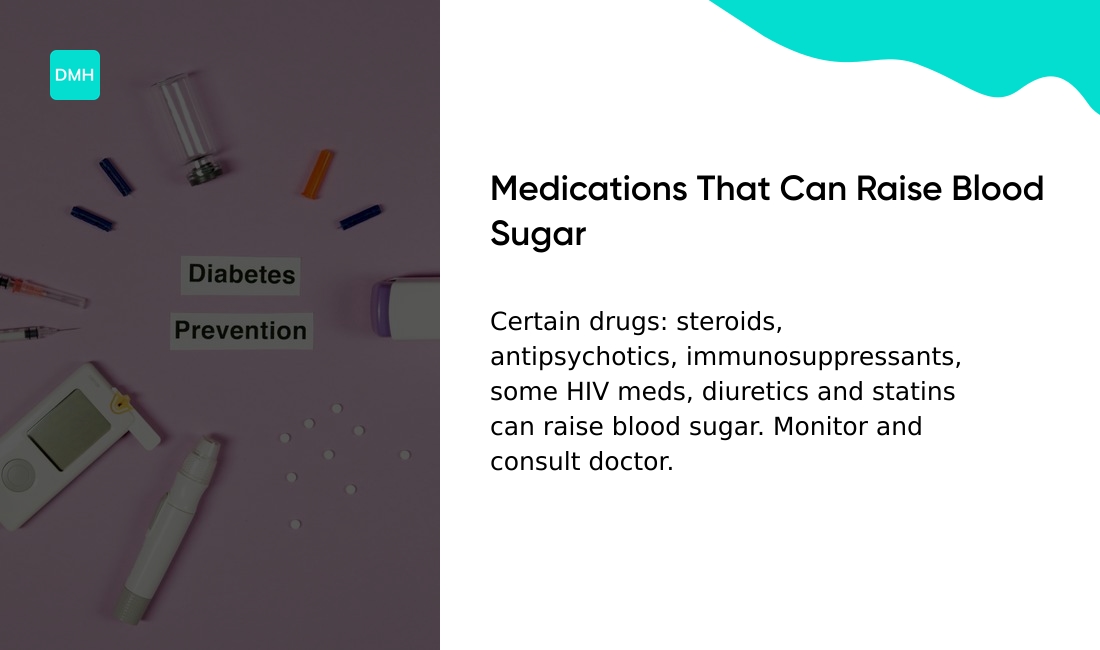
Certain drugs can raise blood sugar or worsen insulin action. Corticosteroids such as prednisone increase glucose production and lower insulin sensitivity. Atypical antipsychotics like olanzapine and clozapine often cause weight gain and contribute to insulin secretion impairment.
Certain immunosuppressants, including tacrolimus and cyclosporine, appear linked to reduced insulin release. Some HIV protease inhibitors and older antiretrovirals can raise diabetes risk by altering fat distribution and glucose metabolism.
Thiazide diuretics and high-dose niacin may modestly affect glucose. Statins show a small association with new-onset diabetes in some studies, though cardiovascular benefits remain important for many patients.
What causes diabetes varies by person. Medication effects interact with existing diabetes risk factors like obesity, family history, and age. Clinicians balance treatment benefits against medication-induced diabetes risk when choosing drugs for individuals.
|
Medication Class |
Examples |
Potential Effect on Glucose |
|---|---|---|
|
Corticosteroids |
Prednisone |
Increase glucose production, lower insulin sensitivity |
|
Atypical Antipsychotics |
Olanzapine, Clozapine |
Weight gain, impaired insulin secretion |
|
Immunosuppressants |
Tacrolimus, Cyclosporine |
Reduced insulin release |
|
Thiazide Diuretics |
Hydrochlorothiazide |
Modest glucose elevation |
|
Statins |
Atorvastatin |
Small association with new-onset diabetes |
Routine glucose checks during treatment help detect early changes and guide care decisions. Evidence comes from clinical trials and observational studies; results can vary across populations.
This information is for informational purposes only and does not replace medical advice. Always consult a qualified healthcare professional for medical advice specific to your situation.
You might also like: How To Improve Gum Health
How can you reduce your risk of developing diabetes?
Reducing your risk of developing type 2 diabetes means lowering the chance that prediabetes will progress. Losing 5–10% of body weight often links to meaningful risk reduction.
A major trial, the Diabetes Prevention Program, found about a 58% lower incidence with intensive lifestyle change in people at high risk. Small weight loss goals, steady activity, and diet changes form the core approach.
Weight loss targets include losing 5–10% of current weight. The CDC recommends at least 150 minutes of moderate activity per week. Plus, add two sessions of resistance training weekly to support muscle and metabolism—a focus on regular physical activity helps insulin work better.
Shift dietary patterns toward vegetables, whole grains, legumes, and lean proteins. Cut sugar-sweetened drinks and processed snacks. Mindful portion control lowers calorie intake. For information about supplements and weight support, see our guide on vitamin for weight loss.
Sleep quality, stress management, and avoiding tobacco appear linked to risk. Small, consistent changes matter more than perfect plans. According to available research, these steps are commonly used to lower risk.
-
Aim for 5–10% body weight loss if overweight
-
Engage in at least 150 minutes of moderate activity weekly
-
Include two resistance training sessions per week
-
Focus on whole foods, vegetables, and lean proteins
-
Reduce sugar-sweetened beverages and processed snacks
-
Prioritize 7–8 hours of quality sleep nightly
-
Manage stress through mindfulness or other techniques
-
Avoid tobacco use
The rising prevalence of type 2 diabetes globally is driven by rapid urbanization, unhealthy diets, and increasingly sedentary lifestyles. Addressing modifiable risk factors can make a real difference.
Always consult a qualified healthcare professional for medical advice specific to your situation.
You might also like: What Foods Cause Sleep Apnea
Educational notice: This content is provided for informational and educational purposes only and is not intended as medical advice. Always consult a qualified healthcare professional for medical concerns.