Precordial catch syndrome, often called Texidor’s twinge, is a benign musculoskeletal condition that causes brief episodes of sharp chest pain.
It most commonly affects children and adolescents, though adults can experience it too.
The pain feels sudden and stabbing, typically near the left side of the chest.
Episodes usually last just 30 seconds to 3 minutes before resolving on their own.
Understanding this condition can help reduce unnecessary worry when chest pain occurs.
What is precordial catch syndrome
Precordial catch syndrome is a benign musculoskeletal condition that causes brief, sharp chest pain in children and adolescents. The pain feels like a sudden, stabbing sensation near the chest apex—many patients describe it as a needle-like discomfort that gets worse with deep breathing.
Individual episodes typically last 30 seconds to three minutes. The pain often stops as suddenly as it begins, and most cases show no signs of cardiac illness or other systemic symptoms.
Researchers suggest the cause may involve irritation of an intercostal nerve, a transient muscle spasm, or pressure on cartilage near the ribs. Growth spurts and posture changes may be associated with episodes, though the exact mechanism remains unknown.
The condition commonly appears in school-aged children and adolescents, typically from age 6 through early adulthood. Presentations frequently include left-sided chest pain, but symptoms can vary from person to person.
Paediatricians report that precordial catch accounts for 80% to 90% of chest pain once any chest trauma is excluded. That’s a pretty significant percentage when you think about it.
Clinicians usually diagnose the condition by matching the classic symptoms and excluding red flags. Persistent, severe, or exertional pain warrants prompt clinical assessment. If you’re concerned about a child’s chest pain, consider discussing symptoms with a qualified healthcare professional for guidance relevant to the situation.
What are the symptoms of precordial catch syndrome
Typical episodes produce a sharp needle-like pain near the left chest apex. The pain can feel like a stab or pinprick that appears without warning.
Pain location often matches the apex of the heart or the left rib margin. This pattern explains why many report left-sided chest pain.
Have you noticed the pain gets worse when you breathe deeply? Many describe a brief episode of pain on inhalation or sharp chest pain when breathing in. This often leads patients to take shallow breaths to avoid triggering more discomfort.
Individual episodes last about 30 seconds to three minutes. The short duration helps distinguish it from other causes—you know, the kind that stick around much longer.
Here are the typical symptom features:
- Sudden onset without warning
- Sharp, stabbing quality
- Worsens with deep breathing
- No cardiac symptoms like palpitations or sweating
- Resolves spontaneously
- No tenderness when pressing the chest wall
Episodes often begin at rest while sitting or lying down. They may appear in adolescents during growth spurts and can vary from person to person. The pain never occurs during sleep or exertion, which is a key distinguishing feature.
Plus, there are usually no cardiac symptoms such as palpitations, fainting, sweating, or radiating arm pain. Pain rarely follows palpation of the chest wall, unlike conditions such as costochondritis.
If you’re concerned about chest pain, consider discussing it with a qualified healthcare professional for personalized evaluation. Always consult a qualified healthcare professional for medical advice specific to your situation.
What causes precordial catch syndrome
What triggers precordial catch syndrome episodes
The underlying cause of precordial catch syndrome remains unknown. However, researchers believe it may involve irritation of intercostal nerves or chest wall structures.
Some researchers speculate that several factors may contribute to episodes:
- Poor posture that pinches nerves in the pleura or cartilage surrounding the ribcage
- Sudden movements or quick torso twists
- Mild activity while at rest, such as sitting up fast
- Deep breaths that magnify brief, sharp chest pain
- Growth spurts in children and adolescents changing chest mechanics
- Local muscle spasm or minor chest injuries
Actually, posture and brief muscle spasms may explain many episodes in children. Symptoms often last 30 seconds to 3 minutes and lack cardiac signs.
If you’re concerned about chest pain, consider discussing it with a qualified healthcare professional. For informational purposes only.
Does posture affect precordial catch syndrome
Posture may influence brief chest pain episodes in some cases. Precordial catch syndrome often causes sharp, stabbing pain near the left chest apex—the condition is sometimes called Texidor’s twinge.
Slouching can compress the ribcage. That posture may pinch nerves in the lining around the lungs or the costal cartilage, which can cause intercostal nerve irritation. Spasms of chest wall muscles can add to discomfort.
Episodes often last 30 seconds to 3 minutes and occur during quiet breathing. This positional link appears in children and adolescents and relates to musculoskeletal chest pain in child cases.
Maintaining good posture may help prevent some episodes, though prevention of growth spurt-related cases isn’t always possible. Pleura or cartilage issues may be part of the explanation, but evidence is limited and mixed.
Always consult a qualified healthcare professional for medical advice specific to your situation. For informational purposes only.
Can anxiety cause or worsen precordial catch syndrome
Anxiety may alter breathing patterns and change how you sense pain. Stress can tighten chest wall muscles and alter posture, which may trigger brief stabbing episodes often labeled precordial catch syndrome or Texidor’s twinge.
Shallow rapid breathing can heighten the feeling of sharp chest pain. The topic of anxiety and chest pain may help explain overlapping symptoms.
Some studies suggest anxiety can increase pain sensitivity and vigilance. A child’s focus on chest sensations may make episodes feel worse, even though the underlying condition remains benign.
Here’s the thing: anxious states may amplify perceived severity of benign chest pain. But the condition itself is entirely benign with no association with cardiac disease.
Always consult a qualified healthcare professional for medical advice specific to your situation.
How is precordial catch syndrome diagnosed
Precordial catch syndrome vs heart attack
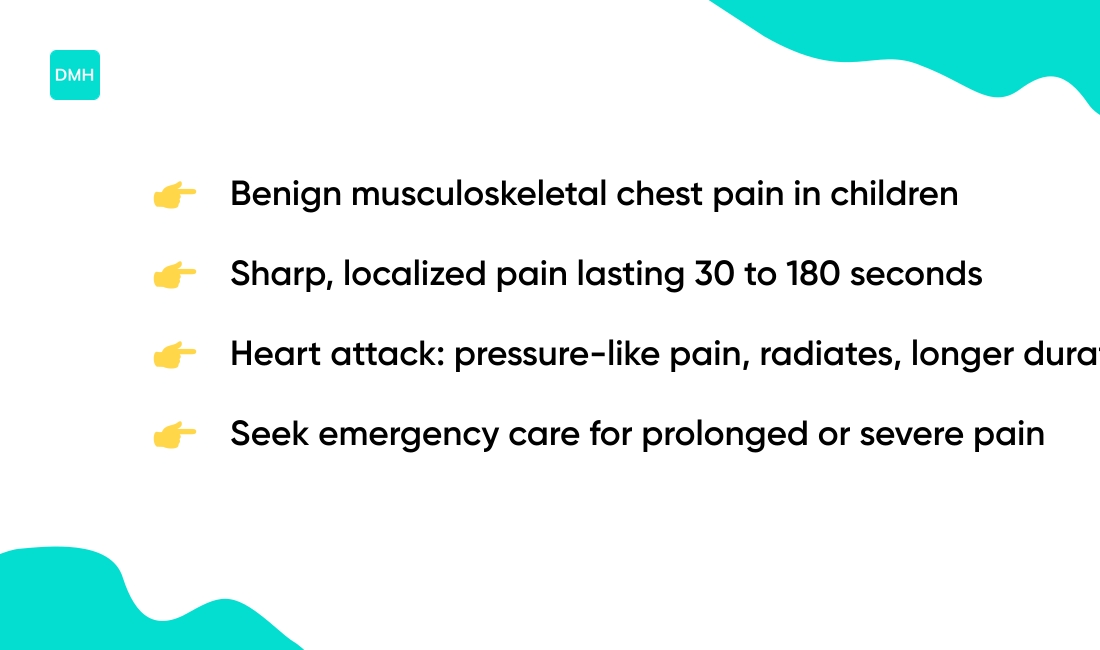
Precordial catch syndrome, also called Texidor’s twinge, usually affects children and adolescents. It’s a benign musculoskeletal condition with very different features from a heart attack.
The pain has a sharp, stabbing quality and is well localized near the left chest. It often worsens with a deep breath and lasts 30 seconds to three minutes before resolving completely.
Heart attack pain typically affects older adults with risk factors such as smoking, high blood pressure, or diabetes. It often feels like pressure or squeezing and can last minutes to hours. It may radiate to the arm, neck, or jaw and come with nausea or sweating.
| Feature | Precordial Catch Syndrome | Heart Attack |
|---|---|---|
| Age Group | Children & adolescents | Older adults with risk factors |
| Pain Type | Sharp, stabbing | Pressure, squeezing |
| Duration | 30 seconds to 3 minutes | Minutes to hours |
| Associated Symptoms | None | Sweating, nausea, arm/jaw pain |
| Trigger | Rest or mild activity | Often during exertion |
We highlight age, pain type, and duration as practical clues. Emergency care is appropriate when chest pain is prolonged or severe. Look for cardiac warning signs like arm or jaw radiation, fainting, heavy sweating, nausea, or breathlessness.
For timing guidance, see when to go to the hospital for chest pain. If concern persists, a qualified healthcare professional can offer individualized advice.
Precordial catch syndrome vs costochondritis
Well, these two conditions both cause chest pain but have clear features that help tell them apart.
Precordial catch syndrome causes a sudden, sharp jabbing pain. Episodes last about 30 seconds to three minutes. Pain often sits near the left chest apex and may worsen with deep breath, but it’s not tender to touch. This condition is most common in children and adolescents and may present as stabbing chest pain in children.
Costochondritis produces a dull, aching or pressure-like pain. Pain can persist for hours to days and localizes to the costochondral junctions along the front chest. Tenderness to touch is a key sign—pain can be reproduced by pressing the rib cartilage. Teens and adults report this pattern more often.
Knowing the usual pain duration, exact location, and presence of tenderness reduces unnecessary alarm. If you’re concerned about severe or prolonged symptoms, consult a qualified healthcare professional for evaluation.
Precordial catch syndrome and pleuritic chest pain share some breathing-related pain features, but they’re quite different conditions.
Precordial catch syndrome, often called Texidor’s twinge, causes brief sharp chest pain near the left chest apex. Pain usually lasts 30 to 180 seconds and stops without other signs.
Pleuritic chest pain often reflects inflammation of the pleura or underlying lung disease. That pain can last longer and come with cough, fever, or breathlessness.
Precordial catch syndrome may be associated with intercostal nerve irritation or brief muscle spasm. Pleuritic pain may be associated with pneumonia, pulmonary embolism, or pleuritis—conditions that require medical attention.
Precordial catch syndrome is common in children and adolescents. Pleuritic causes often affect adults but can appear at any age.
Can you tell the difference based on duration and accompanying symptoms? Careful history often separates benign musculoskeletal pain from pleural disease.
If you’re concerned, consider discussing symptoms with a qualified healthcare professional. If chest pain occurs with fainting or heavy sweating, urgent care may be needed. Severe breathlessness or persistent pain may require urgent evaluation.
How do you treat precordial catch syndrome
The good news is that precordial catch syndrome treatment is usually simple. This benign musculoskeletal condition causes brief, sharp chest pain near the heart apex and is often called Texidor’s twinge.
The pain typically resolves with simple maneuvers such as deep breathing, lying down, or changing posture. The acute pain almost always resolves on its own without any treatment.
Here are practical approaches that may help during episodes:
- Deep breathing: slow, controlled breaths during an episode may ease pain
- Posture changes: lie flat or sit upright to reduce ribcage strain
- Lateral stretches and gentle shoulder rolls can relieve muscle tightness
- Avoid sudden twists and heavy lifting during flare-ups
Episodes typically last 30 seconds to three minutes and stop without treatment. Reassurance helps because the condition is benign and not linked to heart disease—honestly, understanding that can make all the difference for worried families.
Gentle daily chest mobility exercises may help reduce episodes over weeks. Breathing retraining can normalize shallow breathing patterns linked to anxiety.
Patient reports suggest that short posture routines reduce episode frequency. Maintaining good posture and avoiding chest injuries may help prevent some episodes.
If you’re concerned about chest pain with sweating or fainting, seek urgent care. More management tips are available at Physio-Pedia. Always consult a qualified healthcare professional for medical advice specific to your situation.
How long does precordial catch syndrome last
Precordial catch syndrome causes brief, intense chest pain. Episodes typically last 30 seconds to 3 minutes—that’s it. The pain feels like a sharp, needle-like sensation near the left chest, and breathing often makes it worse.
Children and adolescents most commonly report these short episodes. The pain can recur over days or weeks, though frequency varies from person to person.
But here’s the really reassuring part: the long-term outlook is favorable. Most people notice fewer episodes with age, and many outgrow the condition by their mid-20s. Some studies suggest symptoms decline significantly during late adolescence and early adulthood.
The prognosis is excellent, with most patients experiencing complete resolution of symptoms over time. Episodes may occur once in a lifetime or recur periodically during childhood and adolescence, but frequency typically decreases over time.
We present this as a benign musculoskeletal chest pain that often needs only reassurance and simple self-care. Clear explanation helps reduce worry for families and teens.
If chest pain occurs with fainting, shortness of breath, sweating, or pain that spreads to the arm or jaw, seek urgent medical evaluation. If you’re concerned about persistent or changing symptoms, consider discussing them with a qualified healthcare professional for personalized assessment. For informational purposes only.
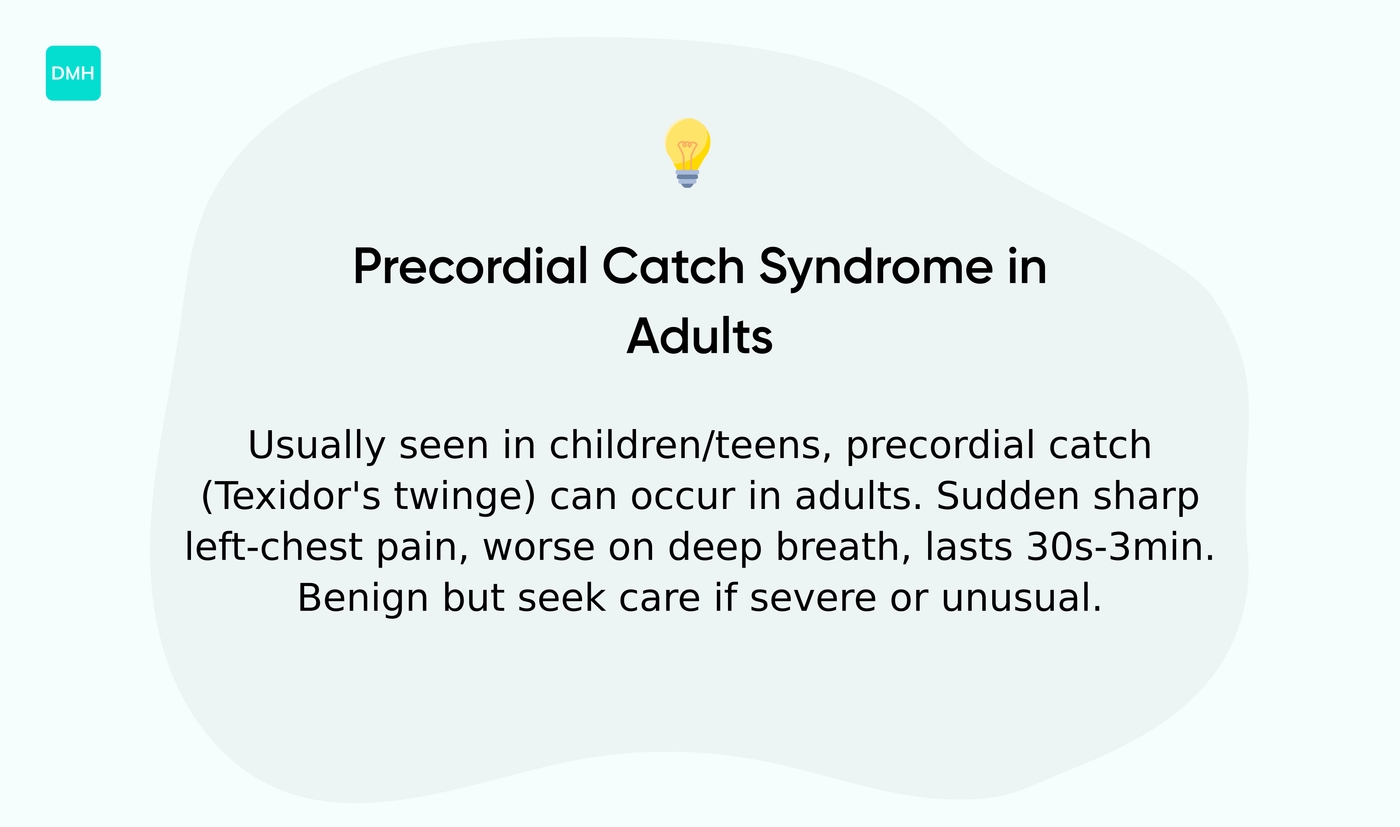
Can adults get precordial catch syndrome
Precordial catch syndrome most often appears in children and adolescents. Episodes usually begin between ages six and early adulthood, though some cases persist into later adult years.
Texidor’s twinge is a benign musculoskeletal cause of sudden, sharp chest pain. The pain is short lived and often linked to posture or ribcage movement.
Adult cases are likely underrecognized. Reports suggest adults can experience similar episodes, though prevalence falls compared with teens. Symptoms can vary from person to person.
Typical features include:
- Sudden, sharp, needle-like pain near the left chest apex
- Pain that feels worse with a deep breath
- Duration of about 30 seconds to three minutes
- No typical cardiac symptoms like sweating, fainting, or prolonged breathlessness
Diagnosis relies on the pattern of pain and excluding other causes. Clinicians may consider benign chest pain, musculoskeletal chest pain, and anxiety-related breathing changes when assessing adults. Imaging or cardiac tests may be used if symptoms don’t match the usual pattern.
If you’re concerned about recurring or severe chest pain, consider discussing it with a qualified healthcare professional. Always consult a qualified healthcare professional for medical advice specific to your situation.
Read also: Rare Fibromyalgia Symptoms
When should I see a doctor for my child’s chest pain
Sharp chest pain in children often has benign causes. One common example is precordial catch syndrome, called Texidor’s twinge. But certain warning signs need medical evaluation.
Watch for red flag symptoms that suggest more than a benign cause:
- Pain during exertion or during play
- Chest pain with fainting or near-fainting
- Pain with sweating, nausea, or palpitations
- Pain that radiates to the arm, neck, or jaw
- Persistent worsening pain that lasts hours or worsens over days
- Difficulty breathing or blue lips
Sharp, stabbing pain that occurs only with deep breaths often fits precordial catch syndrome. See the NUH precordial catch chest pain resource for typical features and reassuring signs.
Chest pain can be linked to anxiety. See our overview on anxiety symptoms vs illness for context.
Does the pain happen during physical activity or come with other worrying symptoms? Pain during exertion warrants prompt clinical assessment. Pain with fainting, sweating, or persistent worsening pain warrants assessment as well.
If you’re concerned about symptoms, consult a qualified healthcare professional for advice specific to your situation.
You might also like: How to Get Rid of Heartburn Easily
Is precordial catch syndrome dangerous
Precordial catch syndrome is a benign musculoskeletal chest pain seen in children and adolescents. It’s often called Texidor’s twinge and causes sharp, stabbing pain near the left chest apex.
Episodes last about 30 seconds to three minutes and intensify with deep breath. But here’s what really matters: it’s an entirely benign condition with no link to structural heart disease.
Clinical exams and routine tests are typically normal in classic cases. Studies don’t associate the syndrome with cardiac events or long-term heart damage—not at all.
Most episodes reflect nerve or chest wall irritation rather than heart problems. Most patients experience symptom resolution over months to years, and many people outgrow the pain by their mid-20s, which supports a no long-term complications outlook.
Some cases persist into adulthood, but serious outcomes remain rare. Simple actions such as posture change and paced breathing can ease episodes and are part of usual care.
The overall picture shows an excellent prognosis overall for complete resolution. The condition is entirely benign with no long-term complications or association with cardiac disease.
If you’re concerned about chest pain, consider discussing it with a qualified healthcare professional for personalized evaluation. For informational purposes only.
You might also like: What BNP Level Is Dangerous? Guide
Educational notice: This content is provided for informational and educational purposes only and is not intended as medical advice. Always consult a qualified healthcare professional for medical concerns.