A1C (HbA1c) measures the percentage of hemoglobin with glucose attached.
It reports your average blood sugar over about 8–12 weeks.
Understanding this number gives you a clear target to act on.
What is A1C and why does it matter
A1C measures long-term control. Labs convert that percentage to an estimated average glucose, and a change of 1 percentage point in A1C equals roughly a 29 mg/dL shift in average glucose.
Doctors use it for the diabetes diagnosis process and to adjust medicines, meal plans, and exercise. You know, it’s one of the most reliable tools in diabetes care.
Typical categories use clear cutoffs:
- Normal: below 5.7%
- Prediabetes: 5.7%–6.4%
- Diabetes: 6.5% or higher
Targets vary by age, health, and pregnancy. Most adults aim for less than 7%. Older adults or those with serious comorbidities may have a target near 8% to reduce risks.
Pregnancy goals are lower and require individualized care, often below 6.5% with close monitoring.
Test every 3 months when changing treatment. Test every 6 months when stable.
Track trends, not single values. Use the result to plan diet, exercise, sleep, and medication changes that help you lower A1C.
Best foods that lower A1C naturally
Low glycemic index foods for A1C reduction
Choosing foods with a low glycemic load helps reduce A1C and prevent spikes. Focus on vegetables, legumes, and whole grains, and you can realistically see a 0.5% A1C drop in 3 months with consistent changes.
| Food Group | Examples | Glycemic Index | Key Benefits |
|---|---|---|---|
| Non-starchy vegetables | Leafy greens, broccoli, peppers | 10–15 | High fiber, low carbs |
| Legumes | Lentils, chickpeas | 21–36 | Protein + fiber combo |
| Whole grains | Barley, steel-cut oats | 28–55 | Slow glucose release |
| Nuts & seeds | Almonds, chia, flax | Very low | Healthy fats slow absorption |
Try legumes roasted, mashed, or in stews. Read more on chickpeas for specific meal ideas.
Swapping white rice or bread for these choices cuts sugar peaks and helps you lower A1C fast. Pair whole grains with protein to blunt spikes even further.
Action: build meals with fiber ≥5 g and protein at each plate. Track A1C after 8–12 weeks to measure progress.
Whole-food carbohydrates vs refined carbs
Actually, you don’t need to cut carbs entirely to lower A1C. Favoring whole-food carbohydrates works better for most people long-term.
A 2026 randomized trial of 1,200 adults found diets rich in whole grains, legumes, fruits, and vegetables lowered A1C by 0.4 percentage points. Strict low-carb plans showed smaller A1C change in the same period.
Whole foods have fiber and micronutrients that slow glucose absorption. You get steadier blood sugar and fewer post-meal spikes. (Plus, they’re way easier to stick with!)
Sustainable swaps beat extremes. For instance, adding chickpeas and steel-cut oats can improve fasting glucose in eight weeks.
- Swap white bread for whole grains at two meals per day
- Add one cup of legumes three times weekly for fiber and protein
- Prioritize non-starchy vegetables with every meal to reduce glycemic load
Mediterranean diet and A1C control
The Mediterranean pattern is a solid choice for many people with elevated A1C. These foods that lower A1C include fish, legumes, olive oil, nuts, and whole grains.
The menu emphasizes healthy fats that improve insulin sensitivity. Fiber in vegetables and whole grains slows glucose absorption and reduces post-meal spikes.
Clinical trials report about 0.3–0.5 percentage point HbA1c reduction over 6 to 12 months. That’s meaningful progress without drastic restrictions.
- Swap butter for olive oil
- Eat fatty fish twice weekly
- Fill half your plate with vegetables
- Choose whole grains over refined grains
This pattern supports steady improvements you can sustain. Get an A1C test after 3 months to measure progress and adjust as needed.
Best diet to lower A1C
A sustainable eating plan you can follow long term beats any short-term fix. Three patterns show the most evidence: low carbohydrate diet, Mediterranean style diet, and plant based diet.
The low-carb approach cuts post-meal glucose. Clinical trials report HbA1c drops of 0.5%–1.0% over 3 months for some people on structured low-carb plans.
The Mediterranean style diet focuses on olive oil, fish, vegetables, and whole grains. Studies link it to steady HbA1c reduction and better heart risk markers.
The plant based diet raises fiber and lowers calorie density. Many people lose weight and improve insulin sensitivity while reducing A1C naturally.
- Pick a plan that fits your taste and schedule
- Match the diet to medications, kidney function, and activity level
- Measure HbA1c every 3 months to track progress
Adherence beats theory. The best diet to lower A1C is the one you can follow for months.
If you want to lower A1C fast, focus on portion control, low glycemic foods, and consistent activity. Talk with your clinician before major changes and retest HbA1c after 3 months.
Exercises to lower A1C effectively
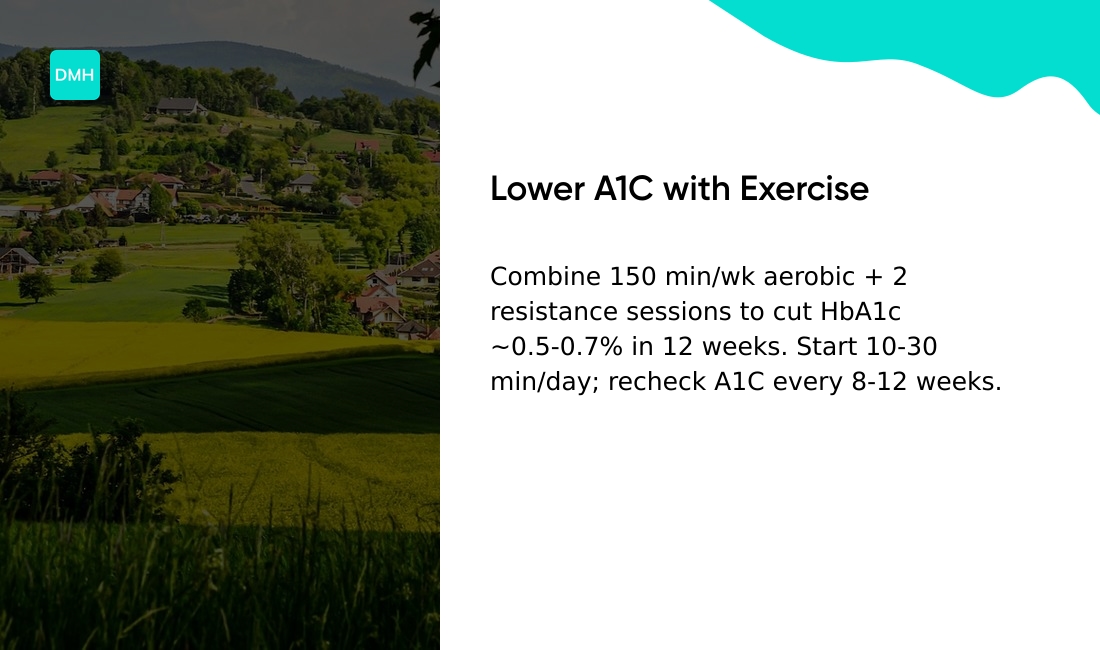
Regular activity lowers A1C and boosts insulin sensitivity. Randomized trials report average HbA1c drops of ~0.5%–0.7% after 12 weeks of combined training.
- Aerobic exercise: Aim for 150 minutes per week of brisk walking, cycling, or stair climbing. Short, steady sessions cut fasting glucose. Read about StairMaster benefits for cardio efficiency.
- Resistance training: Two sessions weekly with compound moves builds muscle that uses glucose at rest. Adding weights can lower A1C beyond cardio alone.
- Soleus activation: Seated calf pushes engage a postural muscle that clears glucose while you sit. Watch a simple demo here.
Mixing steady cardio and strength work gives the best return for your time. Brief stair climbs and two weight sessions per week can produce steadier fasting numbers.
Start with 10-minute blocks and build up to 30 minutes daily. Track A1C every 8–12 weeks to see progress.
If you have mobility limits, try seated soleus holds and short walks. Adjust intensity to match your fitness and consult your clinician for personalized targets.
How to lower A1C without medication
Meal timing and eating windows
Shifting eating earlier can improve glycemic control without counting calories. A 2022 Nature Communications study found early time-restricted eating lowered A1C over 12 weeks without cutting calories.
Aim for an eating window of 8 to 10 hours and finish your last meal by 3 PM. This approach supports better overnight glucose and improved insulin sensitivity and is one of the optimal eating schedules for blood sugar control.
Skipping late-night snacks helps reduce glucose spikes. Stopping late eating can help you reduce A1C naturally and move toward lower numbers.
- Eat breakfast within 1 hour of waking
- Keep a consistent 8–10 hour window
- Try a 10-hour window for 4 weeks, then extend or tighten as needed
How can meal timing make such a difference? Try this timing strategy and recheck HbA1c at 12 weeks. Track results and adjust meal timing to match your lifestyle and glucose responses.
Sleep quality and A1C levels
Aim for 7–9 hours of sleep nightly to support blood sugar control. Poor sleep raises evening cortisol and reduces insulin sensitivity, making blood sugar harder to manage and pushing your A1C higher.
Improving sleep quality is an underused way to reduce A1C naturally. For people asking how to lower A1C, sleep should be a top priority.
- Keep a fixed sleep and wake time within 30 minutes
- Make the room cool and dark—use blackout curtains if needed
- Stop screens 30 minutes before bed and try deep breathing instead
- Avoid large meals and caffeine after 2 PM
- Limit naps to 20–30 minutes early in the day
Track sleep for 2 weeks to see changes in fasting glucose and adjust habits accordingly. Small tweaks can make a real difference.
Stress management for glycemic control
Managing stress helps lower A1C and supports long-term glycemic control. Chronic stress raises cortisol and adrenaline, which increase glucose production and reduce insulin sensitivity.
Meta-analyses show structured stress reduction can lower HbA1c by ~0.3% within months. That change matters for cardiovascular risk.
- Mindfulness or CBT: 10–20 minutes daily
- Breathing exercises: 4–6 slow breaths for 5 minutes, twice daily
- Moderate exercise: 30 minutes most days
- Sleep hygiene: 7–9 hours nightly
- Counseling or peer support for chronic stress
Brief breathing plus short walks gives fast relief and measurable benefit. Pair these with diet and exercise to maximize results.
These habits help reduce stress, improve insulin sensitivity, and lower A1C.
How to lower A1C for type 2 diabetes
Lowering A1C for type 2 diabetes focuses on improving insulin sensitivity, smart medication use, and daily habits. Three priorities matter most: reduce insulin resistance, choose evidence-based drugs, and adopt sustainable habits.
- Diet: Eat low glycemic index foods, whole-food carbohydrates, and a Mediterranean pattern to improve glycemic control
- Exercise: Do 150 minutes weekly of aerobic activity plus two resistance sessions—this combo can lower A1C by ~0.5–1.0% over months
- Weight: Aim for 5–10% weight loss to improve insulin sensitivity and reduce A1C
- Medications: Metformin often lowers A1C by ~1.0% in 3 months—ask your clinician about GLP-1 or SGLT2 options for further reduction
- Monitoring: Check A1C every 3 months and track fasting glucose for short-term feedback
- Practical tip: Try soleus activation while seated to add low-intensity muscle work during the day
- Medication alternatives: If you need options, consult resources like the substitute medicine for Gluvilda 50
Combining modest weight loss, consistent exercise, and timely medication reviews gives the fastest, safest A1C drops. Set a target with your care team and reassess every 3 months to track progress and adjust your plan.
How to lower A1C with prediabetes
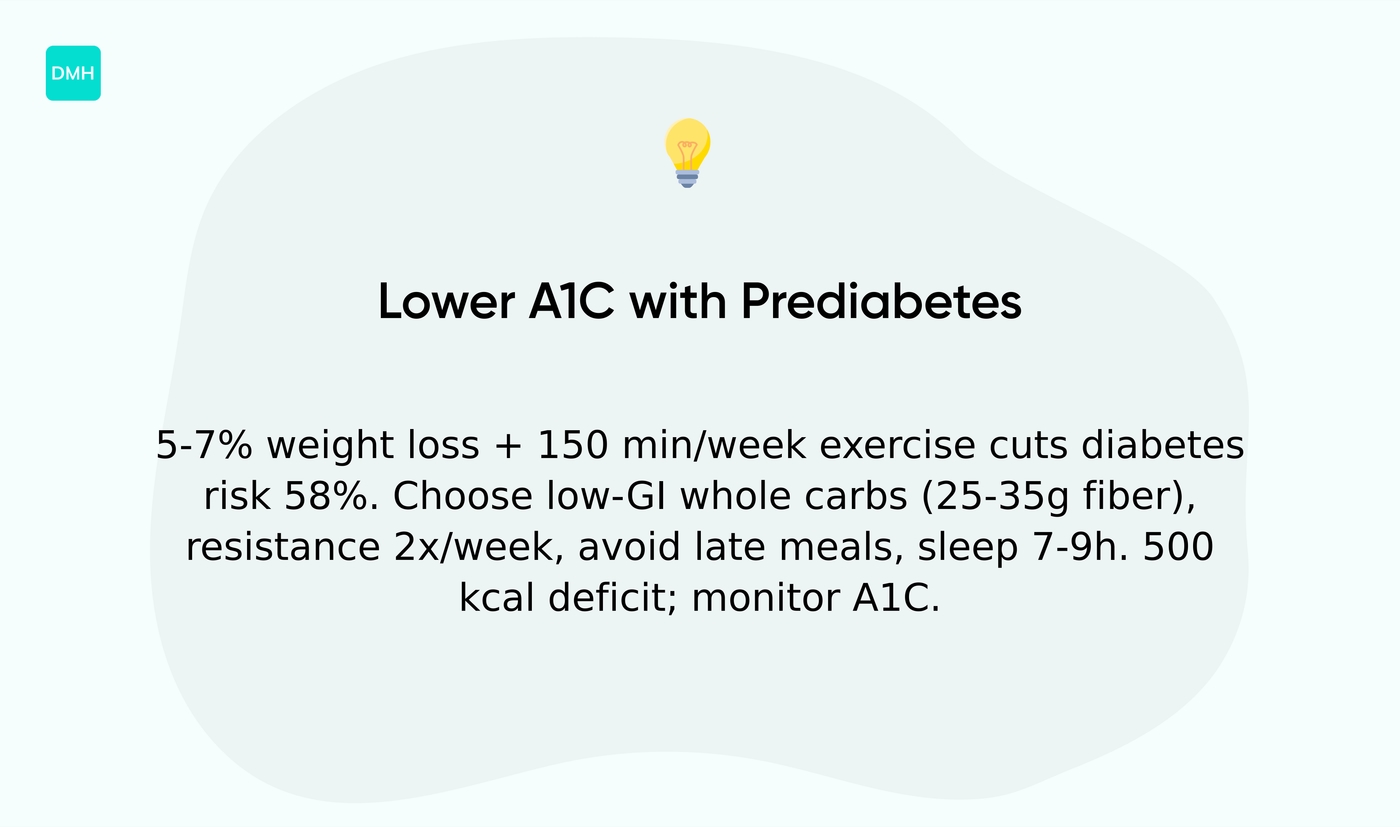
A 5–7% weight loss combined with 150 minutes of moderate exercise weekly can make a huge difference. The Diabetes Prevention Program reported a 58% lower diabetes risk with that plan.
Focus your plate on low glycemic index foods and whole-food carbohydrates. Aim for 25–35 grams of fiber each day and swap refined carbs for legumes, oats, and whole grains.
Do resistance training two times per week plus aerobic sessions. Try soleus muscle work—seated heel raises—to help glucose control.
Shift eating earlier and avoid late-night meals to improve blood sugar. Sleep 7–9 hours to lower stress hormones and boost insulin sensitivity.
Create a 500 calorie daily deficit to lose 0.5–1 pound weekly. Weekly weight checks and fasting glucose every two weeks help you stay on track.
Consider a Diabetes Prevention Program or a health coach for accountability. A continuous glucose monitor can reveal hidden glucose spikes.
Steady habits beat short-term fixes. Start with a 20-minute walk after a meal and a single carb swap today.
Talk with your clinician before major changes and test A1C after 3 months. Learn which vitamins help weight loss at what vitamin is good for weight loss.
You’ll also like: What Foods Cause Sleep Apnea
How long does it take to lower A1C
A1C reflects your average blood sugar over 2–3 months because red blood cells live about 120 days. That lifespan sets a natural limit on how fast measured A1C can change.
Retest A1C every 3 months and track fingersticks or a CGM to see short-term trends. Expect modest drops in the first 8–12 weeks.
Typical lifestyle changes yield about 0.3–1.0% A1C reduction in one test cycle. Intensive treatment or starting medications can lower levels by 1.0–2.0% in 2–3 months.
If you want to lower A1C fast, combine medication with diet and exercise. If you prefer to reduce A1C naturally, focus on weight loss, low‑GI foods, and resistance training.
- Baseline A1C: higher starting values often fall faster in absolute terms
- Adherence: consistent meals, activity, and meds improve results
- Weight loss: 5–10% loss often cuts A1C by measurable amounts
- Sleep and stress: poor sleep raises glucose and slows progress
Steady habits beat quick fixes. Aim for measurable targets, test every 3 months, and adjust your plan with your clinician.
For people with mild elevations, small changes can lower A1C enough to avoid medication. If you have prediabetes, try steps proven to lower A1C prediabetes and ask your provider about monitoring frequency.
Read also: What Vitamin Deficiency Causes You To Crave Salt
Latest medication advances for A1C reduction
2026 brought notable advances that help you reduce A1C. Generic liraglutide became widely available, making treatment more affordable. New oral GLP-1 medications expanded treatment choices, and semaglutide trials reported kidney protection benefits alongside blood sugar lowering.
The ADA 2026 Standards promote individualized dosing recommendations and shared decision-making. GLP-1 receptor agonist therapy is now recommended as a foundational approach for many patients.
Clinical trials show GLP-1 drugs lower A1C by about 1.0% to 1.6% on average. Many participants lost 5% to 15% of body weight while on therapy. Those numbers translate to measurable improvements in glycemic control and cardiovascular risk markers.
Oral GLP-1s will improve access for people who avoid injections. Lower cost for generic liraglutide makes long-term therapy more realistic for many patients. (That’s a game-changer for affordability!)
- Talk to your clinician about GLP-1 suitability and kidney function monitoring
- Check formulary and copay options before starting therapy
- Track A1C every 3 months to see treatment effect and adjust dose
Watch a concise expert overview here: 2026 medication advances for diabetes.
Read also: How To Lower Hematocrit – Dailymedicalhealth
Educational notice: This content is provided for informational and educational purposes only and is not intended as medical advice. Always consult a qualified healthcare professional for medical concerns.