A high white blood cell count signals an active immune response and often points to infection.
Leukocytosis means a rise in white blood cells.
Normal values run 4,000 to 11,000 cells per microliter (4–11 x10⁹/L). Mild elevation sits between 11,000 and 15,000 cells per microliter.
Higher values suggest more serious issues. Counts above 15,000 commonly occur with bacterial infections. Counts from 20,000 to 30,000 often show severe infection or sepsis.
Counts above 50,000 may indicate bone marrow disease or leukemia.
Bacterial infections typically cause neutrophilia. Viral infections tend to cause lymphocytosis. A differential count helps clinicians decide on testing and treatment.
Knowing your lab numbers helps you act faster. A WBC of 22,000 often accompanies severe bacterial illnesses like pneumonia or appendicitis, so don’t ignore that value alongside symptoms.
We recommend urgent evaluation for sustained WBC above 30,000 or for fever with low blood pressure, rapid heart rate, severe pain, or confusion. Learn more about high white blood cell count for ranges and causes.
If you have worrying symptoms or a high reading, contact your healthcare provider or emergency services right away. Quick testing and targeted treatment make a real difference.
Bacterial infections that cause high white blood cell count
Does a UTI cause a high white blood cell count?
UTIs often raise your white blood cell count. Bacterial entry into the urinary tract triggers the bone marrow to push out neutrophils.
This leads to a rapid neutrophil increase and often visible pyuria. Simple bladder infections usually cause mild leukocytosis, typically 10,000–15,000 cells/µL.
Kidney infections raise counts more, commonly 15,000–30,000 cells/µL and sometimes higher with systemic spread. Blood neutrophilia often mirrors urine WBCs and positive cultures, which show the offending bacteria. This pattern fits many high WBC levels seen with bacterial infection.
We recommend a urine dipstick, microscopy, and culture to confirm diagnosis. Prompt testing prevents kidney damage.
You should seek care for fever, flank pain, or a WBC above 15,000. Treating early cuts complication risk.
Is WBC count high with pneumonia?
Pneumonia often raises white blood cell counts, especially when bacteria cause the infection. Bacterial pneumonia typically produces a strong neutrophil response.
WBC often climbs above 11,000 cells/µL and commonly ranges from 12,000 to 25,000; severe cases can exceed 30,000. Bacterial pneumonia causes neutrophilia, while viral pneumonia shows lower or normal counts and sometimes lymphocytosis.
We recommend blood count testing and prompt antibiotics for suspected bacterial cases. Early testing cuts complications.
You should seek care if your WBC exceeds 15,000 or if breathing or fever worsen. Quick treatment lowers risk and shortens recovery.
Viral pneumonia often shows normal or mildly elevated WBC. You may see lymphocytosis instead of neutrophilia. A pulse oximeter, chest X-ray, and cultures help tell viral from bacterial. Watching trends matters more than a single number.
Can strep throat increase white blood cells?
Streptococcal pharyngitis commonly raises neutrophils and total white blood cells. You may see WBC rise from a normal 4,000–11,000/µL to about 11,000–15,000/µL in mild to moderate cases.
Neutrophils often reach 70–85% of the differential, producing a neutrophil predominance pattern.
We watch for that neutrophilia because it points to bacterial infection rather than viral illness. A rapid strep test or throat culture confirms the diagnosis and guides antibiotics, which usually lower elevated WBC counts within 24–48 hours.
If you have high fever, severe sore throat, and swollen nodes, you should get tested. This neutrophilia differs from viral lymphocytosis, which raises lymphocytes instead of neutrophils.
If WBC climbs above 20,000, seek urgent care. Test, treat, and follow your counts until they normalize.
Other bacterial infections that elevate WBC
Many bacterial illnesses raise white blood cell levels and change the white cell mix.
| Infection Type | Typical WBC Range (cells/µL) | Pattern |
|---|---|---|
| Sinus infections, dental abscesses | 11,000–18,000 | Mild to moderate leukocytosis |
| Cellulitis, skin abscesses | 12,000–20,000 | Strong neutrophilia |
| Appendicitis | 10,000–18,000 | Moderate neutrophilia |
| Sepsis | 15,000–20,000+ | High or sometimes low |
| Tuberculosis | Mild elevation | Lymphocytosis shift |
| Pertussis (whooping cough) | 20,000+ | Marked lymphocytosis |
A sudden rise above 12,000 with fever or worsening pain needs quick evaluation. You should see a clinician for suspect infections, abnormal counts, or severe symptoms.
Does mononucleosis increase white blood cell count?
Yes, mononucleosis often raises white blood cell count and produces a clear lymphocyte pattern. Epstein-Barr virus infects B cells and drives a large T cell response.
That immune reaction creates a marked lymphocytosis with atypical lymphocytes on blood film. Typical criteria include an absolute lymphocyte count over 4,000/µL or lymphocytes above 50% of WBC, with atypical cells over 10%.
Total WBC often ranges from about 10,000 to 20,000/µL, though values vary by patient.
We push clinicians to read the differential, not just the total count. Spotting atypical lymphocytes helps guide diagnosis and follow-up.
You should see your clinician if you have fever, severe sore throat, swollen glands, or very high counts; they may order specific tests and supportive care. Learn more about lymphocytes and what their patterns mean.
Viral infections often push white cells toward lymphocytes, with each virus showing a distinct pattern. Causes include direct immune cell targeting, the scale of systemic inflammation, and timing of the blood draw.
We track these lymphocyte elevation patterns so you can read lab results with more clarity.
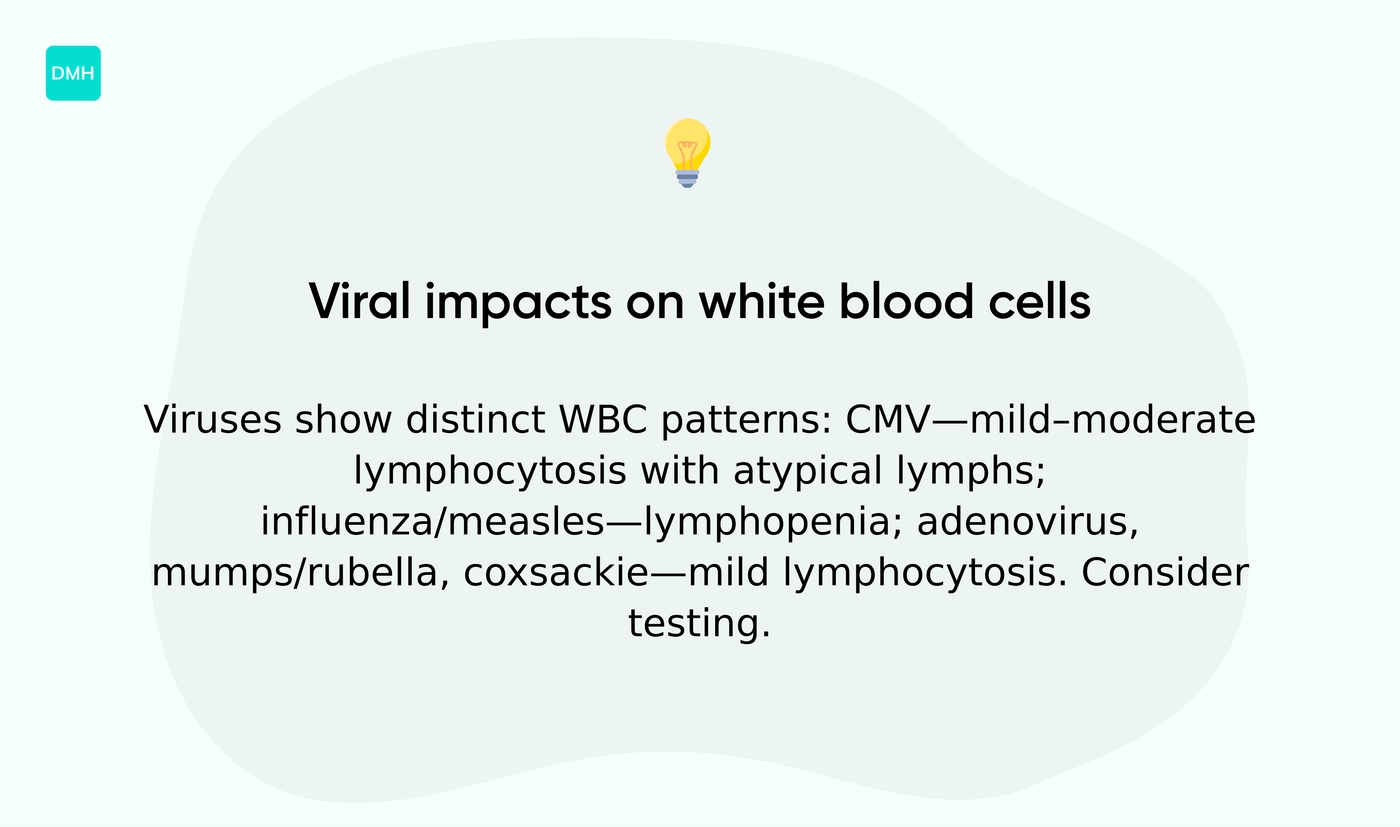
- Cytomegalovirus (CMV): Typically causes mild to moderate lymphocytosis with atypical lymphocytes present. Total WBC often stays near normal or rises slightly.
- Herpes viruses (HSV, VZV): Counts vary. Localized infection may not change WBC. Systemic disease can produce modest lymphocytosis.
- Influenza: Often causes normal WBC or transient lymphopenia rather than lymphocytosis, especially early in illness.
- Measles: Tends to cause lymphopenia and immune suppression, not marked lymphocytosis.
- Mumps and rubella: Can cause mild lymphocyte rises during recovery.
- Adenovirus: May cause moderate lymphocytosis, especially in children.
- Coxsackie virus: Enteroviral patterns often show lymphocyte predominance as fever declines.
Noting these patterns helps you narrow likely causes. If you see unexplained lymphocytosis, ask your clinician about targeted viral testing.
Viral infections typically cause lymphocytosis. Viruses infect cells and trigger the adaptive immune system, which drives T and B cell expansion.
The innate neutrophil response targets extracellular bacteria, not intracellular viruses, so neutrophils stay lower in many viral illnesses.
We note that a lymphocyte-predominant differential points toward viral causes. An absolute lymphocyte count above about 4,000/µL in adults meets common definitions of lymphocytosis.
Spotting lymphocytosis in viral infection and atypical lymphocytes, as in infectious mononucleosis with WBC often 12,000–20,000/µL, speeds correct testing.
You should use the CBC differential to guide tests and treatment. Lymphocyte predominance favors viral PCR or serology. Neutrophilia with a left shift favors bacterial cultures and empiric antibiotics.
Check the differential and follow targeted testing for a clear diagnosis.
What WBC count level indicates infection?
A WBC count strongly indicates whether an infection is likely and how severe it may be. Normal adult values run 4,000–11,000 cells per microliter, which is the normal WBC range.
Counts from 11,000–15,000 often show a mild infection or local inflammation. Levels between 15,000–25,000 usually point to a moderate bacterial infection with a neutrophil rise.
Counts above 25,000 suggest a severe infection or sepsis and demand urgent evaluation. Very high counts, such as over 50,000, can reflect a leukemoid reaction or hematologic disease.
We advise you to combine numbers with symptoms. If you have fever, fast heart rate, low blood pressure, or confusion and a WBC over 20,000, get immediate care.
A rising WBC with systemic signs should never wait for a routine visit. Learn more about leukocytosis for detailed context.
You should call your clinician now if your WBC is high and you feel worse. Seek immediate care.
Why are neutrophils high during bacterial infection?
Neutrophils rise because they act as the immune system’s rapid bacterial fighters.
These cells patrol blood and tissue. Bone marrow holds a reserve and releases cells fast. Neutrophils move toward bacterial signals, engulf microbes, and kill them with enzymes and reactive oxygen.
A normal white blood cell count runs about 4,000–11,000 cells/µL, with neutrophils making up roughly 50–70% of that. Bacterial infections often push total WBC into the 12,000–20,000 range with a clear neutrophil predominance.
Doctors call this pattern neutrophilia or a left shift. Lab reports show more immature neutrophils when demand spikes. That helps clinicians decide if an infection is bacterial and if antibiotics may help.
We advise checking a CBC with differential when you have fever, fast heart rate, or worsening symptoms.
You should share results with your clinician. Persistent counts above 15,000 cells/µL, or signs of sepsis, need urgent care. Learn more about neutrophils to understand test reports and next steps.
Early testing and clear follow-up speed proper treatment. Quick action limits complications and guides targeted therapy.
Fungal and parasitic infections that raise WBC
Parasitic worms often raise eosinophil counts. Helminths invade tissues and trigger a Th2 immune response that boosts eosinophil production.
Common culprits include Ascaris lumbricoides, Strongyloides stercoralis, hookworms, Schistosoma, and Toxocara.
Parasite infections typically show absolute eosinophil counts above 500 cells/µL. Counts over 1,500 cells/µL indicate marked eosinophilia and often point to heavy or tissue-invasive infection.
Tissue-invasive fungi produce different patterns. Invasive Candida and Aspergillus usually cause neutrophilia or variable leukocytosis. Severe fungal disease in neutropenic patients can present with low WBC despite active infection.
Protozoal infections vary. Toxoplasma can cause lymphocytosis. Malaria often causes low or normal WBC, though secondary bacterial infection may raise counts.
Eosinophils rise because parasites expose antigens that drive IgE and IL-5 signaling. Eosinophils attack large parasites and help clear tissue larvae.
Clinicians sometimes overlook mild eosinophilia on routine CBCs. Have you checked your eosinophil count lately? If you wonder which infections cause high white blood cell count, watch for eosinophilia with travel history or eosinophil-linked symptoms.
Learn more about eosinophils and testing thresholds. Watch for patterns and test accordingly.
You might also like: How To Sleep With Pneumonia
Is WBC very high in sepsis?
Sepsis often produces a very high WBC that signals a severe immune reaction. Massive neutrophil release drives counts up fast.
The bone marrow pumps out immature cells. Bacterial load and cytokines amplify the response.
Normal WBC ranges sit around 4,000–11,000 cells/µL. Sepsis commonly pushes counts above 15,000–30,000 cells/µL. Values over 50,000 suggest a leukemoid reaction.
Some patients show low counts instead, and low WBC in sepsis often means worse outcomes. Watch for fever, low blood pressure, fast breathing, and altered mental state.
A WBC above 25,000 with organ dysfunction needs immediate IV antibiotics and ICU evaluation. Quick action saves lives.
When you see a very high WBC with signs of shock, treat it as severe systemic infection. If you feel alarmed, seek emergency care without delay.
Takeaway: very high white blood cell counts often reflect severe bacterial infection and urgent treatment. Act fast and get professional assessment.
You’ll also like: Is A Sinus Infection Contagious? All Questions Answered

How long does WBC stay high after an infection?
WBC counts usually return to normal within one to three weeks after an infection clears.
Bacterial infections that cause high white blood cell count often produce a quick neutrophil surge. Mild bacterial cases drop to baseline in 7–10 days.
Viral infections tend toward lymphocytosis and normalize in 7–14 days. Severe infections or sepsis can keep values elevated for four to six weeks or longer.
The speed of recovery depends on three things: how severe the infection was, how fast treatment worked, and your immune health. A short course of antibiotics often cuts the stimulus within days. Deep abscesses, bloodstream infection, or delayed treatment prolong the rise.
Repeat testing at one to two weeks gives useful reassurance. I’ve seen counts fall from 18,000/µL to normal within ten days after effective therapy.
We recommend a follow-up CBC within 7–14 days for most patients.
Seek further evaluation when a high white blood count persists beyond four weeks, when counts exceed 20,000/µL, or when fever and other symptoms continue. Watch for a neutrophilia infection pattern after bacterial illness or for lymphocyte predominance after viral illness.
A single repeat test often clarifies the trend. Your doctor can order targeted tests if counts stay high.
Read also: Strep Throat Or Mononucleosis
Can you have an infection with a normal WBC count?
Yes, you can have an infection with a normal WBC count. Some infections don’t push total white cells above the usual 4,000–11,000 cells per µL.
Tests can miss early or localized infections, and some viral illnesses change cell types rather than the total.
Viral infections often cause lymphocyte shifts instead of a big rise in totals. Older adults and people on immunosuppressive drugs may not mount a strong white cell response.
Blood counts can be normal in early appendicitis, localized sinus infections, and in certain chronic infections. Clinicians should pair WBC with exam findings, CRP or procalcitonin, cultures, and targeted imaging to avoid missed diagnoses.
We advise you not to rely on WBC alone. If you have fever, pain, or persistent symptoms, seek clinical evaluation.
Read our guide on what causes high white blood cell count for context about typical patterns. Get examined, get the right tests, and treat based on the full clinical picture.
You might also like: CBC With Differential Values And Meanings
Educational notice: This content is provided for informational and educational purposes only and is not intended as medical advice. Always consult a qualified healthcare professional for medical concerns.