Yes, you can take too much vitamin C.
The risk comes mainly from supplements, not from eating oranges or bell peppers.
The tolerable upper intake level for adults sits at 2,000 mg per day, and going beyond that threshold often triggers uncomfortable side effects.
Most adults need only about 90 mg daily for men and 75 mg for women—a medium orange delivers roughly 70 mg.
High doses from vitamin C supplements can cause diarrhea, nausea, cramps, and in rare cases, more serious complications like kidney stones.
Supplements pack concentrated ascorbic acid that hits your system fast, unlike the gentle release you get from whole foods.
Can you take too much vitamin C?
Yes, you can absolutely take too much vitamin C, and the risk jumps when you rely on pills rather than produce. Food sources rarely push you into toxicity territory.
The adult tolerable upper intake level is 2,000 mg per day. Cross that line, and you’re more likely to deal with diarrhea and nausea.
Men need about 90 mg daily, women need about 75 mg, pregnant individuals need 85 mg, and breastfeeding folks need 120 mg. Children range from 15 mg for toddlers to 75 mg for older teens.
Upper limits by age are lower than the adult cap:
- Ages 1–3: 400 mg
- Ages 4–8: 650 mg
- Ages 9–13: 1,200 mg
- Ages 14–18: 1,800 mg
- Adults: 2,000 mg
Common supplement doses fall between 500 mg and 1,000 mg. Honestly, 1,000 mg gives little added benefit for most people. That dose stays below the upper limit but can still cause side effects in sensitive folks.
So what counts as excessive? Single doses over 2,000 mg often trigger loose stools. Chronic high doses raise the risk of kidney stones in vulnerable individuals.
The NIH offers a detailed breakdown of RDAs and limits, complete with full tables and citations. Keep your intake near the RDA for steady health.
Use supplements only for clear reasons, and work with a healthcare provider when you aim for high doses—that reduces the risk of vitamin C overdose and protects against common side effects.
What are the symptoms of vitamin C overdose?
Gastrointestinal symptoms
High single doses of vitamin C often trigger digestive distress. (Your stomach won’t thank you for that mega-dose.)
Major signs include digestive side effects such as diarrhea, nausea, and abdominal cramps. You may also see vomiting, heartburn, and stomach bloating.
Have you ever wondered if you can take too much vitamin C? The answer is yes. These symptoms are common after single doses above the tolerable upper intake level of 2,000 mg.
If symptoms persist, stop the supplement. Split doses across the day, stay hydrated, and contact your healthcare provider for advice.
Excess vitamin C can harm the kidneys, especially in people with existing kidney issues.
High doses increase urinary oxalate. Oxalate can bind calcium and form stones in the urinary tract—not a pleasant experience.
People with prior kidney stones face a higher recurrence risk from high-dose vitamin C supplements. This risk links directly to greater urinary oxalate excretion.
Patients with chronic kidney disease clear oxalate more slowly and may retain it, which raises the chance of worsening kidney function. The tolerable upper intake for adults is 2,000 mg per day, and doses above that push oxalate output and heighten stone risk.
Rare reports tie extreme oral or IV vitamin C doses to kidney failure in vulnerable people. If you have kidney disease or a history of stones, avoid megadoses of vitamin C.
If you take supplements, choose moderate amounts, split doses, stay well hydrated, and ask your nephrologist about safe vitamin C dosing for your case.
Can you take too much vitamin C when you have hereditary hemochromatosis? Absolutely—it raises iron stores and causes iron overload risks.
People with G6PD deficiency face red blood cell breakdown from oxidative stress. High vitamin C doses can trigger hemolytic anemia in these patients.
Large vitamin C doses, especially megadoses above 2,000 mg daily, can alter blood glucose tests. Some meters show falsely high results while others show low results depending on device chemistry, which can seriously affect diabetes care and monitoring.
Its recommended avoiding high-dose supplements if you have these conditions. Talk with your clinician about safe doses and accurate testing plans. I’d say food sources beat megadoses over 2,000 mg for most people.
Neurological and systemic effects
People often complain of neurological and systemic signs like headaches, flushing, and dizziness after very high vitamin C intake.
High intakes can cause sleep disruption. Insomnia and daytime tiredness happen at very high doses such as 6 grams daily or more. Migraines may start or worsen at that level.
Some patients describe lightheadedness and facial flushing that last hours. You may notice reduced concentration and persistent fatigue.
These are common vitamin C overdose signs tied to supplements rather than food.
Can you take too much vitamin C? Taking more than 6 g/day risks neurological harm. If you experience severe headaches, dizziness, or insomnia, stop the supplement and see your clinician. Testing can rule out other causes and check kidney function.
Is 1000 mg or 2000 mg of vitamin C per day too much?
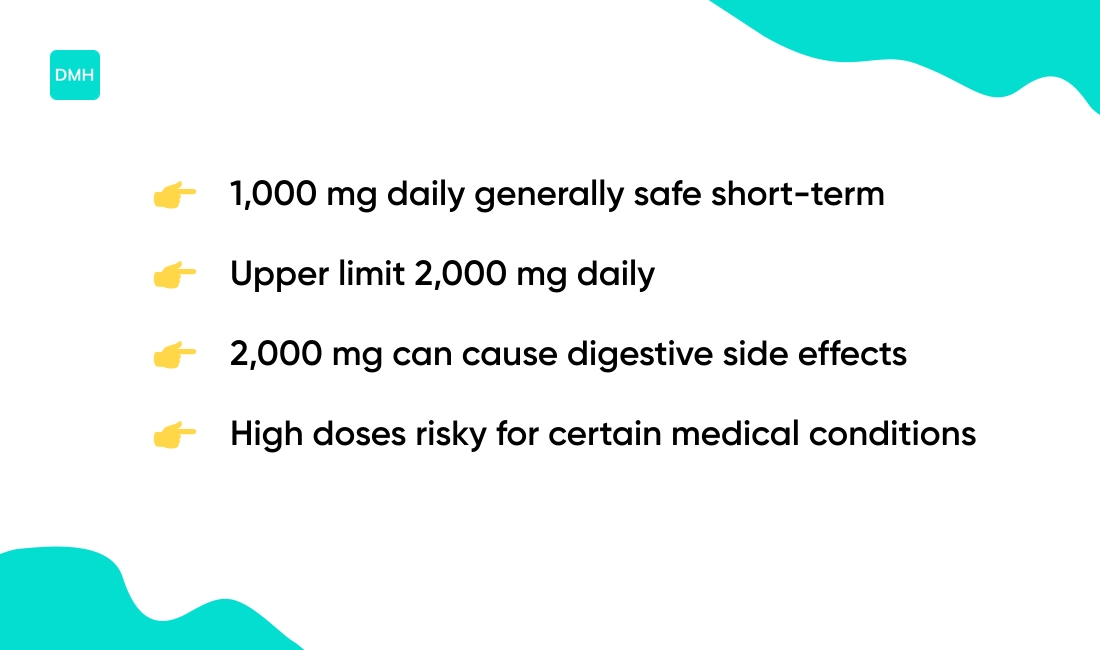
1,000 mg of vitamin C daily is generally safe for most adults. It sits well below serious risk levels for short-term use.
The tolerable upper intake for adults is 2,000 mg per day—that figure marks the limit where side effects rise.
I really think 1,000 mg works for people who want extra immune support during a cold. My experience shows mild benefits without major side effects for short periods.
Hitting 2,000 mg daily can cause diarrhea, nausea, and stomach cramps. Long-term intake at or above that level raises the chance of kidney stones in susceptible people.
People with hemochromatosis, kidney disease, or G6PD deficiency should avoid high doses. We advise medical review before you exceed the upper limit.
If you take powdered packets or multiple tablets, check how that adds up. See our guide on how many Emergen-C packets a day for math and safety tips.
Vitamin C overdose is rare from food—supplements make overdose possible.
Risks of megadosing and high-dose vitamin C
We advise caution with megadoses of vitamin C. Doses above the tolerable upper intake level of 2,000 mg per day raise real safety concerns.
Dietary vitamin C comes with absorption limits. Your gut reduces uptake when you eat fruit or vegetables, which makes food far safer than pills.
High supplements can cause vitamin C toxicity. Expect diarrhea, nausea, abdominal cramps, and heartburn at large single doses. Large ongoing doses can raise urinary oxalate and increase risk of kidney stones.
People with iron disorders may face iron overload from high vitamin C. Blood tests can show false glucose results after big doses. Some reports link multi-gram daily doses to headaches, insomnia, and fatigue.
Long-term high intake may stress kidneys and interfere with certain medicines. If you have chronic kidney disease or a history of stones, you expose yourself to greater harm with megadosing.
Compare products like Airborne vs Emergen-C to check label milligrams per serving before you take multiples. Plus, most people get enough vitamin C from a balanced diet or modest supplements.
If you want reliable guidance, read the Mayo Clinic and talk with your healthcare provider about safe doses for you.
Who should avoid high doses of vitamin C?
High-dose vitamin C can harm certain people. Supplements often push intake past the tolerable upper intake, which raises specific risks for vulnerable groups.
| Condition | Why Avoid High Doses |
|---|---|
| Hemochromatosis | Vitamin C increases iron absorption, speeding organ damage |
| G6PD deficiency | Large doses may trigger hemolysis |
| Thalassemia & sickle cell disease | Involve iron handling and hemolysis; extra vitamin C worsens complications |
| Kidney stone history | High vitamin C boosts urinary oxalate, raising stone risk |
| Chronic kidney disease | Poor kidney function reduces clearance, leading to buildup |
| Diabetes | High vitamin C can interfere with glucose meters and lab tests |
| Post-angioplasty patients | High-dose antioxidants can affect healing and interact with medications |
We advise caution with doses above 1,000–2,000 mg per day for people in these groups. A quick consult with your clinician prevents avoidable harm.
If you have one of these conditions, stop high-dose vitamin C until you get tailored advice.
Can you get too much vitamin C from food?
Food-only vitamin C toxicity is extremely rare. Your body absorbs and clears vitamin C quickly.
Absorption falls as intake rises—the gut limits how much you absorb. Excess leaves in urine.
Adults need about 75–90 mg per day. The tolerable upper intake level sits at 2,000 mg for adults.
Supplements deliver concentrated doses fast, which raises the risk of a vitamin C overdose compared with food. A medium orange contains about 70 mg. You’d need roughly 30 oranges to reach 2,000 mg from whole fruit. (Good luck with that!)
Cooking lowers vitamin C in many vegetables, reducing the chance of excess from meals. A food-first approach keeps your intake steady and safe—you get vitamins, fiber, and other nutrients together.
We recommend choosing whole food sources over high-dose pills. If you consume fortified drinks, see our guide on how many vitamin waters can you drink a day for context.
Supplements often contain 500–1,000 mg per tablet. Taking several tablets a day can push you above the upper limit.
If you have kidney disease, a history of kidney stones, hemochromatosis, or G6PD deficiency, consult your clinician before high doses. Stop supplements and seek care if you get severe diarrhea, persistent nausea, or kidney pain.
You’ll also like: What Vitamin Is Good For Weight Loss
How to reduce side effects from high-dose vitamin C
We recommend simple steps to limit vitamin C side effects from high-dose supplementation.
Can you take too much vitamin C? Vitamin C overdose happens with supplements rather than food.
Reduce your dose. Aim below the tolerable upper intake level of 2,000 mg per day to cut diarrhea and nausea risk.
Divide doses daily. Split large totals into smaller amounts. For example, break 2,000 mg into four 500 mg doses spaced through the day.
Take vitamin C with food to slow absorption and ease the stomach. Food lowers heartburn and upset stomach.
Choose buffered or time-release ascorbate, such as calcium ascorbate, if you have stomach sensitivity. These forms reduce acidity and may limit side effects.
Stay well hydrated. Drink water throughout the day to help flush oxalate and lower the chance of kidney stones.
Stop high doses if symptoms persist. Contact your healthcare provider for persistent diarrhea or severe abdominal pain. Seek urgent care for blood in urine.
Tell your provider if you have kidney disease, hemochromatosis, or G6PD deficiency so they can order tests for oxalate or iron overload.
In my opinion, the easiest, safest steps are lowering dose, splitting doses, and choosing buffered forms. Try changes for one week and note whether symptoms improve.
Read also: Prenatal Vitamin Mechanism Of Action
Vitamin C safety during pregnancy and special conditions
Keep your vitamin C near recommended amounts during pregnancy and breastfeeding. That reduces risk and supports fetal growth.
The pregnancy daily dose sits at about 85 mg per day for pregnant adults and 120 mg per day while breastfeeding. The tolerable upper intake level for adults is 2,000 mg per day.
High supplemental doses above the upper limit can cause diarrhea, nausea, and stomach cramps. Very large doses raise urinary oxalate and increase the chance of kidney stones in susceptible people.
High dose interactions may alter lab results and change how some drugs work. High vitamin C can boost iron absorption, skew glucose meters, and interact with certain cancer treatments or blood thinners.
If you take warfarin, chemotherapy, or have kidney disease, talk to your clinician before using high doses.
Most excess vitamin C is water soluble and leaves the body in urine within about 24 hours for most people. Persistent high intake can keep levels elevated and raise side effect risk. Pregnant people should stick close to RDA values unless a clinician advises otherwise.
We recommend avoiding megadoses during pregnancy and breastfeeding and choosing food sources plus prenatal vitamins. Read more practical guidance on Emergen-C while pregnant before taking high-dose supplements.
You might also like: How Long To Rid Body Of Vitamin B6 Toxicity
Educational notice: This content is provided for informational and educational purposes only and is not intended as medical advice. Always consult a qualified healthcare professional for medical concerns.