Appendicitis pain typically feels like a sudden ache that starts around your belly button or middle abdomen.
Over several hours, that discomfort shifts to the lower right belly, becoming sharper and more intense.
The pain usually worsens with coughing, walking, deep breathing, or any jarring movements.
Have you ever wondered why the pain moves?
Well, as the appendix inflames, the sensation becomes more focused and harder to ignore.
What does appendicitis pain feel like
Pain often starts as a dull, cramping ache in the navel area. The sensation feels vague and hard to pinpoint at first.
Over several hours the discomfort shifts to the right lower abdomen. It becomes more focused and sharper as the appendix inflames.
The pain steadily becomes worse rather than easing. Movement, coughing, sneezing, or any jolt amplifies the discomfort significantly.
You may notice a change in how you walk. Standing upright or taking deep breaths can feel painful. (It’s the body’s way of protecting the inflamed area.)
Nausea and a mild fever often appear alongside the pain. Loss of appetite is common too.
What does appendicitis feel like boils down to the shift from a central dull ache to a steady, sharp pain on the right side near McBurney’s point.
Spotting that shift is the most useful early sign. It lets you seek care before complications develop.
If the pain worsens over hours, or you can’t sit or stand comfortably, go to the emergency room without delay.
Where is appendix pain located
Most appendicitis pain sits in the right lower abdomen near McBurney’s point.
McBurney’s point lies about one-third of the distance from the right anterior superior iliac spine to your belly button. Pain often begins near the belly button and later concentrates at that spot.
The pain sharpens over hours and worsens with movement, coughing, or jarring.
Some people feel pain higher in the belly under the ribs. Back pain or pelvic discomfort can happen if the appendix lies toward the back or pelvis.
Pregnancy pushes the appendix upward as the uterus grows. That shift makes pain appear under the right rib cage in later pregnancy.
Children and older adults often show atypical patterns and vague pain. Trust your instincts if pain moves or becomes intense with fever or vomiting.
Seek urgent care for sudden severe pain, rising fever, or inability to pass gas.
Early signs of appendicitis
What are the symptoms of appendicitis
Appendicitis often starts as dull pain near your belly button. It moves to the lower right abdomen.
What does appendicitis feel like? Recognizing symptoms helps you act fast.
- Nausea and vomiting
- Low-grade fever (99-102°F)
- Bloating
- Constipation or diarrhea
- Inability to pass gas
- Abdominal swelling
Early signs include mild discomfort and loss of appetite. Nausea may come before vomiting. Fever tends to be low-grade at first.
Symptoms often worsen over 12 to 48 hours. Movement, coughing, or jarring can increase pain. These signs cover appendicitis symptoms in adults and children, though presentations vary.
Our team advises urgent evaluation if you have several of these signs. Seek ER care for severe pain or inability to pass gas.
What is rebound tenderness in appendicitis
Rebound tenderness is a physical sign clinicians check for when you have lower belly pain.
The examiner presses gently over the right lower belly and releases quickly. A sharp increase in pain on release suggests irritation of the abdominal lining.
This sign points to peritoneal irritation near the appendix. It often locates pain at lower right abdomen areas like McBurney’s point. It adds weight to other appendicitis symptoms such as nausea, vomiting, low-grade fever (99–102°F), and loss of appetite.
We treat rebound tenderness as a useful clue rather than a diagnosis. This exam helps decide whether to image or refer urgently. If you feel that sharp rebound pain, seek prompt medical evaluation and avoid pressing the area repeatedly.
Appendicitis symptoms in women and special populations
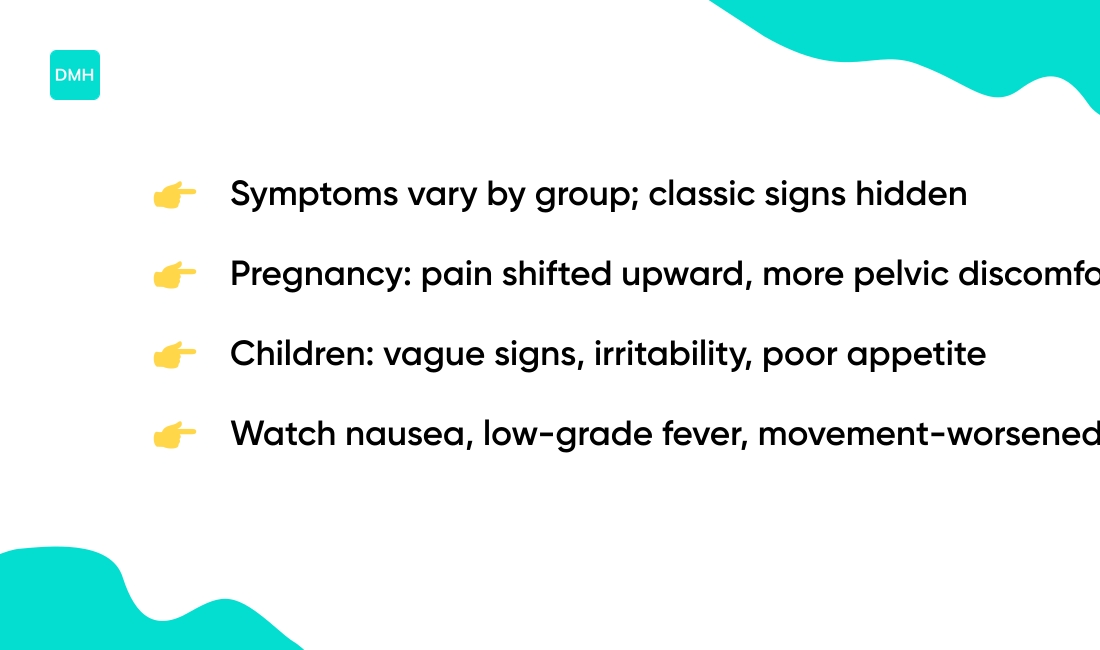
Symptoms differ across groups and can hide classic signs. Here’s the thing—knowing these differences can be lifesaving.
Pregnant women report higher pain and pelvic discomfort because the growing uterus shifts the appendix upward. Pain may appear higher than the typical lower right spot.
Children display vague signs: irritability, poor appetite, fever, and belly pain that doesn’t localize. Toddlers may refuse to walk or cry when moved.
Elderly patients may show milder pain, confusion, or reduced appetite instead of sharp pain. Delayed diagnosis increases risk of a ruptured appendix.
Caregivers should treat behavior and appetite changes as warning signs. Ask for imaging if symptoms persist or worsen.
Watch for nausea, vomiting, bloating, and low-grade fever between 99–102°F with pain that worsens on movement or coughing. These are key appendicitis symptoms to act on.
How to tell appendicitis from other conditions
Appendicitis vs gas pain
Quick recognition of red flags makes all the difference.
| Feature | Appendicitis | Gas Pain |
|---|---|---|
| Pain location | Begins near belly button, shifts to lower right | Moves around, not fixed |
| Duration | Worsens over 12-48 hours | Comes and goes, eases after passing gas |
| Fever | Low-grade fever present | Rarely causes fever |
| Relief | No relief from passing gas | Relief after passing gas |
Appendicitis pain location: pain often begins near the belly button. It shifts to the lower right and grows sharp over hours.
Appendicitis pain tends to worsen over 12 to 48 hours. If gas wakes you at night, try simple relief methods for stomach aches.
Presence of fever: appendicitis often brings low-grade fever, nausea, and vomiting. Gas rarely causes fever or persistent vomiting.
You should seek care when pain stays constant, worsens with movement, or you can’t pass gas and develop fever. Quick evaluation prevents a ruptured appendix.
Appendicitis vs stomach flu or food poisoning
Appendicitis pain starts near your belly button and shifts to the lower right abdomen. It sharpens over several hours and worsens with movement, coughing, or jarring.
Stomach flu and food poisoning produce diffuse cramping across the belly.
Vomiting and diarrhea begin early and often occur before pain. Cramps may ease after vomiting or passing stool.
A useful clue is timing: appendicitis pain usually precedes vomiting. Gastroenteritis tends to cause vomiting first. (That’s a key difference right there.)
Look for low-grade fever and inability to pass gas. Localized tenderness at McBurney’s point signals appendicitis.
We recommend urgent evaluation. Seek care for steady right lower quadrant pain, nausea, or fever. Any steady shift of pain toward the right needs attention.
If pain builds over hours or spreads across the belly, go to the ER. Seek care within 24 hours for worsening symptoms.
Appendicitis pain vs menstrual cramps
Compare pain location and timing to tell them apart.
Appendicitis often starts near the belly button. Pain moves to the lower right abdominal area and grows sharp over hours. Classic appendix pain location is at McBurney’s point.
Menstrual cramps cause central pelvic pain and match your cycle. They feel crampy or aching as bleeding begins.
Appendicitis pain worsens with movement, coughing, or jarring. You may have fever, nausea, vomiting, or loss of appetite. Those are common appendicitis symptoms and signs of appendicitis.
Steady right-sided pain with fever or vomiting needs urgent evaluation. If pain intensifies or spreads, go to the ER without delay.
You might also like: What Causes High White Blood Cell Count
What are the symptoms of a ruptured appendix
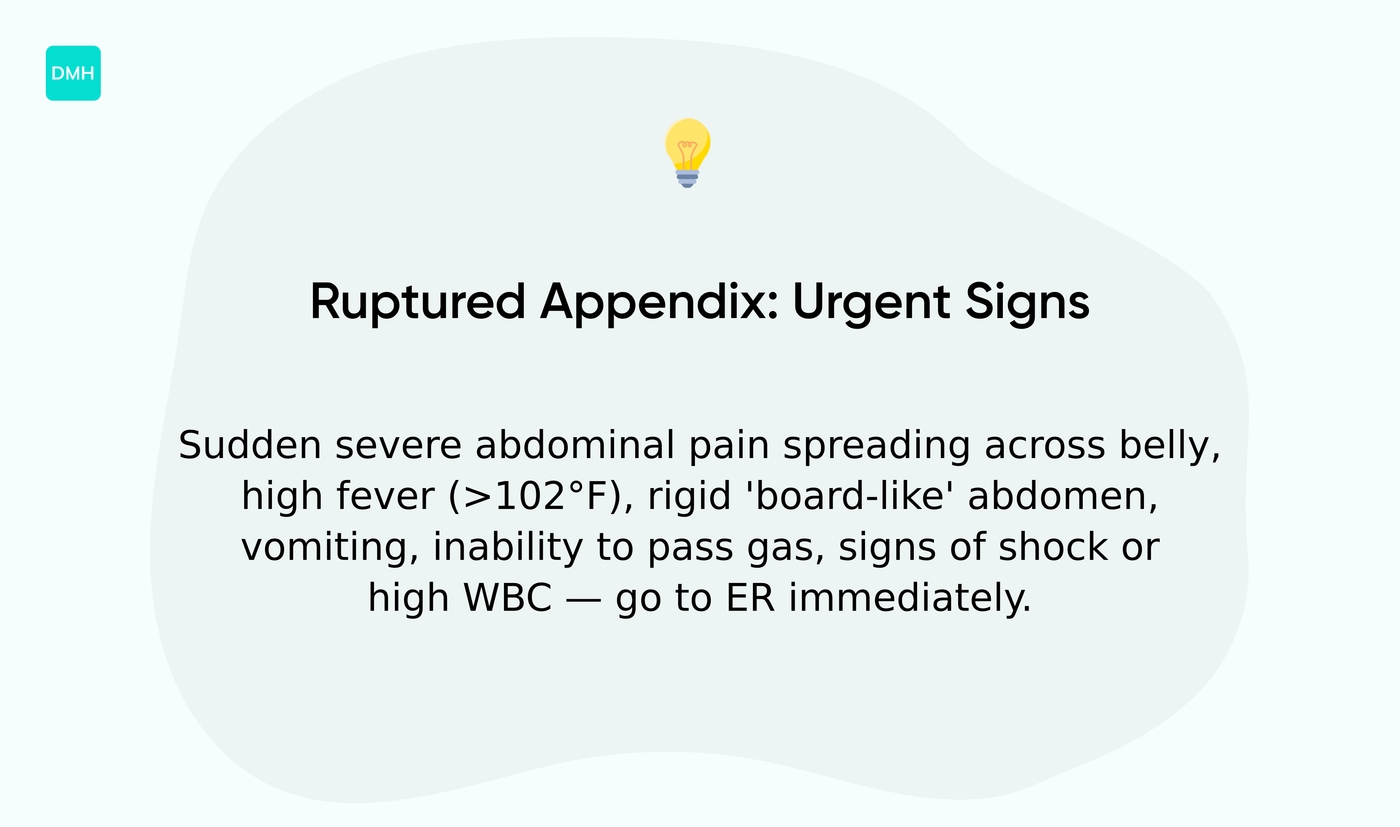
A ruptured appendix causes a sudden, severe infection in the belly. Pain spreads across the abdomen and becomes constant and sharp.
Movement, coughing, and deep breaths make pain worse.
Sudden severe pain often follows rising fever. You may develop a high temperature above 102°F, a rapid heart rate, nausea and vomiting, and trouble breathing. The belly may feel hard and very tender.
A rigid, board-like abdomen is a red flag. Bacteria in the abdomen will cause systemic signs.
You might faint, feel dizzy, or look pale and clammy from low blood pressure and shock. Labs often show a high white blood cell count that points to infection.
If you ask what does appendicitis feel like after rupture, expect severe pain, fever, and a sense that something is very wrong. Seeking care fast will lower the risk of severe complications.
Rigid belly plus persistent vomiting or an inability to pass gas means you should go to the emergency room now. Read the Cleveland Clinic overview for more clinical details.
We urge you to treat worsening abdominal pain as urgent. Call emergency services or go to the ER immediately when these signs appear.
You might also like: What Is A Dangerous White Blood Cell Count
When to go to the ER for abdominal pain
Go to the ER for persistent sharp pain in the lower right abdominal pain. Seek help if nausea and repeated vomiting follow the pain.
Get urgent care for a fever above 99°F or a fast heartbeat. Find care if you can’t pass gas or have abdominal swelling.
Pain that worsens over hours or increases with movement shows progression. Look for these signs that point to appendicitis or a possible rupture:
- Steady pain that starts near the belly button and localizes right
- Loss of appetite with nausea and vomiting
- Low-grade fever that climbs over time
- Rebound tenderness near McBurney’s point
- Inability to pass gas or have a bowel movement
Rapid evaluation lowers the chance of a ruptured appendix. Only about half of cases show the exact classic presentation, so any persistent lower right abdominal pain with nausea, fever, or appetite loss warrants urgent evaluation.
If your symptoms match these signs, seek immediate care within 24 hours. If doctors decide you need admission, learn what to expect during an overnight hospital stay.
Don’t eat, drink, or use painkillers, laxatives, antacids, or heating pads. They can mask symptoms or complicate diagnosis.
We urge you not to wait with worsening abdominal pain. If you feel unsure, call emergency services or visit the nearest ER right away.
You’ll also like: How to Get Rid of Heartburn Easily
Educational notice: This content is provided for informational and educational purposes only and is not intended as medical advice. Always consult a qualified healthcare professional for medical concerns.