No single food lowers blood sugar immediately like medication does.
But here’s the thing — certain foods can help.
Foods high in fiber, protein, and healthy fats slow carbohydrate absorption and reduce post-meal spikes.
Choose low glycemic options and pair them with protein to slow glucose release after a meal.
What foods lower blood sugar immediately
Vegetables, beans, nuts, seeds, and fatty fish work well because they slow digestion and improve satiety. Small snacks that combine protein and fiber produce measurable effects within 30 to 60 minutes for many people.
Examples? A hard-boiled egg with an apple, Greek yogurt with chia seeds, or a handful of almonds with berries. Pay attention to portion sizes and timing.
Eating protein or fiber before a high-carb meal reduces peak glucose.
We recommend testing one change at a time and tracking your numbers for a week to see what works. Next step: try one pairing at your next meal and check your levels two hours afterward to measure the impact.
Best foods to lower blood sugar quickly
Broccoli and leafy greens
If you’re searching for what foods lower blood sugar immediately, start with broccoli and leafy greens. Broccoli packs fiber and antioxidants that slow glucose absorption and reduce oxidative stress.
One cup of chopped broccoli provides about 2–3 grams of fiber and helps blunt post-meal rises. Kale supplies flavonoids that reduced glucose spikes in a study of 42 adults who consumed 7–14 g with high-carb meals.
Pairing these vegetables with starchy foods cuts peaks. Adding a cup of broccoli plus 7–14 g of kale powder to rice or bread gives measurable benefit. Track your glucose for two hours after the meal to see the effect.
Seafood for blood sugar control
Seafood ranks as a top choice to stabilize blood sugar. Fish and shellfish provide concentrated protein and healthy fats that slow digestion.
A 3.5-ounce serving of salmon delivers about 1.5 g of omega-3s. Studies link omega-3s and protein to smaller post-meal glucose rises.
Pairing seafood with non-starchy vegetables limits glucose surges. Pick grilled fish, shrimp, or mussels for steady energy after meals.
Swap a starchy side for a fish portion at lunch to test the effect. Aim for 20 to 30 grams of protein per meal — a 3.5-ounce fish portion gives roughly 20 grams.
Try a simple plate: 3.5-ounce salmon, large salad, and a small whole grain.
Nuts and seeds
Nuts and seeds lower post-meal blood sugar in people with type 2 diabetes. They supply healthy fats, protein, and fiber that slow carbohydrate absorption and blunt glucose rises.
We reviewed trials showing almonds, cashews, pistachios, peanuts, chia, and flaxseed cut post-meal glucose by about 10–25% in controlled tests. The effect shows up within two hours after a meal.
A small portion works best. Try 1 ounce of mixed nuts or 1 tablespoon of ground flax or chia with meals. You’ll feel fuller and see smaller spikes.
Use nuts as part of snacks to lower blood sugar. Pair a handful with berries or a hard-boiled egg. If you eat peanuts or peanut butter, read more on peanut butter digestion for tips.
Beans and lentils
Beans and lentils blunt post-meal glucose spikes. They supply soluble fiber, magnesium, protein, and resistant starch.
These nutrients produce slow carb absorption and reduce peak glucose after rice.
Studies show adding legumes to rice cut post-meal glucose by about 20% in controlled trials. Pairing rice with beans delivers steadier levels.
Legumes offer reliable blood sugar benefits when you swap portion sizes. Read our note on are chickpeas keto to see how chickpeas fit lower-carb plans.
Eat about a half cup of cooked beans per meal to gain fiber and protein. That serving supplies fiber and resistant starch that delay digestion and improve glucose responses. Try beans to lower blood sugar by replacing some rice on your plate today.
Pumpkin and okra
Pumpkin and okra lower post-meal blood sugar when you eat them with starchy foods. A 2018 study showed pumpkin polysaccharides and pumpkin seeds cut post-meal blood sugar by up to 35%.
Pumpkin components slow digestion and reduce rapid glucose entry into the bloodstream. Okra supplies viscous, soluble fiber that traps starch and slows absorption. That combination smooths glucose curves after a heavy meal.
Adding a half-cup of cooked pumpkin or two tablespoons of roasted pumpkin seeds to carb-heavy plates delivers measurable benefits. Try stewed pumpkin with rice or sliced okra with bread.
Track your glucose for one meal to see the effect.
Use a meter to compare readings before and one hour after eating. Small changes like this let you choose the best foods that lower blood sugar fast and reduce peaks.
Which fruits lower blood sugar fast
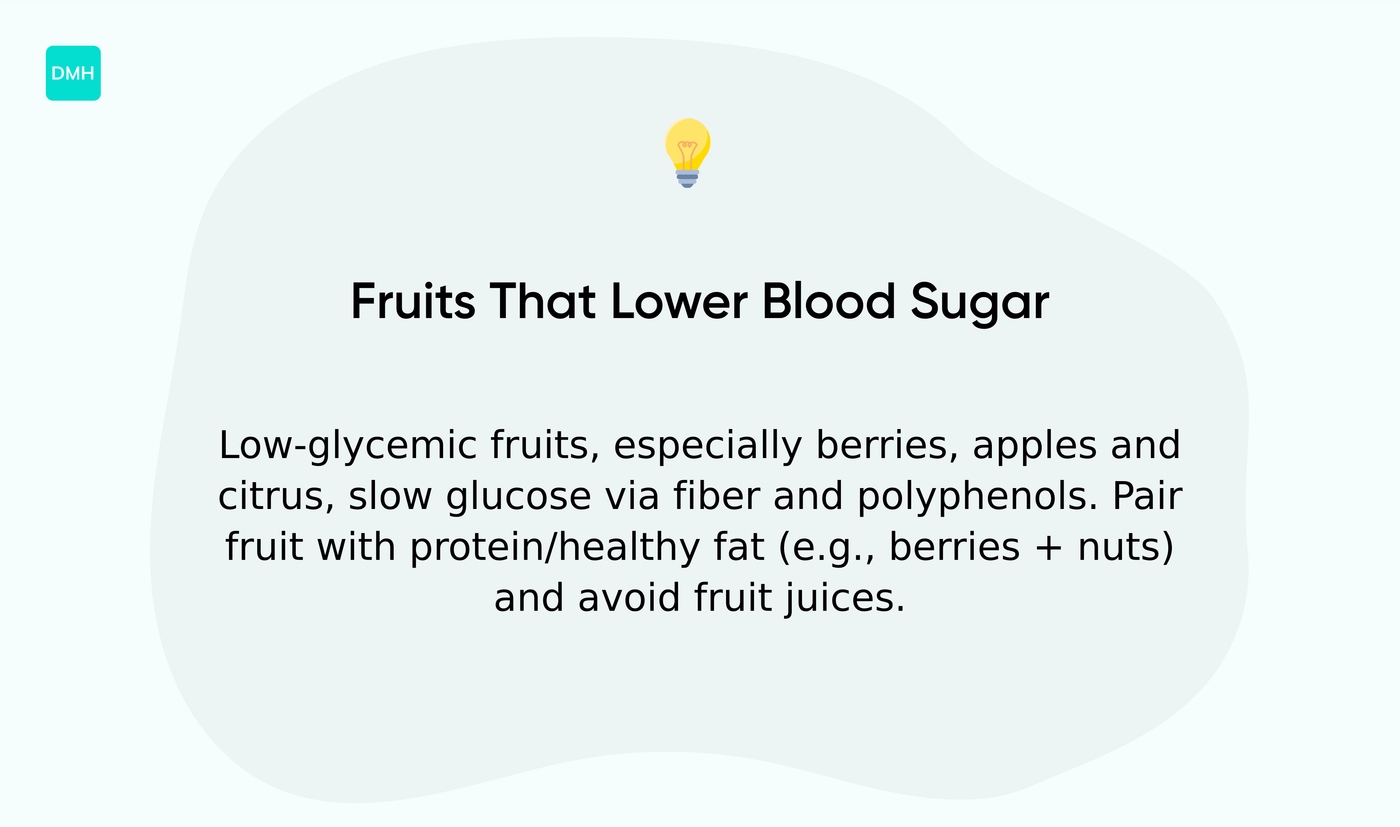
Low glycemic fruits help lower blood sugar fast because they slow glucose absorption with fiber and antioxidant compounds.
Berries rank highest. Raspberries deliver about 8 g fiber per cup, blueberries give roughly 4 g, and strawberries supply near 3 g. These numbers blunt post-meal spikes and cut inflammation through polyphenols.
Oranges and other citrus offer vitamin C and 3–4 g fiber per fruit. Apples provide about 4 g fiber and pectin that slows glucose release. These choices appear on many low glycemic foods list recommendations.
We suggest pairing fruit with protein or healthy fat to sharpen the effect. A cup of berries with 10–15 g nuts lowers the blood sugar rise more than fruit alone.
Have you tried combining fruit with protein? Berries work best for quick control for most people. A berry-plus-nuts snack after high-carb meals produces steadier fingerstick readings within 60–90 minutes.
Practical tip: reach for a cup of mixed berries or a medium apple with a tablespoon of nut butter when you want foods that lower blood sugar quickly. Avoid large fruit juices that remove fiber and can spike glucose.
Next step: try one fruit-plus-protein snack today and check your response to learn what works for your body.
What snacks lower blood sugar right away
Pair protein with fiber or healthy fat to lower blood sugar immediately. This combo slows digestion and cuts post-meal glucose spikes by about 20% in some studies.
If you’re searching for what foods lower blood sugar immediately, pick snacks that balance carbs with protein and fiber:
- Nuts with berries — 1 oz almonds and 1/4 cup berries. Fat and fiber slow sugar release.
- Greek yogurt and chia — 3/4 cup plain Greek yogurt plus 1 tbsp chia seeds for protein and fiber.
- Eggs and avocado — 1 hard-boiled egg with 1/4 avocado. Healthy fat keeps glucose steady.
- Apple slices with 1 tbsp peanut butter for a low-glycemic bite.
- Hummus with raw veg sticks for sustained energy and less spike.
Keeping portions modest helps most people avoid rebound highs after snacks. We recommend aiming for 150–250 calories per snack and pairing protein with fiber.
Read more lists of foods that lower blood sugar fast to expand your snack options.
How to use low glycemic foods to lower blood sugar
High fiber foods for blood sugar
High-fiber foods slow glucose and improve insulin sensitivity, giving steadier levels after meals. Beans, oats, whole grains, and non-starchy vegetables deliver soluble and resistant fiber that delays carb absorption.
Soluble fiber forms a gel in the gut, slows digestion, and trims post-meal spikes by about 10–30% in trials that replace refined carbs with legumes or oats.
Aiming for 7–15 grams of soluble fiber per meal produces measurable effects. Pairing a half-cup of lentils or a cup of steel-cut oats with protein cuts spikes fastest.
High fiber foods support gut health and insulin response while blood sugar control improves when you choose soluble fiber sources over processed carbs. Pick one high-fiber swap for your upcoming meal.
Protein foods for blood sugar control
Protein slows glucose and helps keep blood sugar steady. It delays stomach emptying and triggers a modest insulin response that blunts post-meal spikes.
Choose eggs, nuts, and seafood for quality protein and healthy fats. Aim for about 20–30 g of protein per meal to reduce post-meal rises.
Starting meals with protein slows sugar release. Pairing a boiled egg or a 3-ounce fish portion with bread or rice gives steadier readings.
Nuts work well as snacks — a palm-sized handful adds fat, fiber, and a protein boost that slows absorption. Add a palm-sized portion of protein to each meal and snack as a simple step to manage spikes.
A large egg provides about 6–7 g of protein, while a 3-ounce salmon fillet gives roughly 20 g.
Low carb foods for diabetics
Low-carb foods blunt post-meal blood sugar spikes. They cut available carbs and slow glucose entry into blood. Choose high satiety items that supply nutrients and steady energy:
- Non-starchy vegetables: leafy greens, broccoli, bell peppers.
- Lean proteins: fish, poultry, eggs, tofu.
- Healthy fats: avocado, olive oil, nuts.
- Nuts for blood sugar and seeds: almonds, chia, flax for fiber and fat.
- Low glycemic fruits in small portions: berries and green apples.
Aiming for 20–30 grams of carbs per meal works for many people with diabetes. Pairing protein with fiber calms spikes fastest — shoot for 5–10 grams of fiber per meal to slow absorption.
Actionable step: replace a cup of white rice with a salad, olive oil, and grilled fish at your upcoming meal to test the effect.
Does apple cider vinegar lower blood sugar immediately
Apple cider vinegar lowers post-meal blood sugar modestly. Small randomized crossover trials found a 10–34% post-meal glucose drop when vinegar was taken with or before high-carb meals.
Most studies used 1 to 2 tablespoons diluted in water about 10–20 minutes before the meal. Acetic acid slows gastric emptying and improves insulin sensitivity for a short period. Effects vary by dose and meal carbohydrate load.
Vinegar doesn’t act like insulin or a fast-acting drug for emergencies. If you use glucose-lowering medications, vinegar can increase hypoglycemia risk. Check glucose after trying it and talk with your clinician.
We recommend treating vinegar as part of a meal strategy with fiber and protein. Combining vinegar with low glycemic foods and protein foods for blood sugar control gives the most reliable benefit.
Try one tablespoon diluted in water before a carb-heavy meal and measure your response.
For context on vinegars and calories, read how many calories in balsamic vinegar. Use vinegar thoughtfully and track results rather than expecting an immediate cure.
You might also like: Foods to Avoid While Taking Amoxicillin
Does cinnamon lower blood sugar quickly
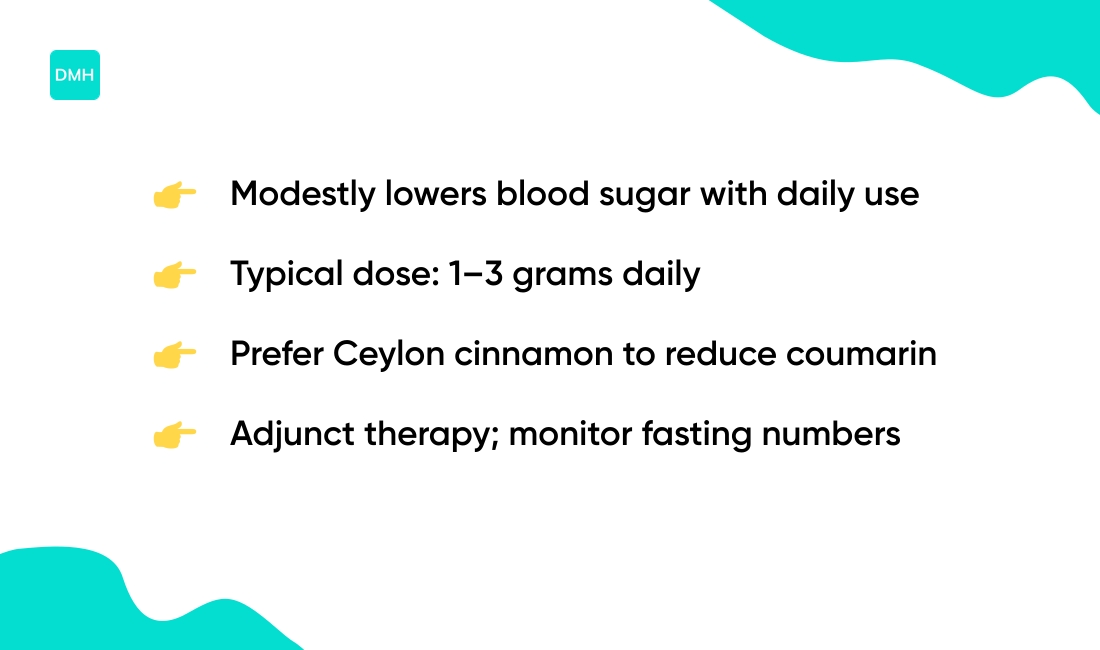
Cinnamon can modestly lower blood sugar when taken daily. Clinical trials link it to improved insulin sensitivity and lower fasting glucose.
Meta-analyses report fasting glucose drops of about 10–29 mg/dL and HbA1c falls up to 0.5% in some studies. Most trials used 1–6 grams per day, commonly 1–3 grams.
High intake of cassia cinnamon raises coumarin exposure and risks to the liver. Starting at 0.5–1 teaspoon per day balances benefit and low risk for many people. Prefer Ceylon cinnamon when you plan daily use — it contains far less coumarin.
Cinnamon works best as part of a meal strategy. Pair it with high fiber foods and protein:
- Sprinkle on oats or chia pudding.
- Stir into Greek yogurt with berries.
- Blend into smoothies with protein powder.
- Add to savory dishes like chili or curry.
If you have diabetes, use cinnamon as an adjunct not a replacement for medication. Check fasting numbers before and after four weeks.
Try one teaspoon daily for four weeks and monitor blood sugar.
Read also: Foods to Avoid While Taking Azithromycin
How to eat to lower blood sugar fast
Eating fiber and protein before carbs blunts blood sugar spikes. Clinical studies show adding protein and fiber can cut post-meal glucose by about 20–30%.
Pair non-starchy vegetables with a lean protein to slow digestion. Try salad with fish or eggs. Control portions of starchy foods to limit the glucose load — aim for a palm-sized serving of rice or potatoes.
Space meals to avoid stacking glucose from back-to-back plates. Allow four to six hours between larger meals. Combine snacks that include both fiber and protein to stabilize levels.
| Strategy | Action | Expected Effect |
|---|---|---|
| Start with fiber | Eat salad or beans first | Blunts initial glucose surge |
| Add protein | 20–30 g per meal | Slows digestion, reduces spike |
| Control portions | Palm-sized starch serving | Limits glucose load |
| Space meals | 4–6 hours apart | Avoids stacking glucose |
Lowering blood sugar happens faster when you reduce carb concentration on the plate and add fat or protein. Use low-glycemic choices like oats, beans, and most vegetables — these high fiber foods release glucose slowly.
Starting meals with salad or beans blunts the initial glucose surge. If spikes give you symptoms such as headaches, read our piece on sugar and headaches for more context.
Want step-by-step meal tactics? See practical tips at BSW Health. Pairing fiber with protein works best. Try this plan for one week and track your readings.
You might also like: Foods to Avoid While Taking Amox Clav