Health anxiety can produce symptoms that feel completely real—because they are.
Your racing heart, chest tightness, or tingling hands aren’t imagined.
They’re genuine physical reactions triggered by your nervous system’s alarm bells.
But here’s the tricky part: these sensations often mimic serious medical conditions, making it tough to know when to worry and when to breathe.
So, how do you tell the difference between anxiety and actual illness?
What is health anxiety and how does it create real physical symptoms
Health anxiety disorder means persistent worry about having a serious illness despite medical reassurance. The Anxiety and Depression Association of America notes it affects about 4–5% of people—though some experts believe the number may be higher.
When anxiety kicks in, your autonomic nervous system fires up. This fight-or-flight response floods your body with adrenaline and stress hormones. Those chemicals shift your heart rate, breathing, digestion, and blood flow in measurable ways.
That explains common physical symptoms of anxiety. You might experience palpitations, chest tightness, shortness of breath, dizziness, stomach pain, numbness, tingling, and fatigue. These sensations can mimic heart, lung, ear, gut, or neurologic problems—and they feel absolutely genuine.
Recognizing the biology behind these symptoms can lower your panic. Actually, naming a sensation as a stress reaction often helps people regain control. (It’s not all in your head—it’s in your nervous system.)
Want to know how to tell anxiety symptoms from real illness? Track the timing, link symptoms to stress, and test simple coping moves like paced breathing. Seek urgent care for sudden weakness, slurred speech, severe chest pressure, fainting, or any new, worsening sign. Routine medical checks remain important—just don’t skip them out of fear or overdo them out of worry.
Common physical symptoms of anxiety that mimic illness
Many physical symptoms stem from anxiety rather than illness. Understanding which sensations trace back to your nervous system can save you from unnecessary panic.
You may feel shortness of breath, chest tightness, or sharp chest pain. Palpitations make your heart race. Dizziness and lightheadedness can feel like you’re about to faint.
Digestive changes show up as stomach pain, nausea, or bowel shifts. You might feel intense fatigue despite rest. Pins and needles form as numbness and tingling. Chills or sweating can mimic fever.
Your brain floods your body with adrenaline during stress. This fight-or-flight response raises your heart rate and redirects blood flow. Muscles tense and breathing quickens. These shifts explain many somatic symptoms of anxiety.
Recognizing patterns helps you avoid needless panic. Watch for symptom spikes around stress, predictable durations, and relief from breathing or grounding techniques. Plus, panic attack symptoms differ from heart attack signs in pain type and duration.
If symptoms feel new, severe, or asymmetric, see a doctor right away. If tests clear medical causes, focus on anxiety treatment and lifestyle changes. Start by tracking triggers and timing—it’s the first step in learning how to tell anxiety symptoms from real illness.
Key differences between anxiety symptoms and real medical conditions
Anxiety chest pain vs heart attack symptoms
You can usually tell panic chest pain from a heart attack by checking the pain pattern, duration, triggers, and extra signs.
Look at location first. Panic pain often feels sharp or stabbing and stays near the chest wall. Cardiac pain often feels heavy, squeezing, or like pressure. Crushing pressure can indicate heart injury.
| Feature | Anxiety Chest Pain | Heart Attack |
|---|---|---|
| Duration | Peaks in 5–20 minutes | Lasts longer, often worsens |
| Triggers | Follows stress or hyperventilation | Comes with exertion or at rest |
| Other Signs | Tingling, breathlessness, dizziness | Nausea, cold sweat, jaw/arm pain |
If you want more detail, check out our guide on anxiety and chest pain. Use these checks to learn how to tell anxiety symptoms from real illness. Seek emergency care for severe, spreading, or lasting chest pain.
Anxiety shortness of breath vs asthma
You can tell anxiety shortness of breath from asthma by three signs: trigger pattern, sound, and response to treatment.
Asthma usually causes a cough and a clear whistle on exhale. Symptoms often follow exercise, cold air, or allergen exposure. A bronchodilator often brings quick relief. Spirometry can confirm airflow obstruction.
Anxiety causes rapid, shallow breathing and chest tightness. You may feel dizzy or break into a sweat. Breathing exercises, grounding, or a short walk often calm you down. A fast calming response points toward anxiety—symptoms can fade within minutes.
Watch for shortness of breath, wheezing or cough, and response to an inhaler. If you have severe breathlessness, blue lips, fainting, or chest pain, seek urgent care. When unsure, note timing and triggers before you see a clinician.
Anxiety dizziness vs vertigo
Checking triggers and sensation helps you tell them apart.
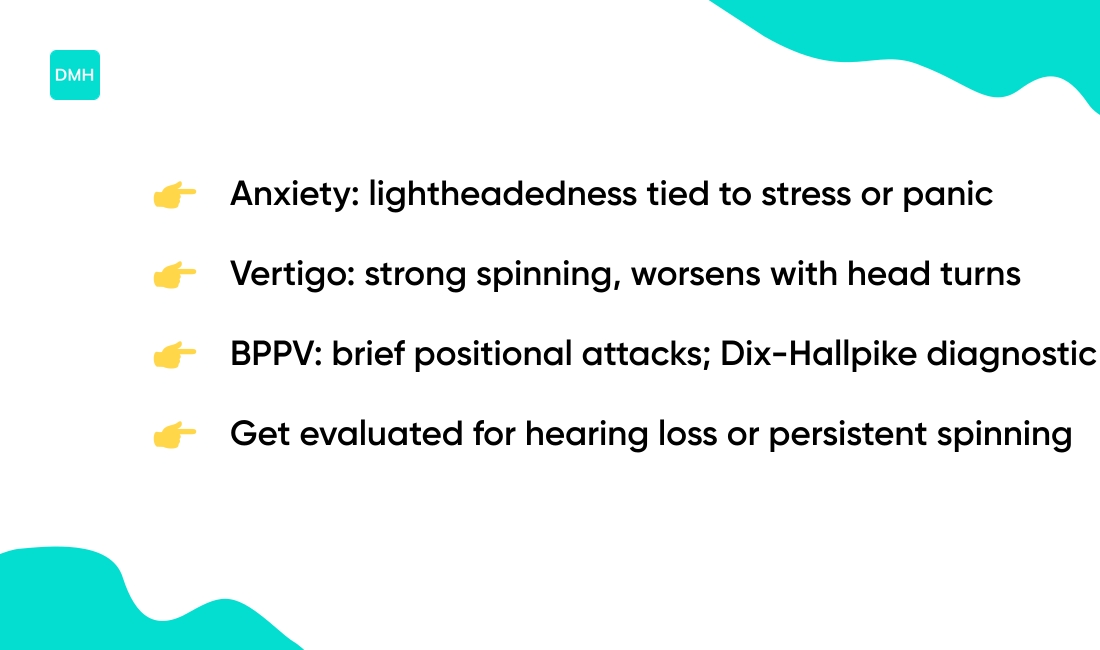
Anxiety usually causes lightheadedness or wooziness tied to stress or panic. It often lasts minutes to hours and follows rapid breathing or worry. There’s a clear stress link.
Vertigo causes a strong spinning sensation. Episodes can be under one minute with BPPV (benign paroxysmal positional vertigo). True vertigo often worsens with head turns or rolling in bed. A clear positional change points to the inner ear.
Look for hearing loss or continuous severe spinning for days. Those signs need evaluation. BPPV causes many brief positional attacks. A simple Dix-Hallpike test often reproduces symptoms. I’ve seen patients relieved after correct diagnosis and repositioning maneuvers.
If you’re unsure, get checked for inner ear disorders or cardiac causes. Simple tests can help clarify what’s going on.
Anxiety numbness and tingling vs stroke or MS
Anxiety-related numbness and tingling tends to be fleeting, symmetric, and tied to panic or hyperventilation.
Check where sensations occur, how long they last, and whether they come with other neurologic signs. This helps you tell anxiety numbness from stroke and anxiety tingling from MS.
Anxiety often causes pins-and-needles in both hands, fingers, lips, or around the mouth. Hyperventilation makes sensations spread and fade with calming breaths.
Stroke gives sudden, severe, one-sided numbness, weakness on one side, slurred speech, or vision loss. MS causes persistent focal numbness, optic changes, and balance problems that recur over days or weeks.
Call emergency services for sudden-onset limb numbness, facial droop, confusion, or trouble speaking. If you notice asymmetric, new, or worsening numbness, seek urgent care. When to see a doctor for anxiety symptoms? Anytime numbness lasts hours or comes with other neurologic signs.
Anxiety palpitations vs arrhythmia
Anxiety palpitations often start with a clear trigger like stress, caffeine, or a panic episode. You can tell them apart by regularity, triggers, duration, and symptoms that come with the racing heart.
Palpitations from anxiety usually feel fast, strong, and brief. They come with shortness of breath, sweating, or intense fear. Arrhythmias often feel irregular—like skipped beats or a constant flutter. They may happen at rest without stress and can last longer.
Seek evaluation if you faint, have ongoing rapid beats for more than 24 hours, or have known heart disease. Get an ECG and a Holter monitor to capture abnormal rhythms. Testing clarifies whether you’re dealing with palpitations or arrhythmia.
If you want to learn how to tell anxiety symptoms from real illness, start by noting triggers, timing, and any loss of consciousness. Bring those notes to your clinician—it’ll speed up your diagnosis.
Signs your symptoms are from health anxiety rather than illness
These signs point to health anxiety as the likely cause of your symptoms, not a new medical condition:
- Persistent worry about health that feels out of proportion to exam results
- Frequent body checking and obsessive self-exams
- Repeated reassurance seeking from doctors, tests, or loved ones
- Intense symptom hypervigilance where minor sensations feel catastrophic
- Hours spent on “Dr. Google” or seeking reassurance on Reddit despite clear test results
Health anxiety affects about 4–5% of people and creates real physical signals via nervous system arousal. (Some experts think the actual number is higher.)
Symptoms often spike with stress and quiet after relaxation, breathing work, or grounding. Panic-related chest pain tends to peak fast and fade with calm techniques. Breathing trouble from anxiety often eases with slow breaths, while an asthma attack usually needs an inhaler.
Track when symptoms appear and what you did before they started. Note timing, activity, and mood. If symptoms improve after brief relaxation or cognitive tools, anxiety likely plays a big role. If symptoms persist, change suddenly, or match red-flag signs, seek medical care.
Try logging symptoms for two weeks and testing one calming strategy each day. Single-day experiments reveal patterns you can act on.
If you find symptoms worse on waking, read more about why anxiety can feel worse in the morning. That insight helps you decide whether to try anxiety management or see a clinician.
How to self-check if symptoms are anxiety or medical
You can often self-check whether symptoms are anxiety or a medical issue by using a few concrete signals. Use timing, context, and objective signs to guide your next step.
- Timing and pattern: Sudden peaks in minutes suggest panic. Panic attacks often peak within 10 minutes and ease within 20–30 minutes. Persistent or steadily worsening pain over hours or days points toward a medical cause.
- Stress-symptom link: Symptoms tied to clear stressors or performance situations favor anxiety. Symptoms that occur at rest, during sleep, or without stress need medical review.
- Response to relaxation: Deep breathing, grounding, or a short walk often reduce anxiety palpitations or breathlessness within 5–15 minutes. Little or no change after these steps raises concern for a physical condition like asthma or arrhythmia.
- Objective versus subjective: Measurable signs matter. Fever, low oxygen, asymmetric weakness, sudden vision loss, or fainting are objective red flags. Subjective feelings like tingling without other signs often trace to anxiety.
- Symptom progression: New focal symptoms, worsening shortness of breath, prolonged chest pain, or altered consciousness require prompt medical evaluation. When unsure, seek care.
Tracking time, stress level, and simple measures like pulse oximetry helps you decide faster. Use these checks to act with calm urgency and get medical help when objective signs appear.
You’ll also like: How to Stop an OCD Spiral: 5 Effective Strategies
When to see a doctor for anxiety-like symptoms
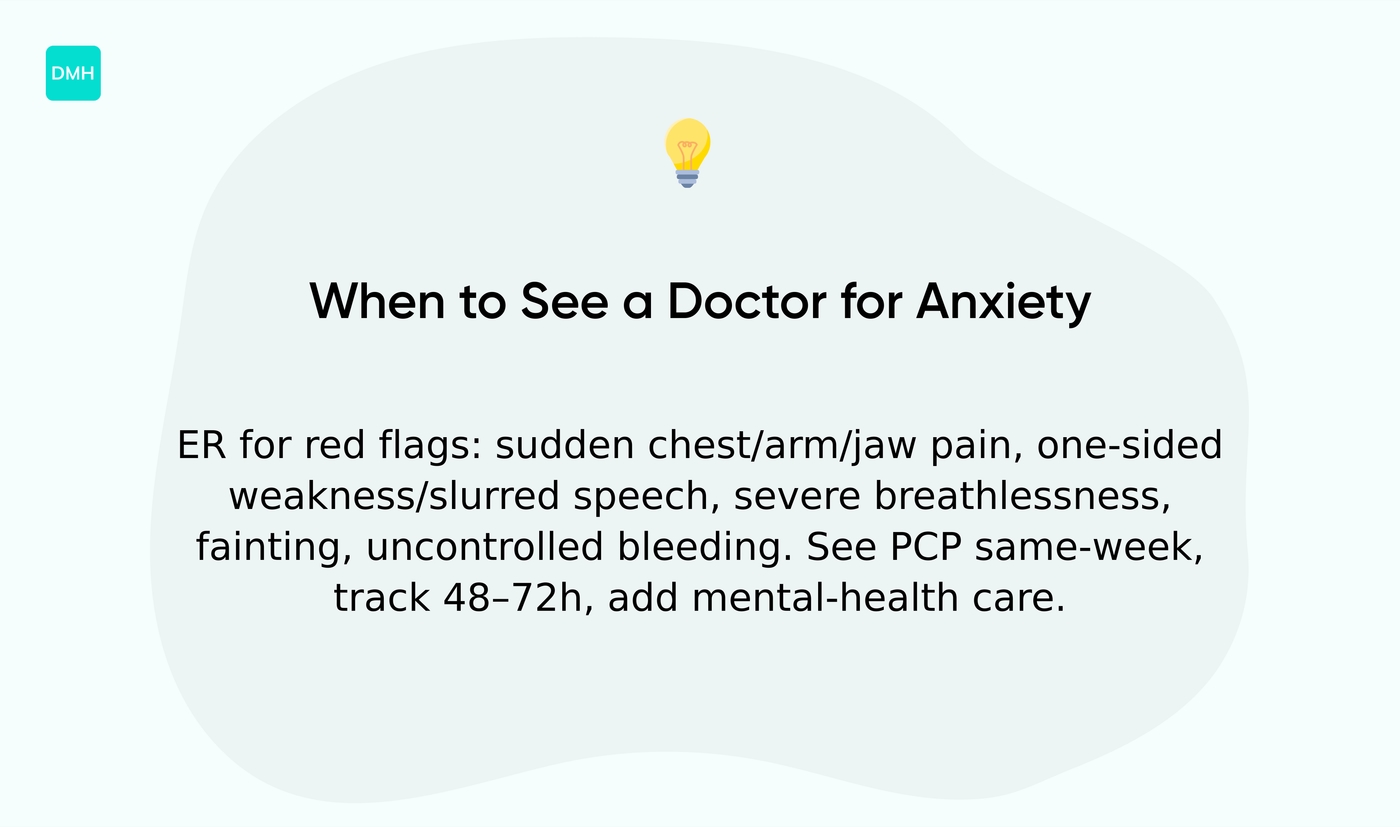
Urgent care is needed when you have clear red-flag signs. These signs point to a possible medical emergency and need immediate attention:
- Sudden severe chest pain, pressure, sweating, fainting, or pain radiating to the arm or jaw. Check this guide on when to go to the hospital for chest pain.
- New weakness or numbness on one side of the body, slurred speech, vision loss, or confusion. These match stroke patterns.
- Severe shortness of breath, blue lips, or low oxygen signs. These may be cardiac or respiratory problems rather than panic.
- Loss of consciousness, very high fever, or uncontrolled bleeding.
For non-urgent but concerning symptoms, make a same-week primary care visit. Describe timing, triggers, and what relieves the feeling. Bring notes on sleep, caffeine, meds, and recent stress. This helps rule out medical causes and guides testing.
Clear rules prevent needless ER visits and help you get the right care. From experience, tracking symptoms for 48–72 hours clarifies patterns between anxiety and simple causes like dehydration or thyroid issues.
Pair medical evaluation with mental health support when tests are normal. Book a primary care visit if symptoms persist. Seek emergency care for any red-flag sign without delay.
Read also: Top 7 Benefits of Online Therapy for Men Today
How long physical symptoms of anxiety last and managing them
Anxiety-related sensations can last from a few minutes to many months depending on whether stress is brief or chronic.
Acute panic often peaks within 10 to 30 minutes. Lingering fatigue, stomach upset, dizziness, or muscle tension can persist for days to weeks when stress repeats. Chronic stress can keep symptoms active for months without treatment.
Physical sensations come from nervous system arousal. When your body stays on alert, you get ongoing muscle tightness, palpitations, digestive changes, and sleep disruption. These are real physical symptoms of anxiety.
Evidence-based therapy makes a big difference. Randomized trials show cognitive behavioral therapy produces large, reliable improvements for many people with anxiety. CBT is the best first step for lasting change.
Practical steps you can use now:
- Learn paced breathing and grounding for immediate relief
- Prioritize 7–9 hours sleep and regular exercise to reduce baseline stress
- Limit caffeine and stay hydrated to lower jitteriness
- Try short CBT exercises for symptom reappraisal and habit change
Herbal support may help some people. See this guide on ashwagandha for anxiety for options and dosing notes.
See a clinician if chest pain is new, fainting occurs, or symptoms worsen rapidly. If symptoms are persistent but non-urgent, try structured CBT and lifestyle changes to break the cycle. If you need help, ask your provider about a short CBT program or a therapist referral.
You’ll also like: Can Isolation Cause Agoraphobia? 100% Answered