
Heart catheterization is a low-risk test that helps doctors see and treat blocked arteries.
It’s not major surgery and hospitals perform it over one million times per year in the U.S.
Most people walk away with nothing more than minor bruising.
What is heart catheterization and how serious is it
The procedure uses a thin tube threaded through an artery or vein to the heart. Doctors use X-ray and contrast dye to view coronary arteries during coronary angiography.
Typical recovery for an outpatient heart cath is a few hours to a day.
Most people experience minor issues like bruising, mild soreness, or temporary irregular heartbeats. These common heart catheterization side effects usually resolve quickly with simple care.
Serious events are rare. The overall heart cath mortality rate sits well below 0.1 percent for diagnostic tests. Major problems include heart attack, stroke, vascular injury, significant bleeding, and kidney damage from contrast. These represent the main cardiac catheterization risks clinicians monitor for closely.
Access choice affects bleeding risk. Radial access from the wrist lowers bleeding versus femoral access from the groin.
That difference explains much of the data on radial vs femoral access risks.
We encourage you to discuss your personal risk factors before the test. Asking about kidney function, blood thinners, and access site improves safety and peace of mind.
Takeaway: ask specific questions, share your medical history, and follow post-procedure instructions to minimize heart cath risks.
What are the risks of cardiac catheterization
Major complications and mortality rate
Major complications after a heart catheterization are uncommon. You should know the measurable risks to make informed choices.
Large registries put diagnostic coronary angiography mortality near 0.1% or below. Stroke risk estimates range about 0.03–0.08% and periprocedural heart attack rates sit near 0.1%.
Major bleeding and vascular injury remain the most common serious problems. These numbers reassure most patients and prompt clear questions for your team.
Ask your cardiologist for the center’s cardiac catheterization complications rates and access approach. Choosing radial access lowers the heart cath mortality linked to bleeding. Bring a list of medications and kidney history before the test.
Bleeding and vascular complications
Bleeding at the insertion site is the main vascular concern after a heart cath. Small bruises are common; serious bleeding is uncommon.
Hematoma forms when blood pools under the skin and creates a firm, tender lump. Clinically significant hematoma occurs in about 2–5% after femoral access and under 1% with radial access.
Vascular injury can include artery puncture, pseudoaneurysm, or arteriovenous fistula. Femoral access often produces larger bruises and higher rates of access-site problems.
Studies show radial access lowers major bleeding risk by roughly half compared with femoral access. Radial punctures sit near small, compressible arteries so bleeding stops faster.
I’d say radial access favors quicker recovery and less visible bruising for most patients. Same-day recovery times fall by hours when teams use the wrist approach.
We advise you to tell your cardiologist about blood thinners and prior bleeding issues before the procedure. Ask about radial access and follow pressure and rest instructions after the cath.
Kidney damage and contrast dye reactions
Kidney injury and allergic dye reactions can occur during coronary angiography. Screening and simple precautions keep the risk low for most people.
Contrast-induced nephropathy affects about 2–7% of patients. The rate rises to 20–30% for people with chronic kidney disease or diabetes. These figures highlight a clear kidney damage risk angiography presents for high-risk patients.
Mild allergic reactions like itching and hives happen more often. Severe anaphylaxis is rare, under 1%. Tell your team about prior contrast reactions and iodine allergies.
Several factors raise your risk:
- Pre-existing kidney disease
- Diabetes
- Dehydration
- Large contrast volume
- Older age
- Heart failure or low blood pressure
We check baseline creatinine and hydrate at-risk patients before angiography. Measuring kidney function and limiting contrast volume reduces cardiac catheterization risks.
Ask your cardiologist about hydration, alternative imaging, and contrast-sparing techniques.
Minor side effects and temporary issues
Most post-catheterization issues are mild and short-lived. Cardiac catheterization is performed over a million times annually in the U.S. Major complications are rare, but expect small, temporary effects.
Common complaints include minor bruising, mild nausea, temporary arrhythmias, and soreness at the catheter insertion site. These signs often reflect local vessel irritation or simple tissue trauma.
They count as typical heart catheterization side effects rather than severe cardiac catheterization complications for most patients.
Most symptoms ease within 24 to 72 hours with basic care: rest, ice, and simple pain relief. Gentle movement speeds recovery and reduces stiffness.
Watch for growing swelling, heavy bleeding, persistent palpitations, fever, or increasing pain. If you notice any of those, call your clinician or go to the emergency room.
What is the difference between left and right heart catheterization
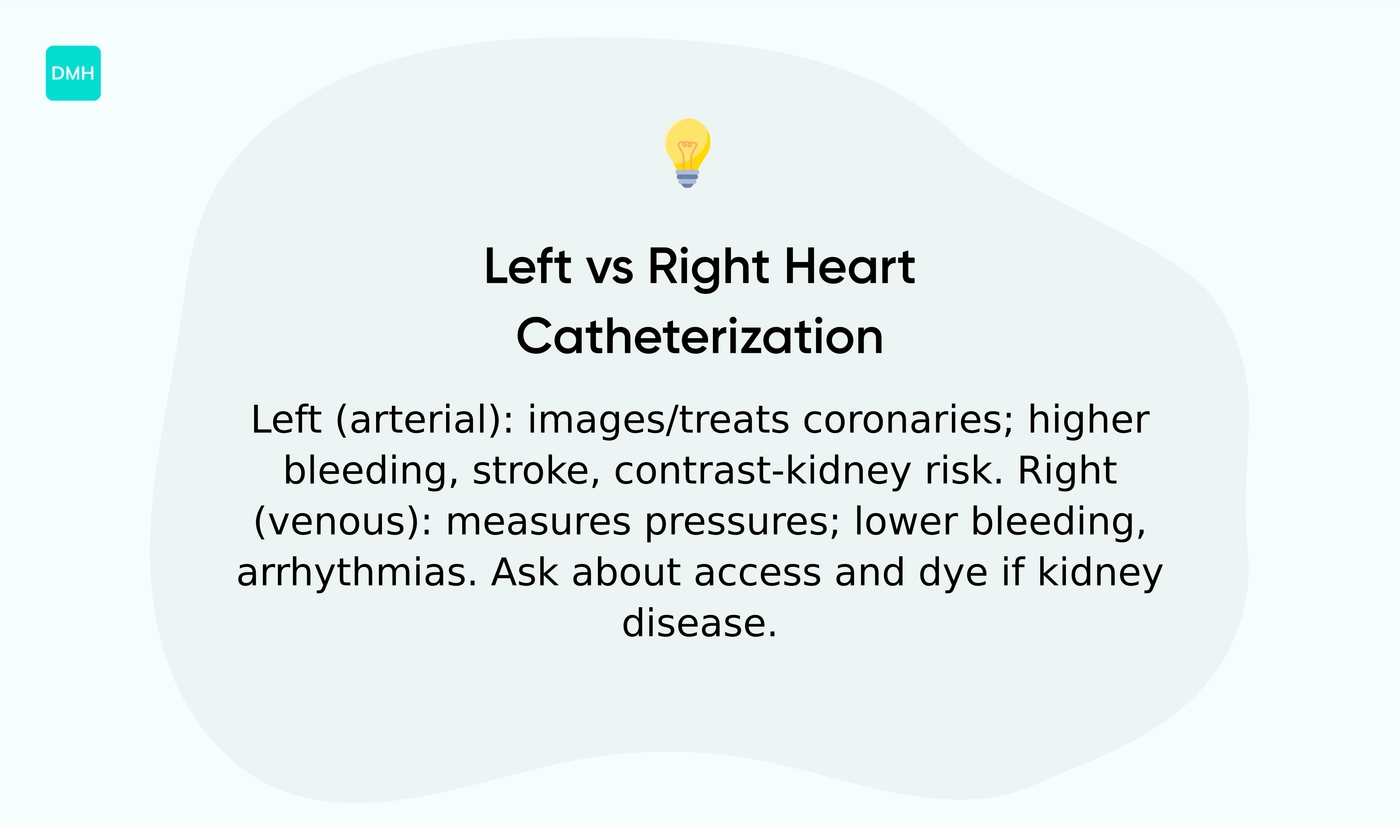
Left heart catheterization and right heart catheterization serve different goals and carry different risks. Left procedures image coronary arteries and treat blockages. Right procedures measure chamber pressures and evaluate pulmonary hypertension.
Access points differ. Left cath uses arterial entry, usually radial or femoral artery. Right cath uses venous entry, commonly internal jugular or femoral vein.
Choice of access changes recovery time and complication patterns.
| Feature | Left Heart Cath | Right Heart Cath |
|---|---|---|
| Primary Purpose | Image coronary arteries, treat blockages | Measure chamber pressures, assess pulmonary hypertension |
| Access Site | Arterial (radial or femoral artery) | Venous (internal jugular or femoral vein) |
| Main Risks | Bleeding, arterial injury, stroke, contrast kidney damage | Transient arrhythmias, rare venous thrombosis or pneumothorax |
| Complication Rate | Higher bleeding risk | Lower bleeding risk |
Risk profiles differ by route and purpose. Left cath has higher chances of bleeding risk, arterial injury, stroke, and contrast-related kidney damage. Right cath has lower bleeding risk but more transient arrhythmias and rare venous thrombosis or pneumothorax if a central vein is used.
Serious complications for diagnostic cath stay well under 1% in most centers.
We urge you to ask about access choice and contrast use before the test. Radial access for left cath cuts bleeding and shortens outpatient recovery. Tell your team if you have kidney disease, blood thinners, or prior reactions to dye.
Takeaway: match the procedure to the question your cardiologist needs to answer. Ask which access they plan, what specific risks apply to you, and how long recovery should take.
Factors that increase heart catheterization risks
Cardiac catheterization risks for elderly patients
Older adults face higher risks with cardiac catheterization and need tailored care. We see increased bleeding risk, kidney function concerns, and longer recovery times in patients aged 75 and up.
The test occurs over one million times annually in the U.S., yet age raises complication rates. Low eGFR, diabetes, and frailty increase the chance of contrast-induced kidney injury.
We recommend a pre-procedure kidney panel and a clear plan for blood thinner management. Radial access often lowers bleeding and speeds mobility for older patients.
Expect slower recovery. Activity may be limited for 24 to 48 hours or longer after an outpatient heart cath. Ask your cardiologist about limiting contrast volume, aggressive hydration, and access-site choice.
Plan follow-up and clear instructions for bleeding signs and urine changes.
Radial versus femoral access safety comparison
Radial access is safer than femoral access for most patients undergoing heart catheterization. We prefer radial access when anatomy and operator skill allow. Radial offers better comfort and lower bleeding risk for most people.
One meta-analysis found a 46% reduction in major bleeding with radial access. Radial procedures let you sit up and walk within an hour. Femoral access often requires 4–6 hours of bed rest.
Femoral access still serves when large catheters or complex interventions are needed. That choice depends on your anatomy and the procedure goals.
Ask your cardiologist about radial access if you want lower bleeding complications and improved patient comfort. Request an explanation of risks tied to your health and recovery plan.
Pre-existing conditions that affect safety
We prioritize tailored planning for patients with chronic conditions. Certain health issues raise your risk during and after the procedure.
Kidney disease raises the risk of contrast-induced injury. Check eGFR before coronary angiography. Risk rises when eGFR falls below 60 mL/min/1.73m². Kidney disease risks increase with dehydration and drug interactions.
Diabetes increases infection and kidney stress and adds to heart catheterization risks. Manage blood sugar and review medications the week before.
Allergies to contrast dye can trigger severe reactions. Premedicate or use alternative imaging such as CT angiography or stress testing.
Bleeding disorders and anticoagulant use raise bleeding risk heart catheterization at the access site. Consider radial access and short-term medication adjustments.
Bleeding disorder precautions cut vascular complications.
Sharing lab results and medication lists with your cardiologist changes outcomes. Act: get labs, ask about radial access, and confirm medication plans.
What to expect during the heart cath procedure
This procedure is usually safe and routine. You’ll likely stay awake and monitored the whole time.
Staff numb the insertion site with a local anesthetic injection. You may receive a light IV sedative or a conscious sedation option so you feel relaxed. General anesthesia is rare and used only for special cases.
Doctors insert a thin catheter through the wrist or groin. If they use the wrist, they use radial artery access. They guide the catheter to the heart and inject contrast dye to image arteries.
The team watches heart rhythm and blood pressure continuously.
Procedure time ranges from 20 to 90 minutes. Diagnostic tests often take 30 to 60 minutes. Interventions like stent placement add time.
Expect a short recovery in the lab and a few hours of observation afterward.
Pain is usually mild. You may feel pressure, warmth from dye, or brief discomfort. Soreness and bruising at the entry site are common and fade in days. Major complications occur in under 1% of cases. Death risk sits near 0.1% for diagnostic caths, which keeps overall risk low.
We tell patients to ask about access site, sedation plan, and recovery steps before the test. Knowing these steps reduces fear.
Ask your team about sedation and arrange a driver for the day of the procedure.
Heart catheterization recovery and what not to do after heart cath
Recovery after a heart catheterization is typically short and manageable. You get clear steps that speed healing and reduce complications.
Over one million procedures occur each year in the U.S., so clinicians have refined safe, simple recovery rules. Follow them to avoid common cardiac catheterization risks like bleeding or infection.
Here’s what to expect and avoid:
- Eating and drinking: Eat when awake and alert. Most patients tolerate clear liquids right away.
- Driving and work: Don’t drive for 24–48 hours after radial access. Wait 48–72 hours after femoral access. Return to desk work in 24–48 hours. Delay heavy labor for 5–7 days.
- Strenuous exercise: Avoid vigorous activity and heavy lifting for one week. Keep heart rate steady while the access site heals.
- Wound care: Keep the site dry and clean. Don’t submerge the area in a bathtub or pool for 48–72 hours.
- Warning signs: Call your doctor for swelling, increasing pain, fever, bleeding, or sudden shortness of breath.
Choosing radial access often shortens recovery and lowers bleeding risk. Share any new symptoms with your care team immediately.
Takeaway: follow simple aftercare, avoid heavy use of the access arm or groin, and call your provider if you see concerning signs.
Complications of cardiac catheterization in 24 hours
How serious is a heart catheterization? Risk is low, but early complications need quick action.
Over one million diagnostic heart catheterizations occur each year in the U.S. Major problems happen in under 1% of patients. Minor issues like bruising or mild pain appear more often.
What signs should you watch for in the first day? Here are the key warning signals:
- Fever over 100.4°F — may signal infection.
- Swelling at the site — growing size or a hard lump needs attention.
- Chest pain — new, intense, or not relieved by rest or nitroglycerin.
- Shortness of breath — trouble breathing or rapid breathing.
- Excessive bleeding — bleeding that soaks dressings or spurts.
- Dizziness, fainting, or sudden weakness.
- Redness, warmth, or drainage at the insertion site.
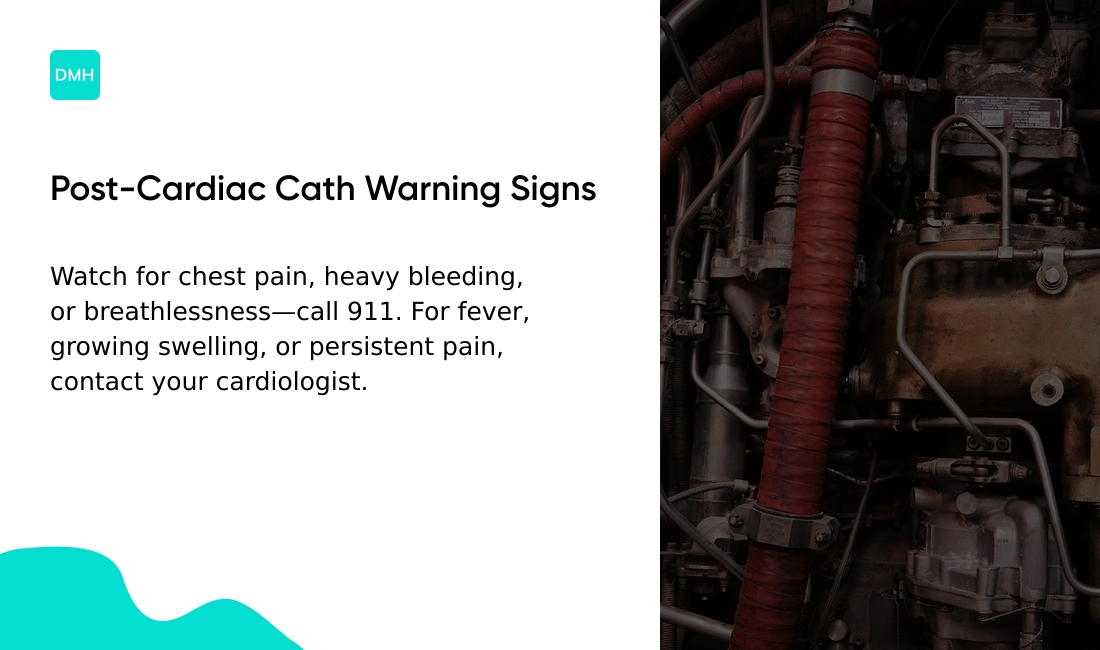
We recommend calling 911 for heavy bleeding, severe chest pain, fainting, or major breathing trouble. For fever, growing swelling, or persistent pain, call your cardiologist right away.
Knowing these signs reduces anxiety and speeds care. Keep the dressing clean, avoid heavy lifting, and follow medication directions.
Takeaway: treat chest pain, heavy bleeding, and breathing trouble as emergencies. Contact emergency services immediately; call your doctor for other warning signs.
Read also: What To Do When A Doctor Refuses To Treat You
How to reduce the risk of complications after heart catheterization
You can lower heart catheterization risks with clear preparation and the right team. Major complications occur under 1%, and mortality sits near 0.1% in modern centers.
Tell your cardiologist about blood thinners, aspirin, and herbal supplements. Follow precise medication instructions so bleeding risk drops.
Fast for six to eight hours before the procedure unless told otherwise. Arrive with a list of current medications and allergies.
Hydrate well before and after the test if your kidney function allows. Ask for kidney-protective measures to reduce contrast-induced kidney damage risk. Choose radial access when feasible to reduce access-site bleeding.
Discuss radial vs femoral access risks with your team.
Post-procedure care matters. Keep the dressing intact, stay flat if instructed, and avoid heavy lifting for 48 hours. Watch for increased pain, swelling, bleeding, fever, or shortness of breath.
Seek immediate care for chest pain or sudden weakness.
We recommend selecting experienced facilities with proven low complication rates. High-volume centers usually report lower heart cath complications rate. Clear instructions and a trusted team cut risks the most.
Confirm your medication plan with your cardiologist today.
Read also: How Much Does A DNA Test Cost At The Hospital
When is heart catheterization necessary versus noninvasive alternatives
Reserve heart catheterization when noninvasive tests leave doubt or when immediate treatment is likely. The procedure guides repairs that noninvasive imaging can’t deliver. Over one million procedures occur yearly in the U.S., with major complications rare and mortality roughly 0.1%.
We recommend a stepwise approach. Start with noninvasive tests such as stress testing, echocardiography, or CT angiography for most stable patients.
Choose invasive angiography for unstable chest pain, high-risk stress test results, recurrent symptoms despite medical therapy, or when CT shows high-grade coronary blockages. Angiography pays off when it leads directly to stenting or surgery.
Typical serious complication rates sit near 1% for major events and under 0.2% for death in modern centers, so weigh benefits against cardiac catheterization risks.
Noninvasive options lower immediate risks and shorten outpatient recovery. Many patients with noncardiac chest pain improve with conservative care.
Talk with your cardiologist about test accuracy, your kidney function, anticoagulation status, and the chance that cath will change treatment. Choose the least invasive test that answers your specific question and move to catheterization when results will change care.