C-reactive protein (CRP) is a reliable blood marker of inflammation.
It rises quickly after tissue injury or infection.
The liver produces CRP in response to immune signals called cytokines.
High CRP signals active inflammation, infection, or tissue damage.
CRP alone doesn’t diagnose a specific disease.
Doctors combine CRP results with symptoms, exam findings, and imaging.
What is C-reactive protein (CRP)?
Clinicians order CRP to assess infection severity and to monitor response to treatment. They use high-sensitivity CRP tests to evaluate low-grade inflammation linked to heart disease.
Most labs report CRP in mg/L or mg/dL. Typical baseline values sit under 3 mg/L for many healthy adults.
Tracking CRP trends helps you and your clinician spot worsening inflammation early. Ask your clinician for a CRP or hs-CRP test with unexplained fever, new pain, or chronic symptoms. Watch trends more than single numbers — repeat tests guide treatment and show recovery.
What is the normal range for CRP?
CRP normal range for most healthy people sits under 3 mg/L. Labs often report values in mg/L. Many healthy adults register below 1 mg/L on a high-sensitivity test.
Check the lab’s reference range next to your result. Ask your clinician if the lab used a high-sensitivity assay or a standard CRP test.
Labs may use mg/dL instead of mg/L. Multiply mg/dL by 10 to get mg/L. For example, 0.3 mg/dL equals 3 mg/L.
High-sensitivity CRP tests (hs-CRP) detect low-grade inflammation down to 0.1 mg/L. Baseline values differ by age and sex, but most healthy people fall below 3 mg/L. Slight elevations can reflect short-term issues like mild infection or recent injury.
Tracking trends matters more than one number. A single reading slightly above your lab’s upper limit often needs repeat testing within a few weeks. Rapid rises or values well above 10 mg/L usually require prompt medical review.
Know the units on your report and compare them to the reference range. If you need help interpreting a value, bring the report to your provider and discuss follow-up testing and possible causes.
What CRP level is considered dangerous?
CRP levels 3-10 mg/L: Mild to moderate elevation
A CRP of 3–10 mg/L signals low-grade inflammation and rarely demands emergency care. This range can reflect minor infections, a common cold, pregnancy, obesity, smoking, or early autoimmune changes such as rheumatoid arthritis.
It may hint at early cardiovascular risk when combined with other factors. Repeat testing in 2–4 weeks and a clinical review helps tell temporary rises from chronic inflammation.
A single mild elevation should prompt calm monitoring, not panic. Tracking trends matters more than one number. Values above 10 mg/L need prompt evaluation.
Talk to your clinician about causes, lifestyle changes, and targeted tests. Short interventions like quitting smoking and modest weight loss can lower high CRP levels over months.
CRP levels 10-50 mg/L: Marked elevation
CRP 10–50 mg/L signals a marked elevation level. This range indicates active inflammation from infections, trauma, autoimmune disease, or vascular inflammation.
How much CRP level is dangerous? Well, 10–50 mg/L flags possible acute issues that need testing. Active bacterial infections drive CRP higher. Read about infections that raise white blood cell count to understand related markers.
Watch symptoms like fever, rapid heartbeat, low blood pressure, or severe pain. Seek care if symptoms appear or worsen — you need medical evaluation to rule out serious conditions.
Repeat testing and clinical context matter more than one number. Your doctor will likely order additional labs and imaging to pinpoint the cause.
CRP levels 50-100 mg/L: Severe elevation
CRP levels of 50–100 mg/L indicate severe inflammation and often point to dangerous disease. Most patients with this range have an acute bacterial infection — studies report about 90% link to bacterial causes.
You can also see this after major injuries or with advanced illnesses. Treat the reading as a major trauma signal that needs swift action.
Rapid assessment saves lives. If your CRP sits here, get prompt evaluation and targeted therapy when indicated. Clinicians order blood cultures, imaging, and repeat CRP tests to follow trends.
A rising value suggests possible sepsis or worsening infection. Hospital care becomes necessary if organ dysfunction appears. You should follow prescribed treatment and repeat tests until values decline.
CRP levels above 100 mg/L: Critical danger zone
CRP levels above 100 mg/L signal a medical emergency. Values over 100 mg/L place you in a critical danger zone. This level often reflects severe bacterial infection, sepsis, major trauma, or a rheumatologic crisis.
Such very high CRP readings usually come with fever, low blood pressure, or rapid heart rate. Labs report CRP levels in mg/L and a number over 100 often prompts blood cultures and imaging. Watch symptoms closely and compare counts with a trusted guide on dangerous white blood cell count.
Urgent hospital evaluation is essential for CRP above 100 mg/L and signs of organ dysfunction. Waiting raises the risk of lasting harm. Seek emergency care now for assessment, labs, and immediate medical intervention.
Understanding hs-CRP levels for heart disease risk
Use hs-CRP to sharpen your heart disease risk profile. The high-sensitivity C-reactive protein test detects low-grade inflammation linked to atherosclerosis.
Labs report hs-CRP in mg/L. Results under 1 mg/L show low risk. Results of 1-3 mg/L reflect moderate risk. Results above 3 mg/L signal high risk for future cardiovascular events.
| hs-CRP Level (mg/L) | Cardiovascular Risk | Action |
|---|---|---|
| Below 1 | Low | Maintain healthy habits |
| 1-3 | Moderate | Discuss prevention strategies |
| Above 3 | High | Aggressive risk reduction needed |
| Above 10 | Very high | Urgent medical evaluation |
hs-CRP levels help when traditional measures sit near a cutoff. hs-CRP provides useful context if your cholesterol or blood pressure give mixed signals. Studies link hs-CRP above 3 mg/L to about a 1.5–2x higher chance of heart attack or stroke over several years.
Repeat testing matters. A single mildly elevated value can follow a recent infection or injury. Persistent elevation over weeks suggests chronic inflammation and higher cardiovascular risk.
Discuss hs-CRP with your clinician if your level exceeds 1 mg/L. Ask about combining hs-CRP with a formal risk calculator and about lifestyle steps to lower inflammation.
If your hs-CRP is above 3 mg/L, talk to your provider about risk reduction strategies. These include smoking cessation, weight loss, improved sleep, and targeted therapies based on your overall risk. Monitor trends rather than a single reading to guide decisions.
What causes high CRP levels?
Infections and sepsis
Bacterial infections often push CRP well above 50 mg/L and demand urgent testing. Most acute bacterial cases show levels between 50 and 100 mg/L — about 90% of those cases represent severe infection.
Viral infections tend to cause moderate CRP rises, usually below 50 mg/L. Compare CRP with lab trends and white blood cell counts using resources like high white blood cell count.
Sepsis produces critical elevations often exceeding 100 mg/L and needs immediate care. Knowing how much CRP level is dangerous guides urgent action.
Seek emergency care for a CRP over 100 mg/L or for signs of sepsis. These signs include confusion, rapid breathing, extreme weakness, and low blood pressure.
Autoimmune and inflammatory diseases
Autoimmune and inflammatory diseases drive persistent CRP rises and require careful tracking. Rheumatoid arthritis, lupus, inflammatory bowel disease and vasculitis often keep persistently elevated CRP.
Rheumatoid arthritis flares commonly push CRP into the 10–50 mg/L range. For more details, see Healthline’s guide on rheumatoid arthritis CRP levels.
Autoimmune activity can mimic infection and keep values high. Tracking CRP trends and symptoms guides care. Aim for CRP levels below 3 mg/L for low inflammation.
Seek rheumatology follow-up when readings stay above 10 mg/L or spike above 50 mg/L. Keep tests done at the same lab and use the same assay to compare results. Track symptoms in a simple diary and bring both to your next appointment.
Cardiovascular disease and metabolic conditions
Chronic inflammation fuels atherosclerosis and raises heart disease risk. You can track that process with hs-CRP. Inflamed arteries attract lipids and immune cells and form unstable plaques — that increases the chance of heart attack or stroke.
High-sensitivity CRP under 1 mg/L signals low risk. 1–3 mg/L shows moderate risk. hs-CRP above 3 indicates higher cardiovascular risk.
Obesity and type 2 diabetes commonly push hs-CRP into the high-risk range. People with metabolic disease often have persistently elevated values. Measuring hs-CRP helps clarify risk for patients with obesity, diabetes, or a strong family history of heart disease.
Discuss hs-CRP testing with your clinician if you have metabolic conditions or other risk factors. Track trends, not a single value. Seek urgent care if hs-CRP climbs above 10 mg/L with fever, chest pain, or shortness of breath.
Lifestyle and temporary factors
Lifestyle can raise CRP temporarily. Smoking, poor diet, stress, inactivity, injury, surgery and some drugs boost CRP.
Small rises often sit between 3 and 10 mg/L. Major trauma or surgery can push levels above 50 mg/L and into the severe range.
Certain medications affect CRP differently. Oral estrogens and some hormone therapies can raise CRP modestly. Statins often lower CRP by about 20–40%. Antibiotics reduce CRP by treating the underlying infection.
After minor surgery CRP often peaks near 48 hours. Levels fall over 7 to 14 days. Tracking trends matters more than one reading.
If your test shows high CRP levels, contact your clinician for repeat testing and evaluation. Track symptoms and note recent events — share both with your provider to help identify causes of high CRP.
When should you worry about your CRP level?
You should worry about CRP at high levels or with serious symptoms. A single mild rise rarely means emergency. Persistent or repeated elevated CRP levels require follow-up and context.
Ask for repeat testing in 48 to 72 hours. When does CRP become a red flag? Here’s the breakdown:
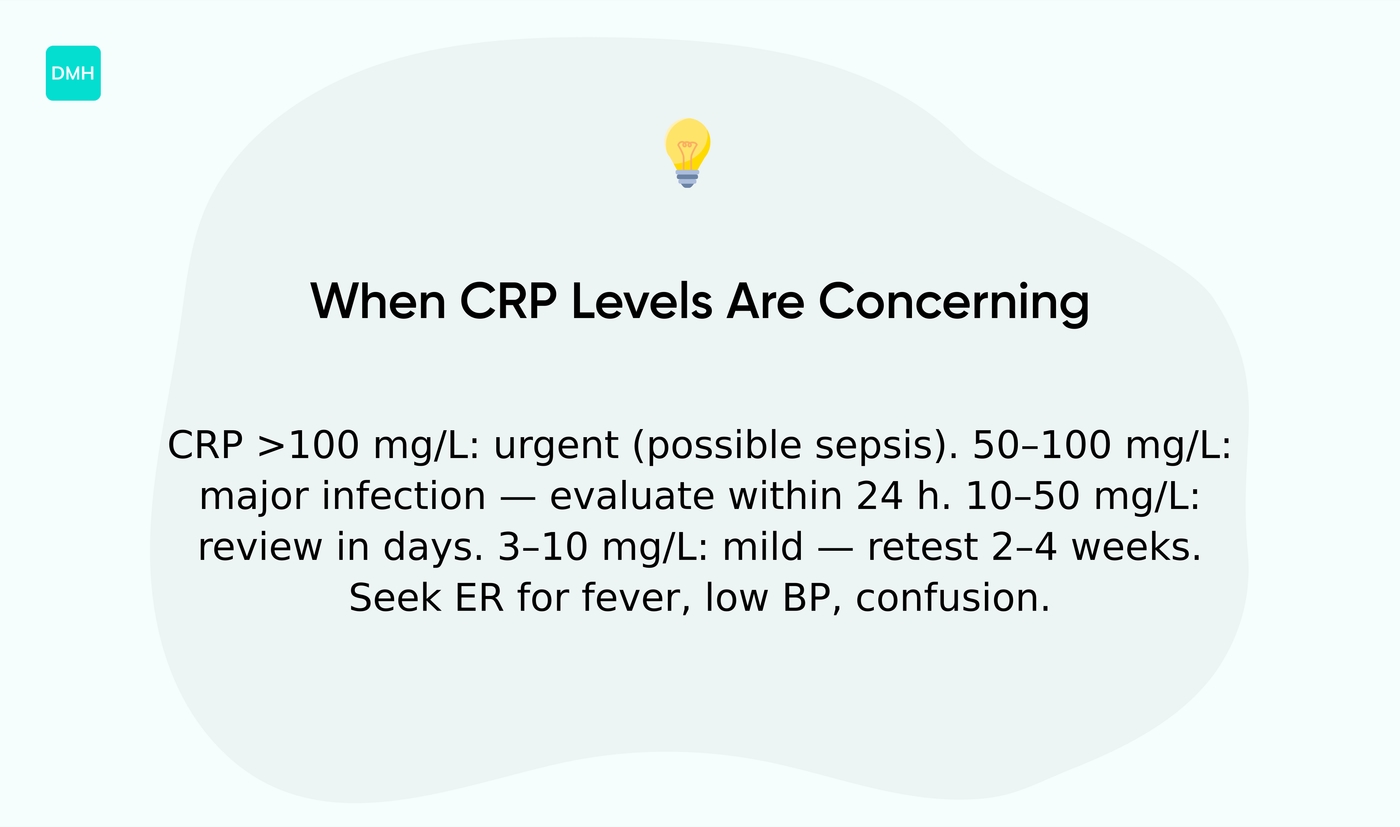
- CRP above 100 mg/L: Urgent medical attention needed. Levels over 100 mg/L often signal sepsis or severe infection.
- CRP 50-100 mg/L: Major bacterial infections or severe inflammation. Arrange evaluation within 24 hours if you feel unwell or symptoms worsen.
- CRP 10-50 mg/L: Seek medical review within a few days. This range points to active inflammation that needs assessment.
- CRP 3-10 mg/L: Mild elevation. Repeat testing in 2-4 weeks and discuss with your doctor if symptoms persist.
Seek immediate care if you have fever, low blood pressure, confusion, or fast breathing. Go to the ER or call emergency services now.
Watch trends not single numbers. A rising CRP over days signals worsening inflammation. Compare CRP with white blood cells and CBC with differential values. If both rise, contact your clinician the same day.
You’ll also like: Is It Serious To Be Referred To A Hematologist
CRP vs ESR: Which is more reliable?
CRP is more reliable than ESR for detecting acute inflammation and tracking treatment response. CRP rises within six hours and peaks around 48 hours. ESR moves slower and can stay high for days or weeks.
CRP reads in CRP levels mg/L. ESR reports in mm/hour. Labs use CRP to spot rapid changes.
CRP proves more sensitive for bacterial infection. A CRP above 10 mg/L suggests an active issue. Values of 50–100 mg/L signal severe inflammation. Readings over 100 mg/L often mean sepsis or major trauma.
ESR can rise with anemia, age, or pregnancy and gives less specific signals. CRP offers clearer short-term monitoring. If you need to track treatment, order CRP every 24–48 hours.
Use ESR to monitor long-term inflammatory conditions like some autoimmune diseases. Want a clear next step? Tell your clinician your symptoms and request a CRP test when infection or rapid inflammation is likely.
You might also like: What Level Of Platelets Is Dangerous
How to lower CRP levels naturally
You can lower CRP levels naturally with targeted lifestyle changes that cut chronic inflammation. We prioritize simple, evidence-based steps you can start today.
- Anti-inflammatory diet plan: Follow a Mediterranean-style pattern. Studies report hs-CRP drops of about 15–25% with this diet. Eat fish, olive oil, whole grains, nuts, and lots of vegetables.
- Regular physical activity: Aim for 150 minutes of moderate exercise weekly. Trials show routine exercise reduces CRP by roughly 10–20% and improves insulin sensitivity.
- Quality sleep habits: Sleep 7–9 hours per night. Short sleep links to higher CRP — improving sleep can lower inflammation measurably.
- Stress management: Practice daily breathing, mindfulness, or brief walks. Small studies show measurable CRP decreases after 8–12 weeks of stress reduction.
- Weight loss: Lose 5–10% of body weight to cut CRP by up to about 25%. Fat loss reduces inflammatory signals from adipose tissue.
- Quit smoking: Stop smoking to lower CRP within weeks to months and reduce cardiovascular risk linked to high hs-CRP.
Combining diet, exercise, sleep, and quitting smoking gives the fastest and most reliable CRP drop. Track hs-CRP levels with your clinician every 3 months while you try these steps.
If CRP stays above 10 mg/L, seek medical evaluation for infections or autoimmune disease. Remember that lifestyle changes work best alongside proper medical care (not as a replacement).
You’ll also like: What Is Basophils In Blood Test