Eosinophils are the primary white blood cell elevated in allergies.
These specialized cells release inflammatory mediators that drive sneezing, wheezing, and itchy skin.
They damage tissue in asthma and allergic rhinitis.
In the airway, they worsen bronchospasm and mucus production.
Normal eosinophil counts run 0–500 cells/µL or 1–4% of white cells. Allergic triggers often raise counts to 500–1,500 cells/µL. Counts above 1,500 cells/µL indicate marked eosinophilia and need prompt evaluation.
In some nasal smears for hay fever, eosinophils exceed 10% of cells. Basophils, mast cells, and IgE antibodies join the response. Basophils and mast cells release histamine fast and feed the ongoing inflammation.
Read a focused guide on eosinophils for lab ranges and common causes. Checking eosinophil levels gives clear clues about allergy type and guides treatment choice.
CBC with differential is the test to request. Ask your clinician for a CBC with differential to measure your eosinophil count and plan next steps.
What white blood cells are involved in allergic reactions?
Eosinophils function in allergy
Eosinophils drive allergic inflammation. They release inflammatory mediators including major basic protein, eosinophil peroxidase, and eosinophil cationic protein.
These granules damage cells directly. They injure airway epithelium and nasal mucosa, causing tissue damage that increases mucus and bronchial hyperreactivity.
Eosinophils recruit other immune cells and prolong inflammation. They perpetuate allergic symptoms in asthma and allergic rhinitis. Counts above 300–500 cells/µL associate with more exacerbations, while normal ranges sit near 0–450 cells per microliter.
Our team advises measuring eosinophils when symptoms persist. Tracking counts helps guide steroid and biologic decisions. Testing requires a CBC with differential—you get clearer treatment choices when you know the eosinophil count.
Basophils in allergies
Basophils act as rapid responders that store and release histamine when IgE on their surface binds an allergen. They degranulate within minutes and free other signaling molecules that widen blood vessels and draw immune cells.
Basophils make up less than 1% of circulating white blood cells but punch above their weight in early allergic reactions. Eosinophils show higher counts during prolonged allergic inflammation and cause tissue damage.
You can read more about basophils for lab details and clinical context. We recommend a CBC with differential when allergy symptoms persist and you need clarity on which leukocytes drive inflammation. Clinicians often underappreciate basophils as early alarms in allergy—ask your provider for specific tests to guide treatment.
Mast cells and allergic reactions
Mast cells trigger immediate allergic responses. While eosinophils often rise during allergic conditions, mast cells drive the instant reactions.
Mast cells sit in skin, lungs, and gut mucosa near blood vessels and nerves. IgE antibodies coat mast cells, and when an allergen binds, cells degranulate within seconds.
They release mediators like histamine, leukotrienes, and tryptase. Histamine release causes itch, hives, runny nose, and airway tightening fast. Large systemic release drives anaphylaxis response—blood pressure can drop and airways can close within minutes.
Mast cells deserve more attention in allergy care. Recognizing their role speeds treatment. You should carry epinephrine if you have severe allergies and get urgent care at first sign of anaphylaxis.
We map the chain from allergen to tissue damage so you see the link clearly. IgE antibodies bind allergens and cross-link FcεRI on mast cells and basophils, triggering rapid mediator release and cytokine signals.
Mast cells release IL-5 and chemokines that drive eosinophil recruitment. Eosinophils arrive, activate, and release granules that worsen symptoms and sustain allergic inflammation.
Blood eosinophil counts above 300 cells/µL often indicate allergic activity. Severe cases reach 500+ cells/µL. Testing both serum IgE and a CBC with differential gives clearer diagnostic information.
Read a detailed review on IgE and eosinophils here. You can ask your clinician for those tests if symptoms persist.
Are eosinophils elevated during allergic reactions?
Is eosinophilia common in allergic rhinitis?
Allergic rhinitis often involves raised eosinophils in the nose. About 20–40% of hay fever patients show peripheral eosinophilia on blood tests.
Normal eosinophil percentages run about 1–4% of the differential. Mild symptomatic rises commonly reach 4–8% levels. Clinically relevant eosinophilia usually means an absolute count above 500 cells/µL.
Eosinophils track with exposure—counts climb during peak pollen weeks and with heavy indoor allergen contact. Patients with higher counts report worse congestion, sneezing, and eye itching.
Measuring eosinophil count in allergic reactions helps guide care. If you track symptoms, ask your clinician for a CBC with differential during symptomatic periods to link your symptoms with your numbers.
Are eosinophils high in asthma linked to allergies?
High eosinophils in asthma often reflect an allergic-driven airway process. Blood eosinophil counts above about 300 cells/µL commonly mark the eosinophilic asthma phenotype and predict more frequent flare-ups.
Eosinophils release inflammatory mediators that damage airway tissue and sustain symptoms. This link explains why eosinophils elevated in allergies appear with allergic rhinitis and atopic features.
Elevated eosinophil counts guide therapy choices. In trials, anti-IL-5 drugs and higher-dose inhaled steroids cut exacerbations and steroid use. Those results support using targeted biologics when counts stay high despite standard care.
Checking eosinophil counts gives clear, actionable data. Patients improve after treatment tailored to their eosinophilia. If you have asthma and a high eosinophil count, talk with your clinician about allergic triggers and treatment options you can pursue.
Can atopic dermatitis cause elevated eosinophils?
Atopic dermatitis eosinophils often rise with active eczema. Many patients with moderate to severe skin inflammation have mild to moderate eosinophilia.
Skin inflammation severity often tracks the blood eosinophil count. Counts above 500 cells/µL meet common definitions of eosinophilia, and severe cases can exceed 1,500 cells/µL.
Many studies link higher eosinophil levels with worse itching and more widespread rash. Clinicians use counts as an objective marker to follow disease activity and adjust therapy.
Tracking eosinophils helps guide treatment choices for eczema. Elevated counts flag eosinophilia and allergies, but they don’t confirm allergy alone. Discuss results with your clinician to rule out parasites, drug reactions, or other causes and to plan appropriate care.
How is eosinophilia detected on a blood test?
We read lab reports to spot elevated eosinophils quickly. The common test is a CBC with differential. Labs list eosinophils as a percent of white blood cells and as an absolute number.
Reports show percent and cells per microliter. The lab prints absolute eosinophil count as cells/µL. Normal values sit near 0–6% or about 30–350 cells/µL.
| Eosinophilia Level | Absolute Count (cells/µL) | Common Causes |
|---|---|---|
| Normal | 0–500 | Baseline health |
| Mild | 500–1,500 | Allergic rhinitis, mild asthma |
| Moderate | 1,500–5,000 | Parasites, drug reactions, severe allergies |
| Severe | >5,000 | Blood disorders, hypereosinophilic syndromes |
Elevated eosinophils often mean allergic disease like asthma or allergic rhinitis. Eosinophilia can also signal parasites, drug reactions, autoimmune issues, or blood disorders.
Trends matter more than a single high number. Tracking the eosinophil count in allergic reactions helps guide treatment choices and allergy testing. If you notice high eosinophils on a blood test, share the report with your clinician. They’ll compare symptoms, check for parasites, review medicines, and suggest allergy or specialist referral.
What is a normal eosinophil count in allergies?
We provide clear, usable lab ranges so you know what to expect from a CBC with differential. Normal blood eosinophil percentage sits near 1% to 4% of white blood cells.
Absolute normal values run from 0.0 to 0.5 x10⁹/L, which equals 0–500 cells/µL. These figures represent the normal eosinophil range.
- Mild eosinophilia: 500–1,500 cells/µL (0.5–1.5 x10⁹/L)
- Moderate eosinophilia: 1,500–5,000 cells/µL (1.5–5 x10⁹/L)
- Severe eosinophilia: >5,000 cells/µL (>5 x10⁹/L)
Allergic conditions most often produce mild to moderate rises. Allergic rhinitis and atopic dermatitis typically show counts in the 300–1,500 cells/µL range, or roughly 3%–10% on a differential.
Eosinophilic asthma often uses a lower cutoff for treatment decisions, commonly ≥300 cells/µL. These are practical eosinophil count thresholds clinicians use.
Absolute counts matter more than percent for clinical choices. A single high result needs clinical context. Your doctor will compare symptoms, repeat tests, and rule out other causes such as parasites or drug reactions. Ask for a differential and a follow-up plan if your count is above 500 cells/µL.
What causes high eosinophils besides allergies?
Eosinophils elevated in allergies are common but not exclusive. We review medication lists, travel history, and symptoms to narrow causes.
Parasitic worm infections often raise eosinophil counts above 500 cells/µL. Strongyloides, schistosoma, and hookworm infections can push counts past 1,500 cells/µL and need stool ova and parasite testing.
Drug reaction syndromes such as DRESS cause marked eosinophilia with fever and organ involvement. Common culprits include certain antibiotics, anticonvulsants, and allopurinol—stopping the drug and urgent evaluation matters.
Autoimmune conditions like eosinophilic granulomatosis with polyangiitis link high eosinophils to lung and nerve symptoms. Your clinician may check ANCA and order targeted imaging.
Certain blood cancers including Hodgkin lymphoma and some leukemias can present with eosinophilia. Persistent counts above 1,500 cells/µL prompt bone marrow biopsy and hematology referral.
A single high value rarely closes the case. Ask for a CBC with differential, stool studies for parasites, and a careful medication review to guide next steps.
Read also: How Long Does A Sore Throat From Allergies Last
Can allergies raise overall WBC count?
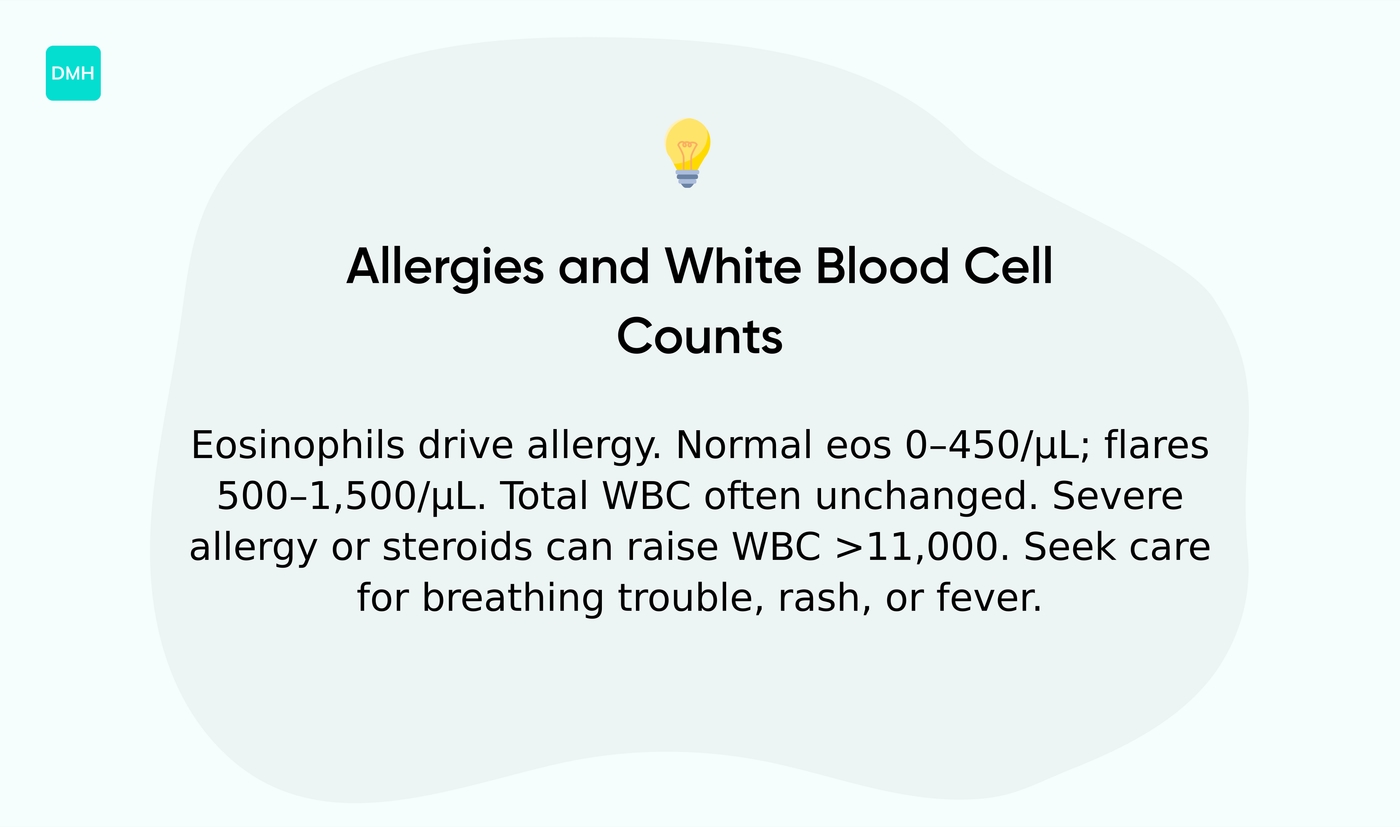
We explain how allergies affect blood counts and what to watch for. Eosinophils drive allergic inflammation. Normal absolute eosinophil counts sit near 0–450 cells/µL.
Allergic flares often push counts to 500–1,500 cells/µL without changing the overall WBC count much. Severe allergic reactions can raise total white cells.
Anaphylaxis triggers a stress response that raises neutrophils and can produce leukocytosis above 11,000/µL. Systemic steroid use causes a quick neutrophil rise through demargination and raises measured totals.
How do you tell allergy from infection? Bacterial infections tend to produce higher counts, often above 15,000/µL, with a left shift and fever. Allergic rises usually show an eosinophil bias and fewer systemic signs. Pairing symptoms with a differential count gives the clearest answer.
If your WBC is elevated and you have breathing trouble, rash, or fever, seek care right away. If a mild eosinophilia appears without severe symptoms, track counts and allergy exposure. Read more about persistent elevations at our high white blood cell count guide for testing thresholds and causes.
You might also like: Sinus Infection Vs Allergies
How to reduce high eosinophil count due to allergies
We recommend clear steps to lower eosinophil counts linked to allergies. Start with medicines that control allergic inflammation.
- Antihistamines reduce symptoms—Take daily oral antihistamines for rhinitis and hives.
- Short steroid courses—Use nasal steroids for rhinitis and inhaled steroids for asthma.
- Allergen avoidance helps—Reduce exposure to dust mites, pollen, pet dander, and mold.
- Immunotherapy, via allergy shots or sublingual drops, lowers eosinophilia over months.
- Biologic therapies target eosinophils for severe asthma or persistent high counts.
Track the eosinophil count in allergic reactions with repeat CBCs. Target values often fall under 500 cells/µL as symptoms improve.
Combining avoidance with medical therapy gives the fastest drop in counts. A short oral steroid course can cut eosinophils quickly, but it needs medical supervision. Immunotherapy and biologics take longer but offer sustained reductions.
Seek urgent care for breathing trouble or rapid symptom worsening. You should review treatment options with an allergist and monitor labs regularly. Work with your clinician to adjust therapy until eosinophil levels normalize.
You’ll also like: What Causes High White Blood Cell Count